Cats have a reputation for being independent, but independence is not the same as needing no care. A healthy adult cat may be comfortable spending part of a day alone, yet food, fresh water, litter, safety, medical needs, and social preferences still matter. The useful question is not simply, “How many hours can a cat survive alone?” It is, “What does this particular cat need while I am away, and who will notice if something changes?”
Use 12 hours as an occasional upper limit for a healthy adult, not a routine target
Cats Protection advises that most healthy adult cats can sometimes be left for a day or overnight, with around 12 hours as the maximum they recommend for an occasional absence. They also make clear that this should not become a regular routine. Kittens, older cats, cats with medical conditions, and cats with more complex needs require more frequent checks.
That distinction is important. A cat may have enough food for longer than 12 hours, but food is only one part of care. Water can spill, a feeder can jam, a cat can vomit, a litter problem can develop, or an apparently healthy cat can suddenly become unwell.
Think about the individual cat first
Before planning an absence, consider age, health, diet, medication, mobility, temperament, and normal routine. A young kitten needs frequent meals and supervision. A senior cat may need medication or closer observation. A cat with urinary, kidney, digestive, diabetic, or other medical needs should follow the schedule recommended by its veterinarian rather than a general online guideline.
Personality matters too. Some adult cats spend much of the day sleeping and appear relaxed when the household is quiet. Others seek frequent human interaction or become unsettled when routines change. If your cat has a history of separation-related behavior, discuss longer absences with a veterinarian or qualified behavior professional.
Plan food around the actual time you will be gone
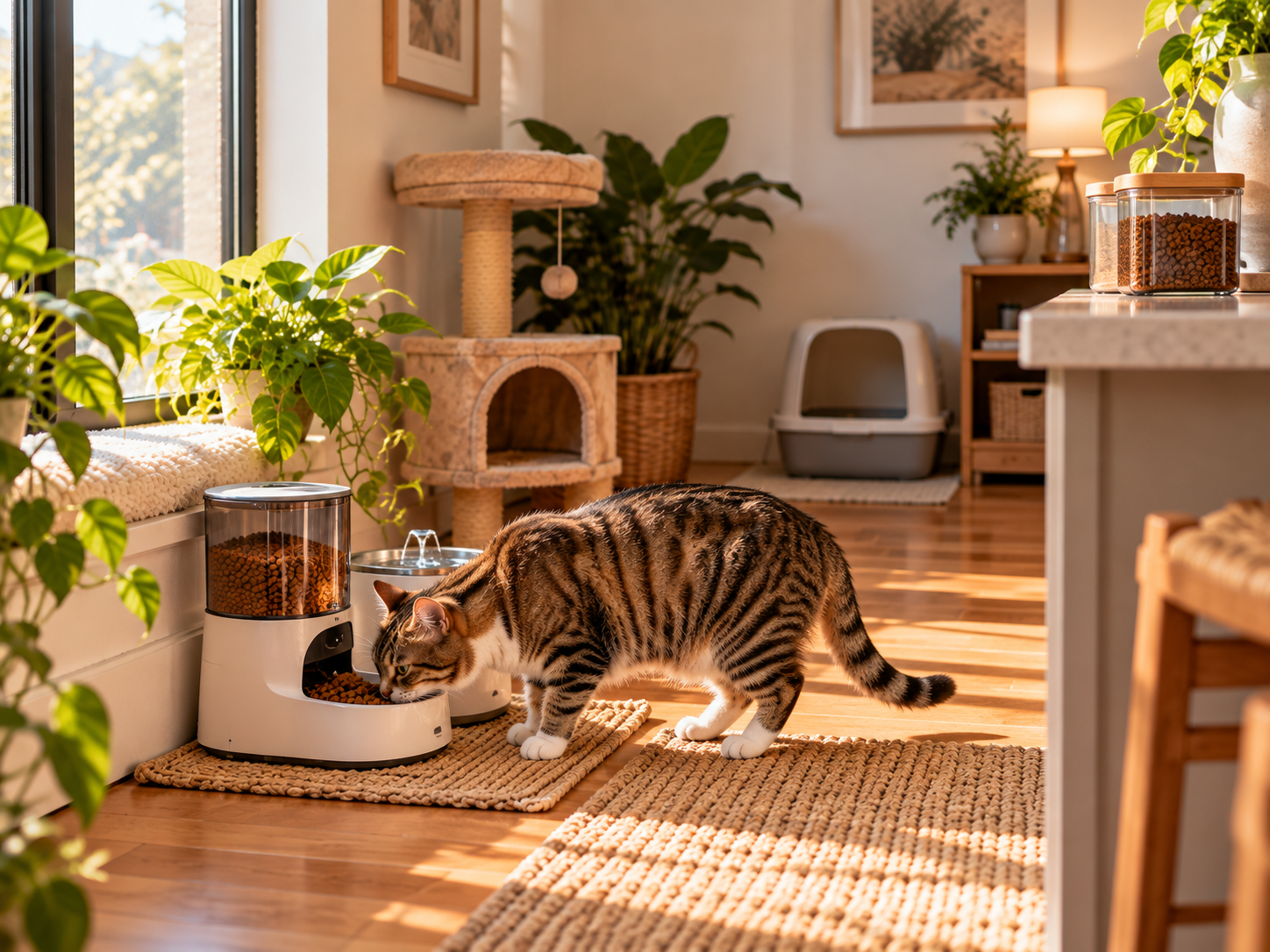
Leave the amount of food your cat normally needs during the absence rather than simply filling a huge bowl. Overfeeding can create digestive problems and may not suit cats on controlled diets.
Wet food requires extra planning because it should not sit at room temperature for long periods. Cats Protection notes that wet food can spoil after a few hours, so a person may need to return to provide a fresh meal. Dry food remains usable for longer, but it still needs to be portioned and checked regularly.
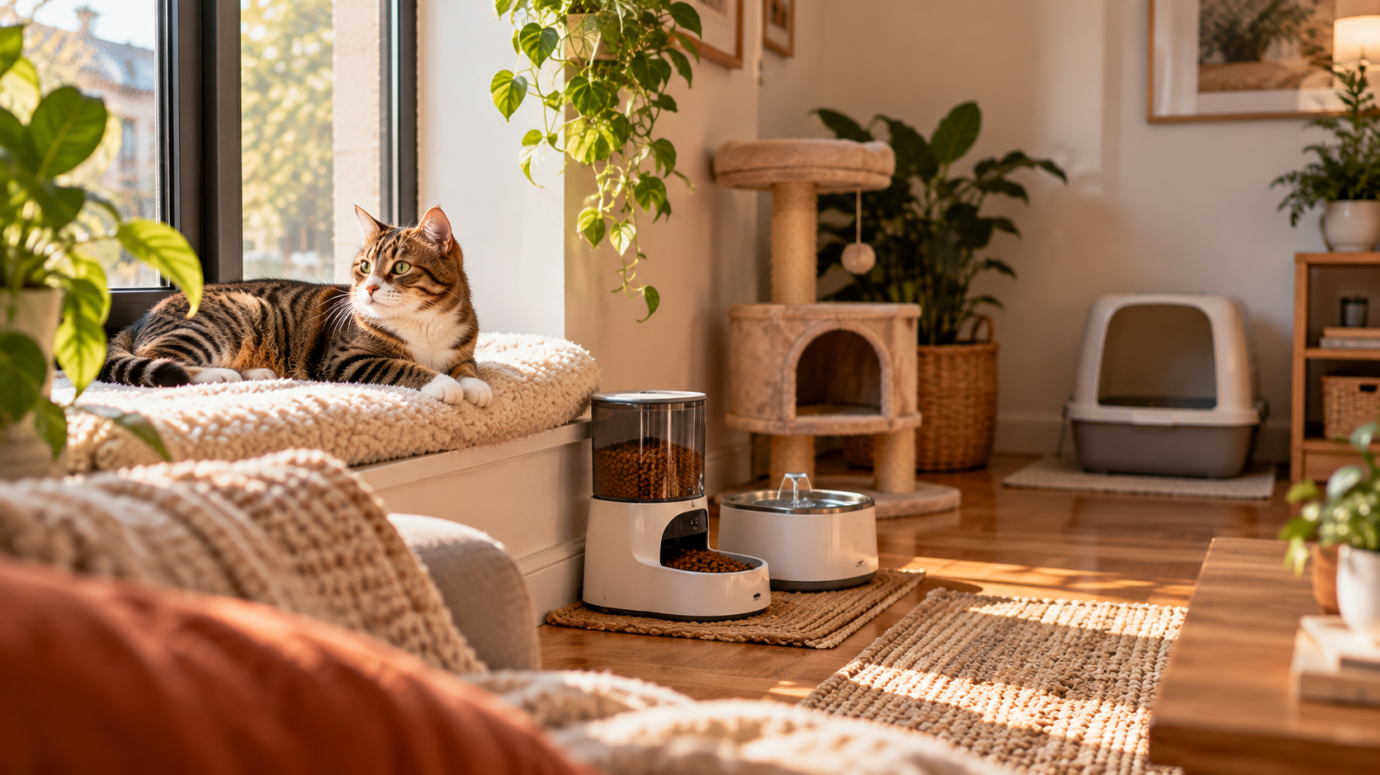
Automatic feeders can help with timing, but they are equipment, not supervision. Test the feeder several times while you are home. Make sure your cat understands it, the batteries are reliable, and another pet cannot steal the food. For trips that exceed a normal workday, a sitter is still the safer plan.
Provide more than one source of fresh water
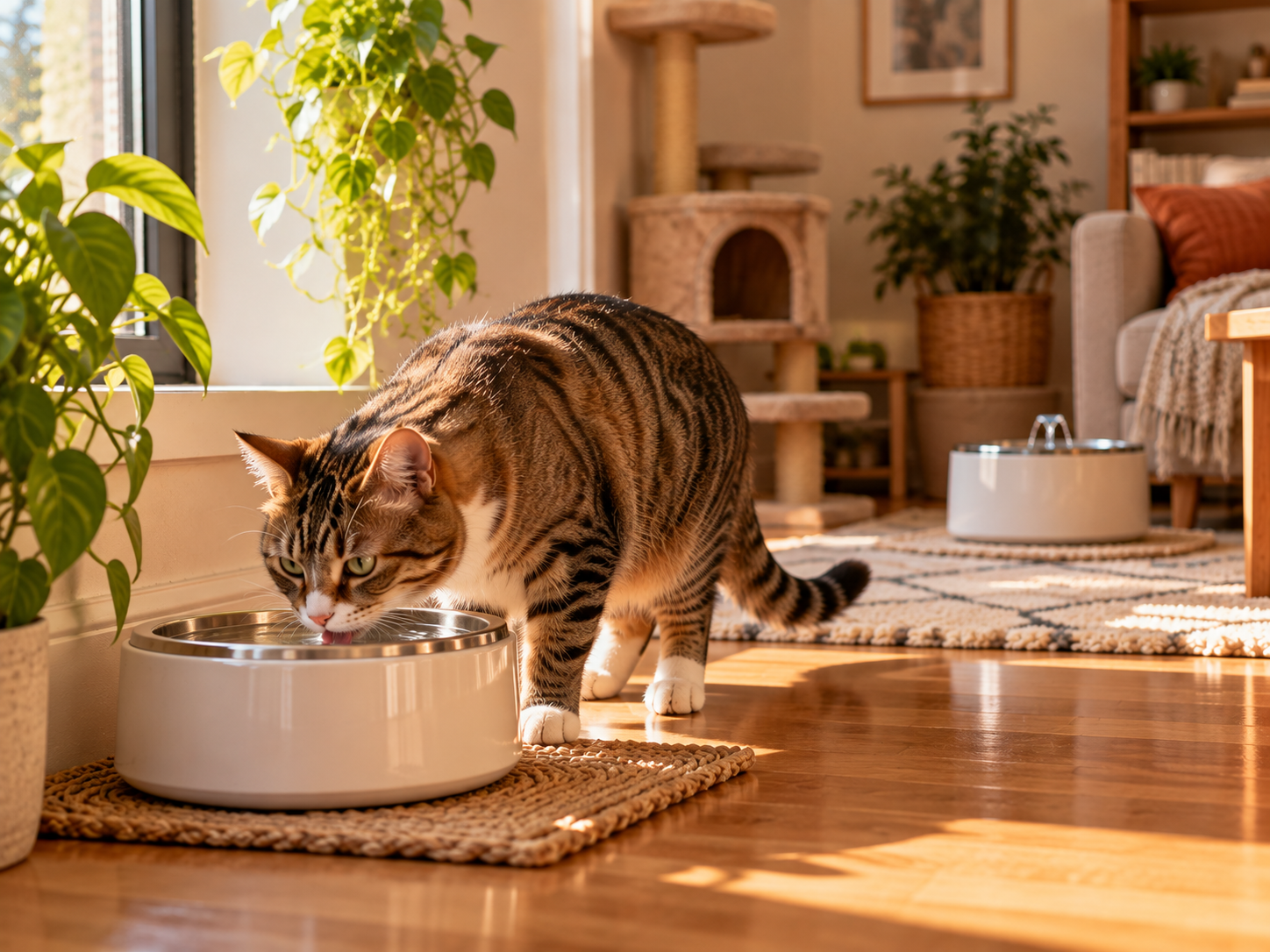
Leave clean water in stable containers that are difficult to tip. Two water points in different locations provide a simple backup if one is spilled or contaminated. If your cat normally uses a fountain, consider leaving a bowl as well in case the fountain stops working.
Refresh the water before you leave. Do not assume a large reservoir guarantees access; pumps can fail and bowls can become blocked or knocked over. Cats with conditions that affect thirst or hydration may need a more specific plan from a veterinarian.
Clean the litter tray before leaving
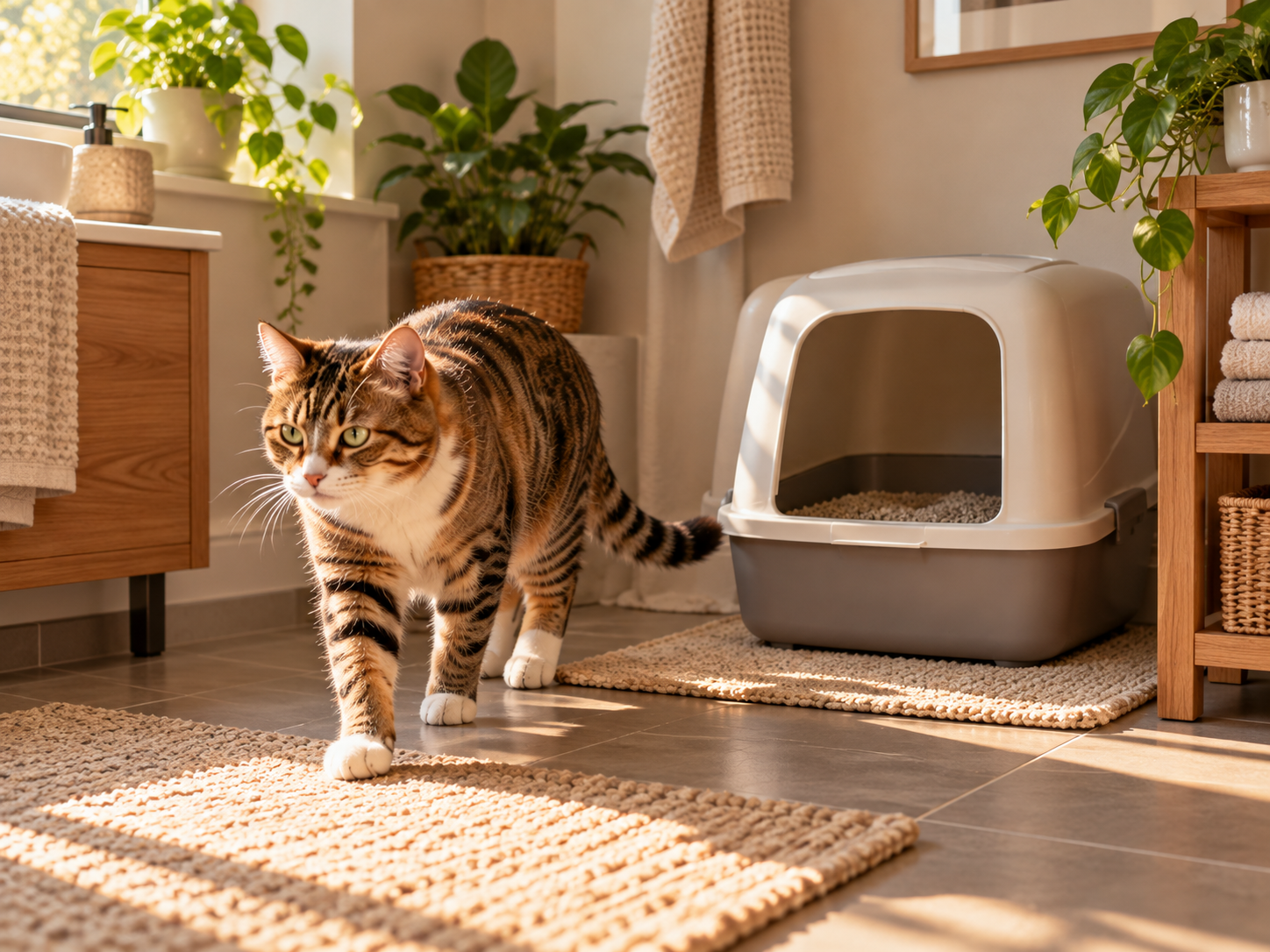
A dirty litter tray can become a welfare problem surprisingly quickly, especially in a multi-cat home. Cats Protection recommends removing waste at least twice daily. Scoop the tray immediately before leaving and make sure the cat can access it throughout the absence.
If you have more than one cat, provide enough trays in separate locations rather than relying on one tray for everyone. A sitter should know where the trays are, what your cat's normal output looks like, and what changes should trigger a call to you or the vet.
Remove predictable household hazards
Before leaving, walk through the rooms your cat can access. Put away string toys, thread, ribbon, medication, cleaning chemicals, unsafe human food, and anything the cat might knock onto itself. Check windows, balconies, screens, doors, washers, dryers, and reclining furniture.
Choose toys that are safe for unsupervised use. Wand toys and strings should usually be stored away. Simple solid toys, sturdy puzzle feeders already familiar to the cat, cardboard boxes, and secure resting places are safer options.
Do not rely on cameras as a substitute for care
A camera can be useful for checking whether a cat is moving around normally, but it cannot refill spilled water, clean vomit, open a jammed feeder, or take a sick cat to a vet. Treat remote monitoring as extra information, not as the caregiver.
If you are away long enough that a problem could go unnoticed for many hours, arrange for a responsible person to visit. Give that person clear instructions rather than asking only for a quick visual check from the doorway.
For absences longer than about 12 hours, arrange human care
Cats Protection recommends a cat sitter, friend, family member, neighbour, or cattery when you will be away longer than about 12 hours, and sooner for cats with additional needs. The RSPCA similarly advises arranging responsible care rather than leaving a pet alone without someone to meet its welfare needs.
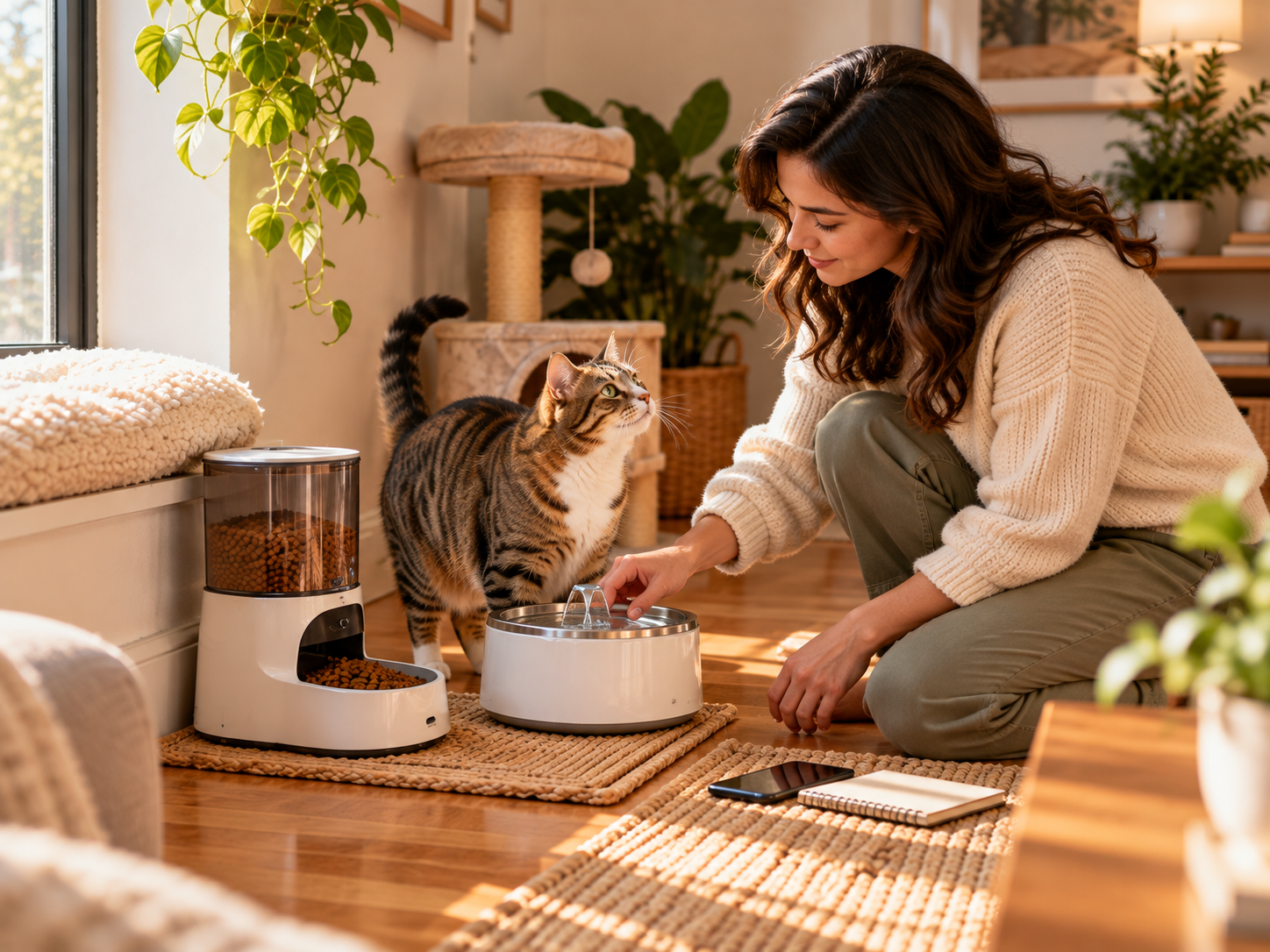
For many cats, care in their own home is less disruptive than travelling to a new environment because cats are strongly attached to familiar territory. A sitter can keep feeding, litter, play, and medication routines closer to normal.
Give the sitter useful instructions
Leave more detail than “feed twice a day.” Write down normal meal amounts and times, where extra food is stored, litter routine, medication instructions, favorite hiding spots, and what behavior is normal for your cat. Include your contact information, your veterinarian's number, an emergency clinic, and a backup person who can make decisions if you cannot be reached.
Tell the sitter what should trigger concern: not eating, repeated vomiting, difficulty breathing, straining in the litter tray, unusual lethargy, sudden aggression, or a cat that cannot be found after a careful search. For male cats in particular, repeated trips to the litter tray with little or no urine can be an emergency and should not wait for your return.
Ask the sitter to actually interact and observe
A good visit is more than topping up bowls. The sitter should see the cat if possible, check food and water intake, inspect the litter tray, look for vomit or accidents, and spend time interacting if the cat enjoys company. A shy cat may stay hidden, so the sitter should know the cat's usual hiding places and look for indirect signs that the cat is eating, drinking, and using the tray.
For social cats, a play session or quiet companionship can help keep the routine familiar. For cautious cats, forcing contact can be stressful; the sitter can simply sit nearby, speak softly, and let the cat decide whether to approach.
Kittens need much shorter periods alone
Young kittens should not be managed by adult-cat time limits. Cats Protection advises that young kittens should be left only for a few hours at a time and checked more frequently because they have small stomachs, high energy needs, and a strong tendency to explore unsafe situations.
Gradually practicing short periods alone can help a kitten learn that people leave and return. Start with minutes, not an entire workday, and make sure the room is safely kitten-proofed.
Older and medically complex cats need a custom plan
A senior cat may sleep more, but that does not automatically mean it can be left longer. Older cats are more likely to have conditions that affect eating, drinking, mobility, toileting, or medication. The same applies to cats recovering from surgery or illness.
Ask your vet how often the cat should be checked and what warning signs matter for that specific condition. If medication must be given at exact times, choose a sitter who is comfortable administering it and has practiced with you beforehand.
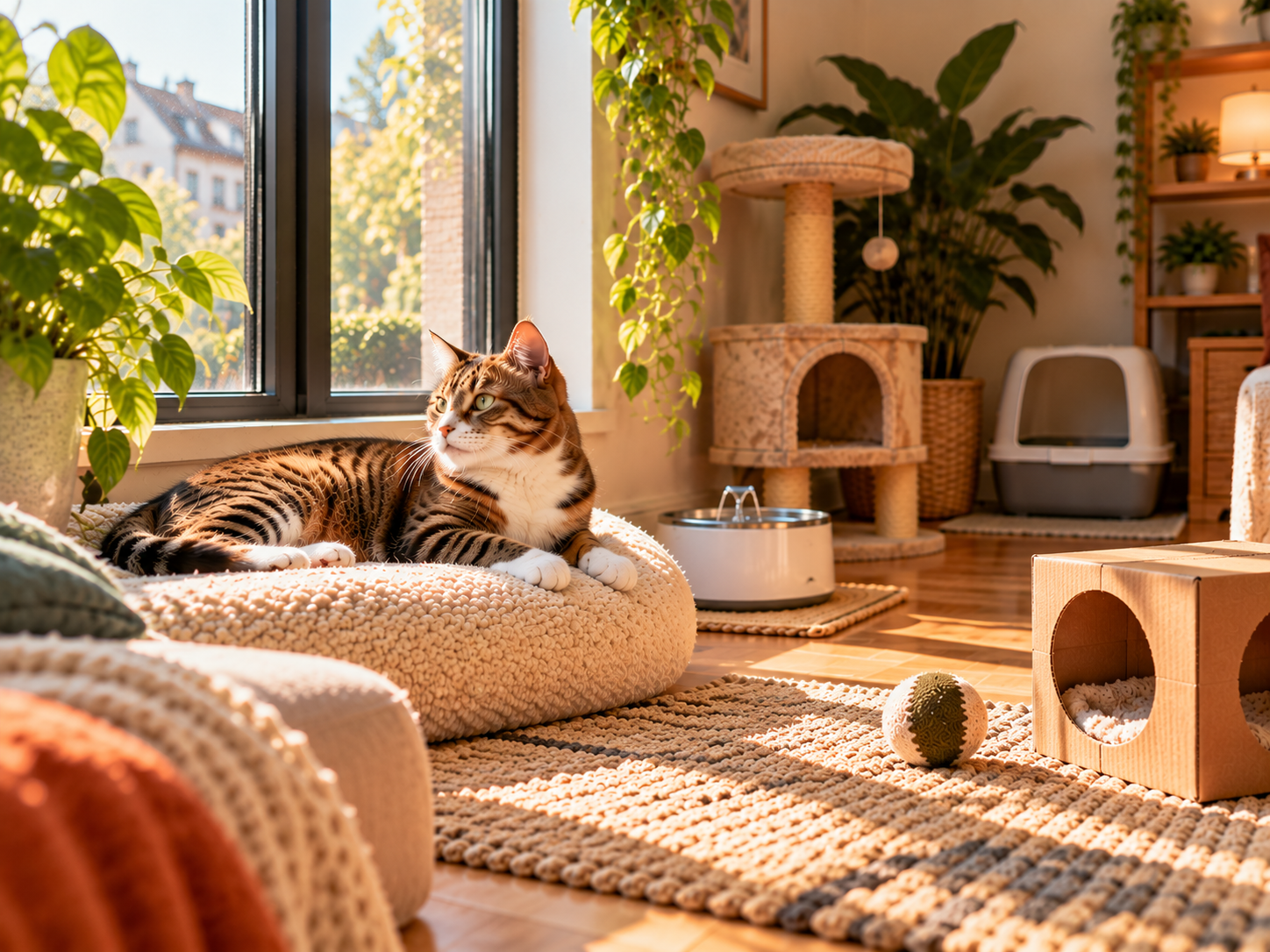
Overnight and multi-day trips need different planning
An occasional absence approaching 12 hours is very different from a weekend away. For overnight or multi-day trips, arrange regular in-person care from the start. The RSPCA recommends leaving a responsible caregiver detailed routine, health, and veterinary information and notes that staying in the familiar home can often be less stressful for cats than travelling elsewhere.
Do not try to convert a weekend into a “large enough bowl” problem. Repeated daily checks are needed because the cat's condition and the home environment can change.