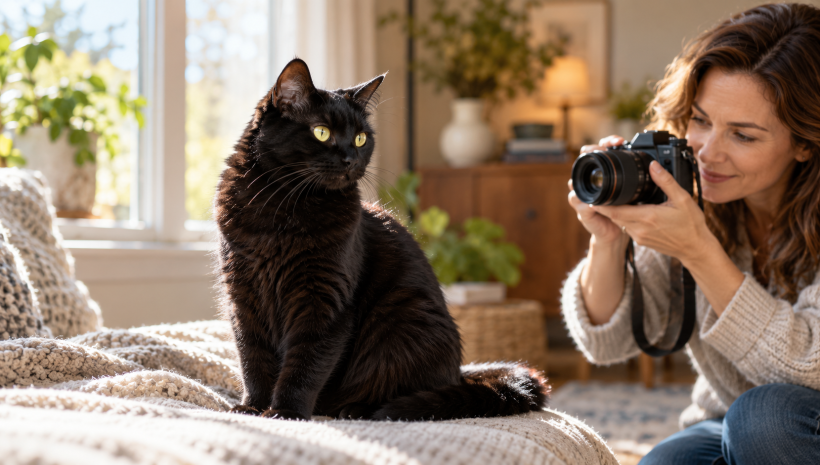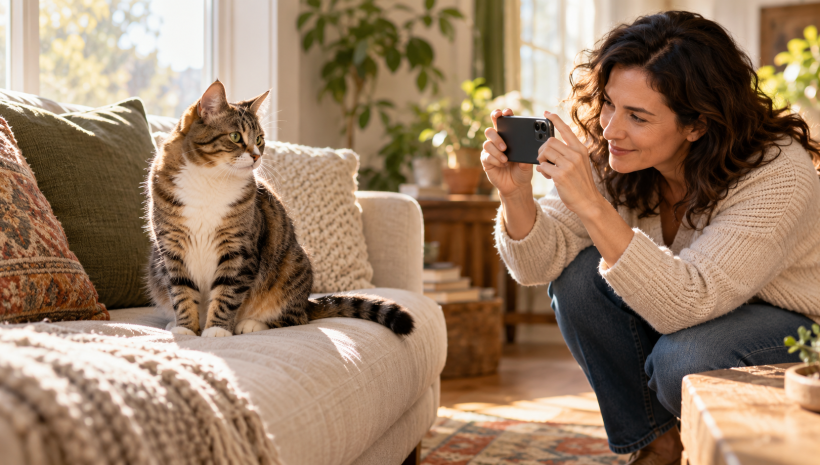
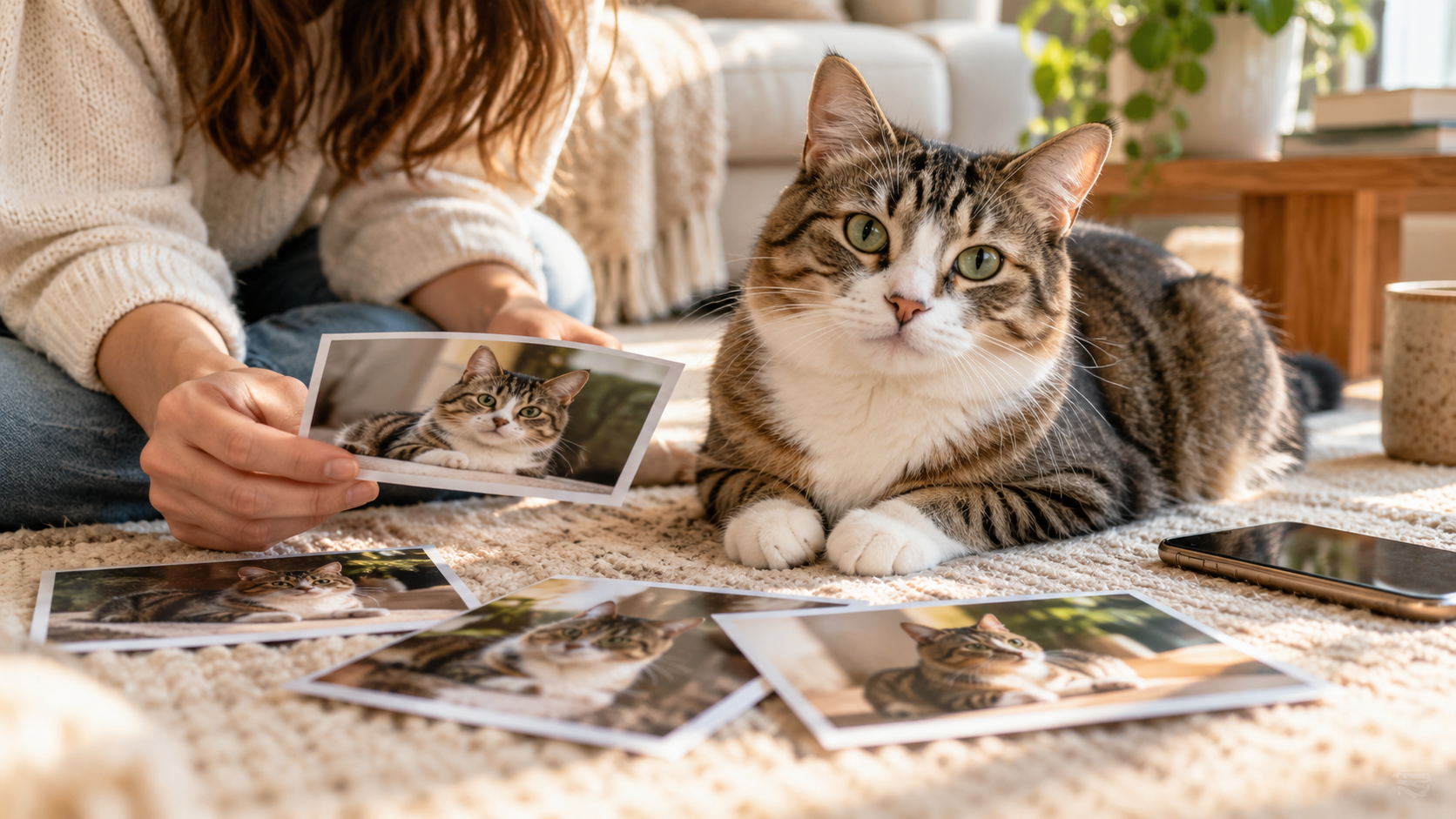
Your favorite photo is often your favorite for a reason: the expression feels exactly right. But for a custom portrait, emotion and image clarity both matter. The goal is not to throw away the meaningful photo. It is to identify what makes it special, then choose the clearest image that still preserves that feeling.
Start with the moment you want to preserve
Before comparing sharpness, decide what you love about the photo. Is it the head tilt, the alert eyes, a sleepy expression, or the way your cat is looking at you? Keep that detail as your reference point. It will help you judge clearer alternatives without losing the personality that made the original photo important.
Check the identity cues first
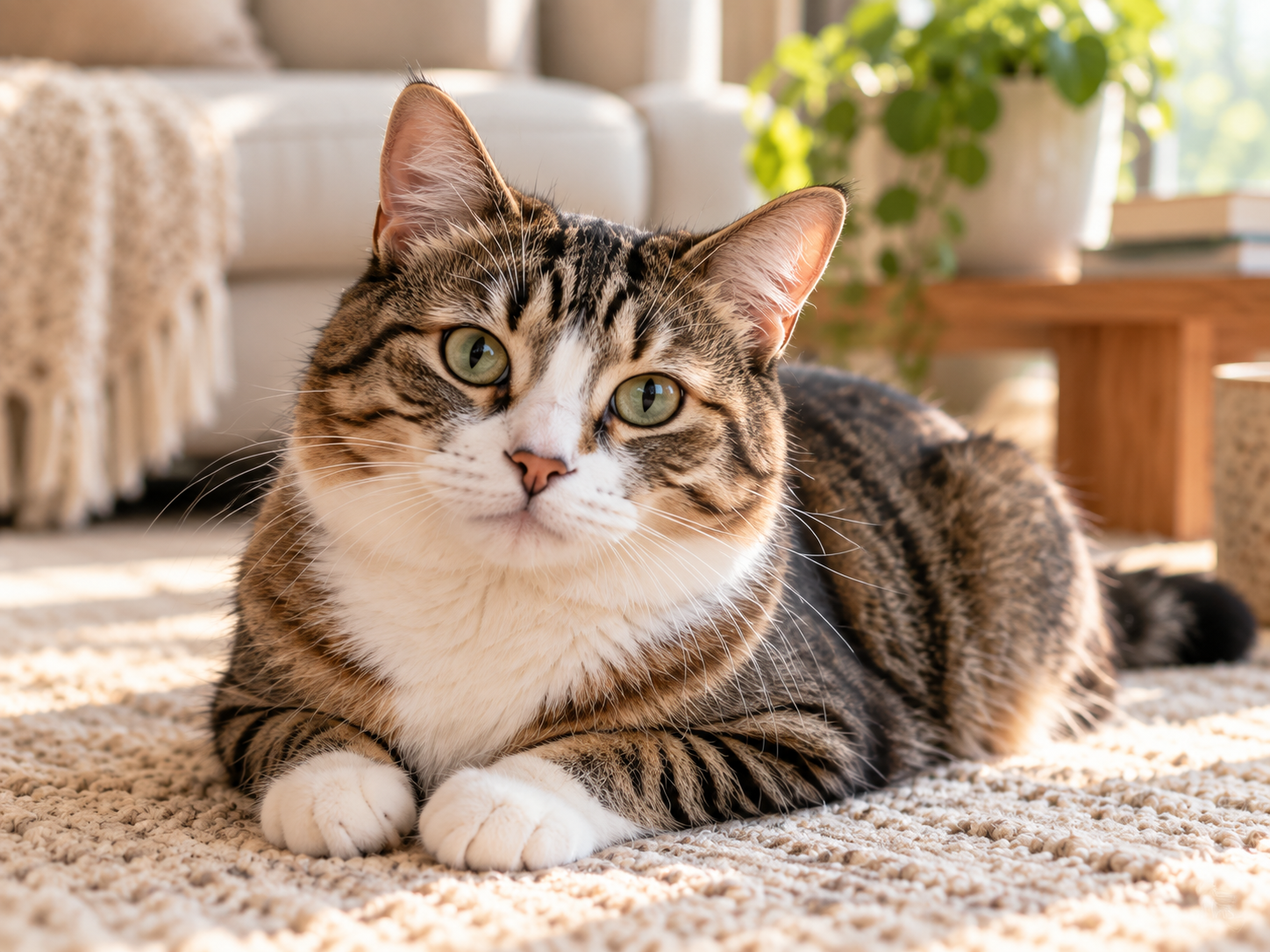
For a conventional cat portrait, readable eyes and usable face detail are strong practical priorities. Photography guidance from Nikon USA emphasizes sharp focus around an animal’s eyes, while its animal-detection autofocus guidance also treats the eye and face as key focus targets.
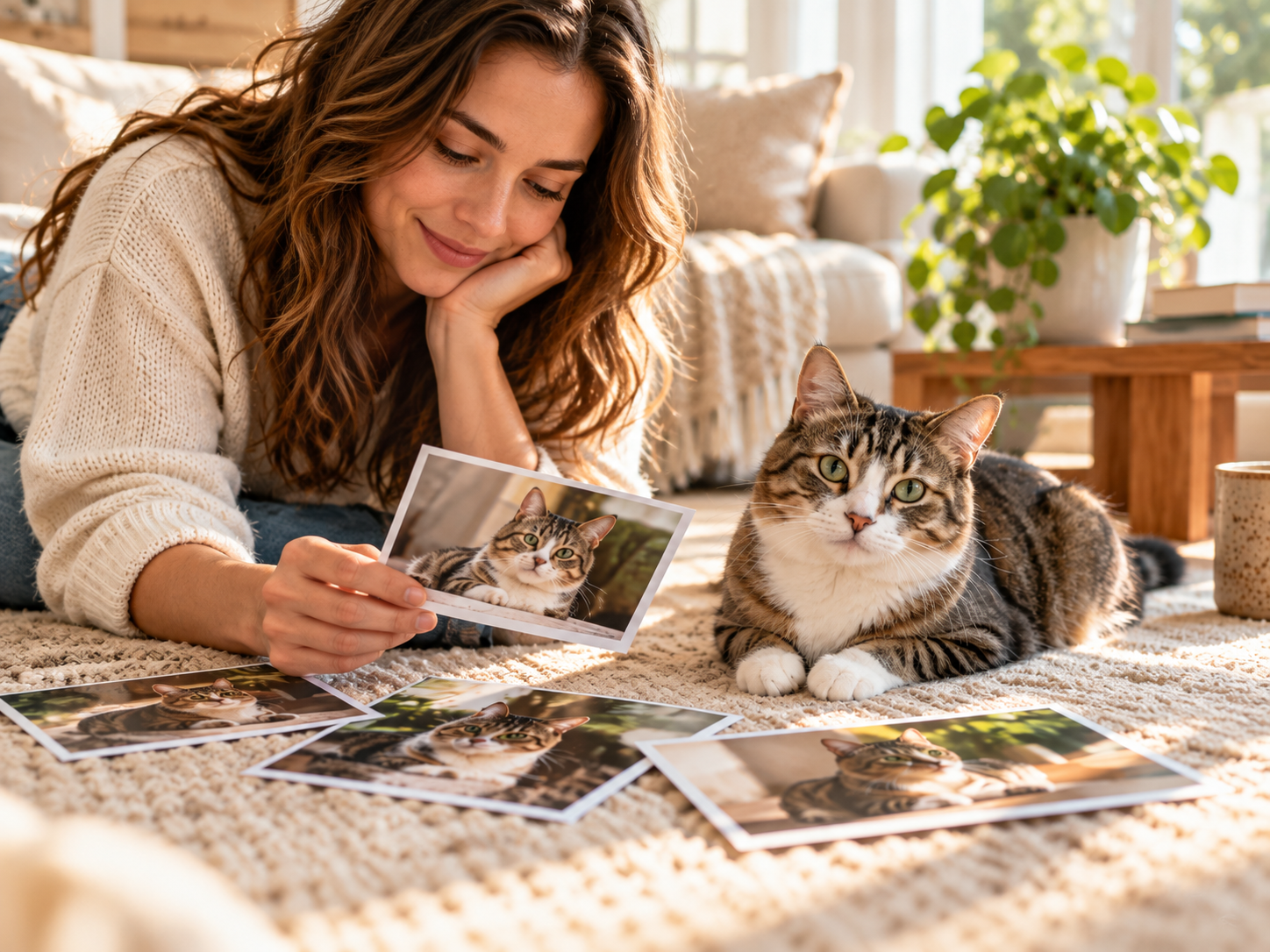
Look closely at your candidate photos. Can you clearly read the eyes, nose, muzzle, ear shape, and the main coat markings around the face? If those details are badly blurred, the image may still be emotionally perfect but less useful as the primary portrait reference.

Compare the favorite with one or two clearer alternatives
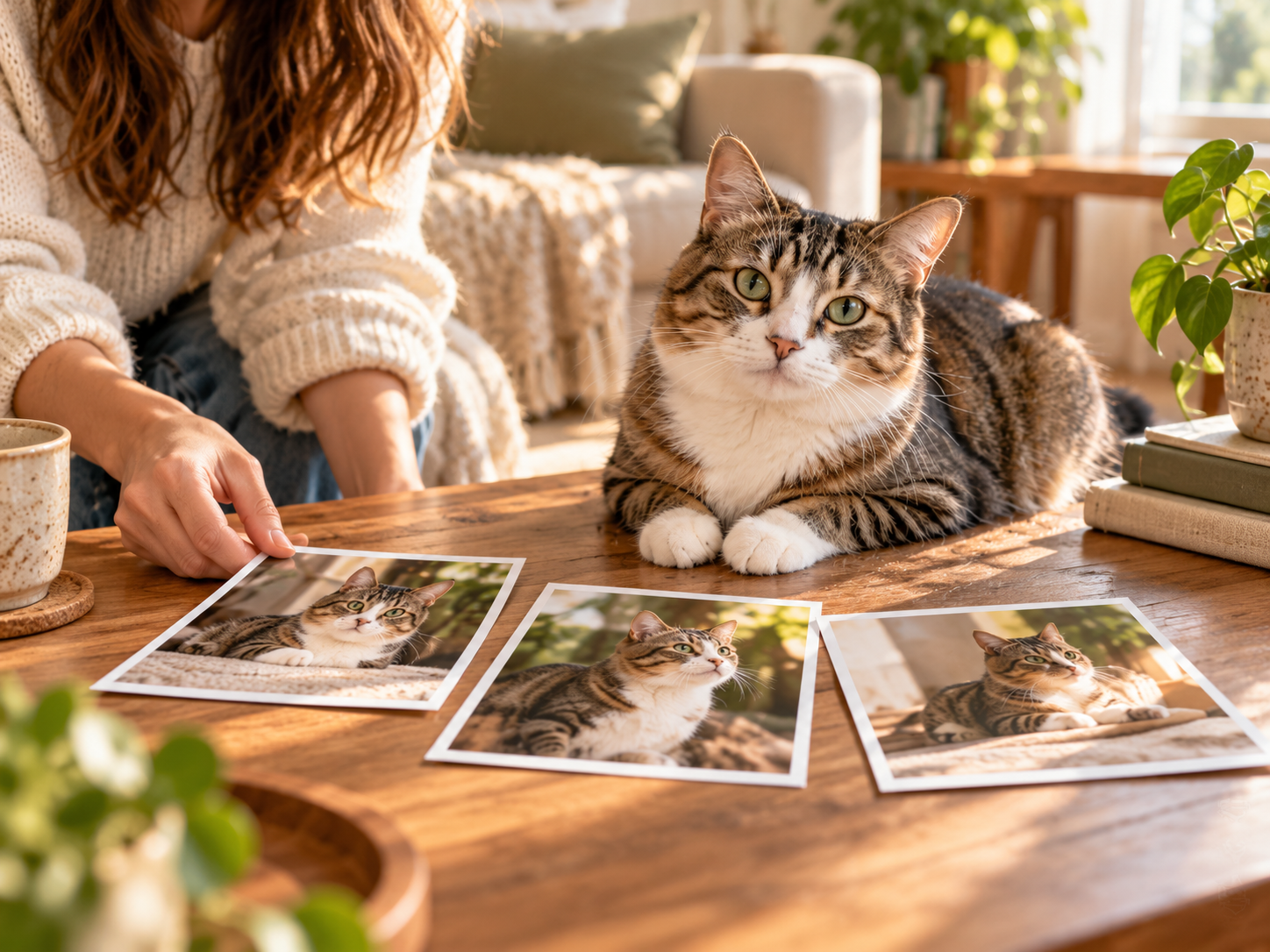
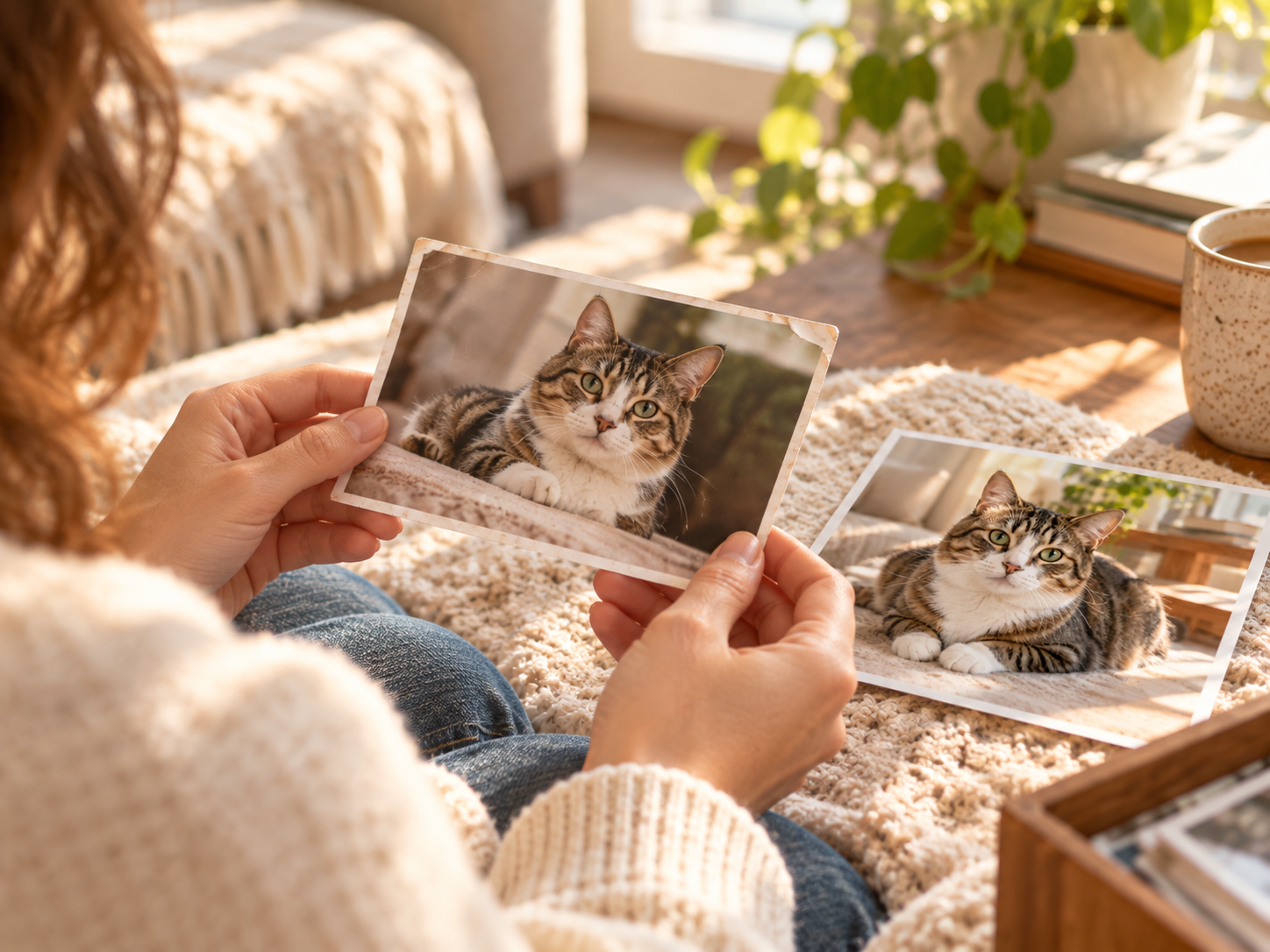
Put your favorite beside the clearest alternatives. Do not compare ten photos at once. Ask three questions:
- Which photo best captures the expression I care about?
- Which photo shows the eyes and face most clearly?
- Is there a clearer photo that still feels like the same cat and the same moment?
If a sharper image gives you readable eyes and clean face detail while preserving the same personality, it is usually the stronger portrait base. Keep the softer favorite nearby as an expression reference.
Use separate photos for separate jobs
You do not always need one perfect image that contains every detail. A small set of complementary photos can be more useful than a single compromised one. One image might show the expression you love, another might show the true eye color in daylight, and a third might reveal a chest patch, nose marking, tail pattern, or ear shape that is hidden in the favorite.
Keep the roles clear when you choose them. Pick one primary photo for the overall pose and expression, then use the others only to answer specific questions about identity. That keeps the portrait from becoming a blend of conflicting angles while still preserving details that make your cat recognizable.
Pay extra attention to coat detail
Solid-colored cats can be deceptively difficult to photograph. A black cat may lose facial separation when the image is underexposed, while a white cat may lose fur texture when bright areas are blown out. Patterned cats present a different problem: a clear face can still be a weak reference if the distinctive markings on the forehead, muzzle, chest, legs, or tail are hidden.
When you compare images, do not judge only by overall brightness. Zoom in and ask whether the important markings are actually readable. If one image shows the expression beautifully but hides the coat pattern, pair it with a second daylight photo that records those markings more clearly.
Use natural light and a tighter frame
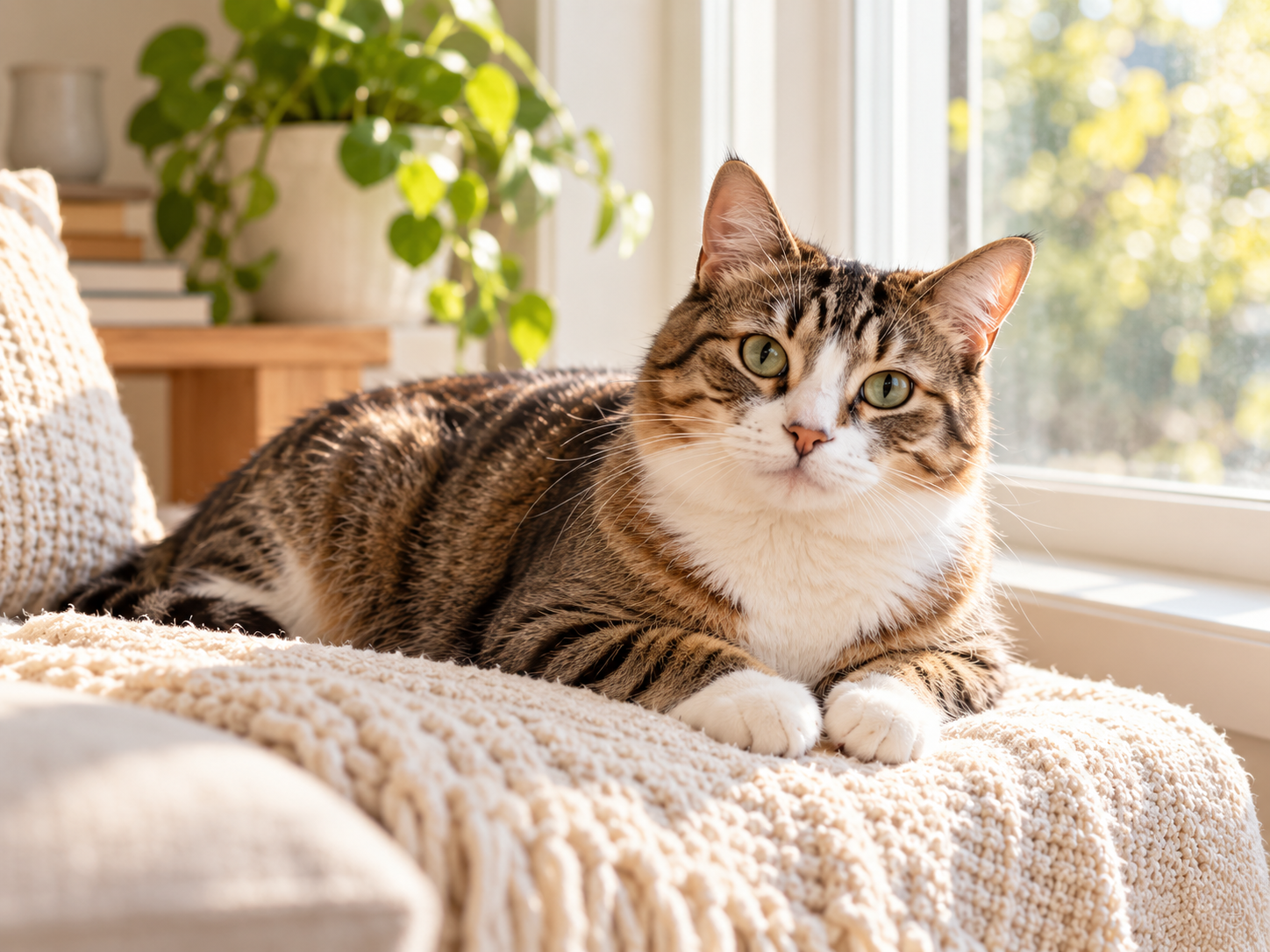
When several images are otherwise suitable, favor the one with soft natural or window light. It tends to preserve fur texture and facial detail without the harsh reflections that flash can create. A tighter crop can also reduce distracting surroundings and make the cat easier to read.
Cropping cannot recover missing detail, though. If the eyes and face are unreadable, a tighter crop only makes the blur larger. Use framing to strengthen a usable photo, not to rescue an unusable one.
Check the actual file, not only the preview
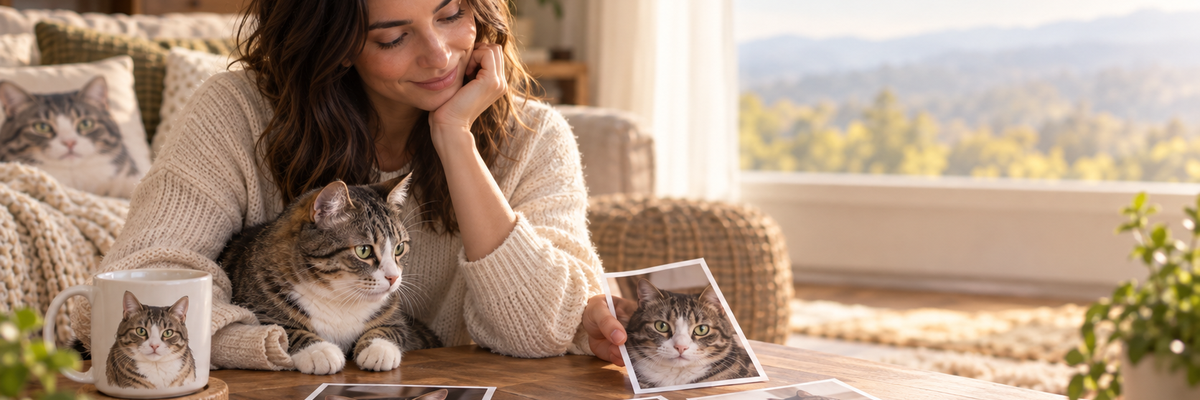
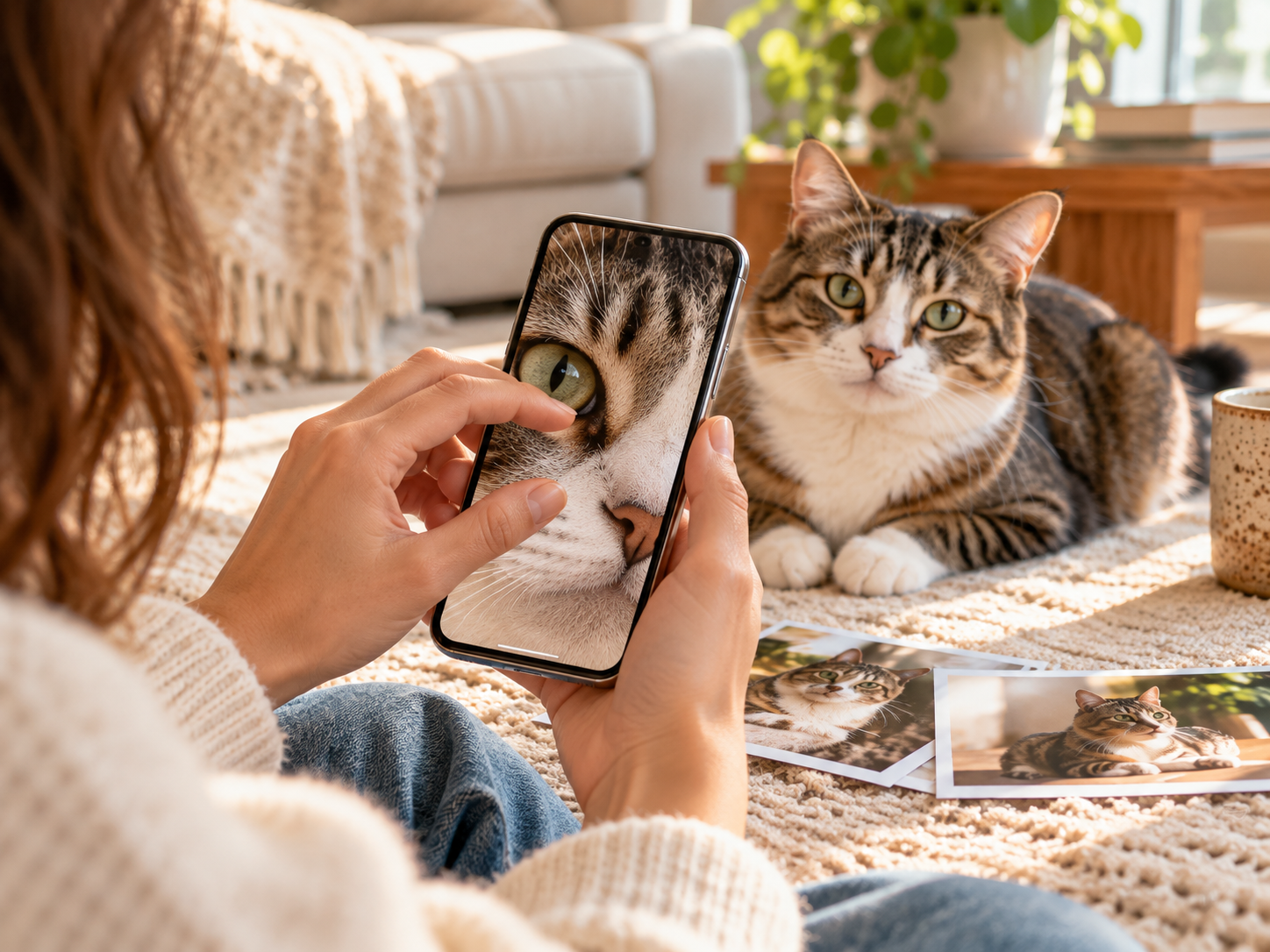
A photo can look acceptable on a small phone screen and fall apart when enlarged. Before choosing, open the original file and zoom in on the eyes and face. Screenshots, heavily compressed social-media copies, and images that have been repeatedly forwarded can lose detail even when the composition is good.
If you have the original camera or phone file, use that version. If you only have an older copy, do not discard it automatically; simply treat it as an expression or memory reference and support it with clearer photos of the same cat where possible.
What if the imperfect photo is the only one that feels right?
Then keep it. A meaningful image can still be valuable as a secondary reference, especially when another photo shows the cat’s markings, eye color, and face shape more clearly. Separate photos can often answer separate questions: one preserves the expression; another provides the detail.
Quick photo-selection checklist
- Expression: Does it feel like your cat?
- Eyes: Are they readable rather than heavily blurred?
- Face: Can you see the muzzle, nose, ears, and head shape?
- Markings: Are the important coat patterns visible?
- Light: Is the fur color reasonably natural?
- Crop: Is the cat large enough in the frame to work from?
- File quality: Do you have the original rather than only a compressed screenshot?
Frequently asked questions
Should I choose my favorite photo if it is not the clearest?
Use it as the expression reference, then compare it with the sharpest image that still preserves the feeling you love.
What matters most in a cat portrait photo?
Readable eyes, usable face detail, recognizable markings, and a natural-looking coat color are practical priorities.
Can a tighter crop make a blurry photo work?
It can remove distractions, but it cannot restore detail that was never captured.
Can I use more than one photo?
Yes. A primary image can guide pose and expression while supporting photos provide missing coat, eye, or facial details.
What if my best photo was taken while my cat was moving?
Keep it if the expression matters, but inspect the face at full size. Motion blur around the body may be acceptable as a reference, while blurred eyes, muzzle, or markings make a second supporting image much more useful. The strongest set preserves both the moment and the details that identify your cat.
Ready to turn a favorite photo into something you can keep?
MewKind creates personalized portraits for mugs, blankets, pillows, and desk mats. Explore printed products.