Leaving a cat home alone can feel nerve-wracking, even for a day or two. PetGuide Cats are relatively independent, but proper preparation ensures they remain safe, happy, and comfortable. PetGuide When your daily schedule shifts and you face an extended absence, understanding how your environment impacts your feline companion becomes essential for preventing stress and maintaining household harmony.
The short answer
To prepare your home for an extended workday, establish a secure environment, provide reliable access to fresh water and measured nutrition, and ensure familiar resting areas remain open. Maintaining familiar bedding, predictable feeding schedules, and routine maintenance helps minimize stress when cats encounter changes in their daily routine. The Alternative Cafe However, if your cat has specific medical needs, separation anxiety, or requires daytime medication, standard preparations may not be enough, and professional check-ins or pet-sitting arrangements should be considered.
By taking proactive steps before you walk out the door, you can bridge the gap between your busy professional schedule and your cat’s need for security. This involves evaluating every room your cat can access, removing potential hazards, setting up reliable food and hydration stations, and establishing environmental touchpoints that keep your cat mentally engaged while you are away.
What is really happening
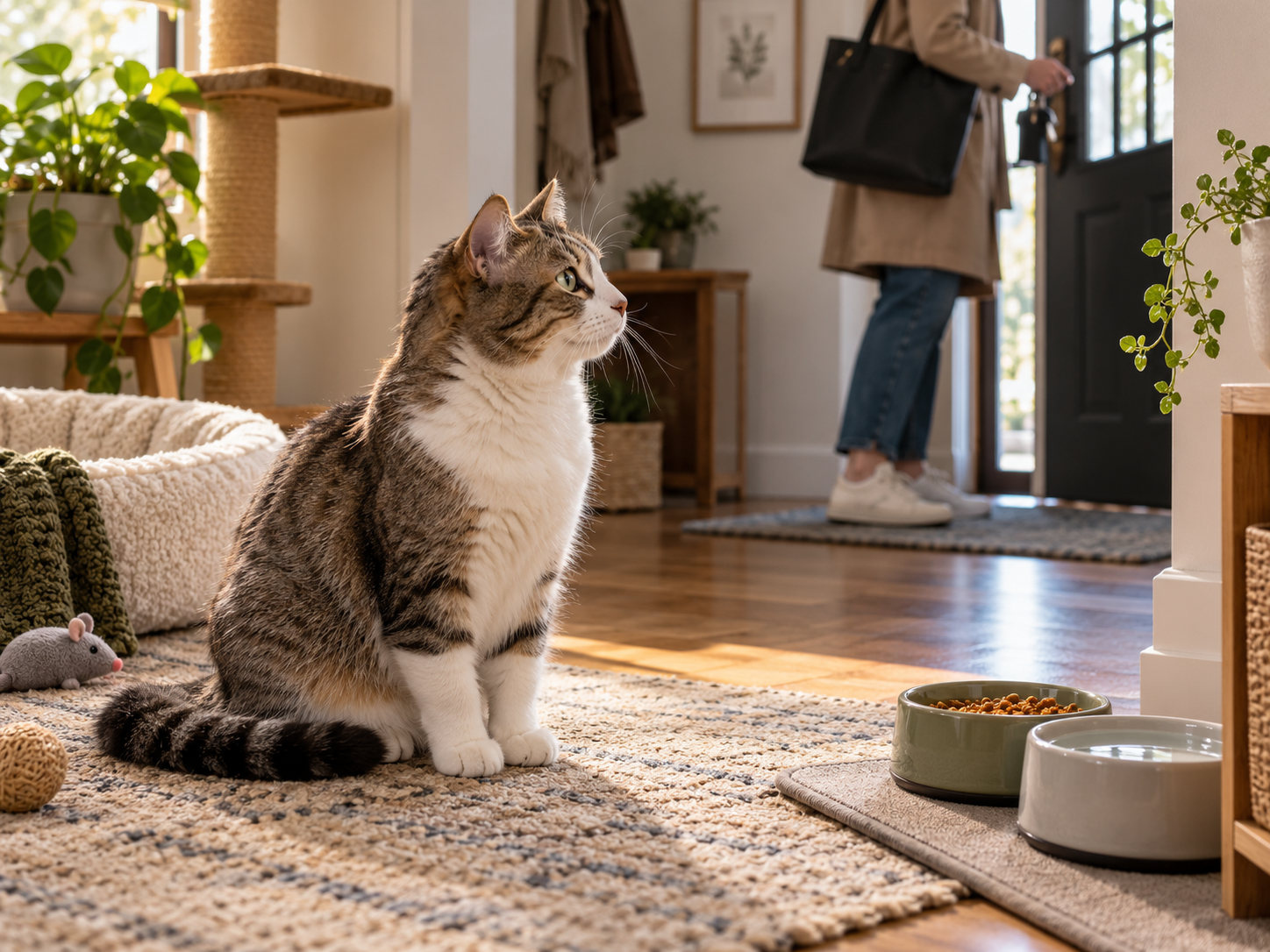
Cats are creatures of habit who respond strongly to predictability in their immediate surroundings. When an owner departs for a long shift, the household’s daily rhythm shifts noticeably. Preserving familiar routines, stable feeding setups, and comfortable resting spots helps mitigate stress during these absences. The Alternative Cafe Without these anchors, unexpected disruptions or unattended household hazards can trigger anxiety or lead to unsafe chewing or ingestion.
In nature, cats balance periods of rest with active hunting behaviors. In an indoor home environment, a long workday interrupts the predictable social and environmental cues they rely on. When humans disappear for eight to twelve hours, cats must navigate that quiet house entirely on their own. If their territory lacks familiar resting spots, stable scent marks, or engaging views, boredom can quickly give way to destructive exploration or anxious pacing. Understanding this psychological baseline allows you to design a living space that feels secure, reassuring, and stimulating even when you are absent.
What changes the answer
Several practical factors influence how well a cat manages a prolonged absence:
- Age and Health Status: Kittens and senior cats require more frequent feeding, attention, or medical monitoring than healthy adult cats. Younger cats possess boundless energy and curiosity, making them more prone to getting into mischief if left unmonitored for long stretches. Older cats, conversely, may struggle with stiff joints, failing eyesight, or specific medication schedules that cannot accommodate a standard workday without intervention.
- Multi-Cat Dynamics: Households with multiple cats may experience shifting social tensions or resource competition when humans are away for extended hours. If resources like litter boxes, water bowls, or resting perches are limited, a long absence can exacerbate subtle bullying or territorial blocking between housemates.
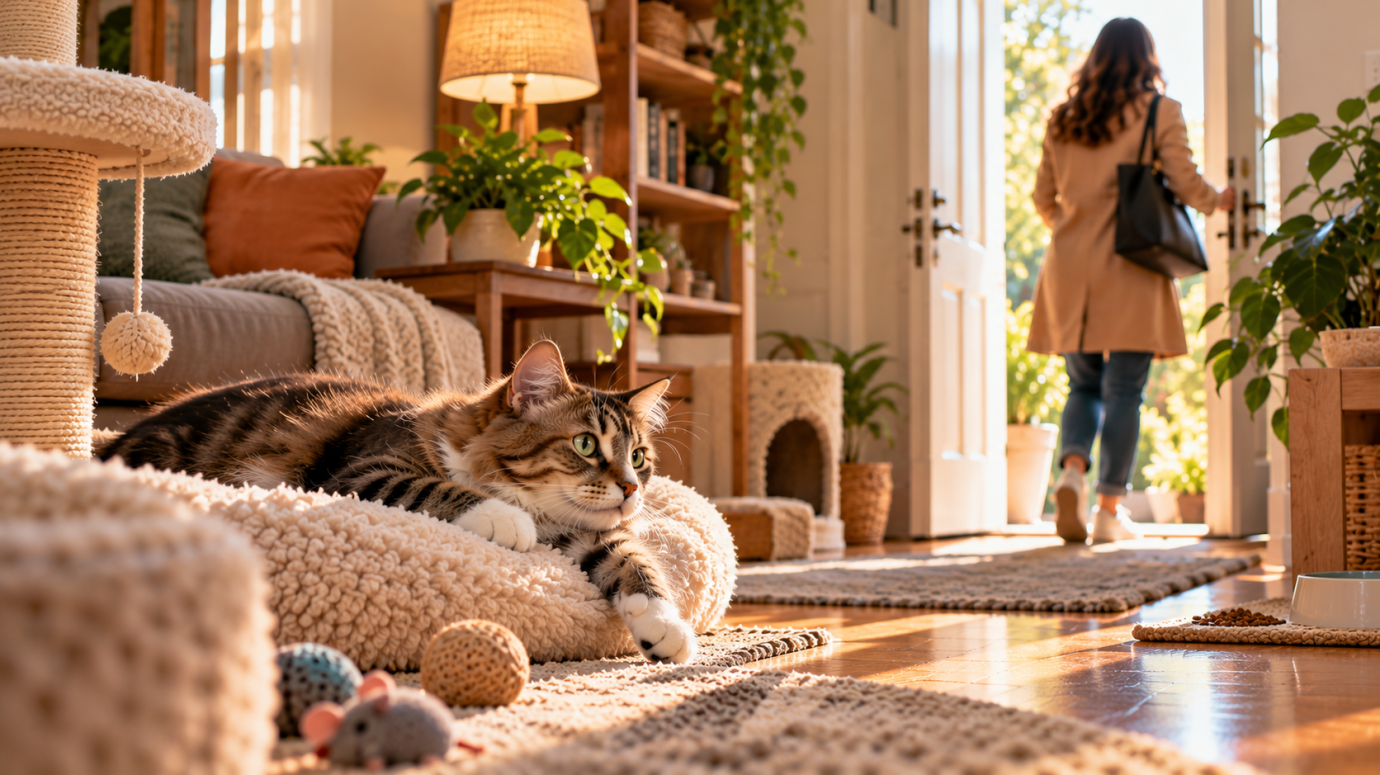
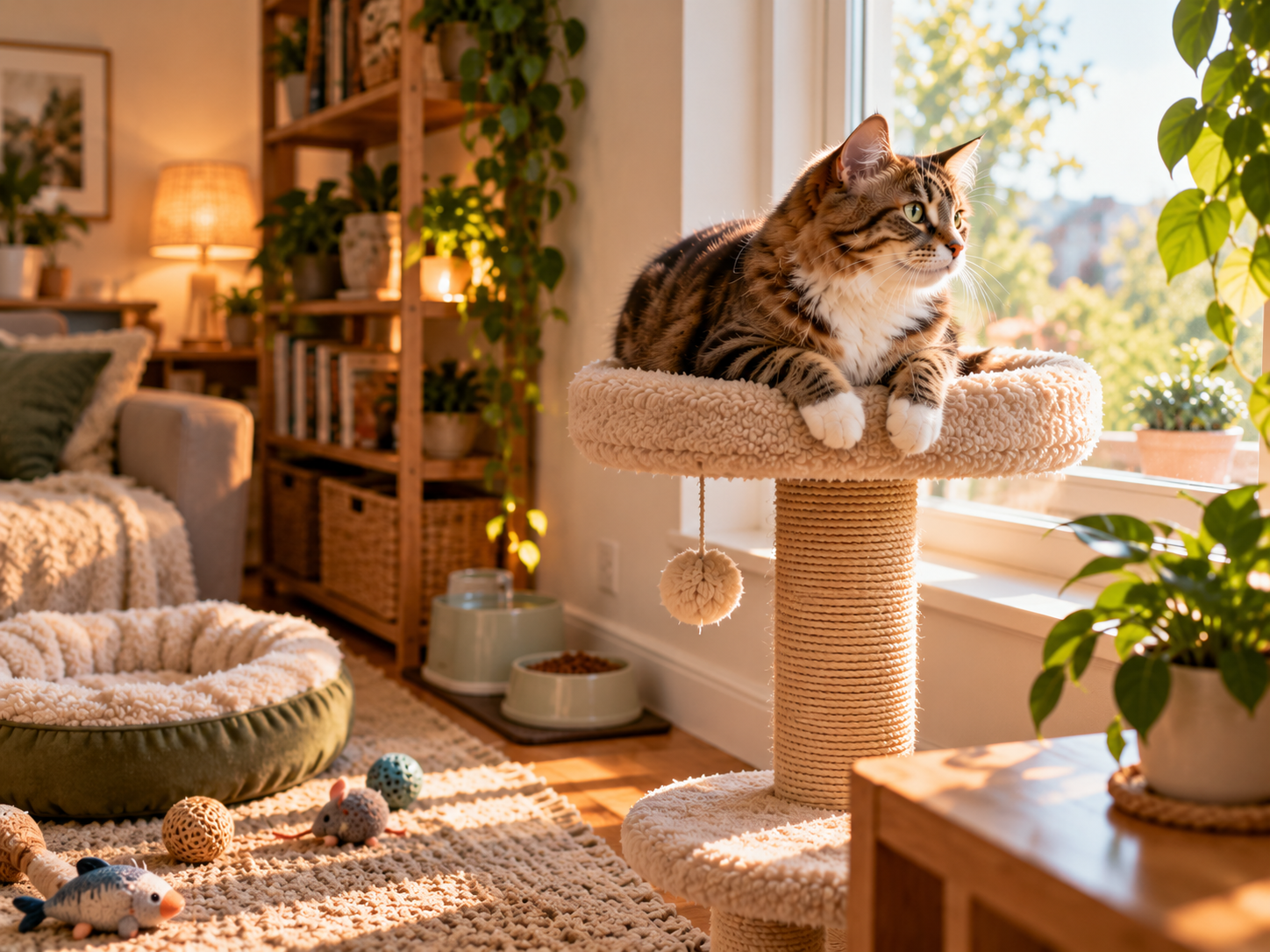
- Environmental Enrichment: Access to vertical spaces, window perches, and safe toys changes how a cat spends time during long hours alone. A cat with a dedicated window view of outdoor wildlife or multiple secure climbing shelves will naturally divide their day between resting and passive observation, reducing stress and inactivity.
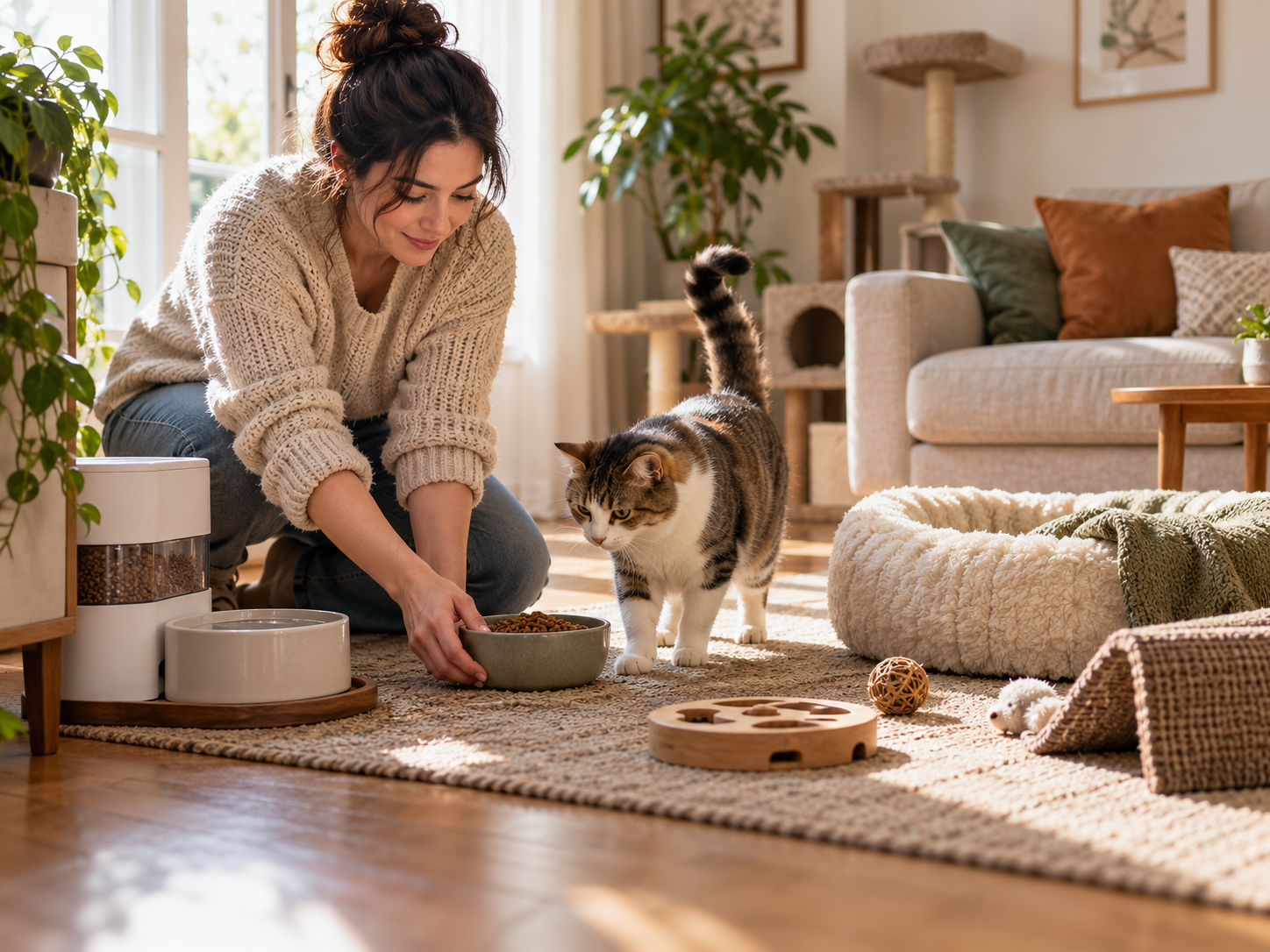
- Length of Absence: A standard eight-hour workday differs significantly from a twelve-hour absence, which may necessitate automated water fountains or timed feeders to ensure physiological needs are met without interruption.
What to check before you decide
Before heading out for an extended workday, review this practical checklist:
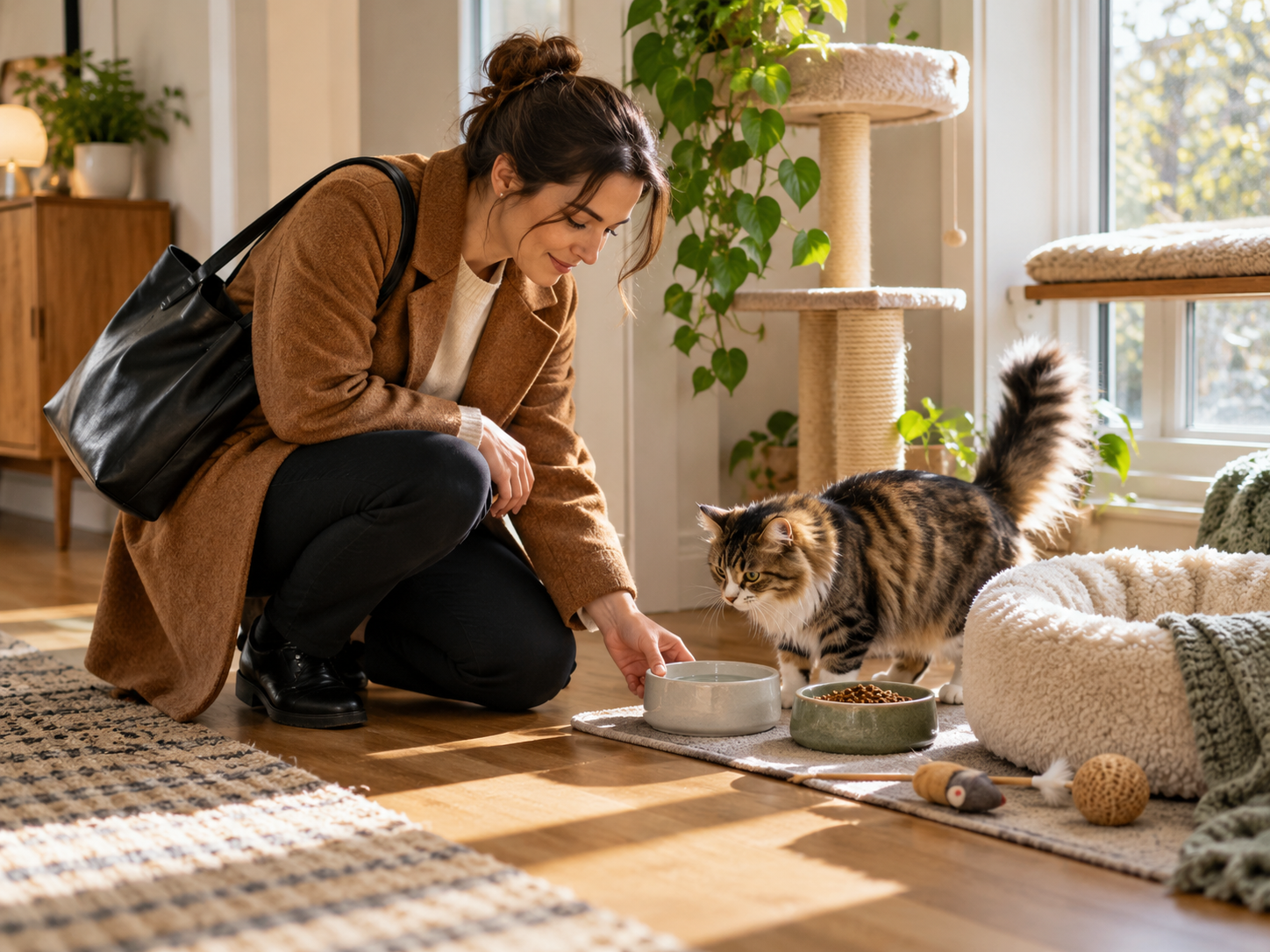
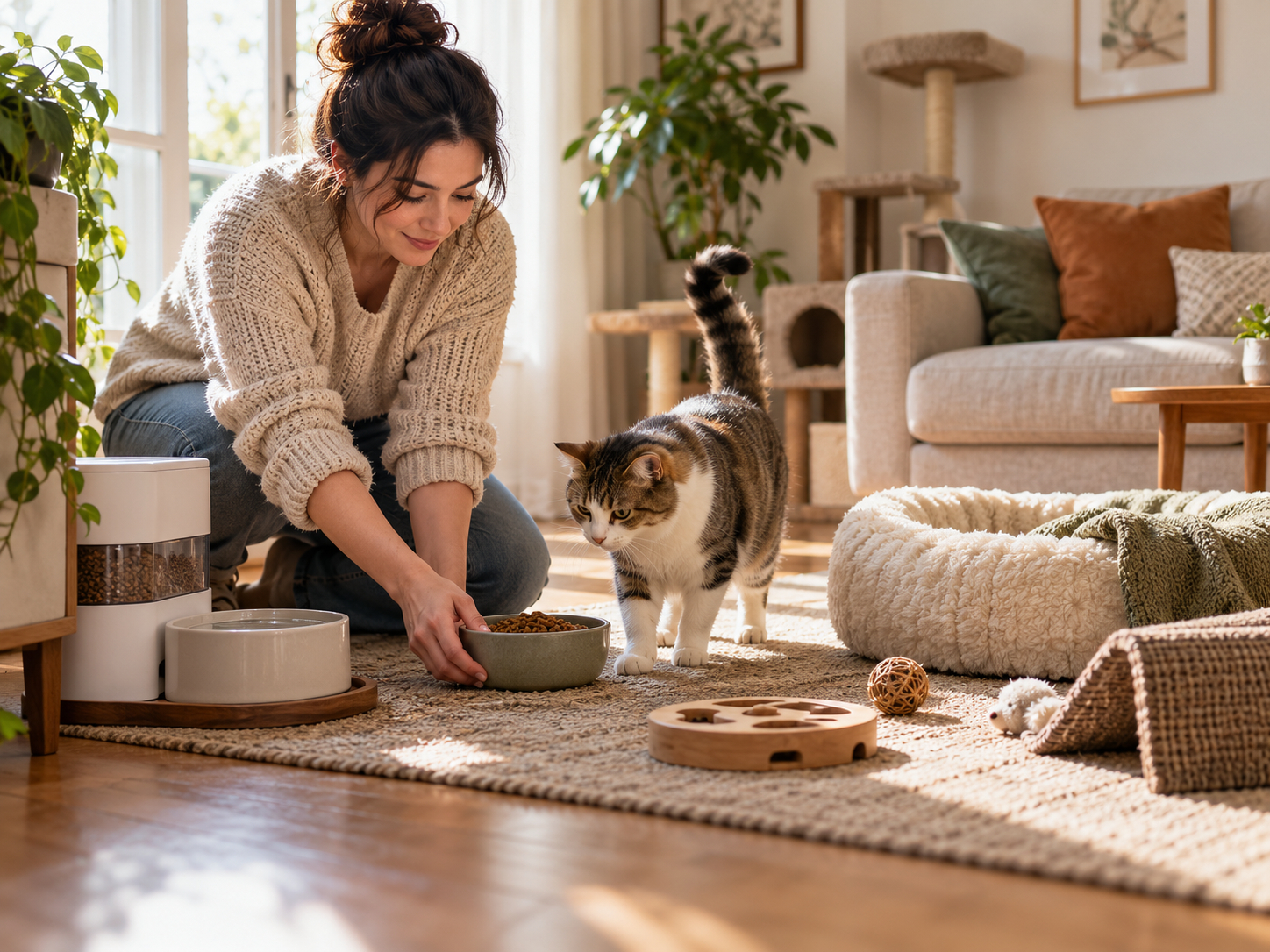
1. Fresh Water Supply: Ensure bowls are full, clean, and positioned securely where they cannot be tipped over. Consider adding an extra water station in a different part of the home to encourage steady hydration throughout the day. 2. Nutrition Setup: Verify that measured food is available or that an automatic feeder is programmed correctly. Portion control prevents overeating when food is left out all at once and ensures your cat has access to meals at their normal biological times. 3. Litter Box Maintenance: Scoop boxes clean before leaving so your cat has an appealing place to eliminate throughout the day. Cats are notoriously fastidious about cleanliness, and a neglected box can lead to inappropriate elimination elsewhere in the house. 4. Hazard Removal: Secure loose strings, toxic houseplants, medication bottles, and small household items that could be swallowed. Taking a few minutes to scan floors and counters prevents emergency veterinary visits resulting from curious exploration. 5. Climate and Comfort: Confirm that indoor temperatures remain comfortable and that curtains are adjusted to provide safe resting spots with natural light. Ensuring a stable indoor climate keeps your cat comfortable regardless of changing weather outside.
Common mistakes or myths
- Myth: Cats never get lonely or bored. While cats value independence, prolonged isolation without environmental stimulation can lead to lethargy or behavioral issues. Assuming a cat is completely self-sufficient can result in a neglected living environment that fails to meet their psychological needs.
- Mistake: Leaving human food on counters. Cats are agile climbers and may reach items left out in the kitchen during a long day. Many common human foods, seasonings, and wrappers pose severe toxicity risks or choking hazards when ingested unsupervised.
- Myth: All cats tolerate sudden schedule changes well. Abrupt shifts in feeding times or environmental layouts can cause stress; consistency is key. Maintaining a steady routine before you leave helps your cat feel grounded and secure.
Practical steps for daily departure routines
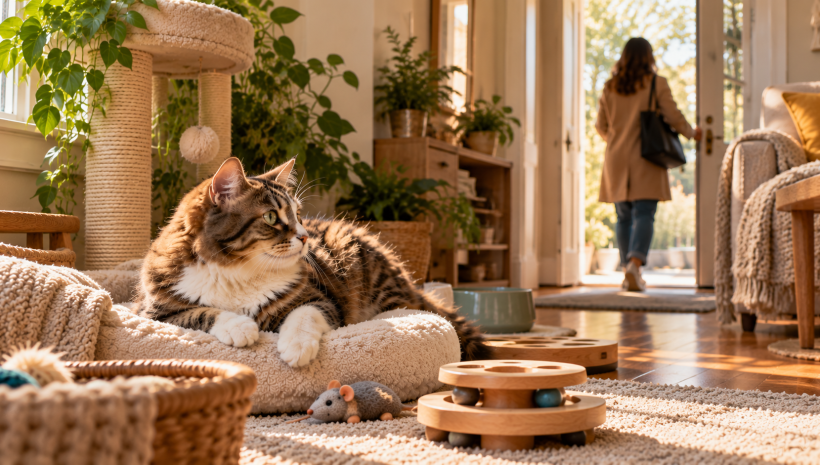
Establishing a seamless departure routine reinforces your cat’s sense of security. Rather than making a dramatic farewell that signals distress or disruption, keep your departure calm and low-key. Ensure that your cat’s favorite resting blankets are left unwashed and in their customary places, as familiar scents provide profound emotional comfort. If you use background sound, leaving a quiet radio or television on at a low volume can help mask sudden outdoor noises that might otherwise startle an unattended pet.
It is equally important to evaluate how your home looks from a cat’s perspective. Walk through each room to verify that interior doors cannot swing shut and trap your cat away from their water bowl or litter box. Secure any loose electrical cords or window blind strings that could pose entanglement hazards. By systematically addressing these environmental variables, you create a fortress of safety that protects your cat while you focus on your professional responsibilities.
Evaluating long-term success
Monitoring how your cat responds to your workday routine over time is the best way to gauge whether your preparations are working. Watch for subtle behavioral cues when you return home, such as excessive vocalization, sudden clinginess, or signs of disturbance in the litter box or around feeding stations. If you notice persistent stress behaviors, you may need to introduce puzzle feeders, rotate safe toys, or adjust the placement of resting perches to better engage your cat’s natural instincts.
Every household is unique, and fine-tuning your cat’s environment is an ongoing process of observation and adjustment. By prioritizing safety, maintaining consistent routines, and respecting your cat’s natural need for predictability, you can build an environment where your feline companion thrives. Thoughtful preparation transforms a potentially stressful absence into a peaceful, secure part of your cat’s daily life.