
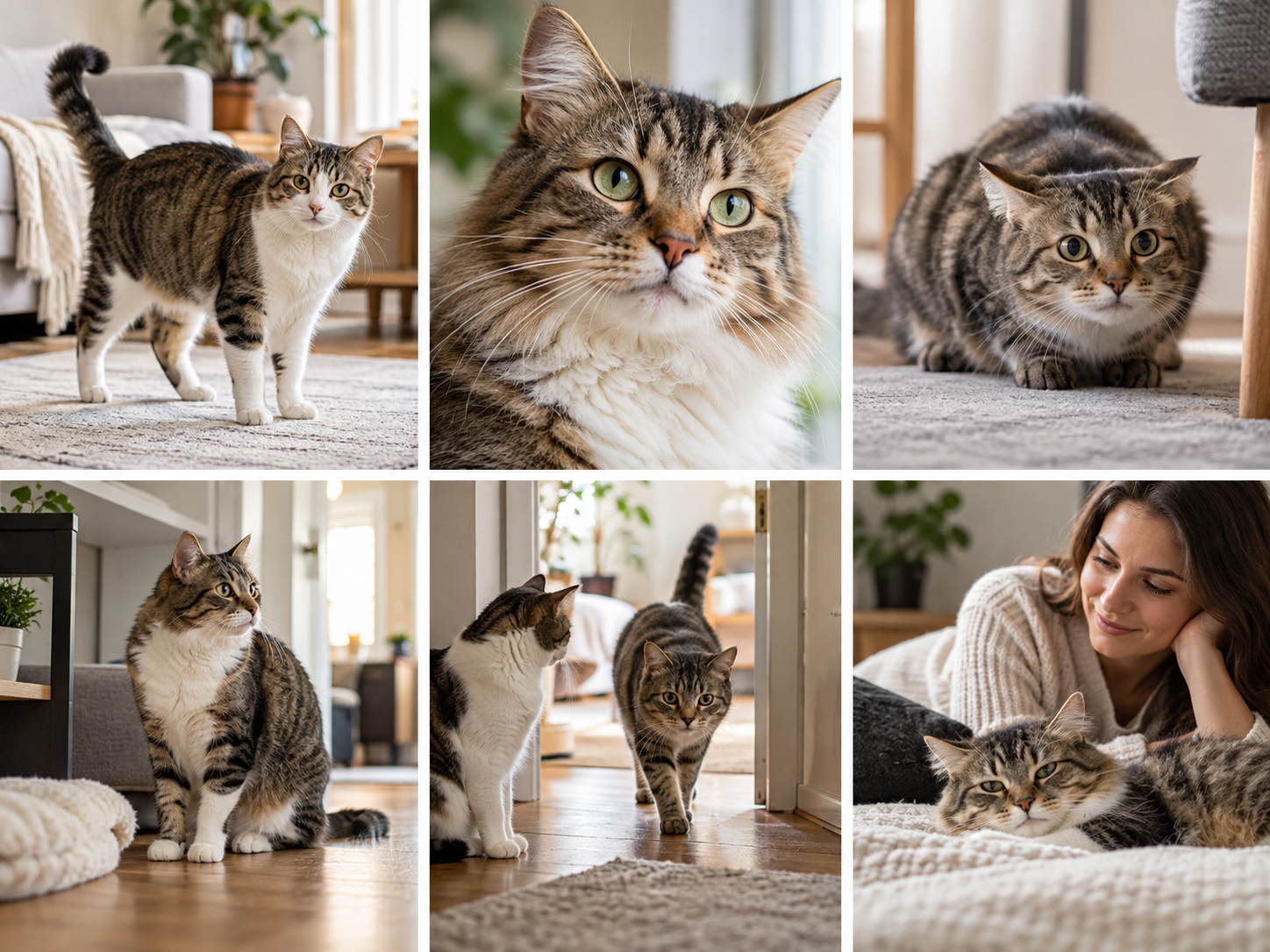
Your cat’s body language makes more sense when you read several signals together. One ear position, one tail flick, or one slow blink rarely tells the whole story. The useful habit is to notice posture, eyes, ears, whiskers, tail, and context as a group.
This guide is for everyday observation, not diagnosis. If a behavior change comes with appetite, weight, toileting, mobility, or other physical changes, speak with a veterinarian.
Read the whole cat, not one feature
Cats Protection’s body-language guidance emphasizes combining signals rather than relying on one feature. A relaxed cat may show a loose body, forward or neutral ears, softer eyes, relaxed whiskers, and an upright tail. A worried or stressed cat may become tense, lower the body, flatten or turn the ears, widen the eyes, or change the position of the whiskers and tail.
Context matters just as much. Wide pupils during fast play are not interpreted the same way as wide pupils in a cat crouched under furniture after a frightening noise.
Build a baseline before you label an emotion
The most useful comparison is often your cat versus their own normal behavior. One cat may naturally sit with a low tail while another carries the tail upright most of the day. One may be highly social; another may prefer to share a room without seeking contact.
Pay attention to repeated patterns in familiar situations: how your cat greets you, where they rest, how quickly they recover after a noise, and what their ears and posture look like during ordinary calm moments. That baseline makes change easier to notice without turning every unusual pose into a problem.
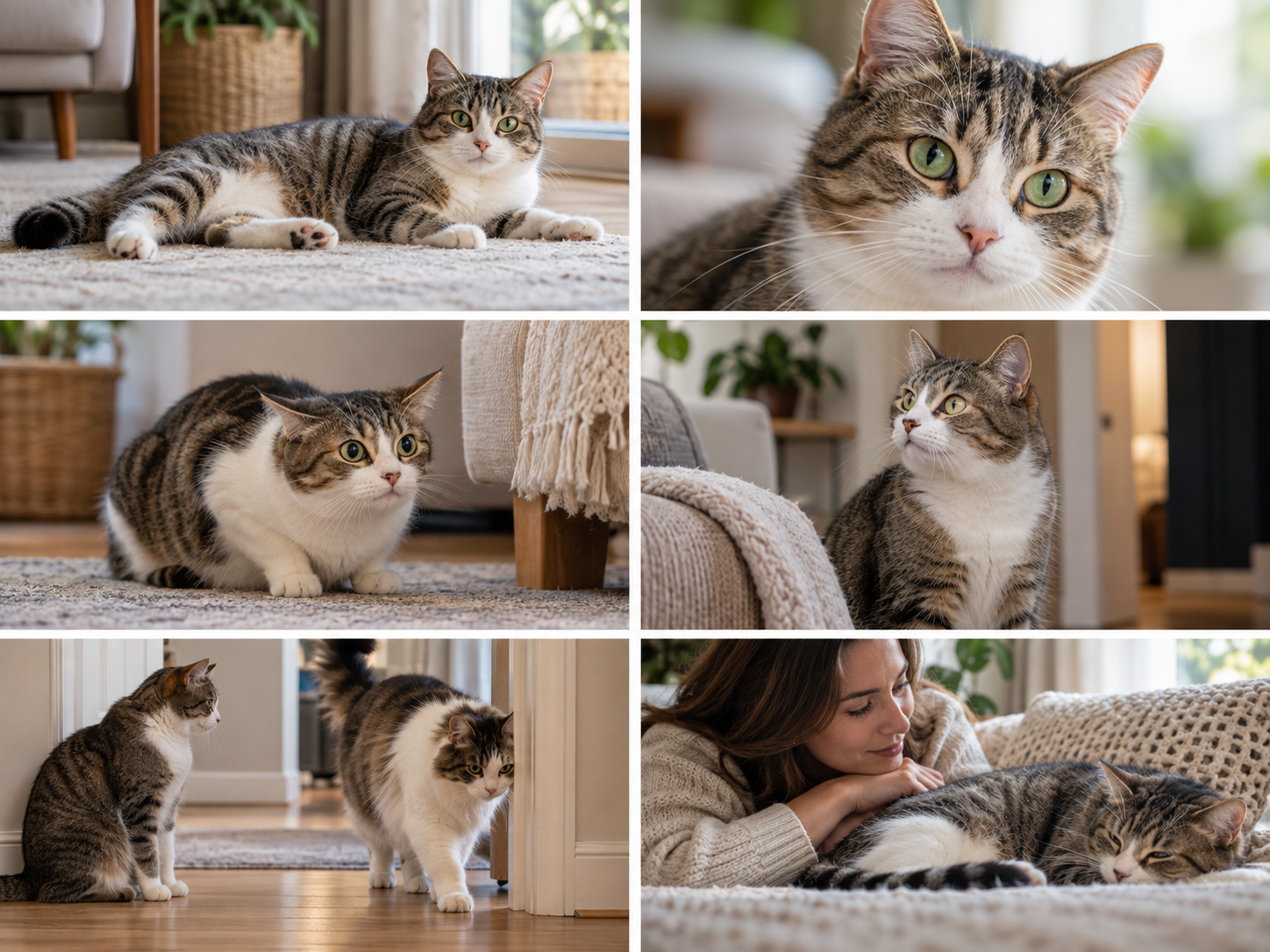
Common calm and social signals
Look for clusters rather than guarantees:
- Loose posture: the body does not look compressed or ready to flee.
- Upright tail: often seen during a relaxed approach or greeting.
- Soft or partly closed eyes: especially when paired with a relaxed body.
- Neutral or forward ears: without repeated flattening or sharp swiveling.
- Relaxed whiskers: sitting naturally rather than pulled tightly back or thrust forward.
- Slow blinking: often used during calm interaction, but best read with the rest of the body.
A calm cat does not need to look excited. Sometimes the clearest positive signal is simply choosing to stay nearby with a loose body.
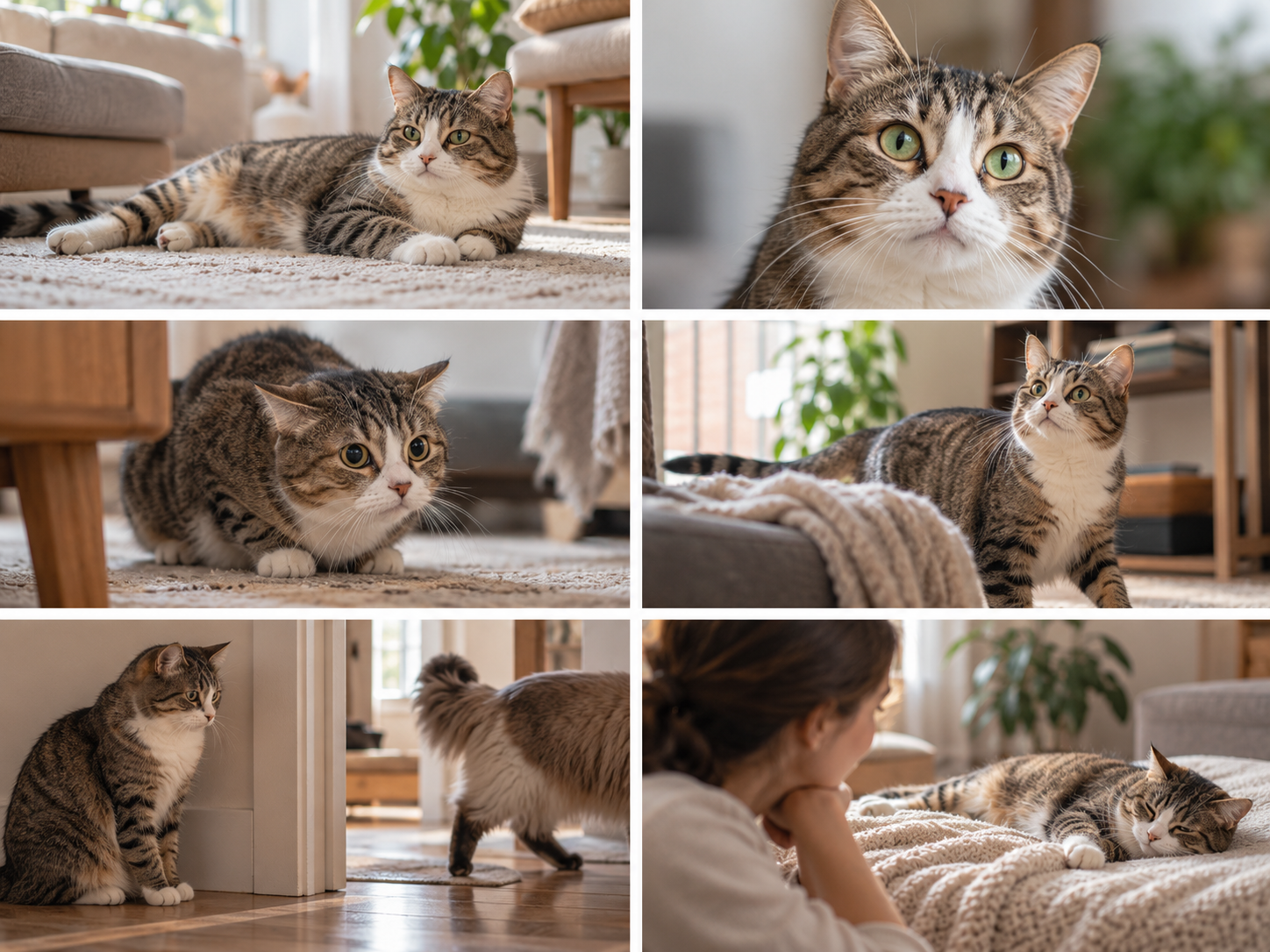
Signals that can point to stress or uncertainty
Cats Protection’s stress guidance describes changes such as hiding, altered social behavior, tension, and other shifts that can accompany stress. Watch for combinations such as:
- ears flattened or held sideways;
- a low, tucked, or guarded posture;
- very wide eyes or fixed attention paired with tension;
- hiding more than usual;
- rapid retreat, hissing, or swiping when approached;
- a sudden change in normal interaction or routine.
One brief moment is not a diagnosis. A pattern that repeats across days is more informative than a single pose captured in a photo.
Separate a temporary reaction from a lasting change
A delivery at the door, a vacuum cleaner, a visitor, or a dropped object can produce a short burst of alert body language. What matters next is recovery. Does your cat return to the normal resting place, resume grooming, eat normally, and move through the home as usual once the event has passed?
A temporary reaction that resolves is different from a pattern that continues long after the trigger is gone. If tense posture, hiding, withdrawal, or another change persists, look at what changed in the environment and whether a health issue could also be contributing.
Purring is not a complete answer
Purring can occur in relaxed situations, but it should not be used as a stand-alone “happy” meter. If a cat is purring while loose-bodied, resting comfortably, and choosing contact, the overall picture is different from a cat that is purring while tense, hiding, or showing signs of discomfort.
When signals disagree, trust the broader context and give the cat space rather than testing the reaction.
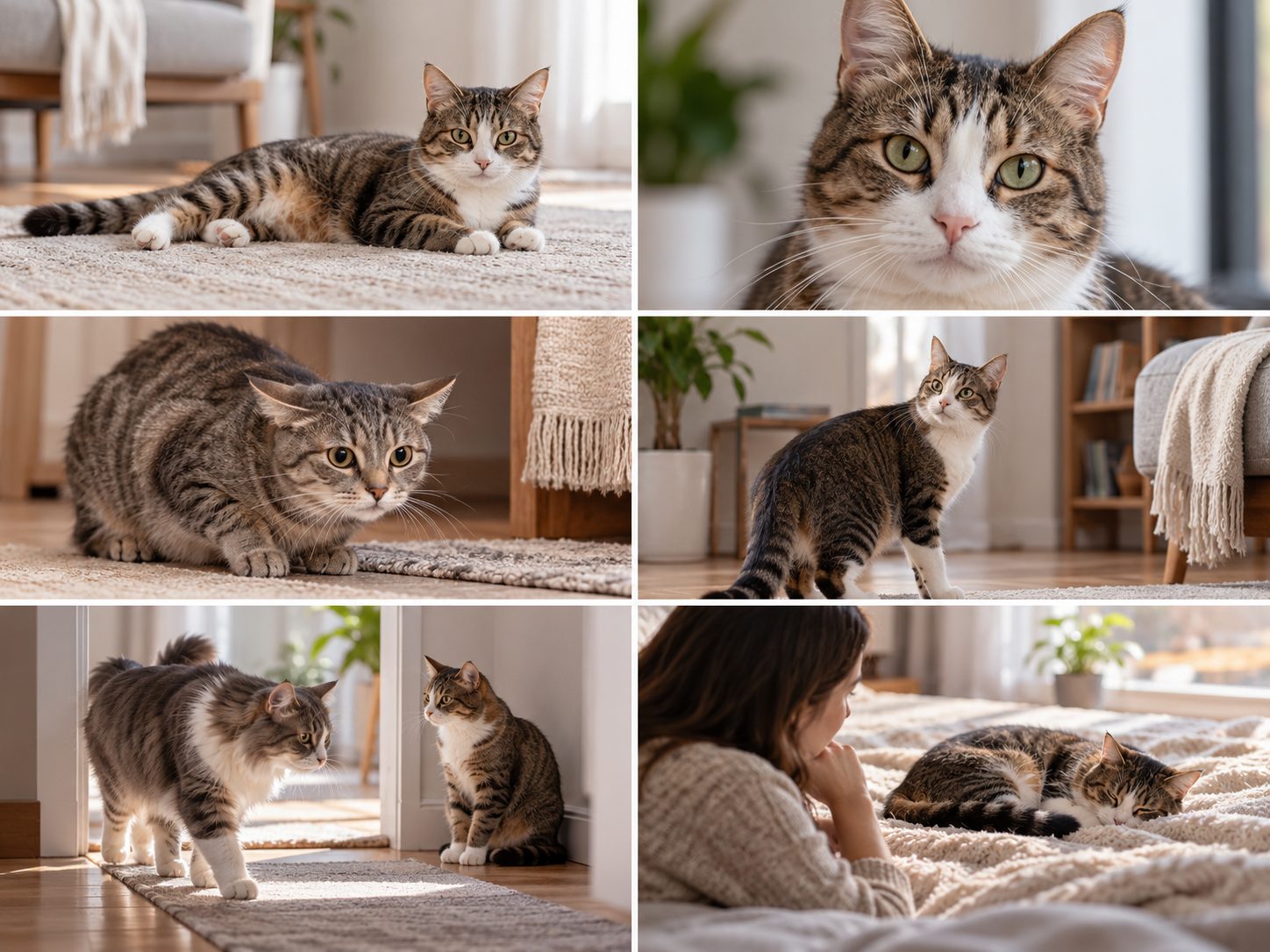
Rolling over does not automatically invite a belly rub
A cat exposing the belly may be relaxed, playful, greeting, stretching, or preparing to defend itself depending on the situation. Before reaching in, look at the ears, eyes, tail, and muscle tension. A relaxed roll is not the same as a stiff body with fast tail movement or flattened ears.
Watch interactions differently in a multi-cat home
Body language between cats can be subtle. One cat may leave a doorway when another appears, give up a resting place, or wait until the other cat has finished eating before approaching. Those choices can matter even when there is no hissing or fighting.
Observe whether each cat can move through the home, rest, eat, play, and use key resources without repeatedly being displaced. If one cat’s relaxed behavior appears only when the other is elsewhere, the social context is part of what you are reading.
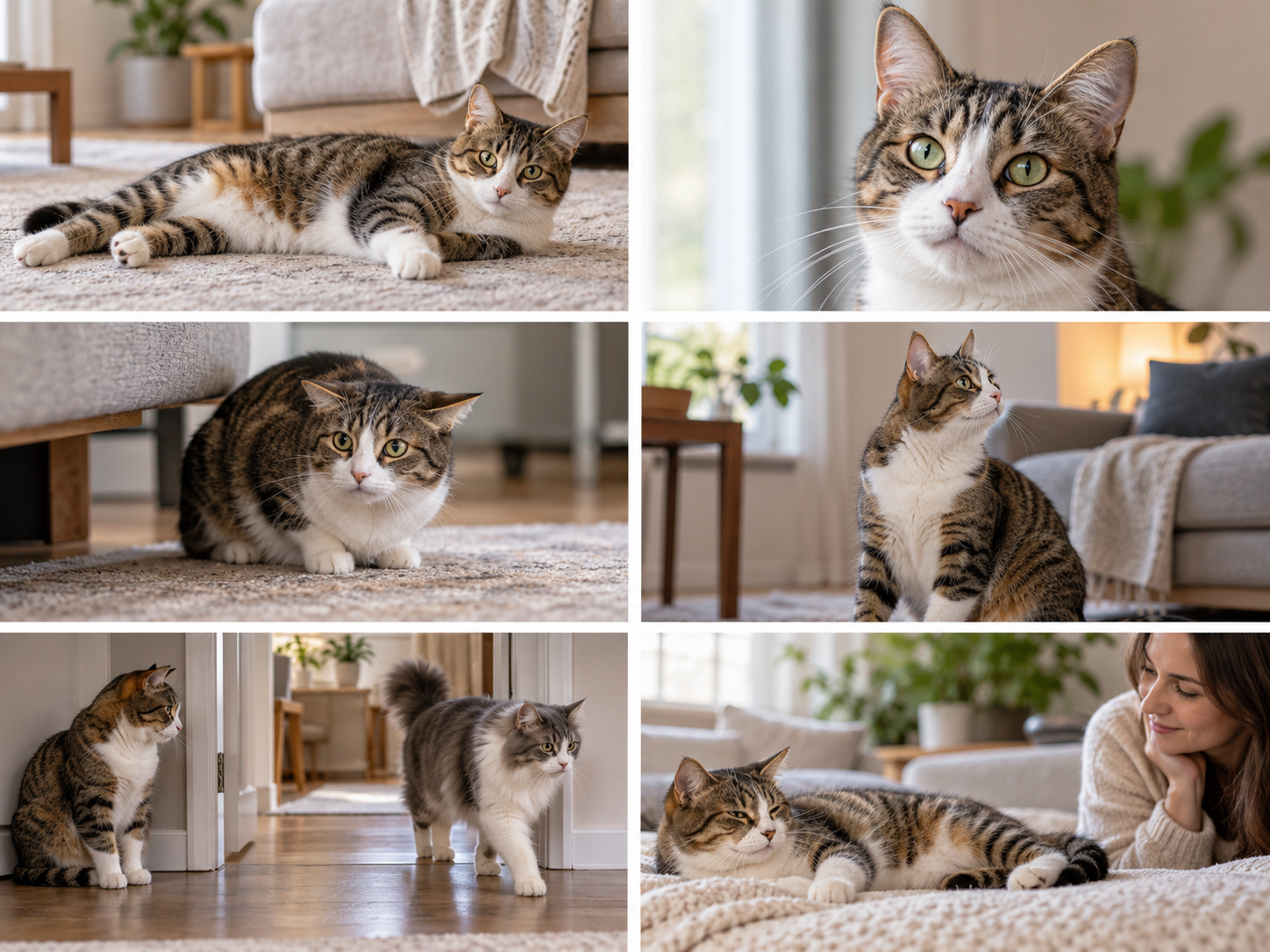
A two-minute daily observation routine
- Posture: loose, neutral, crouched, or tense?
- Ears: forward, neutral, sideways, or flattened?
- Eyes: soft, partly closed, wide, or fixed?
- Whiskers: relaxed, pulled back, or pushed forward?
- Tail: upright, neutral, low, tucked, or moving rapidly?
- Choice: does your cat approach, remain nearby, or leave when given the option?
You do not need to keep a detailed chart. The purpose is to become familiar with your cat’s normal patterns so that meaningful changes stand out.
When to call the vet
Behavior can change because of stress, pain, illness, or environmental changes. If a new behavior is persistent or comes with physical symptoms such as reduced appetite, weight loss, vomiting, toileting changes, or visible discomfort, veterinary assessment should come before assuming the issue is purely behavioral.
Frequently asked questions
Does a slow blink always mean affection?
No single signal is absolute. A slow blink is most useful when the rest of the body is relaxed and the interaction is calm.
Does purring always mean a cat is happy?
No. Read purring together with posture, facial signals, behavior, and the situation.
What should I do when the ears flatten?
Reduce pressure and give space. Then observe the rest of the body and what happened immediately before the change.
How do I know whether a reaction matters?
Compare it with your cat’s normal baseline and watch recovery. A repeated or persistent change is more informative than one brief reaction.
The little expressions are often the ones you remember most.
If you have a favorite photo that captures your cat’s personality, MewKind can turn it into a personalized portrait. Explore printed products.