For many cats, the carrier appears only when something unpleasant is about to happen: a vet visit, a car ride, a move, or an emergency. That pattern makes the carrier a very clear warning signal. A more useful approach is to make the carrier part of normal home life long before travel day, so it becomes familiar rather than suddenly appearing as a trap.
Leave the carrier out between trips
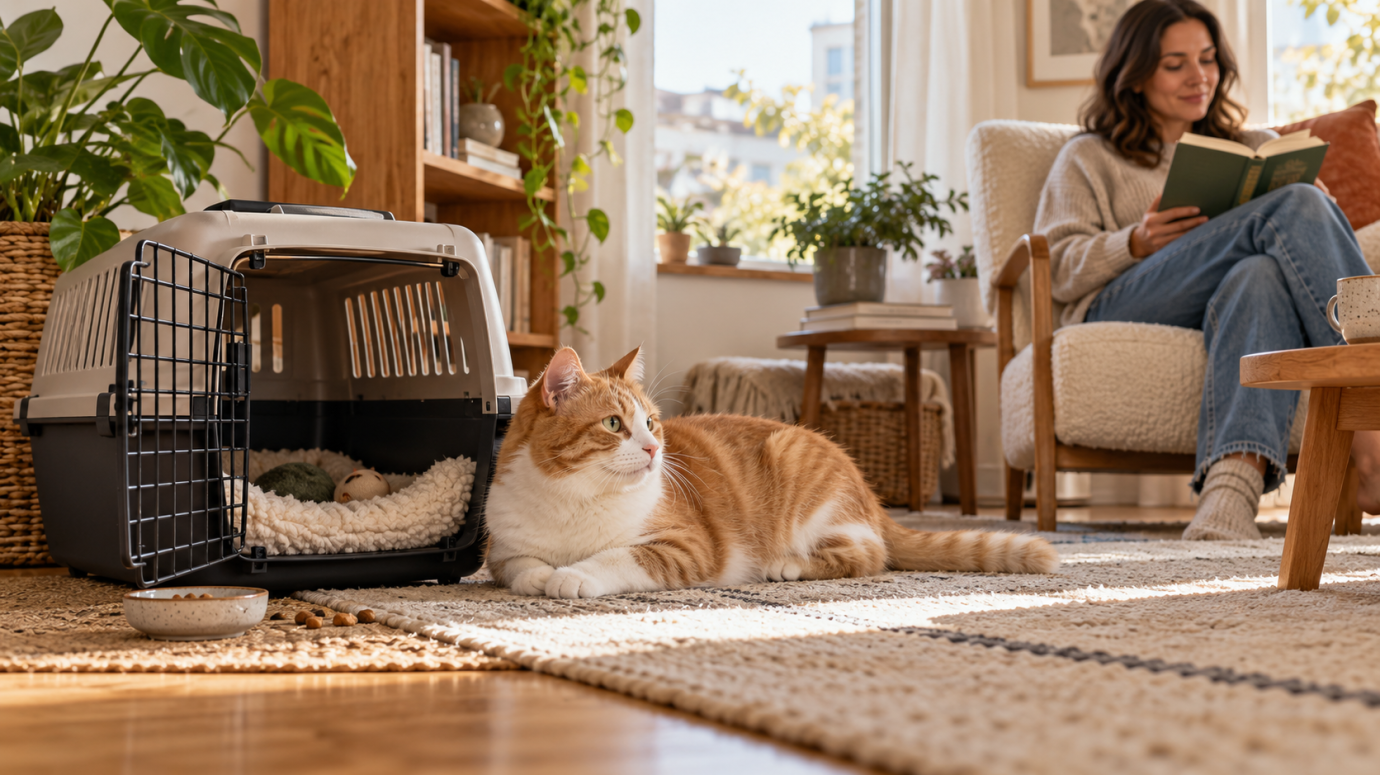
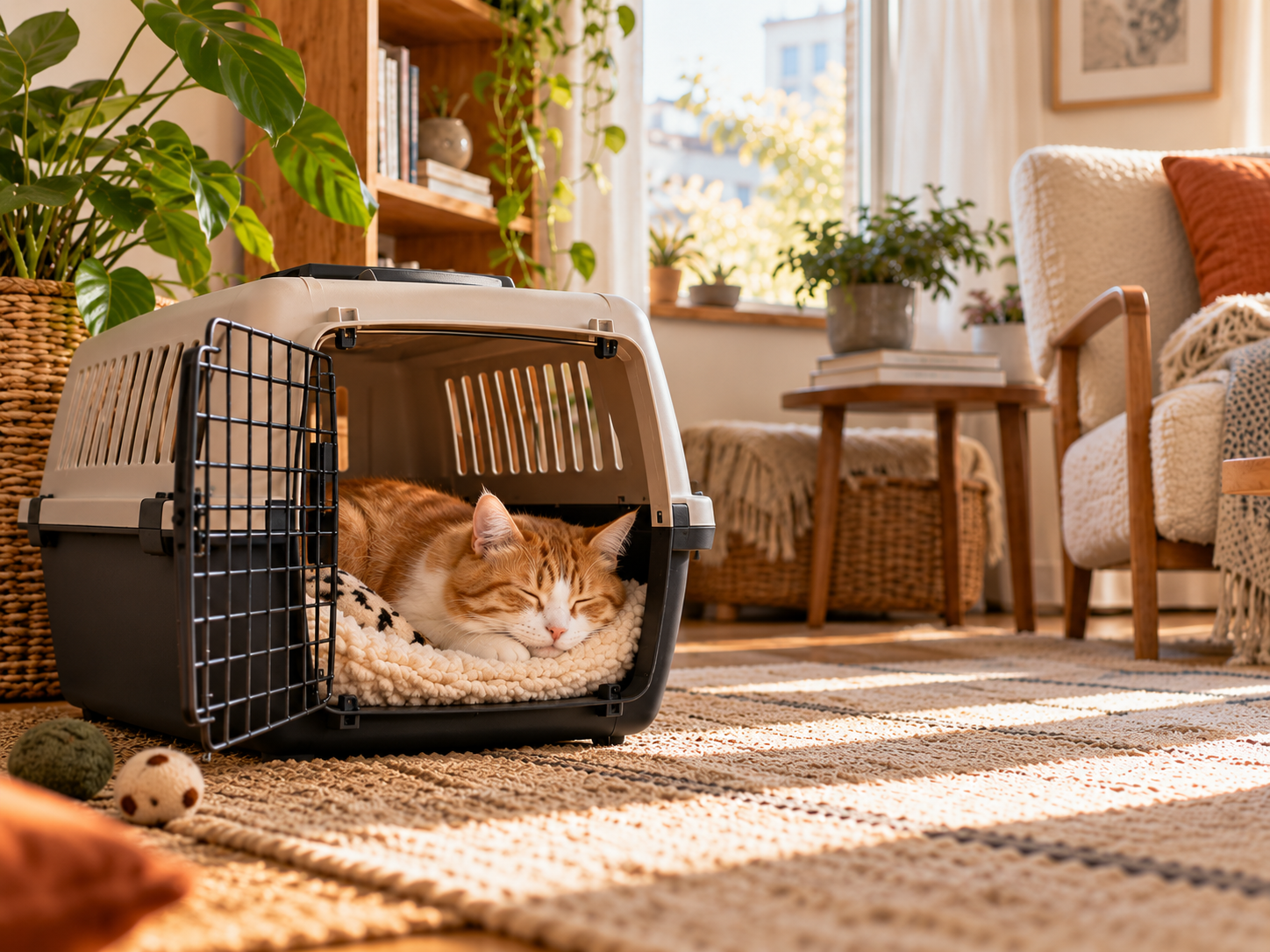
Cats Protection recommends keeping the carrier open and visible in a quiet part of the home instead of storing it away between journeys. Choose a place where your cat already spends time, but not directly in a busy walkway. Remove the door if the design allows it, or secure the door fully open so it cannot swing and startle the cat.
Put familiar bedding inside. A blanket or towel that already smells like the home is often more inviting than a freshly washed surface with a strong detergent smell. You can also place a soft mat beside the carrier at first if your cat will not approach it.
Start at the distance your cat accepts
A cat that already fears the carrier may not walk inside simply because you add treats. Begin where the cat is comfortable. If the cat will rest two metres away but not closer, put familiar bedding there. Over several days, gradually move it nearer the carrier. The pace should be slow enough that the cat still eats, grooms, plays, and rests normally.
Cats Protection advises progressing only when the cat seems comfortable with the current step. That principle matters more than following a fixed schedule. A confident cat may investigate within minutes. A cat with a long history of stressful trips may need much more time.
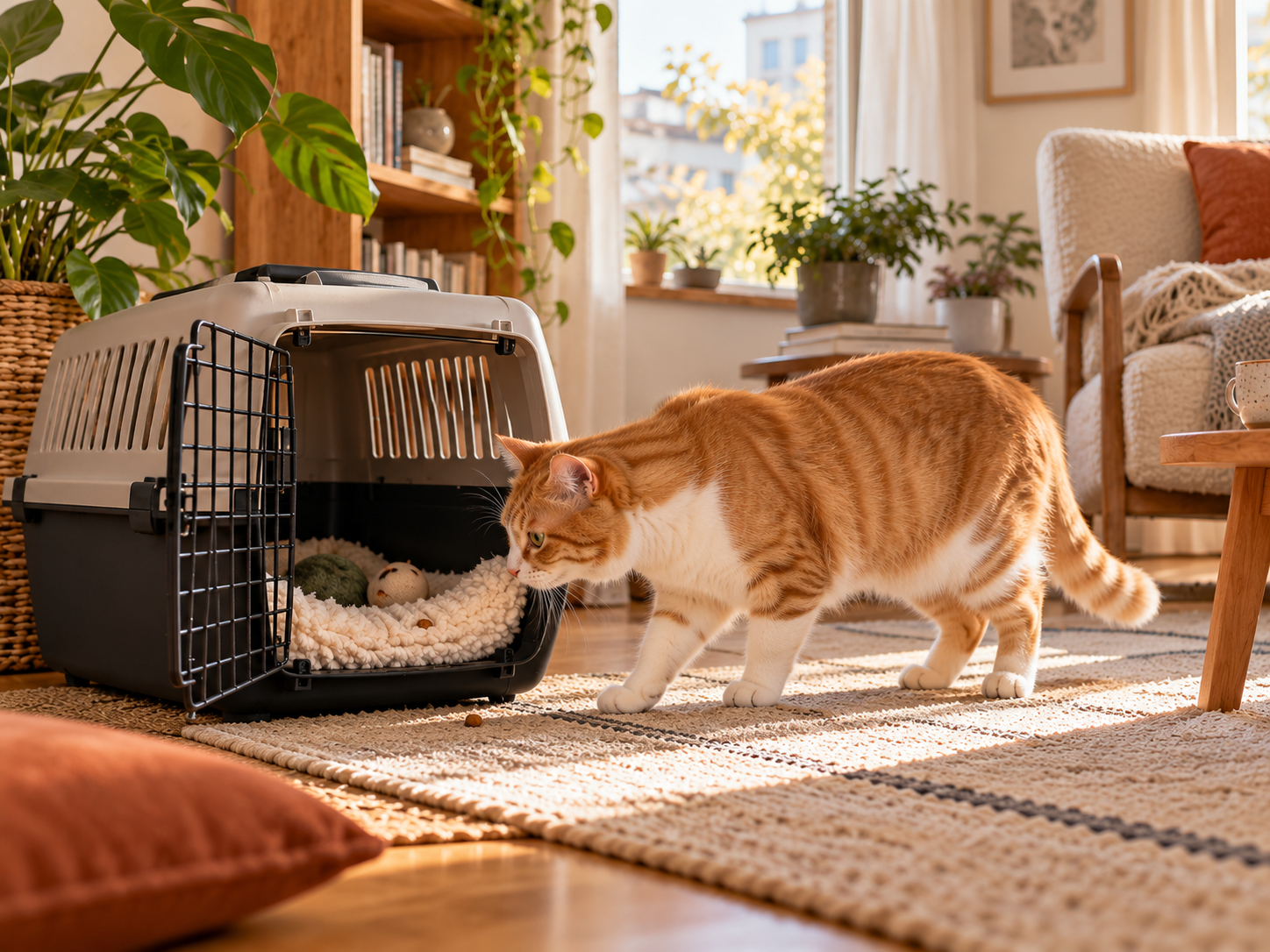
Let voluntary exploration come first
Once the carrier can sit in the room without causing avoidance, make the inside worth investigating. Toss a treat near the entrance, then later just inside. Place a favorite toy or a small amount of normal food in the carrier. Do not close the door while the cat is exploring during this early stage.
The first goal is simple: the cat chooses to enter and can immediately leave. Repeating that experience helps break the association between entering the carrier and losing control.
Build duration before you add the door
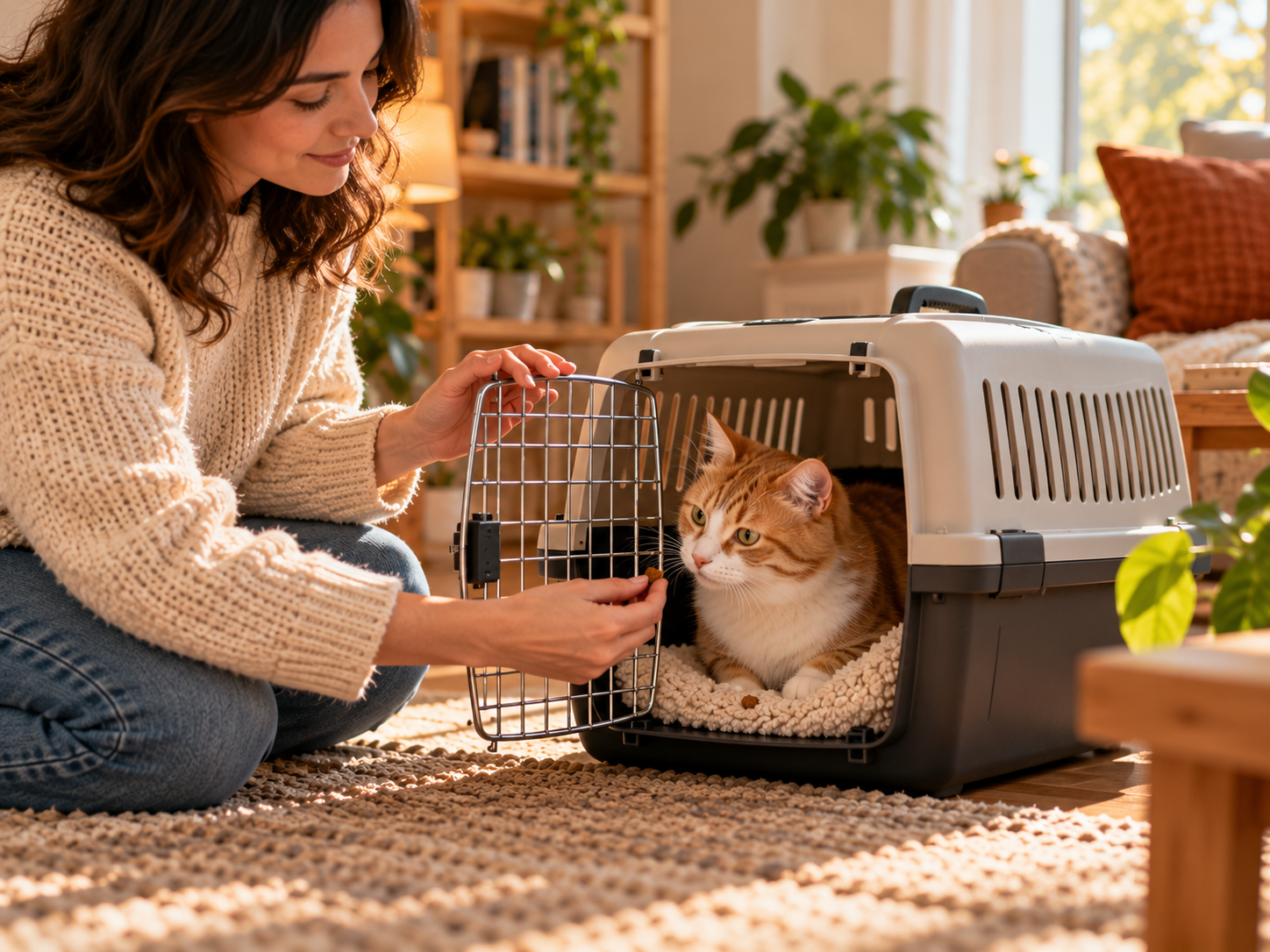
When your cat enters readily, reward brief periods of remaining inside. You can quietly drop another treat into the carrier while the cat is there. Over time, wait a few seconds before rewarding. If the cat turns around and leaves, let it leave.
Only begin touching or closing the door when the cat is comfortable spending time inside. Start with a tiny movement of the door, reward calm behavior, and reopen it. Later, close the door for a second or two. Increase the duration gradually rather than jumping from an open carrier to several minutes of confinement.
Practice lifting without going anywhere
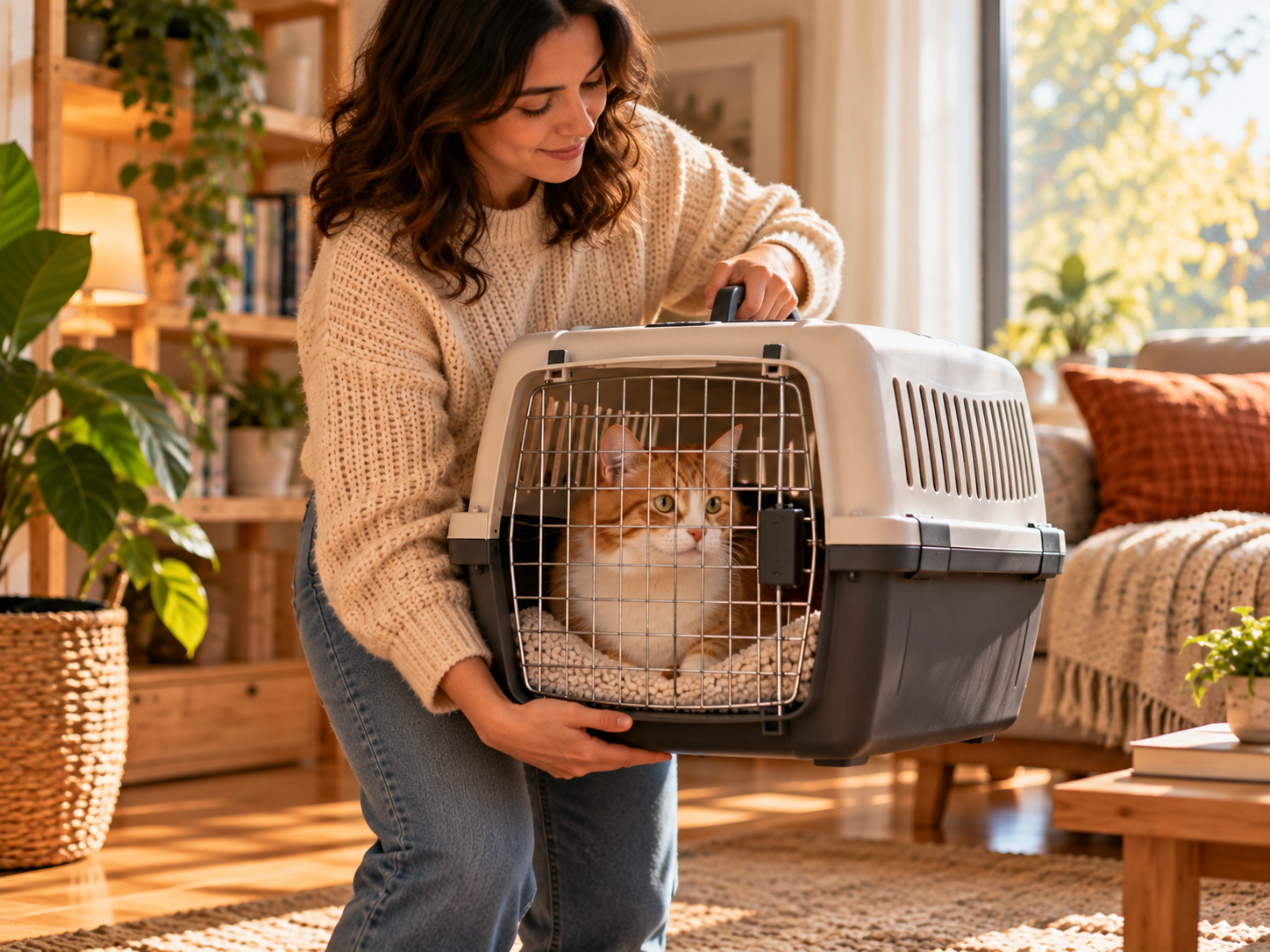
A carrier that is comfortable on the floor can become frightening when it suddenly moves. After your cat is relaxed with the door closed, practice the next piece separately. Lift the carrier a few centimetres, put it back down, and reward calm behavior. On later sessions, lift it for longer or carry it a short distance across the room.
Keep the carrier level and support it according to the manufacturer's design. Avoid swinging it by one handle if that makes the base unstable. The aim is to make movement predictable.
Add the journey in very small pieces
Once carrying around the home is routine, you can practice approaching the front door, walking to the car, or sitting in the stationary car for a short period. You do not need to turn every practice session into a drive.
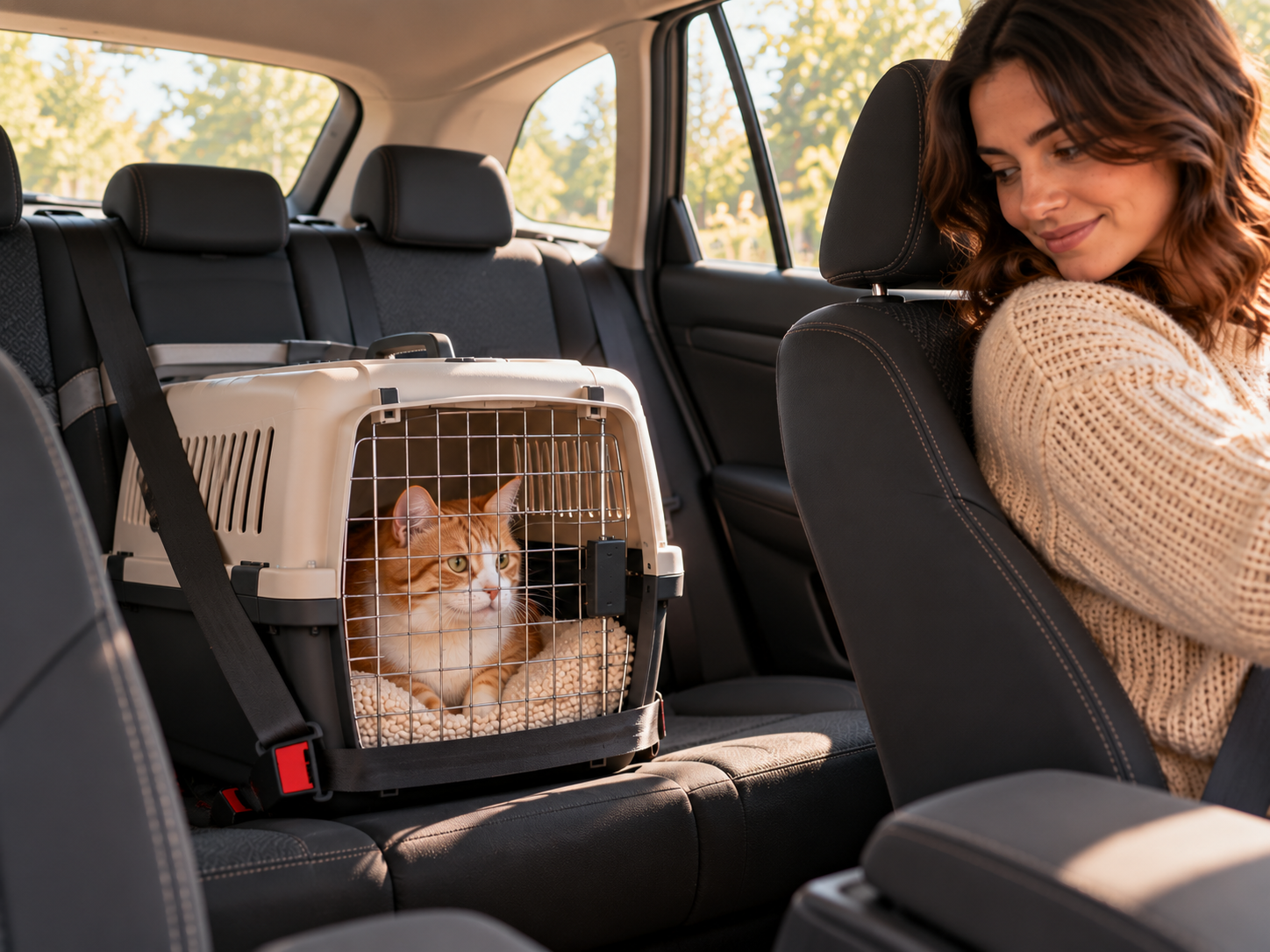
If you do add driving, begin with a very short trip and secure the carrier properly so it cannot slide. The RSPCA recommends using a robust, suitable carrier that allows a cat to sit, stand, turn around, and lie down naturally, and making sure the carrier is safely secured during travel.
Familiar scent can help
A familiar-smelling blanket or towel can make the carrier less strange. The RSPCA specifically recommends familiar-smelling items when transporting cats. Avoid adding anything that could tangle around the cat or block ventilation.
Some owners use synthetic feline pheromone products. Cats Protection notes that these may help some nervous cats when used correctly. If you use a spray, follow the product instructions and allow it to dry before placing the cat inside. It should support training, not replace gradual habituation.
Make the carrier a resting place, not only a training object
You do not need to run a formal session every day. Once the carrier is accepted, leave it available with comfortable bedding. Some cats begin using it as a den or nap spot. Even if your cat never chooses to sleep there, simply being able to walk past it without concern is useful progress.
Occasionally place a treat inside when no trip is planned. This keeps the carrier from becoming a reliable predictor that the cat is about to leave home.
Do not force progress after a bad session
If your cat freezes, backs away, hides, refuses treats, vocalizes intensely, or becomes defensive, the step was probably too difficult. Return to an easier stage for several sessions. Training works best when you preserve the cat's sense of choice for as long as possible.
Avoid chasing the cat around the house with the carrier. That can make both the carrier and your approach cues more frightening. On ordinary training days, stop before the cat becomes distressed.
Emergencies are different
There will be times when a cat must be transported even if training is incomplete. Cats Protection describes a towel-wrapping method for nervous cats when safe, rapid placement in a carrier is necessary. That is an emergency management technique, not the everyday training goal.
If your cat becomes extremely distressed during transport, injures itself trying to escape, pants, vomits repeatedly, or has a medical condition that makes travel difficult, discuss the problem with your veterinarian. A vet can advise on handling, carrier choice, motion sickness, and whether medical support is appropriate for a specific cat.
Choose a practical carrier
Training is easier when the carrier itself works well. A sturdy carrier with secure fastenings and good ventilation is essential. Models with a removable top can make veterinary handling easier for some cats because the cat may be examined in the lower half rather than being pulled through a narrow door.
Check the carrier before every trip. Make sure latches work, the base is stable, and there are no cracked parts or loose fasteners. Put an absorbent layer under the bedding for longer trips or cats that may urinate when stressed.
A five-minute routine can be enough
Carrier training does not need to dominate your week. A short routine can look like this: leave the carrier open all the time; once a day, toss a treat near or inside it; a few times a week, practice a brief door close; occasionally lift it; and, when those steps are comfortable, add a short walk or car practice.
The important part is that most interactions with the carrier do not end in a stressful journey. Familiarity grows through many ordinary, uneventful experiences.
Prepare before the day you need it
The best time to work on carrier comfort is when no appointment is looming. A cat that sees the carrier as part of the room is easier to transport safely, and the owner is less likely to face a last-minute chase. Progress may be slow, but each calm step gives your cat more predictability and gives you a more reliable routine for future travel.