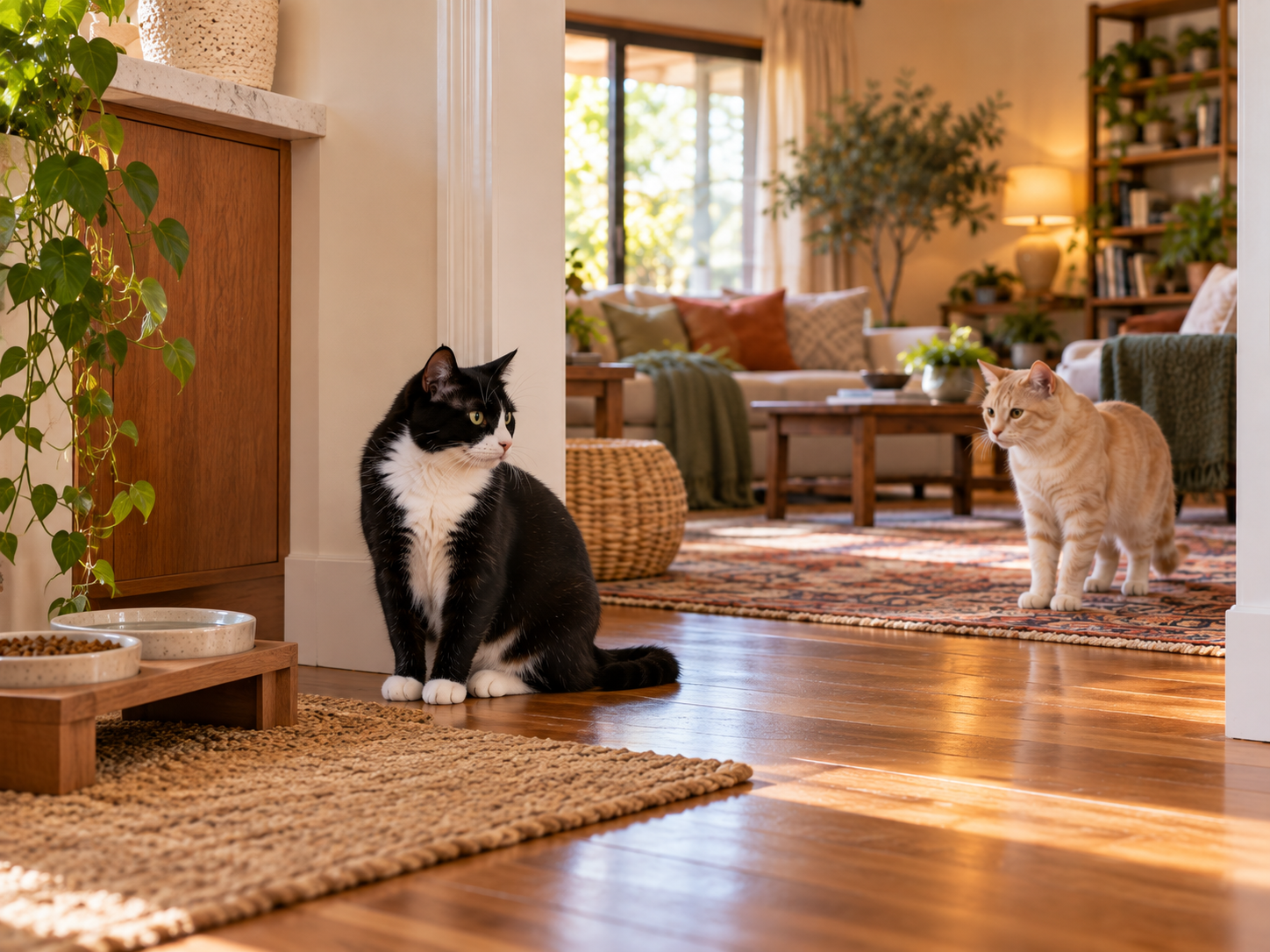
Conflict between household cats is not always a dramatic fight. Sometimes one cat controls the hallway, stares from a doorway, waits beside the food, or repeatedly takes over a favorite perch. The other cat may simply change its routine: eating later, avoiding a room, hiding more, or giving up a resting spot. These quieter patterns can be easy to miss, but they matter because a cat that cannot move around the home freely may be living with ongoing social pressure.
Resource guarding in cats can be subtle
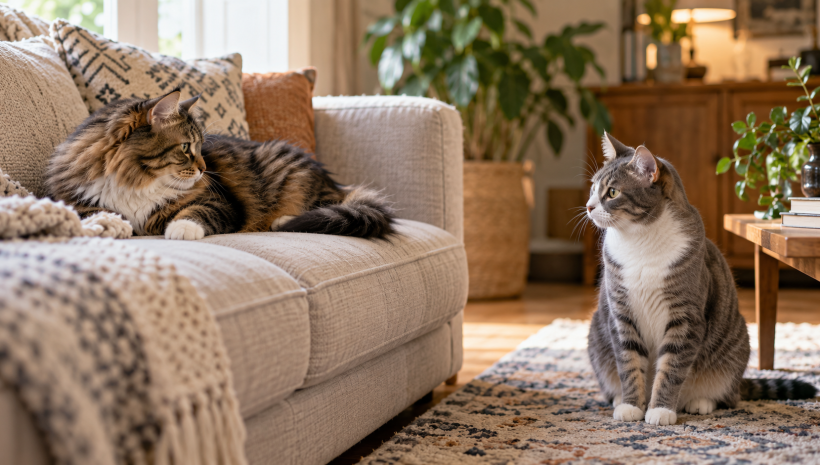
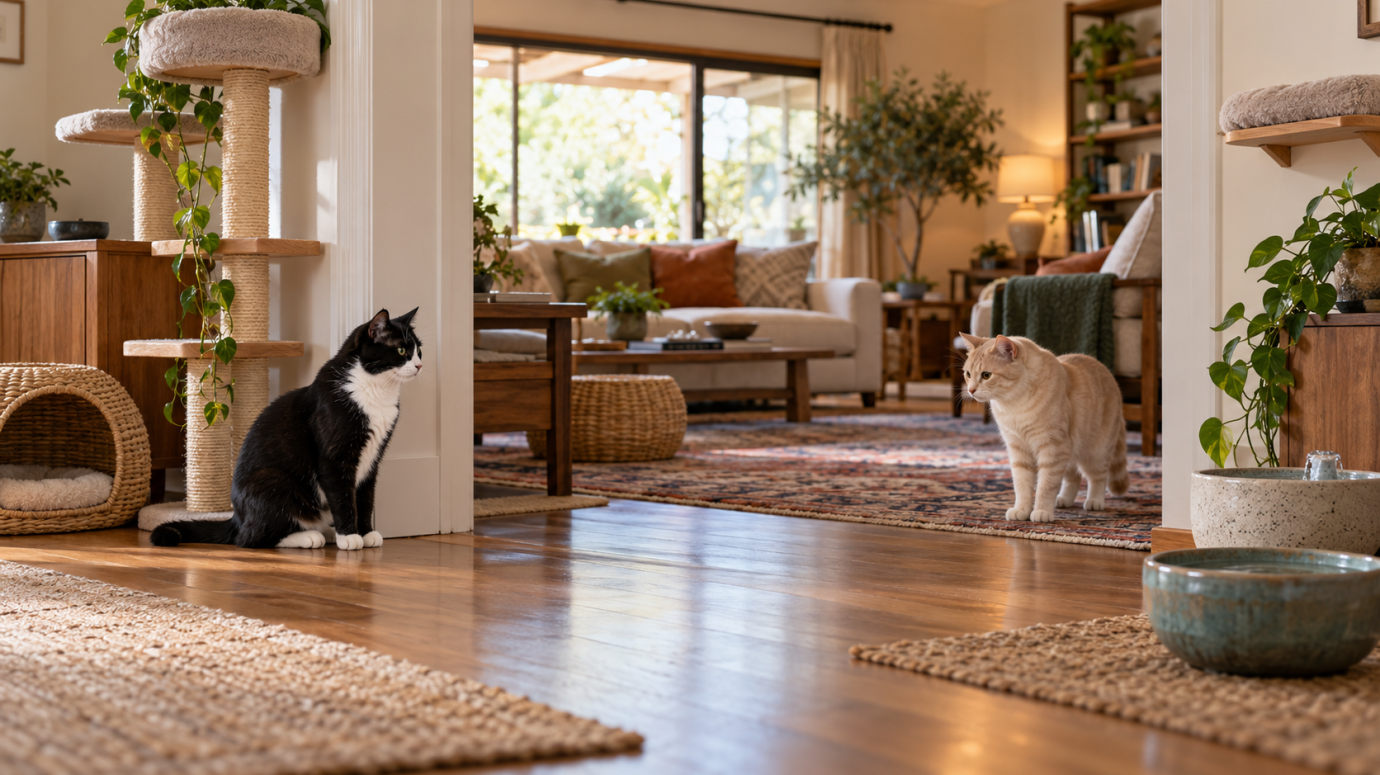
The 2024 Feline Veterinary Medical Association intercat tension guidelines emphasize that tension is often under-recognized because many signs are subtle. Guarding does not have to look like a cat defending a bowl with growls. It can be spatial. One cat may position itself where the other must pass, stare until the other cat leaves, chase after the other cat approaches a resource, or repeatedly occupy the only desirable perch.
Look for changes in the cat that gives way. Does one cat wait until the other leaves before eating? Does it avoid the litter tray when the other cat is nearby? Has it stopped sleeping on the sofa, entering a bedroom, or playing in a particular area? These patterns can reveal more than a single hiss or swat.
Do not make every important resource share the same location
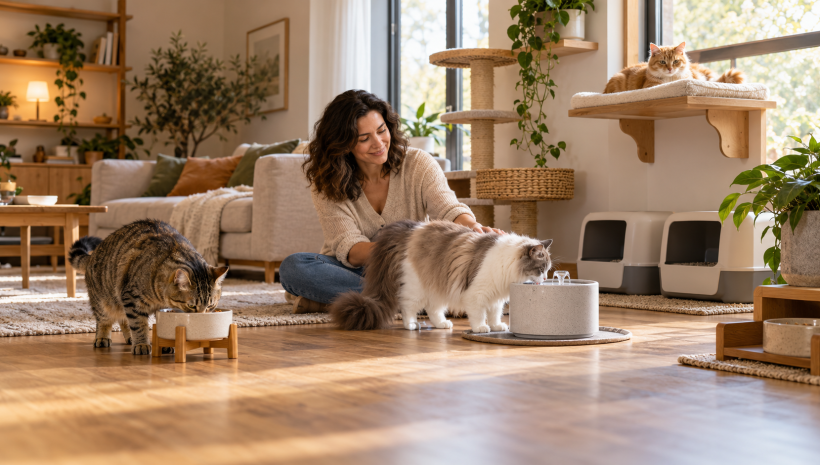
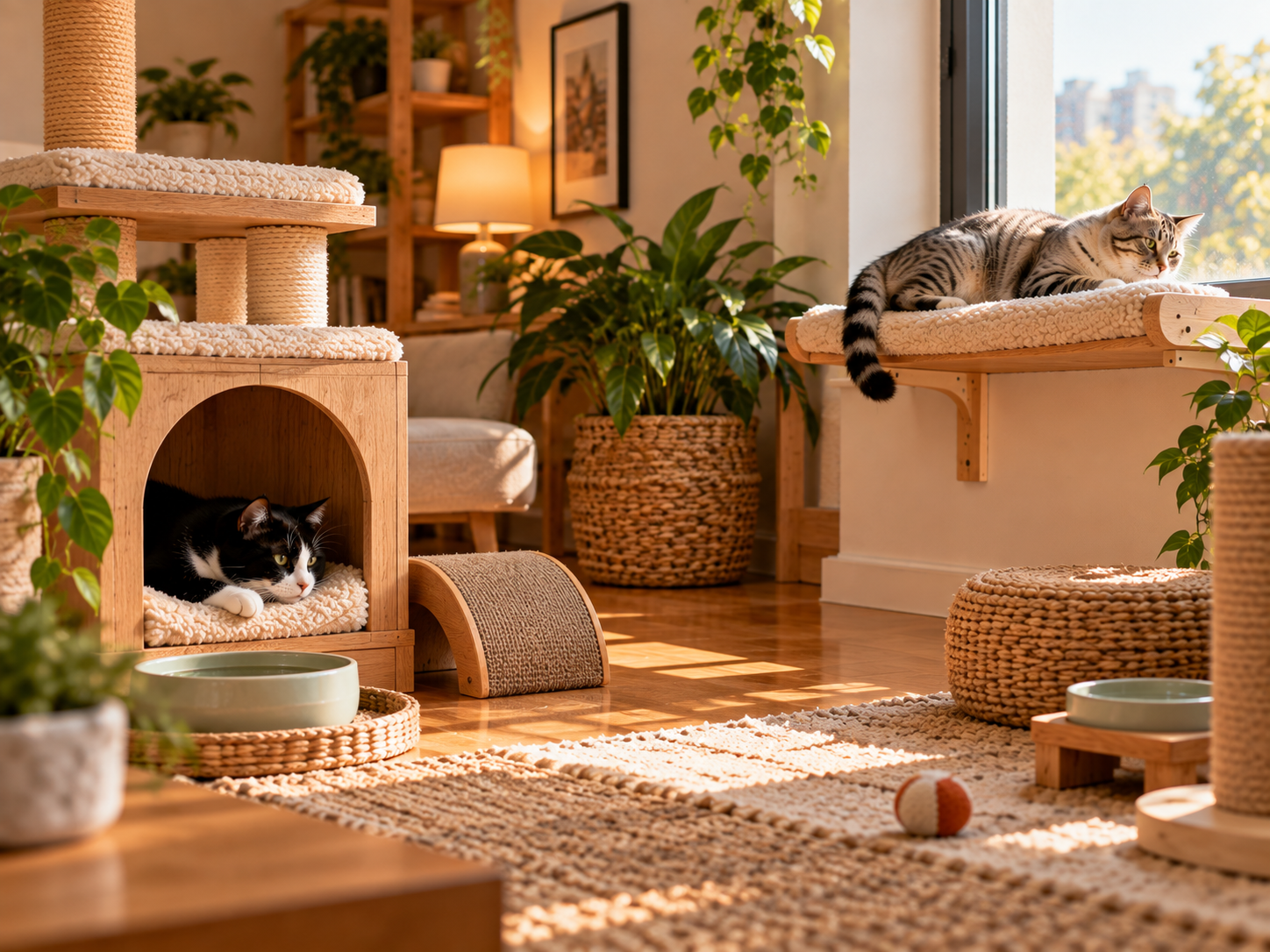
One of the most useful changes in a multi-cat home is to spread key resources around the environment. Food, water, litter trays, scratching surfaces, resting places, hiding spots, play areas, and elevated perches should not all be concentrated in one 'cat zone.' If one cat can sit at the entrance to that zone, it may effectively control access to everything inside it.
Feline environmental guidance recommends multiple and separated resources so cats can reach what they need without being challenged by another cat. Separation matters as much as quantity. Two food bowls side by side may still function as one feeding station because the same cat can guard both.
Give each cat more than one route
Think about traffic flow. A litter tray at the end of a narrow hallway can be difficult for a cautious cat to use if another cat regularly rests in that hallway. A high perch with only one way down can become a trap if another cat waits below. Where possible, create more than one route to important areas and avoid dead ends.
This does not require redesigning the whole home. Moving a bed, adding a second water station in another room, shifting a scratching post, or creating an alternate perch can change how cats move through the space. The goal is to reduce situations where one cat must negotiate with another just to meet an ordinary need.
Feed cats in separate locations when necessary
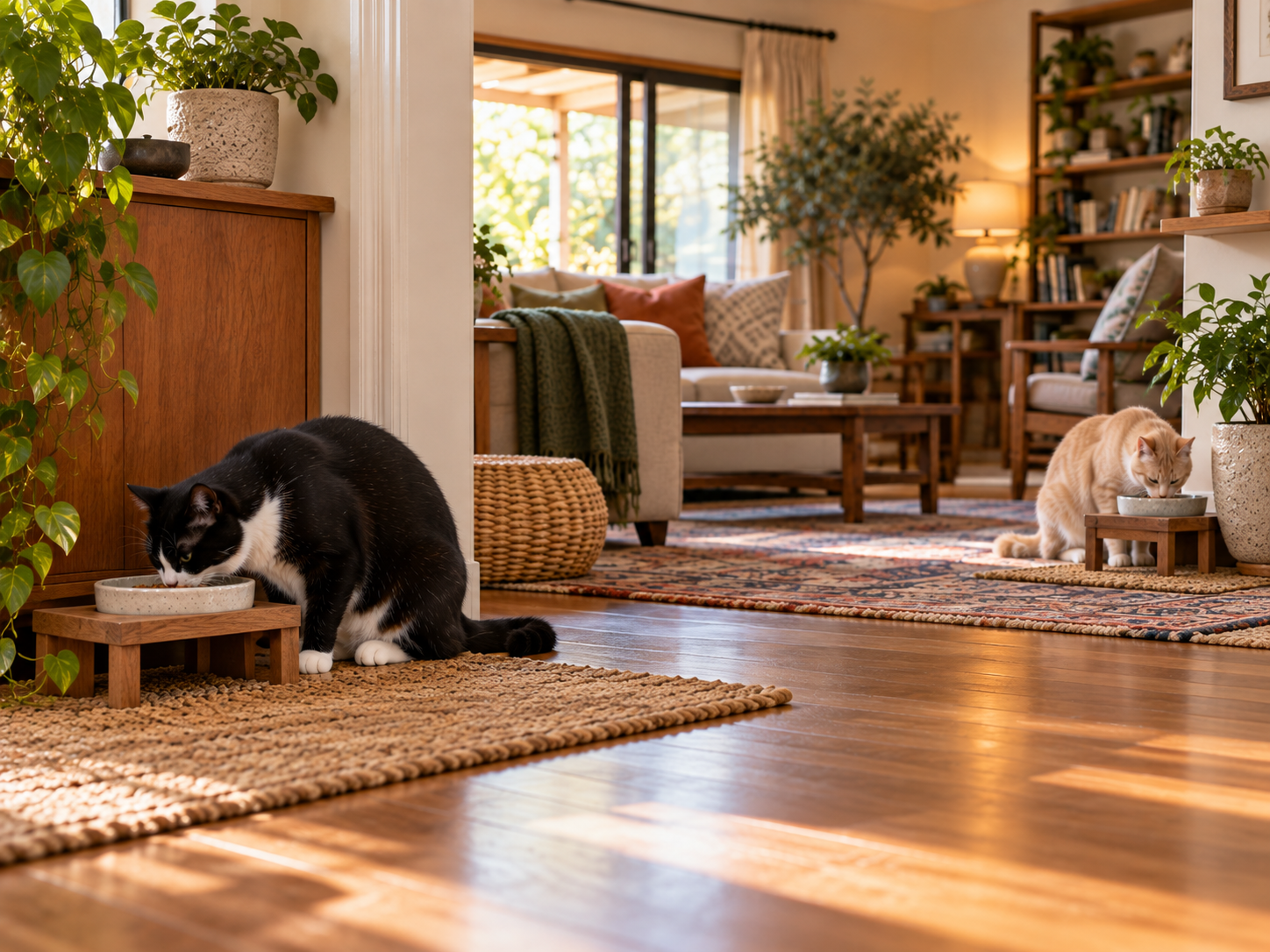
Some cats can eat comfortably in the same room, while others become tense. If one cat rushes another bowl, stares during meals, eats unusually fast, or causes the other cat to walk away, separate feeding areas are worth trying. Visual separation can be more helpful than simply increasing the distance between bowls.
Use different rooms, opposite sides of a barrier, or feeding stations positioned so the cats are not facing each other. Allow each cat to finish without being approached. If one cat requires a special diet, physical separation also makes it easier to know who ate what.
Add safe resting places that are actually separate
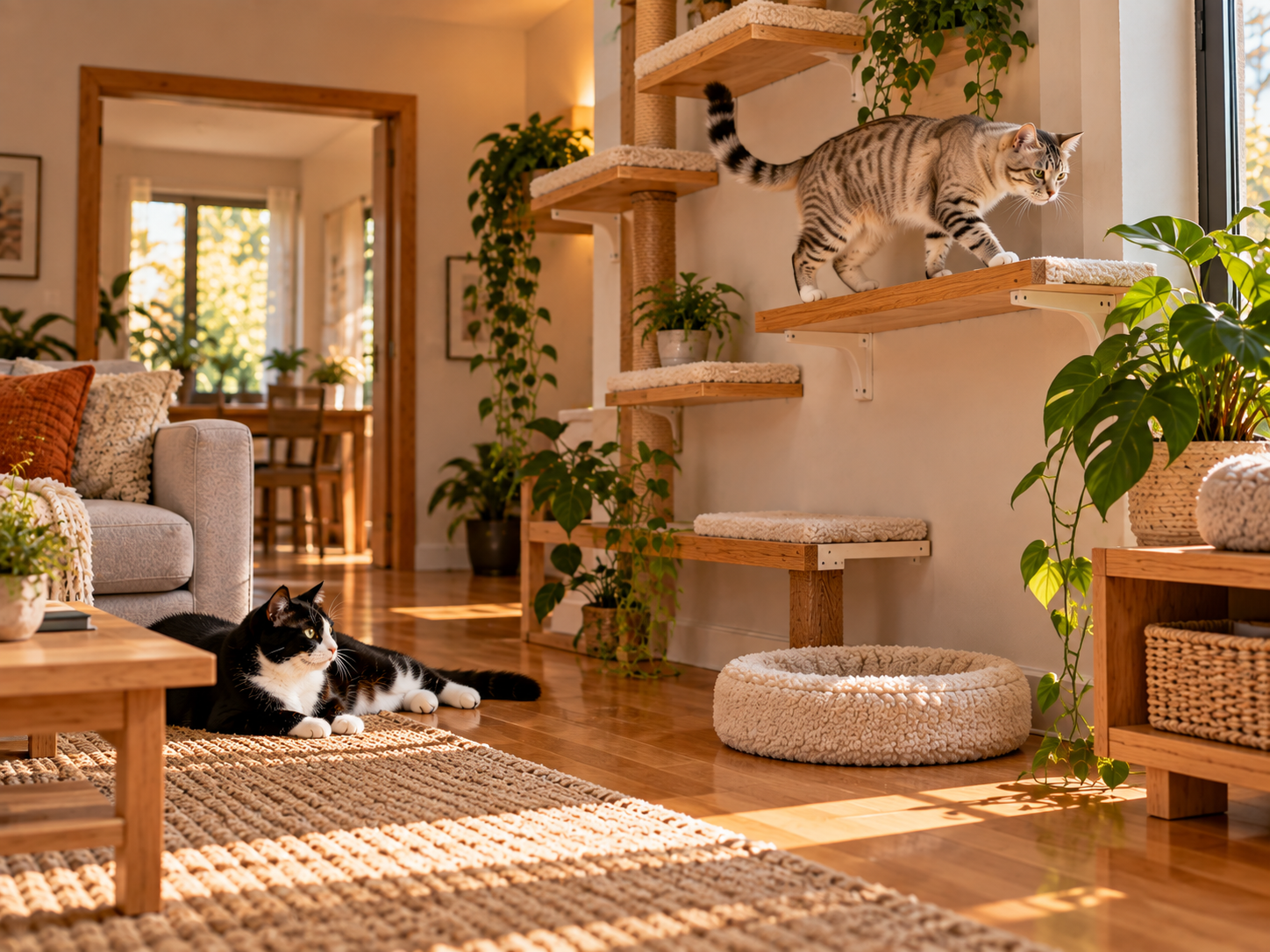
Cats may share a sofa one day and prefer complete distance the next. Offer resting spaces at different heights and in different rooms. A box on a quiet shelf, a bed near a window, a chair in a bedroom, and a covered hide in the living area create options.
FelineVMA guidance recommends safe places where cats can retreat and feel protected. In multi-cat homes, there should be enough safe places that one cat does not have to displace another to rest. If all the desirable resting spots are clustered together, adding another bed beside them may not solve the problem. Distance and visual separation can matter more.
Do not confuse one-sided chasing with play
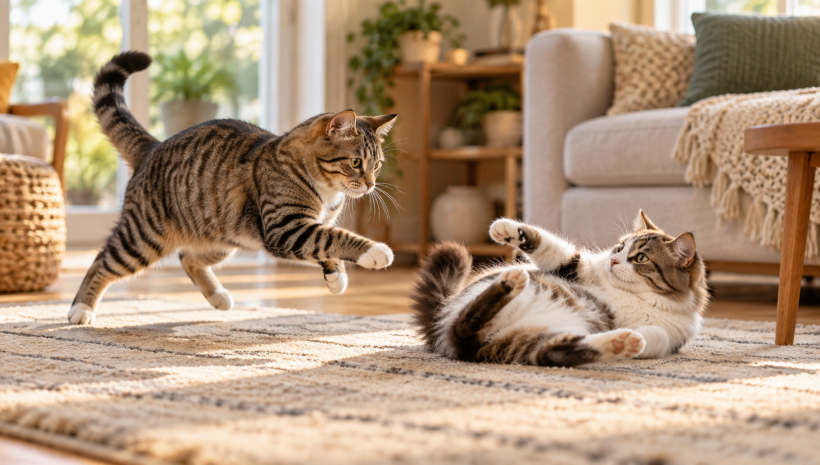
Balanced play usually has give-and-take. Cats may switch roles, pause, separate, and re-engage. When one cat is always chasing and the other is always fleeing, hiding, or trying to end the interaction, the behavior may be tension rather than mutual play.
Other warning signs include prolonged staring, blocking access, cornering, stalking, repeated swatting, low growls, hissing, and a cat refusing to enter a room when the other is present. Changes such as eating less, overgrooming, urine marking, or litter-tray avoidance can also occur for many reasons, so medical causes should be ruled out rather than assuming another cat is responsible.
Increase individual play and foraging opportunities
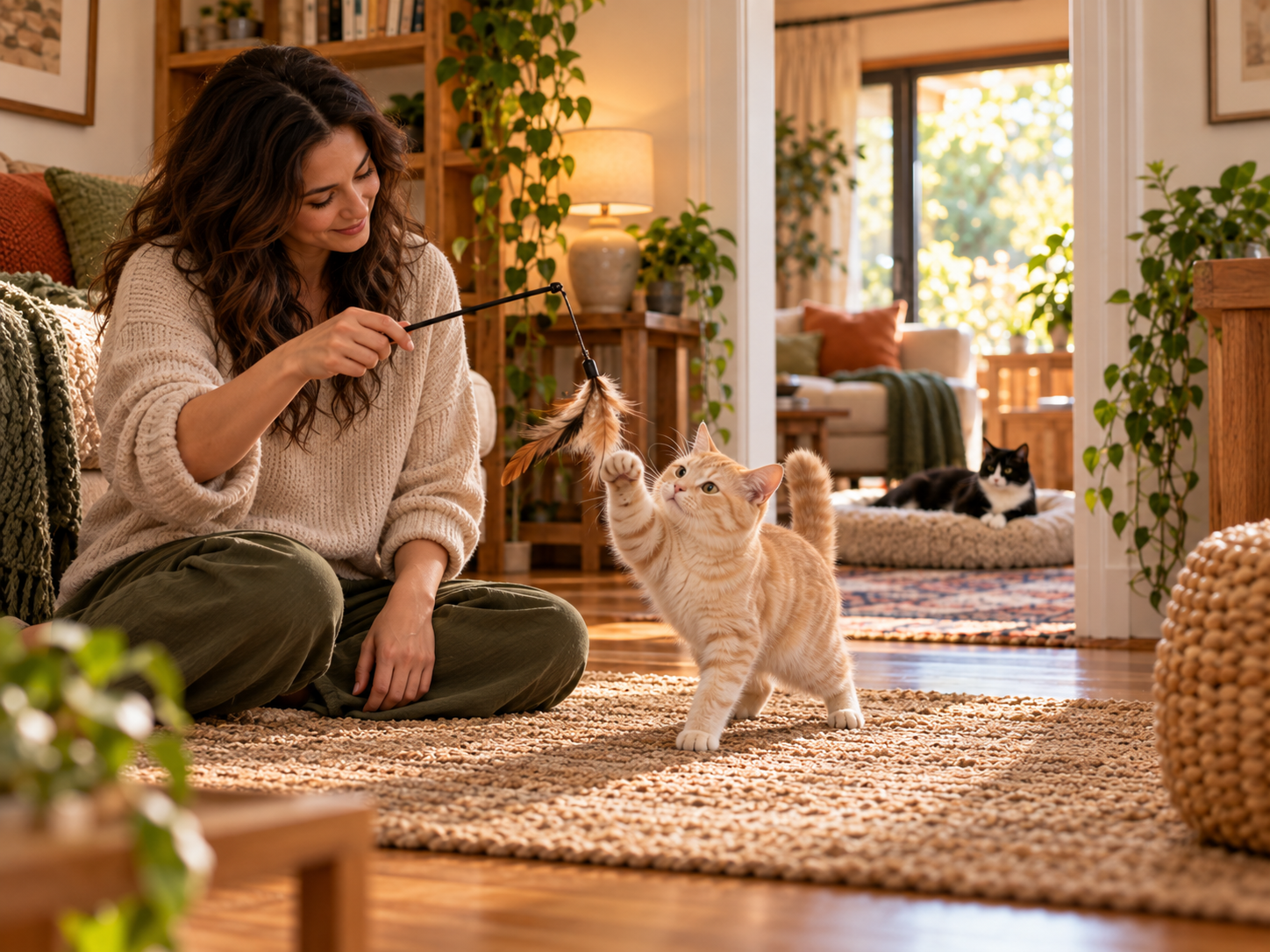
Interactive play can reduce competition when it is offered individually. Feline environmental recommendations encourage opportunities for play and predatory behavior, including wand toys and food puzzles. In a multi-cat home, one confident cat may otherwise take over every game.
Try separate play sessions in different rooms or at different times. Let each cat have a chance to stalk, chase, and capture the toy. If food puzzles are used, provide enough distance that one cat cannot simply take over another cat's puzzle. Enrichment is most useful when it creates choices rather than another resource to defend.
Avoid punishment and forced closeness
Scolding a cat for hissing, chasing, or blocking does not address the reason the cat feels the need to control space. Punishment can also make the other cat's presence predict something unpleasant. Instead, change the environment and manage the distance between the cats.
Likewise, do not force cats to sleep together, eat side by side, or remain in the same room to 'get used to each other.' Cats can build tolerance when they have control over approach and retreat. Forced proximity removes that control and can intensify tension.
Use short separations when everyone needs to reset
If tension is escalating, temporary separation can be useful. Give each cat a complete set of resources in separate areas and allow arousal to settle. Reintroduction may need to return to gradual scent and visual contact, especially after a serious fight.
A separation is not a failure. It is management. It can stop repeated negative interactions from becoming a daily pattern while you adjust the home and work out which situations trigger conflict.
Track patterns for a week
When the problem is subtle, a simple log can help. Note where each cat eats, sleeps, plays, and uses the litter tray. Record chasing, staring, blocking, and any rooms one cat avoids. You may discover that the conflict happens at one doorway, around one perch, or just before meals.
That information makes environmental changes more targeted. Instead of adding random cat furniture, you can add a second route, move a resource, or create visual separation exactly where the pressure occurs.
Know when to involve your veterinarian
Sudden aggression, a major behavior change, reduced appetite, house-soiling, hiding, or sensitivity to touch can be related to pain or illness. A veterinary check is important when behavior changes abruptly or when one cat appears physically unwell. If medical causes have been addressed and tension remains significant, your veterinarian can help you find a qualified feline behavior professional.
The aim in a multi-cat home is not to make every cat best friends. A realistic goal is that each cat can eat, drink, rest, play, eliminate, and move through the home without being controlled by another cat. When resources are separated, routes are flexible, and individual preferences are respected, many households become noticeably calmer.