Introduction: The Solitary Hunter in Multi-Cat Homes
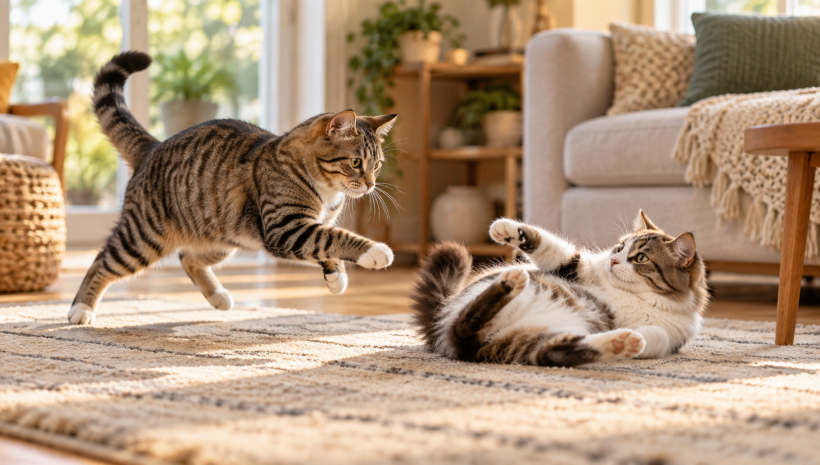
Domestic cats descend from solitary hunters whose evolutionary biology shaped them to manage their environment and resources independently. Unlike social species that share meals and resting zones cooperatively, cats view essential resources—food, water, resting spots, and elimination areas—as individual survival assets. In a multi-cat household, bringing multiple independent hunters together without adequate resource planning often forces unnatural proximity. When cats feel they must compete for access to basic needs, chronic stress takes root, frequently manifesting as inter-cat aggression, urine marking, or subtle behavioral withdrawal.
Understanding this solitary heritage is essential for any cat owner dedicated to maintaining a harmonious, stress-free multi-cat home. By respecting each cat’s individual need for security, we can design living spaces that mitigate tension and foster peaceful coexistence. When multiple felines share a single domicile without proper environmental tailoring, the underlying competitive pressures remain invisible until a behavioral crisis erupts. Recognizing these ancestral traits early allows owners to construct a supportive habitat where all residents feel completely secure in their daily routines.
Understanding Feline Territoriality and Scent Dynamics
To cats, territory is defined primarily by scent rather than visible boundaries. Cats deposit pheromones through facial rubbing, scratching, and scent glands on their paws to map their secure zones and communicate ownership. This reliance on olfaction makes their environment deeply sensitive to chemical changes. Specifically, cats possess a sense of smell roughly fourteen times more powerful than humans, allowing them to instantly detect changes or scent shifts from veterinary visits in multi-cat households Tripawds.
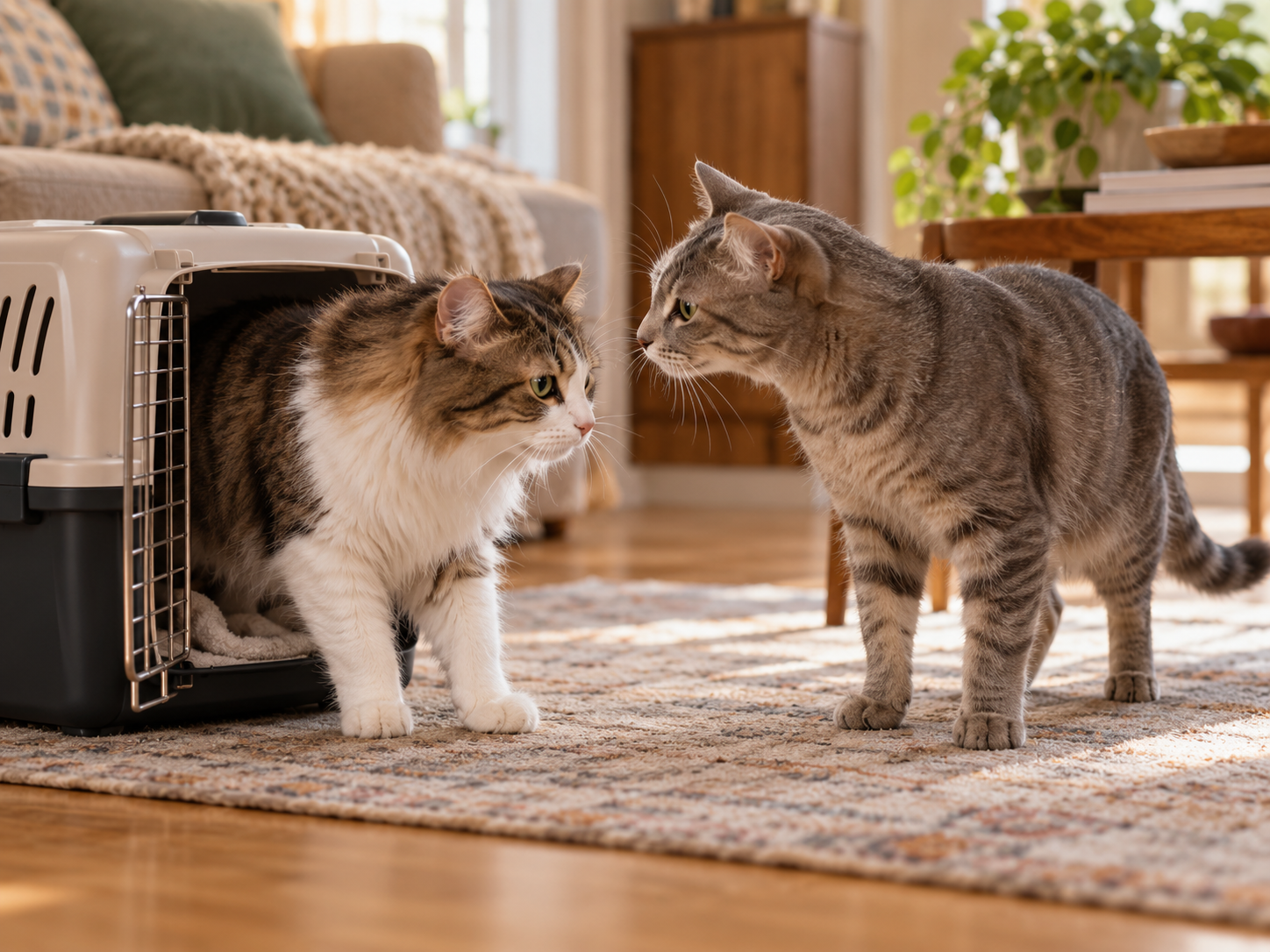
When one cat returns from the clinic carrying unfamiliar clinical odors, anxiety medications, or fear pheromones, housemate cats often fail to recognize them as family. This phenomenon, known as redirected aggression or non-recognition aggression, can trigger sudden hostility. Recognizing the profound role that scent plays in feline social structures helps owners anticipate these conflicts and take proactive steps, such as scent-swapping or temporary separation, before introducing a returning cat back into the shared living space.
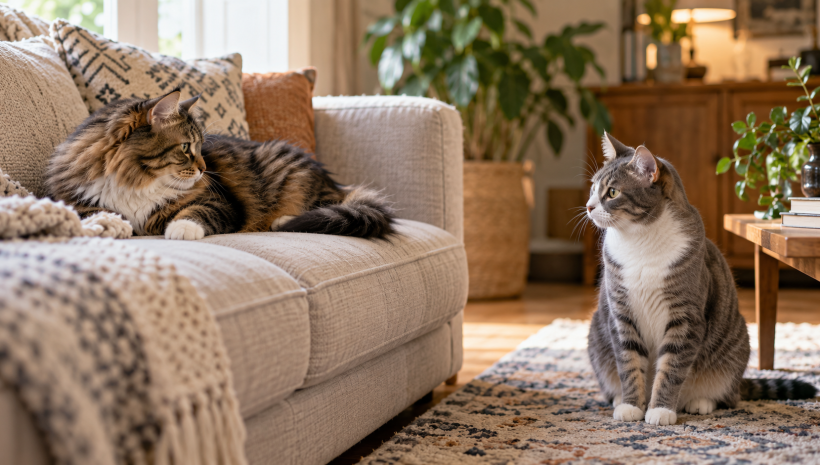
Beyond veterinary visits, everyday household activities, cleaning products, and visitors introduce foreign scents that disrupt an established olfactory map. Cats constantly survey their domain by checking these scent markers, reinforcing their psychological boundaries. When an unfamiliar odor intrudes without warning, it can provoke defensive posturing, stalking, or outright fighting between cats that previously lived in harmony. Maintaining stable scent profiles and managing introductions carefully prevents these chemical alarms from triggering household tension.
The ‘Plus-One’ Rule for Essential Resources
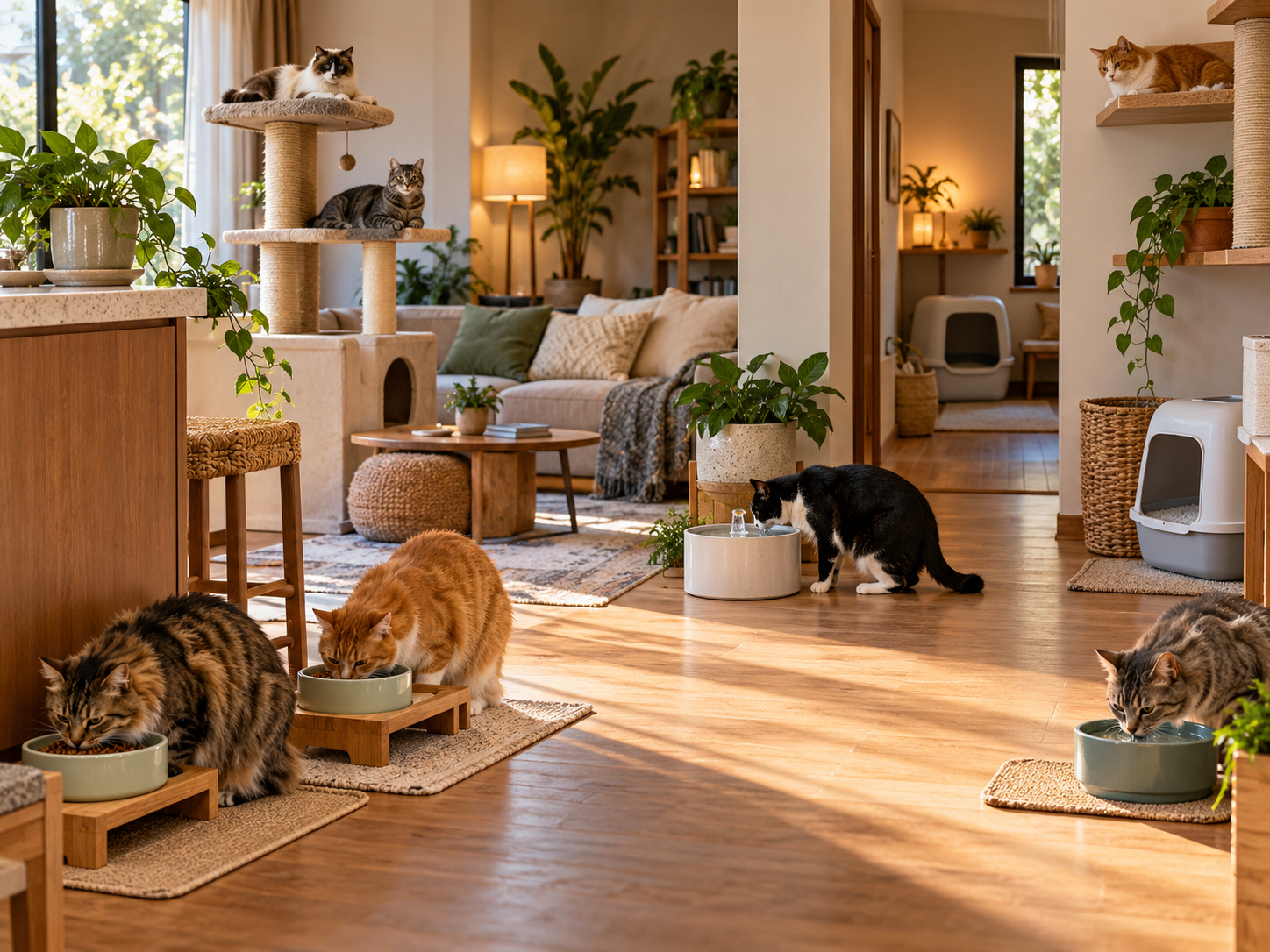
Current FelineVMA guidance emphasizes multiple, visually separated resources to reduce competition in multi-cat homes. Its caregiver guidance recommends, ideally, one of each key resource per cat plus one extra, distributed in private but accessible locations; litter boxes are also commonly recommended at roughly one per cat plus one FelineVMA intercat-tension caregiver guidance.
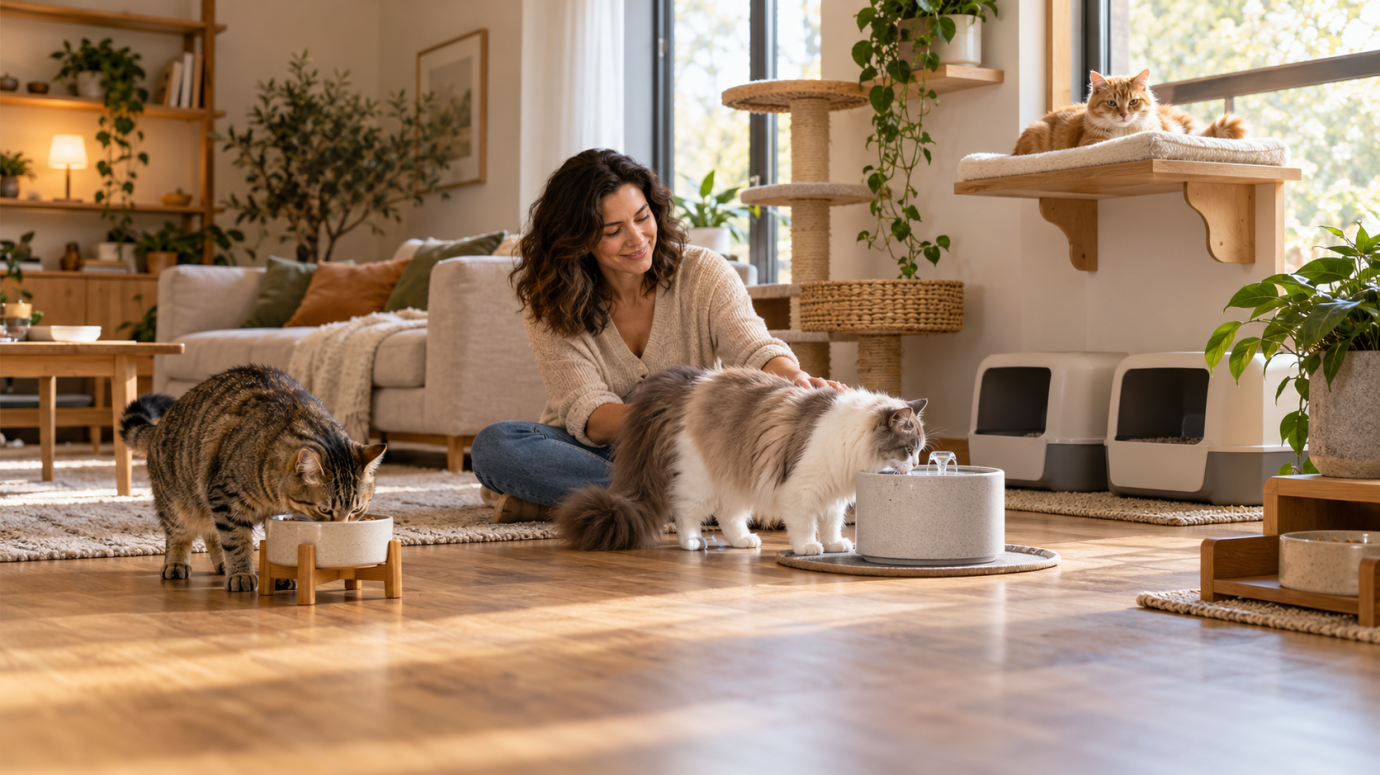
Furthermore, these resources must be strategically distributed across different rooms and vertical tiers rather than clustered together. When resources are placed side-by-side, a single dominant cat can easily guard all of them simultaneously, effectively blocking access for more timid housemates. Spreading resources out ensures that no single cat can monopolize access, allowing every animal to meet its needs without confrontation or intimidation.
Adhering strictly to the plus-one guideline removes the scarcity mindset that drives resource guarding. When cats realize that alternative feeding bowls, water stations, and elimination sites are readily available elsewhere in the home, anxiety diminishes. This spatial distribution supports natural exploratory behavior and grants every individual the autonomy required to navigate daily life without fear of ambushes or territorial disputes.
Food, Water, Space, and Litter Box Planning
Implementing effective resource planning requires examining each category of need through the lens of feline comfort and security:
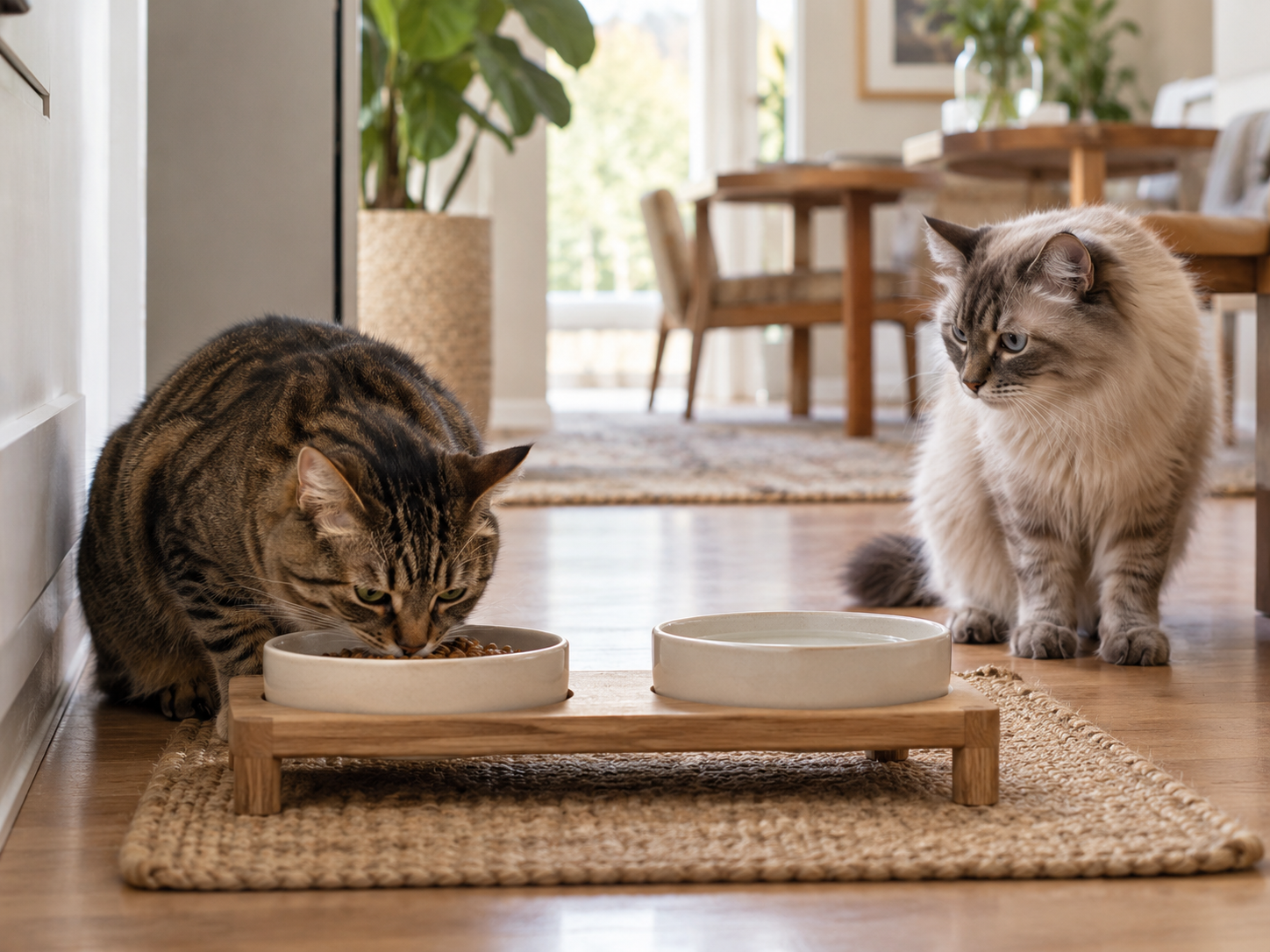
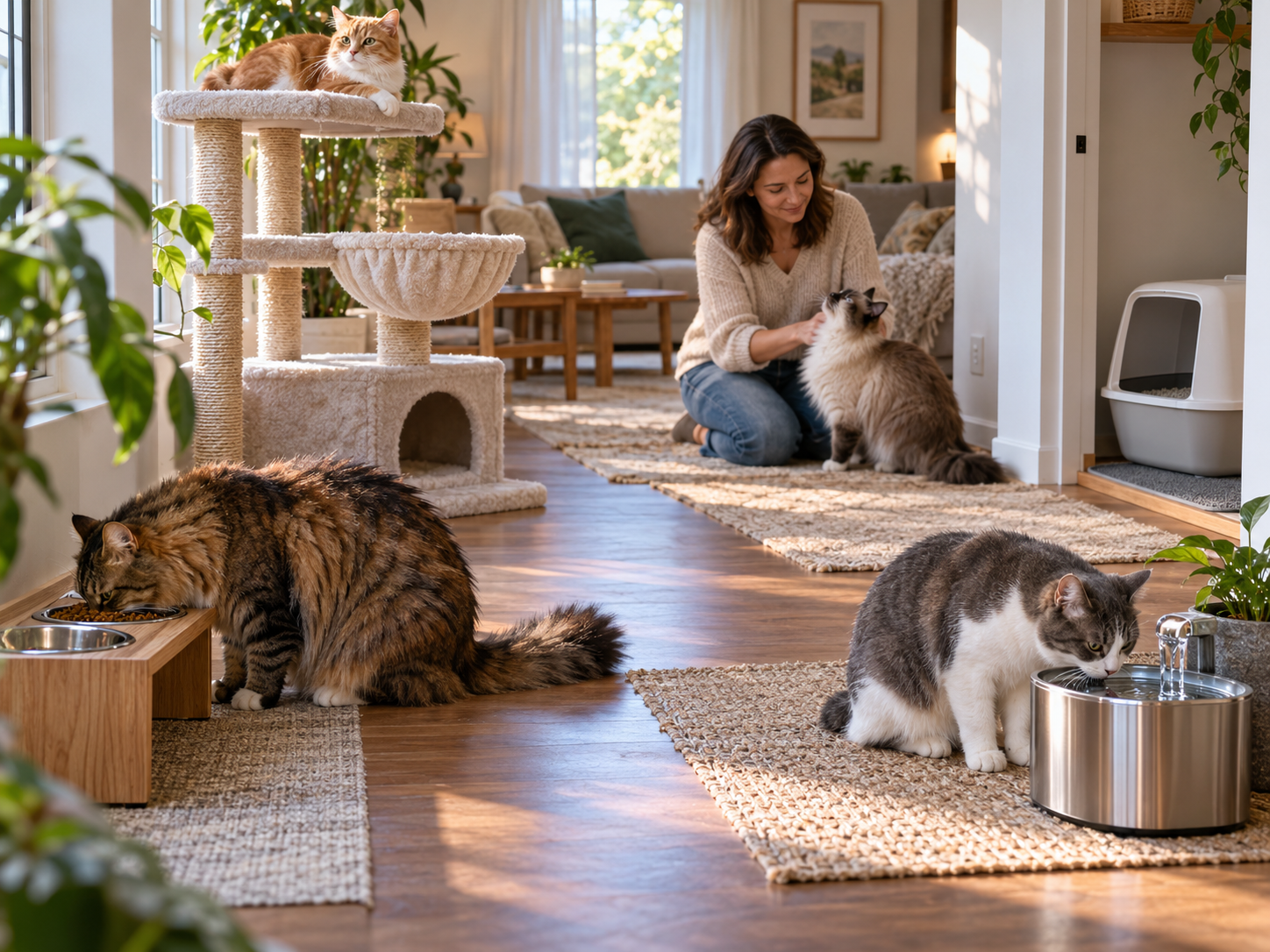
- Feeding Stations: Separate feeding bowls by placing them in distinct areas where cats can eat without feeling cornered. Cats prefer to eat facing outward with their backs protected so they can monitor their surroundings. If housemates experience tension, consider elevated feeding stations or using puzzle feeders to slow down consumption and reduce competitive pacing. Providing separate dining zones prevents opportunistic stealing and ensures that slower eaters consume their meals in peace.
- Water Sources: Cats are notoriously selective drinkers, often preferring fresh, moving water located away from their food bowls. Placing multiple wide ceramic bowls or pet fountains in quiet, low-traffic zones encourages consistent hydration. Avoid placing water directly next to litter boxes or noisy appliances. Separating water from food aligns with natural instincts, as wild felines often seek hydration sources away from their kill sites to avoid contamination.
- Litter Box Placement: Litter box aversion and inter-cat blocking are primary drivers of household tension. Boxes should be placed in open, accessible areas with at least two escape routes so a cat cannot be ambushed while eliminating. Covered boxes can make vulnerable cats feel trapped; open, uncovered boxes with low sides are generally preferred by veterinary behaviorists. Strategic placement in multiple quiet zones ensures that no single cat can control bathroom access.
- Vertical Space and Territory: Horizontal square footage matters less than three-dimensional territory. Providing cat trees, wall shelves, and window perches allows cats to navigate rooms vertically, bypassing potential floor-level standoffs and reducing overall social friction. Vertical pathways create alternative travel routes, enabling a subordinate cat to move across a room safely while a dominant cat occupies the floor below.
Maintaining Long-Term Peace and Environmental Stability
Sustaining a peaceful multi-cat environment requires ongoing observation and minor adjustments as feline relationships evolve. Owners should regularly monitor body language, resting proximities, and feeding order for subtle signs of stress, such as hesitation near shared corridors or avoidance of specific rooms. If tension appears, re-evaluating the physical layout, increasing the separation between key resources, and adding extra vertical perches often restores equilibrium.
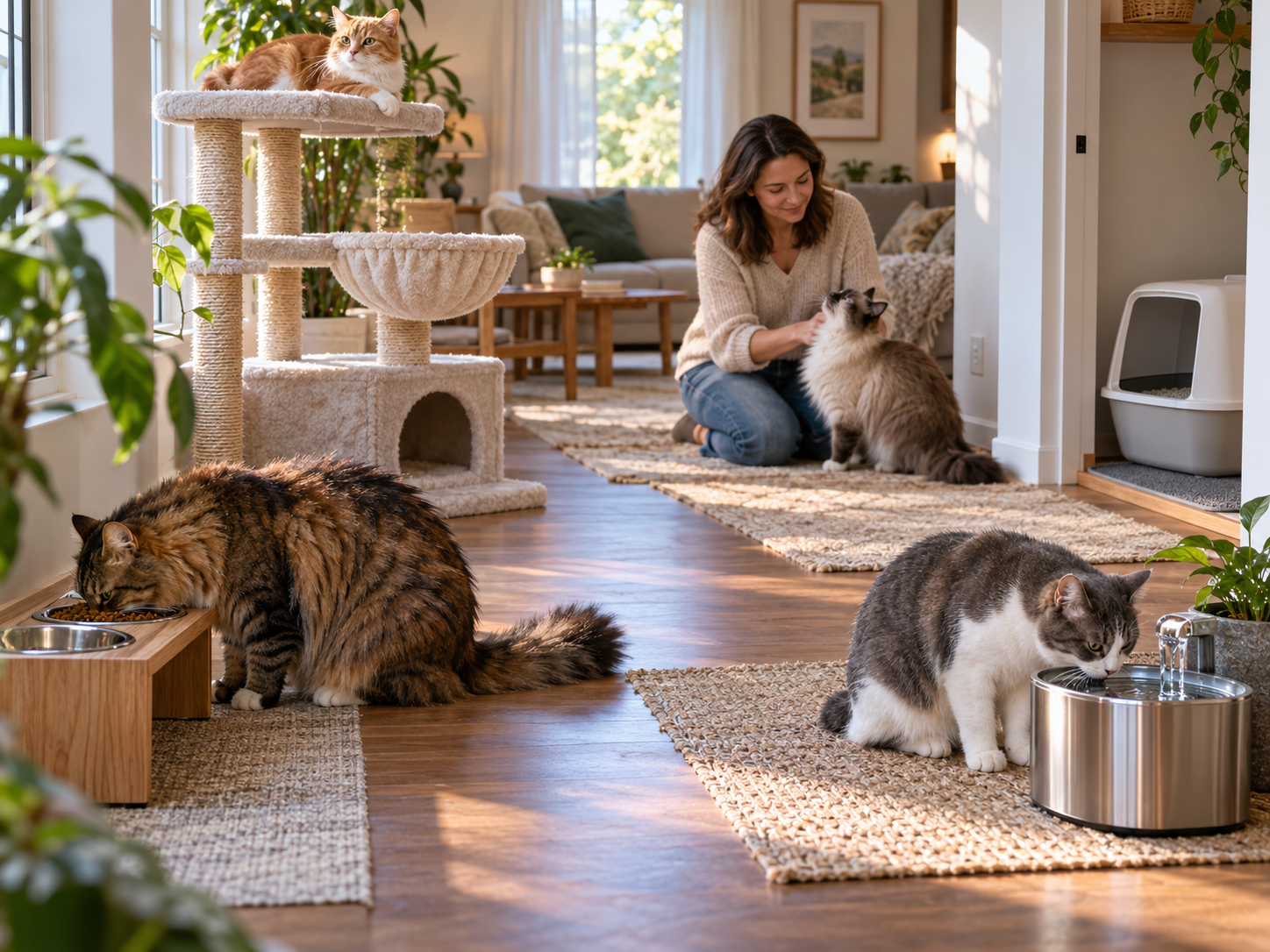
Ultimately, successful resource management transforms a potentially stressful shared home into a secure sanctuary. By honoring the solitary instincts of our feline companions through thoughtful planning, strategic distribution, and scrupulous attention to spatial needs, we cultivate an environment where every cat thrives independently and harmoniously together.
Frequently Asked Questions
Why do cats fight over food and litter boxes in a multi-cat home?
Cats are solitary hunters by nature and do not naturally share resources. When food, water, or elimination spots are scarce, restricted, or placed too close together, dominant cats may guard them, forcing subordinate cats into defensive or aggressive behaviors due to chronic stress.
What is the ‘plus-one’ rule for multi-cat resource planning?
The ‘plus-one’ rule is a veterinary guideline recommending that you provide one more resource than the total number of cats in your home (e.g., three litter boxes and three feeding stations for two cats). This ensures that no single cat can block or monopolize essential supplies.
How do veterinary visits and scent changes affect housemate relationships?
Because cats possess an exceptionally powerful sense of smell, returning from a veterinary clinic covered in clinical odors and stress pheromones can cause housemate cats to fail to recognize them. This scent shift frequently triggers sudden hostility or redirected aggression in multi-cat households Tripawds.