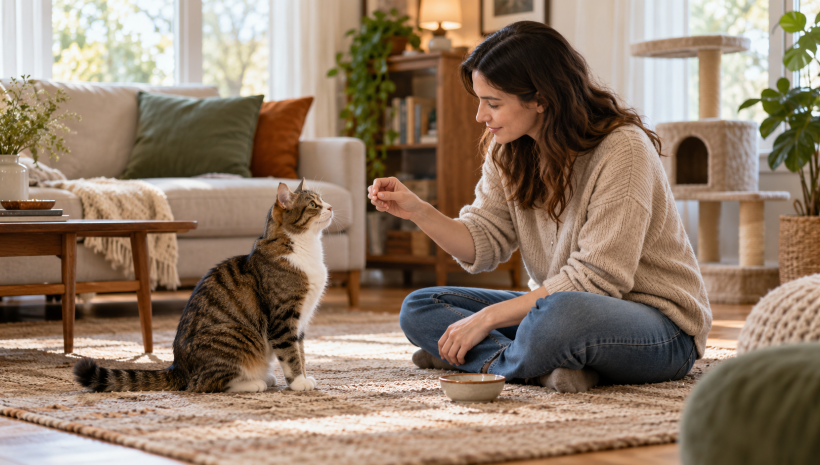
A small apartment does not need to look like a toy aisle for your cat to have a rich play routine. The useful goal is a small active set, a hidden reserve, and a predictable play session that matches the way your cat likes to hunt.
Why rotation helps in a small space
When every toy stays out, two things can happen: the room gets cluttered and familiar toys may become less interesting. The Ohio State University Indoor Pet Initiative recommends keeping only some toys available and rotating favorites back in rather than leaving everything out continuously.
For a small home, that advice has a practical bonus. You can keep the visible footprint tiny while still giving your cat variety.
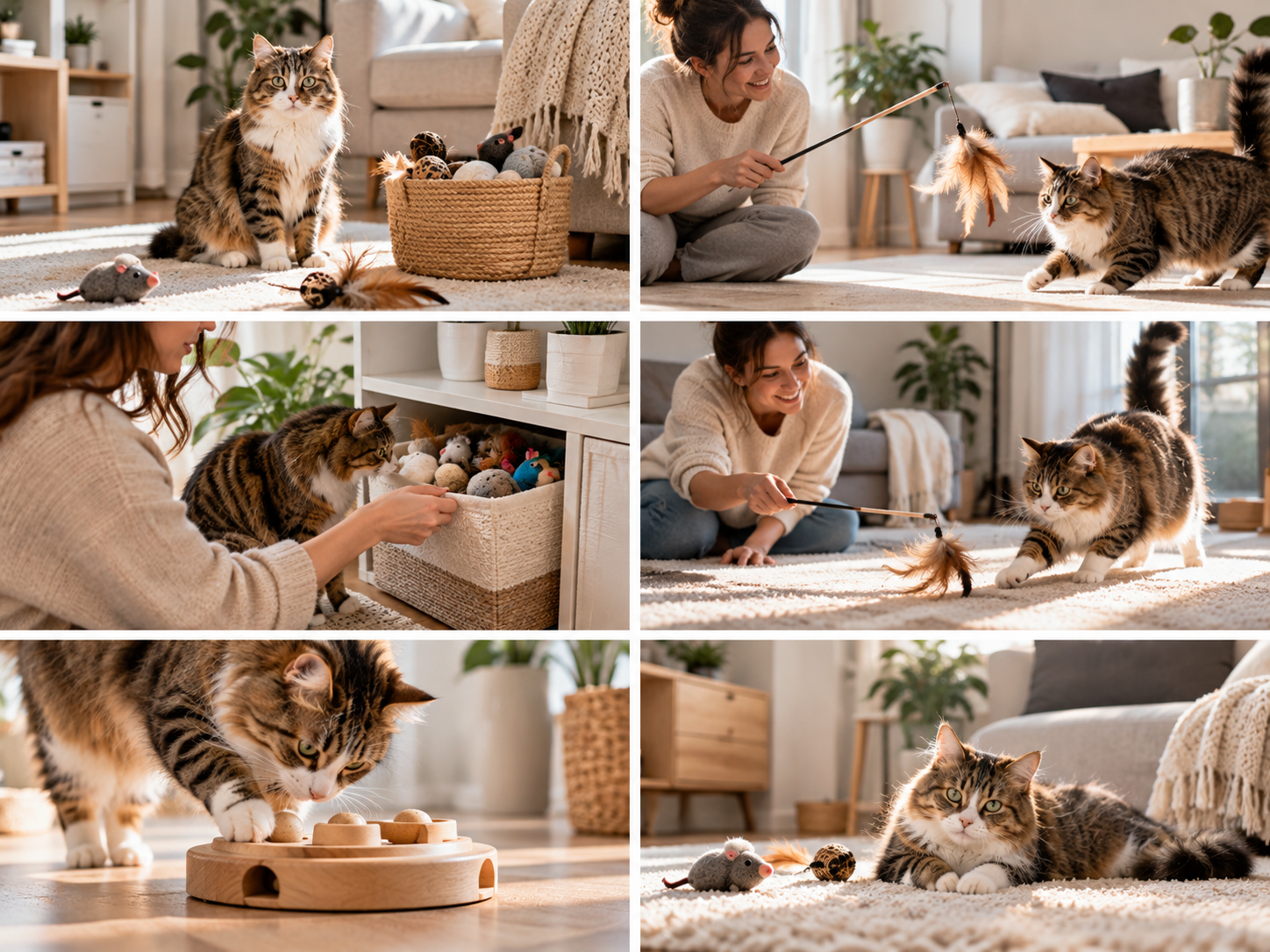
Start with three active toys
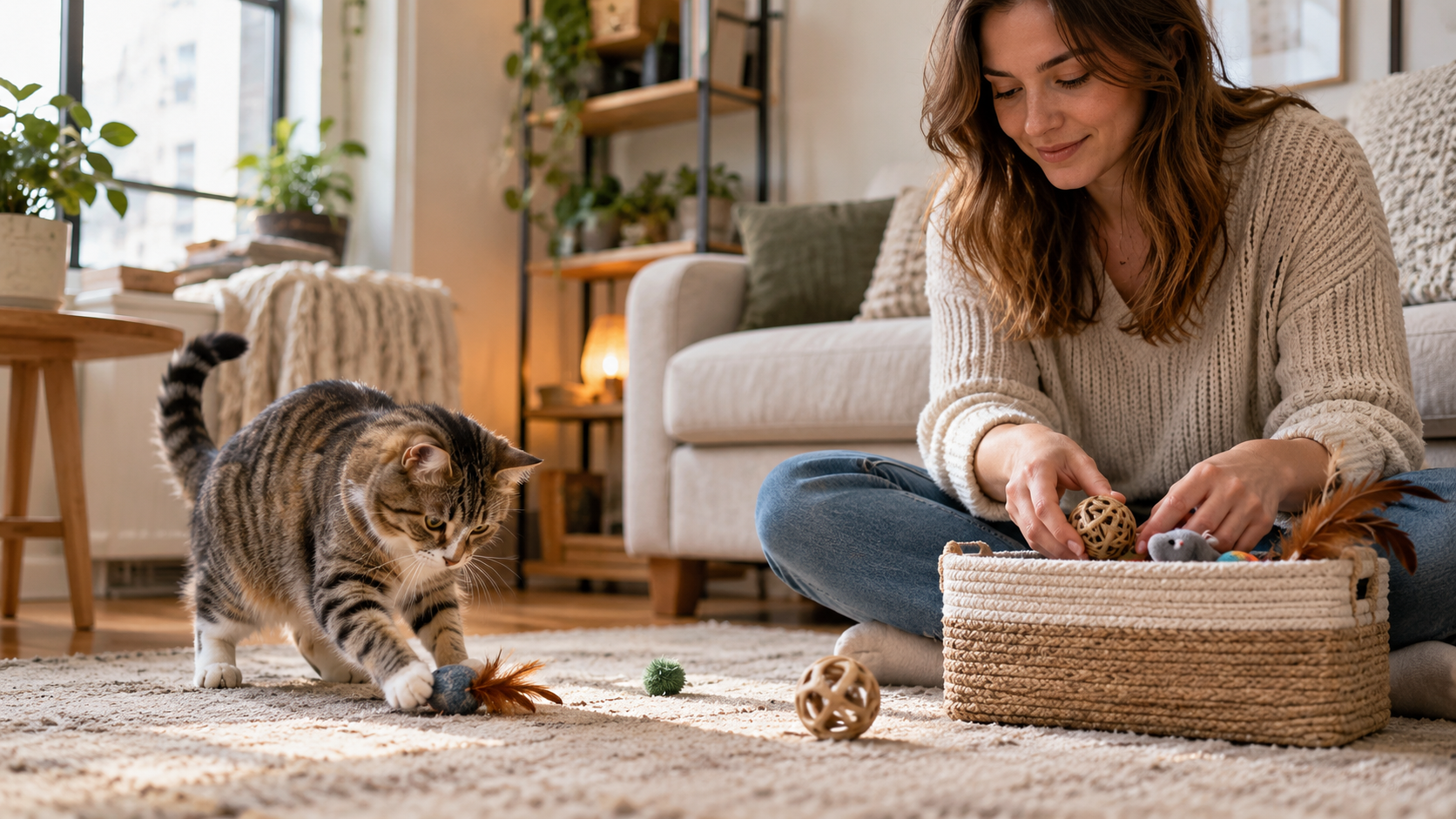
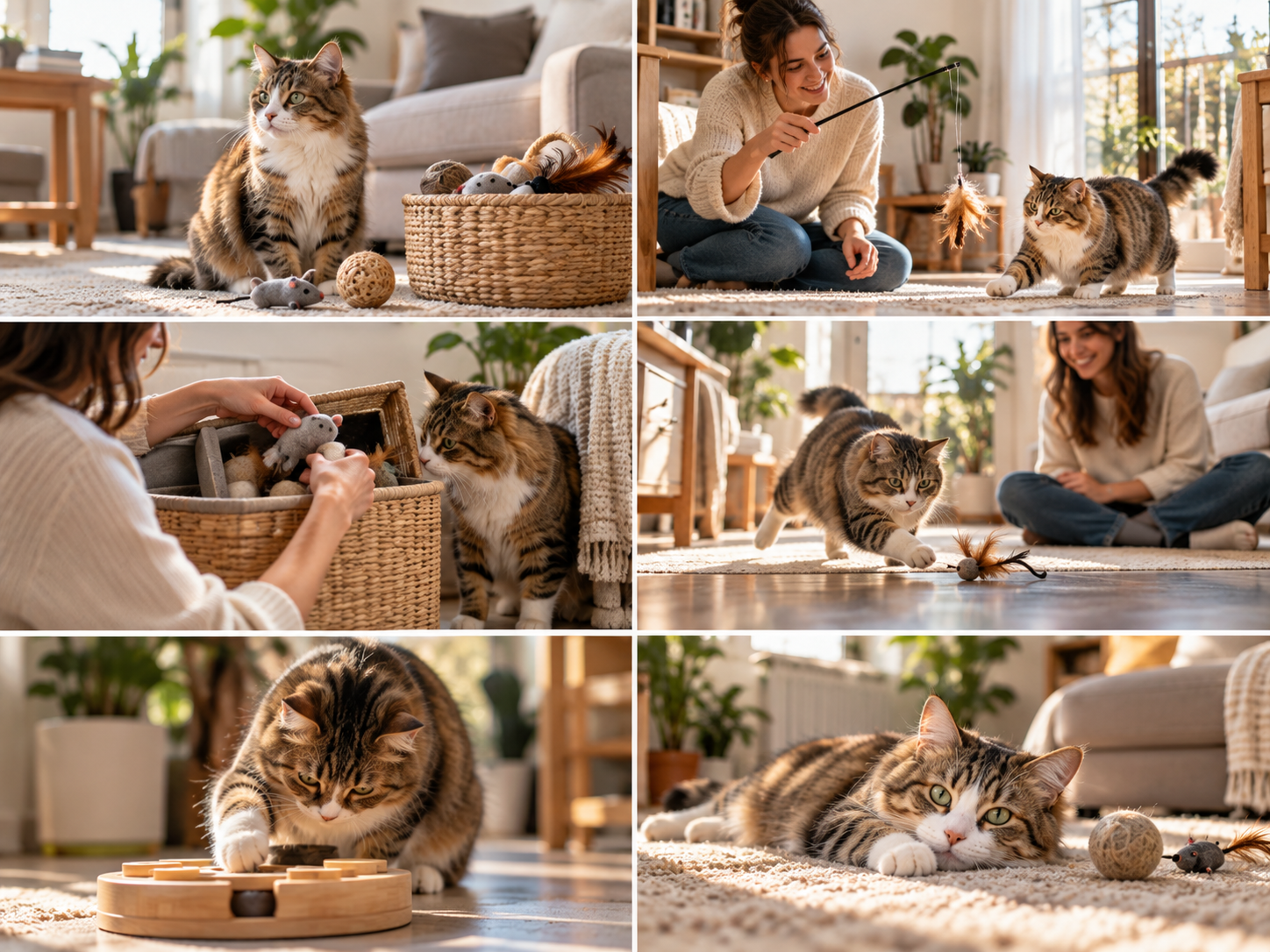
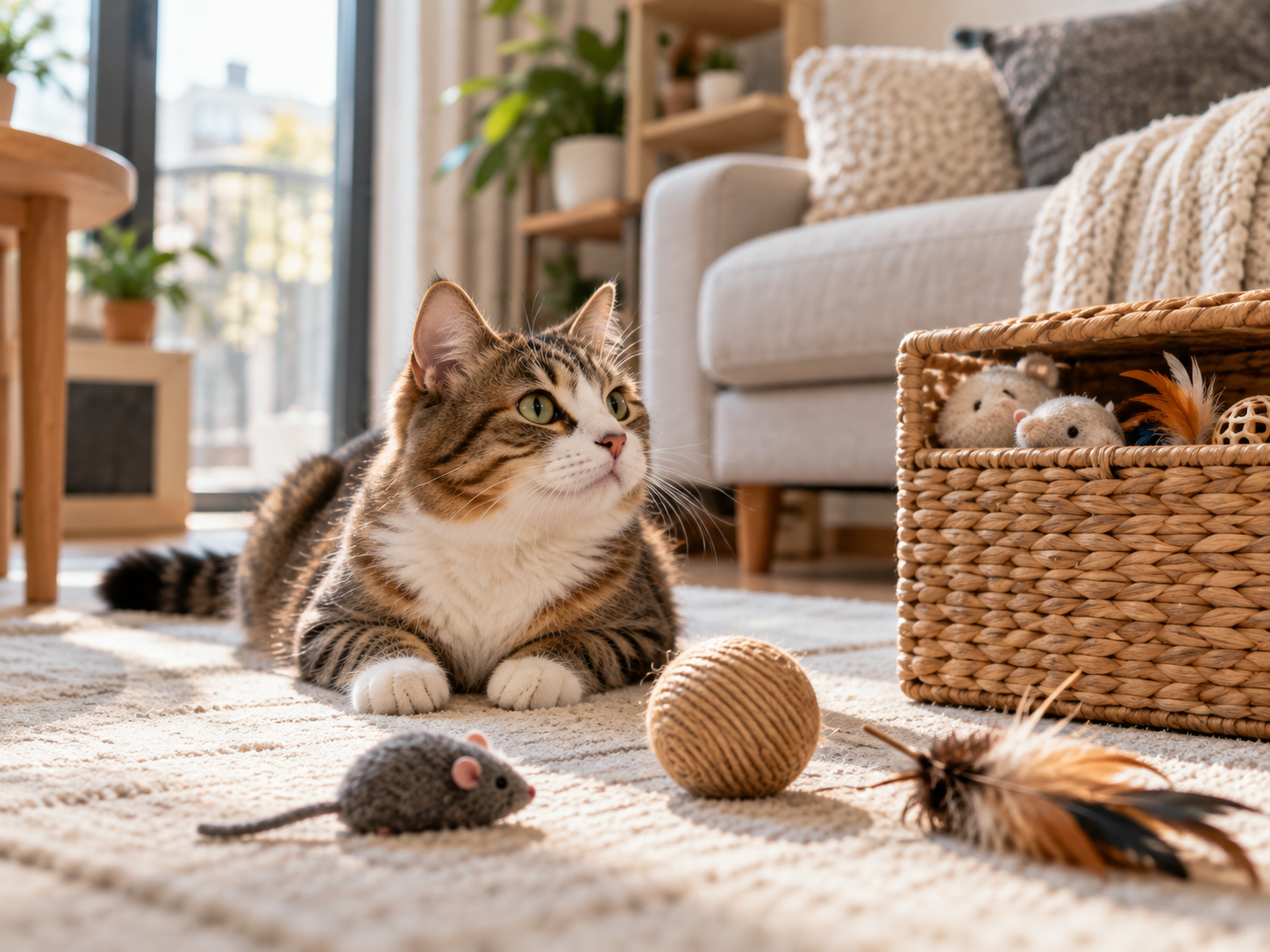
Choose about three toys that represent different kinds of movement. Store the rest in one closed bin, drawer, or bag where your cat cannot constantly access them. Once a week, swap one or two toys from the active set with toys from storage.
You do not need a rigid calendar. If your cat still plays enthusiastically with a toy, it can stay. If interest drops, rotate it out and let it become “new” again later.

Match the toy to your cat’s prey preference
Novelty matters less than relevance. Watch which type of movement gets your cat engaged:
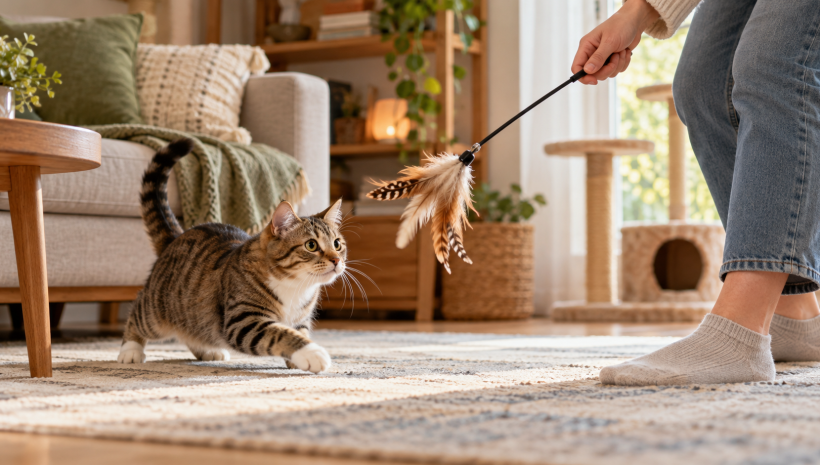
- Chase and drag: a wand or toy moved across the floor in short bursts.
- Pounce and hide: movement that disappears behind furniture or under a blanket edge.
- Roll and bat: lightweight balls or toys that move unpredictably on a hard floor.
If your cat is a dedicated chaser, rotate different chase-style toys first. You do not have to force variety for variety’s sake.
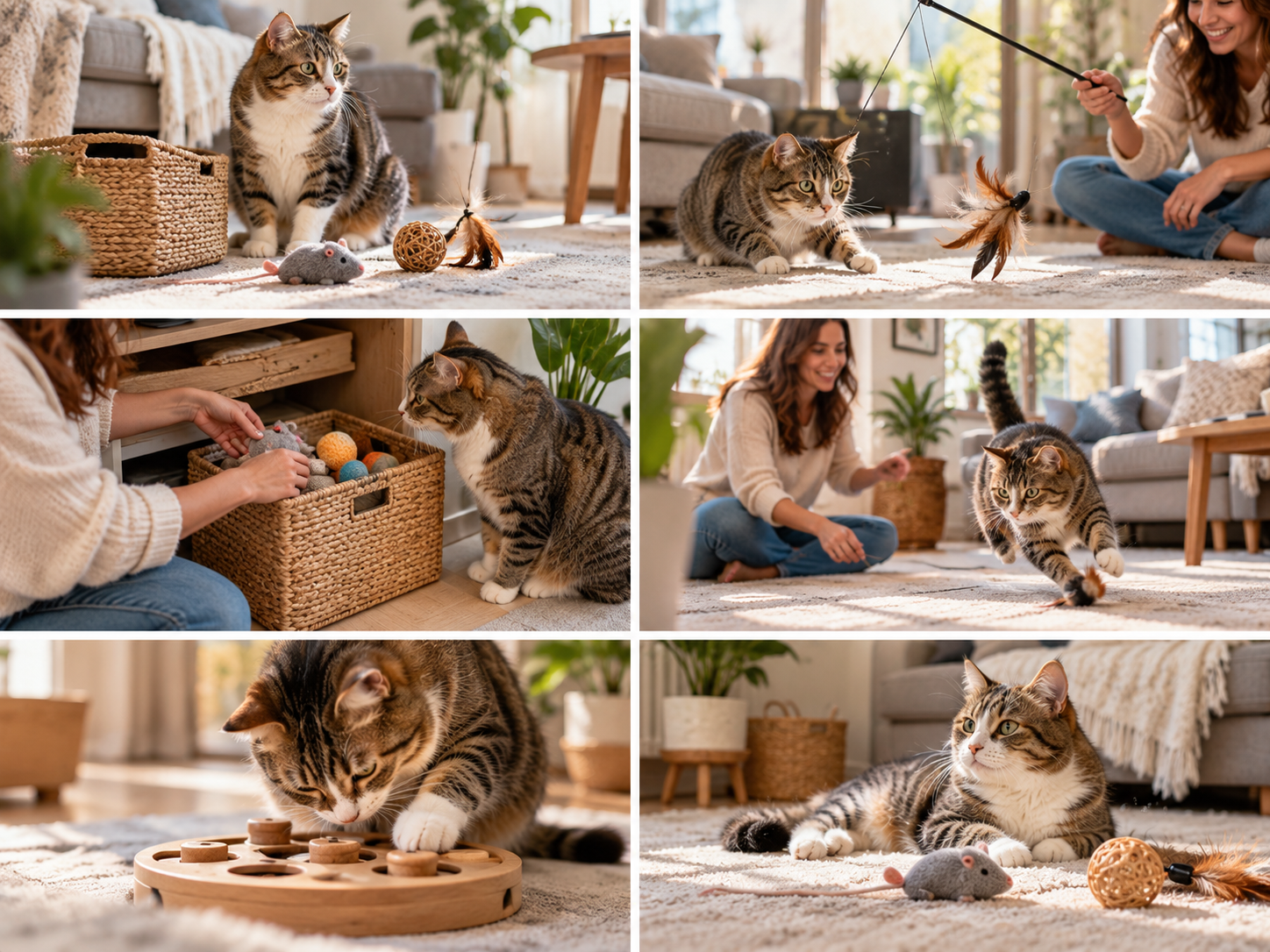
Build variety from movement, not from buying more
A toy collection can grow quickly because each new purchase looks different to a person. Your cat may care more about how something moves. Before adding another toy, see whether you can change the play pattern with what you already own. A wand can skim the floor one day, disappear behind a chair the next, and pause under a blanket edge another time.
This makes a small collection feel more varied without filling another basket. It also helps you learn what actually attracts your cat: speed, hiding, short bursts, rolling movement, or the chance to stalk before pouncing.
Keep a short scheduled play session
Rotation works best when the toys are actually used with your cat. OSU’s indoor-cat guidance recommends regular interactive play rather than relying only on toys left out all day. A short daily session can be easier to maintain than several random sessions that never become a habit.
Ten focused minutes is more useful than a room full of toys your cat ignores. Let the toy behave like prey: pause, dart, hide, and occasionally allow your cat to “catch” it.
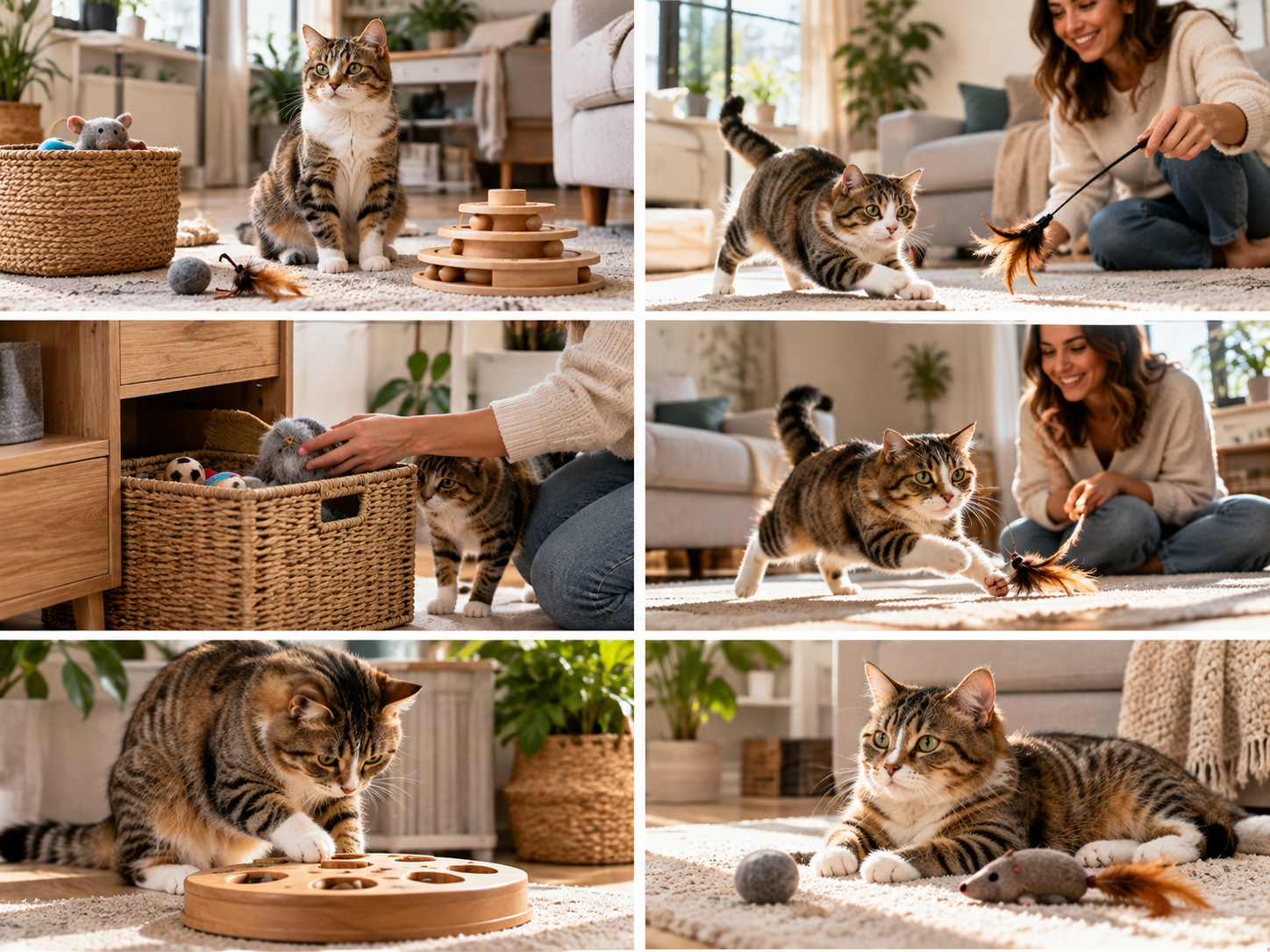
Notice the difference between novelty and real interest
When you bring a toy back from storage, watch the first few minutes. Does your cat track it with the eyes, move toward it, crouch, chase, or bat? Or is the reaction only a brief sniff before walking away? That small observation tells you whether the toy belongs in the active set.
You do not need a spreadsheet. A simple mental note is enough: “chases ribbons,” “likes rolling balls at night,” or “loses interest in plush toys.” Over time, those patterns make rotation easier because you stop guessing.

One-bin storage keeps the system easy
The storage system should be simpler than the play system. One small container is enough. Put it in a closet, under a bed, or on a shelf. When play ends, return inactive toys to the container instead of letting the collection spread across the room.
Attach the weekly swap to something you already do, such as a weekend tidy-up. That turns rotation into a two-minute habit rather than another project.
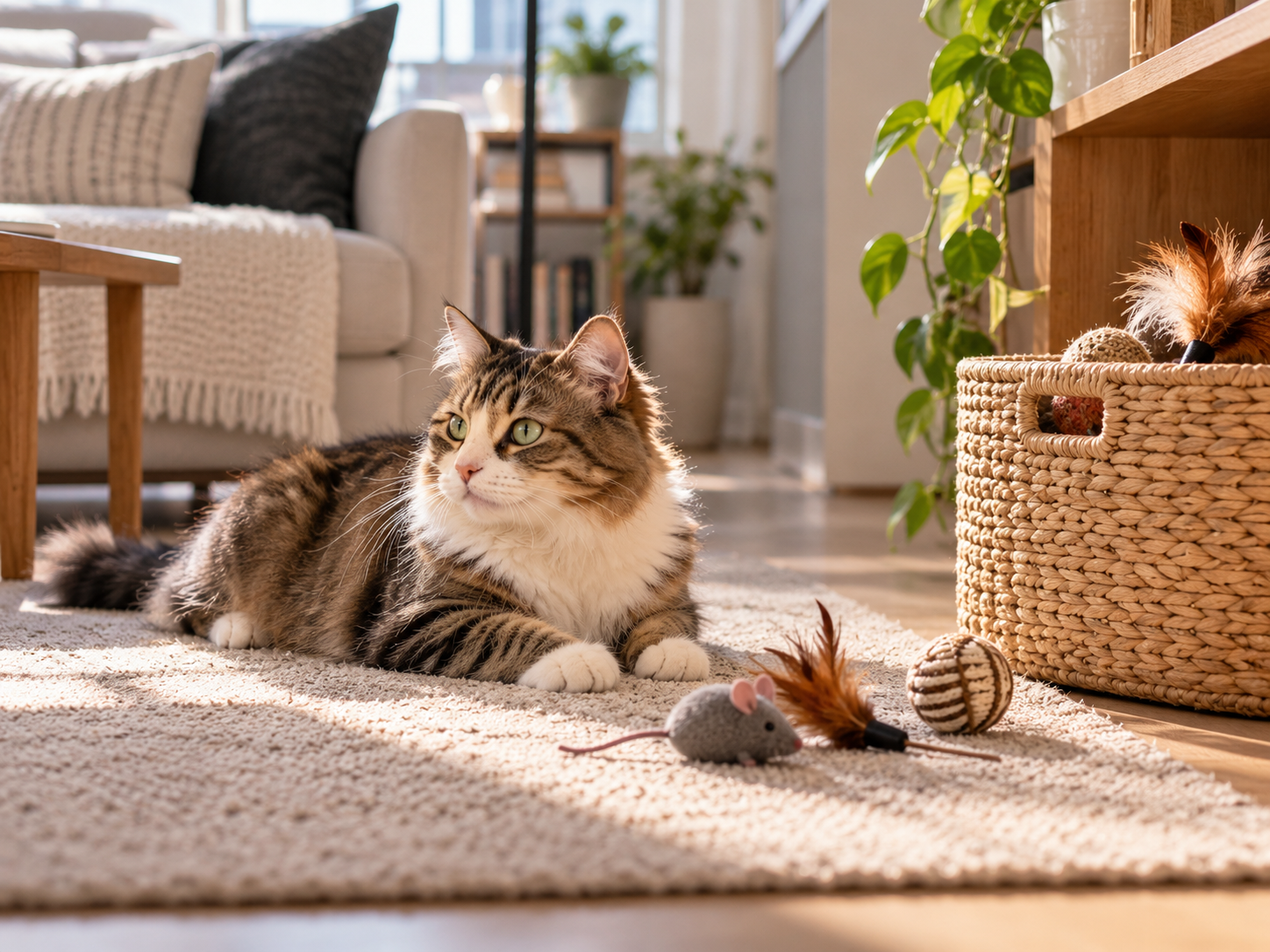
Keep interactive toys as interactive toys
Some toys work best when you are part of the game. Wand-style or string-style toys are useful because you can control speed, direction, and hiding places. When the session ends, put the interactive toy away rather than treating it as part of the always-available floor collection. That preserves the distinction between “play with you” and independent toys your cat can encounter on its own.
The rotation bin can therefore hold two groups: independent toys that cycle through the room, and interactive toys that appear mainly during shared play.
What if you have two cats?
Watch whether one cat consistently monopolizes the active toys or the play session. The solution is not always more toys. Separate short sessions, extra distance between play zones, or a second small active set may work better than leaving a larger pile on the floor.
Also notice whether both cats prefer the same movement style. One may want a fast chase while the other waits for slower stalking opportunities. Rotating by play style, not only by object, makes it easier to give each cat a fair chance.
Know the limits of toy rotation
Rotation is an enrichment tool, not a treatment. If your cat suddenly stops playing, withdraws from normal interaction, or shows a broader behavior change, consider whether pain, illness, stress, or another issue could be involved and speak with a veterinarian when appropriate.
Quick rotation routine
- Keep about three toys active.
- Store the rest out of sight.
- Notice whether your cat prefers chasing, pouncing, hiding, or batting.
- Run one short interactive play session most days.
- Swap one or two toys roughly once a week, or when interest clearly drops.
- Keep a few strong favorites instead of constantly expanding the collection.

Frequently asked questions
Do I have to hide every toy?
No. Keep a small active set available and rotate the rest.
My cat ignores the newly rotated toy. Is the system failing?
No. Try a different movement style. The toy may simply not match what your cat wants to hunt that day.
Can rotation replace interactive play?
No. It supports play; it does not replace time spent actively engaging your cat.
How often should I buy new toys?
There is no fixed schedule. First test new movement patterns with the toys you already have and replace or add only when there is a clear gap.
For the moments that deserve to stay visible:
If playtime has given you a favorite photo of your cat, MewKind can turn it into a personalized keepsake. Explore printed products.