

For many cat owners, living with a playful feline is a source of daily joy, but it can also present unexpected challenges when normal play behavior crosses the line into human-targeted aggression. If your cat treats your walking feet like prey, you are not alone. Understanding the root causes of this behavior and adopting proper redirection techniques can transform your household dynamic into a safer, more harmonious environment for both you and your cat.
Why Cats Target Moving Ankles
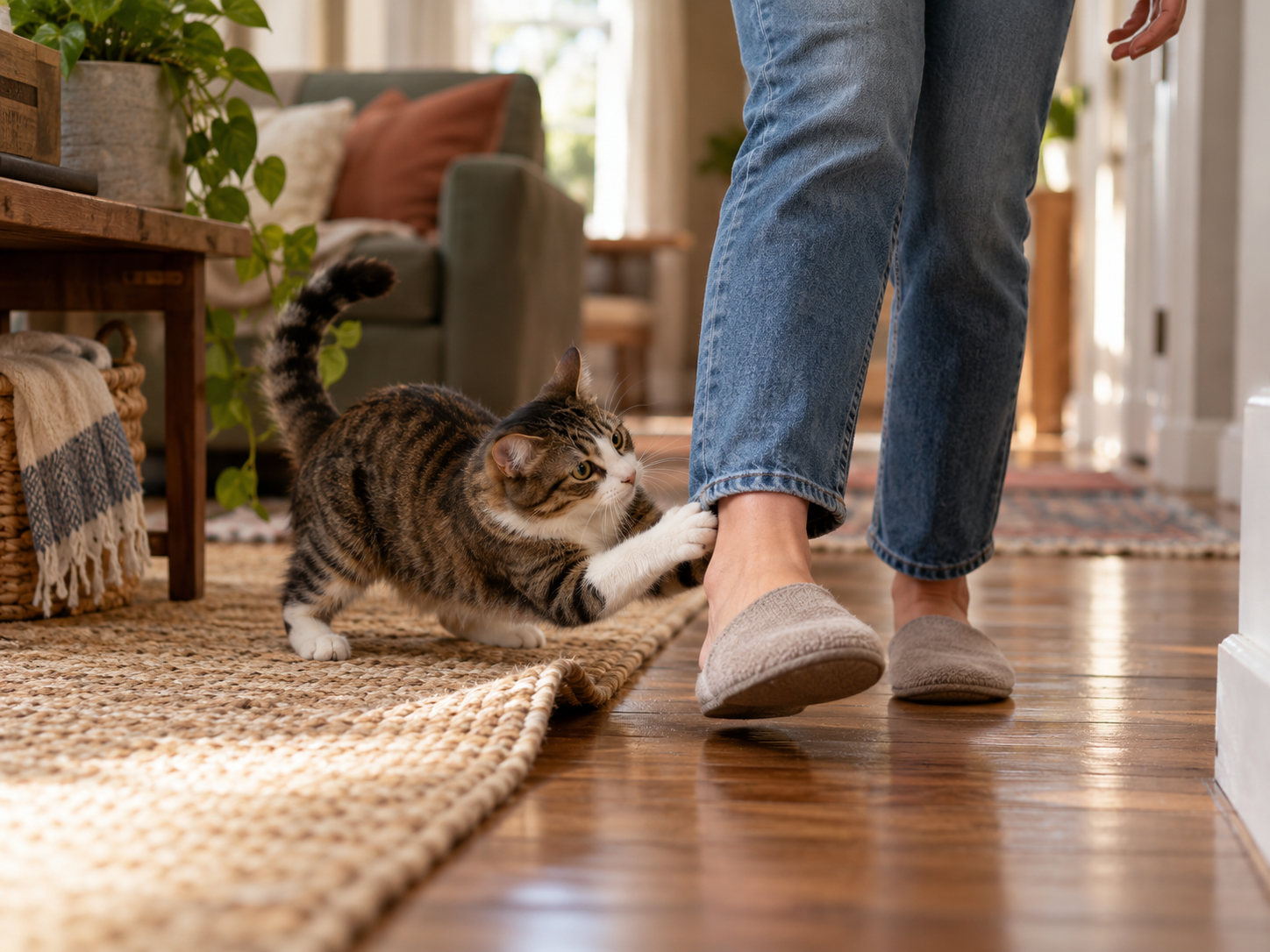
Cats are natural predators with deeply ingrained hunting instincts that persist even in well-fed, indoor pets. When humans walk through a room, feet and ankles move near the floor in a low, darting pattern that closely resembles small, unpredictable prey-like objects Cats may target moving ankles because they act as small, unpredictable prey-like objects near the floor during normal walking.. Kittens and high-energy adult cats often view these moving targets as an irresistible invitation to practice stalking, pouncing, and biting. This behavior is rarely born out of genuine malice; rather, it is an expression of pent-up predatory energy directed at the most convenient moving stimulus available in their environment.
When observing this behavior closely, it becomes clear that physical movement is the primary trigger. In a natural outdoor setting, a cat would spot a rodent or bird moving through grass, stalk the target, and launch a sudden ambush. Inside a home, human ankles mimic this exact dynamic. The slow stride, the sudden stop, and the rhythmic shifting of weight provide all the visual cues a predatory hunter looks for. Because indoor cats lack live prey to chase, they adapt their instincts to whatever motion is available in their territory. Recognizing this biological drive helps remove personal frustration, allowing owners to respond calmly rather than punishing the cat, which would only create fear and confusion.

Furthermore, boredom and excess energy significantly amplify this tendency. A cat that spends long hours alone while humans are away will often experience a surge of activity when someone finally enters the room. This burst of energy seeks an immediate outlet. If interactive play sessions or appropriate hunting toys are not regularly provided, the cat naturally turns to the nearest moving object—your feet—to burn off steam. Establishing a structured routine of play before peak activity times can greatly reduce these ambush attempts.
Recognizing Household Safety and Tripping Hazards
While ankle attacks might seem like a harmless quirk at first, they carry tangible physical risks. Unexpected ambushes around corners or down hallways can easily cause a startled owner to stumble or lose their balance. Ankle biting presents a physical tripping hazard in the home environment Ankle biting presents a physical tripping hazard in the home environment., particularly for individuals with limited mobility, older adults, or anyone carrying items across the house. Addressing this behavior promptly is essential for maintaining household safety and preventing accidental falls.

Beyond the immediate risk of a fall, sudden ankle grabs can cause sharp pain and minor skin punctures, which require proper cleaning and first aid to prevent infection. In households with children or elderly residents, the unpredictability of these attacks can create an atmosphere of tension where people feel uneasy walking through certain rooms or hallways. Taking proactive steps to manage and redirect this predatory behavior restores peace of mind and ensures that daily movement around the house remains safe for everyone.
Evaluating your living space for potential hazard zones is a practical way to manage risk while training is underway. Hallways with poor lighting, narrow entryways, and stairwells are common locations where surprise attacks occur because cats can easily conceal themselves behind furniture or doorframes. Being mindful in these transition areas, wearing supportive footwear during high-activity periods, and carrying a toy to distract the cat before entering a known ambush spot can prevent surprise incidents while long-term behavioral changes take effect.
Redirecting Predatory Energy and Play
Stopping ankle attacks requires changing how you interact with your cat and providing appropriate outlets for their hunting drive. First and foremost, avoid hand-wrestling or using your bare feet and hands as toys. Engaging in rough play with human limbs teaches cats that skin is an acceptable target for biting and scratching.
Instead, introduce interactive toys that allow your cat to channel their predatory instincts safely. Wand toys equipped with feathers or faux prey can be dragged along the ground at a distance, satisfying the cat’s desire to stalk and chase an appropriate target. If your cat intercepts your path, pause immediately, redirect their attention toward an acceptable toy, and reward calm behavior with praise or a small treat once they engage with the toy instead of your feet.
Consistency is vital when implementing redirection techniques. Every member of the household must follow the same rules: never encourage a cat to swat at hands or feet, and always have an approved toy nearby to intercept an impending pounce. If an attack does occur, avoid shouting or making sudden flailing motions, which can inadvertently reinforce the behavior by making the human seem like lively, reactive prey. Instead, stand still, become as uninteresting as possible, and wait for the cat to disengage before offering an appropriate alternative outlet for their energy.

Providing multiple daily play sessions that mimic the natural hunt-catch-kill cycle can also drain excess energy. Conclude each play session with a small meal or treat so the cat experiences the biological satisfaction of a successful hunt, followed by grooming and rest. By meeting their physical and mental stimulation needs, cats are far less likely to seek out human ankles for entertainment during quiet hours.
Frequently Asked Questions
Why does my cat suddenly attack my ankles when I walk by?
Your cat’s predatory instincts are triggered by the motion of your feet near the floor. Moving ankles mimic small, erratic prey, prompting an instinctive ambush response.

How can I stop my cat from biting my hands and feet during play?
Never use your hands or feet as playthings. Always use interactive toys like wand toys or kickers to redirect their hunting energy away from your body.