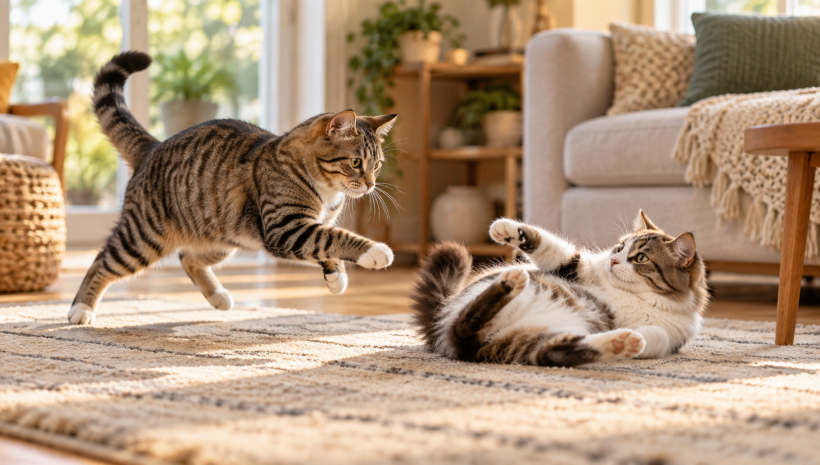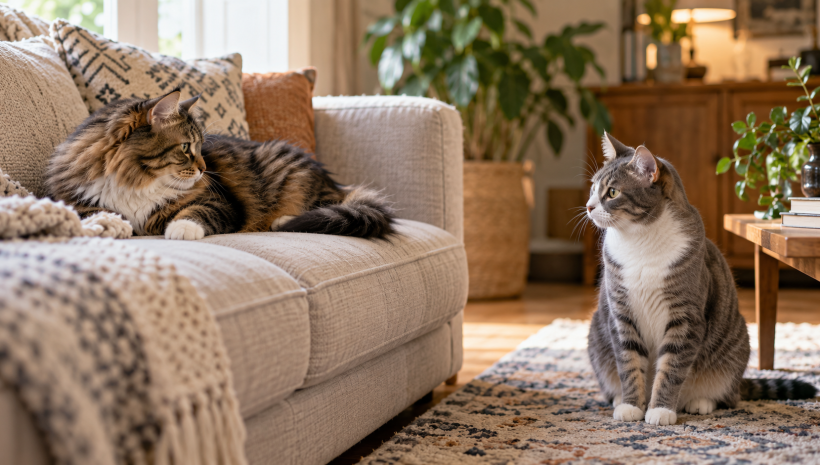

Cats can learn everyday habits without shouting, spraying water, or turning the relationship into a contest. Positive reinforcement is simple in principle: when your cat performs a behavior you want to see again, something the cat values follows quickly.
The Feline Veterinary Medical Association supports positive reinforcement for cats and notes that rewards can include food, play, catnip, petting, or grooming depending on what the individual cat finds rewarding. The American Veterinary Society of Animal Behavior likewise recommends reward-based methods and warns about welfare and relationship risks associated with aversive training.
Choose one tiny behavior at a time
“Be good” is not a behavior a cat can understand. Pick something observable and specific, such as:
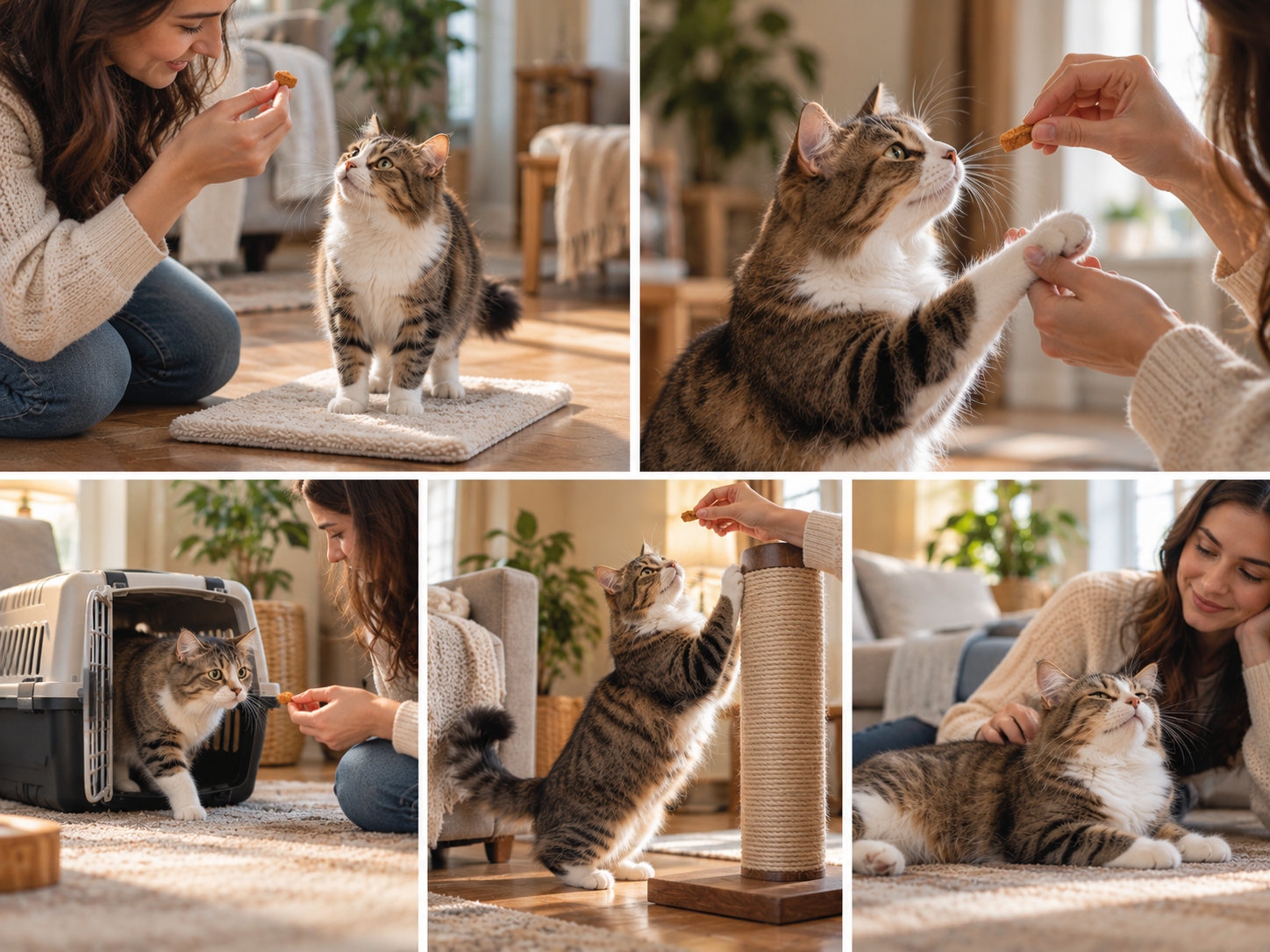
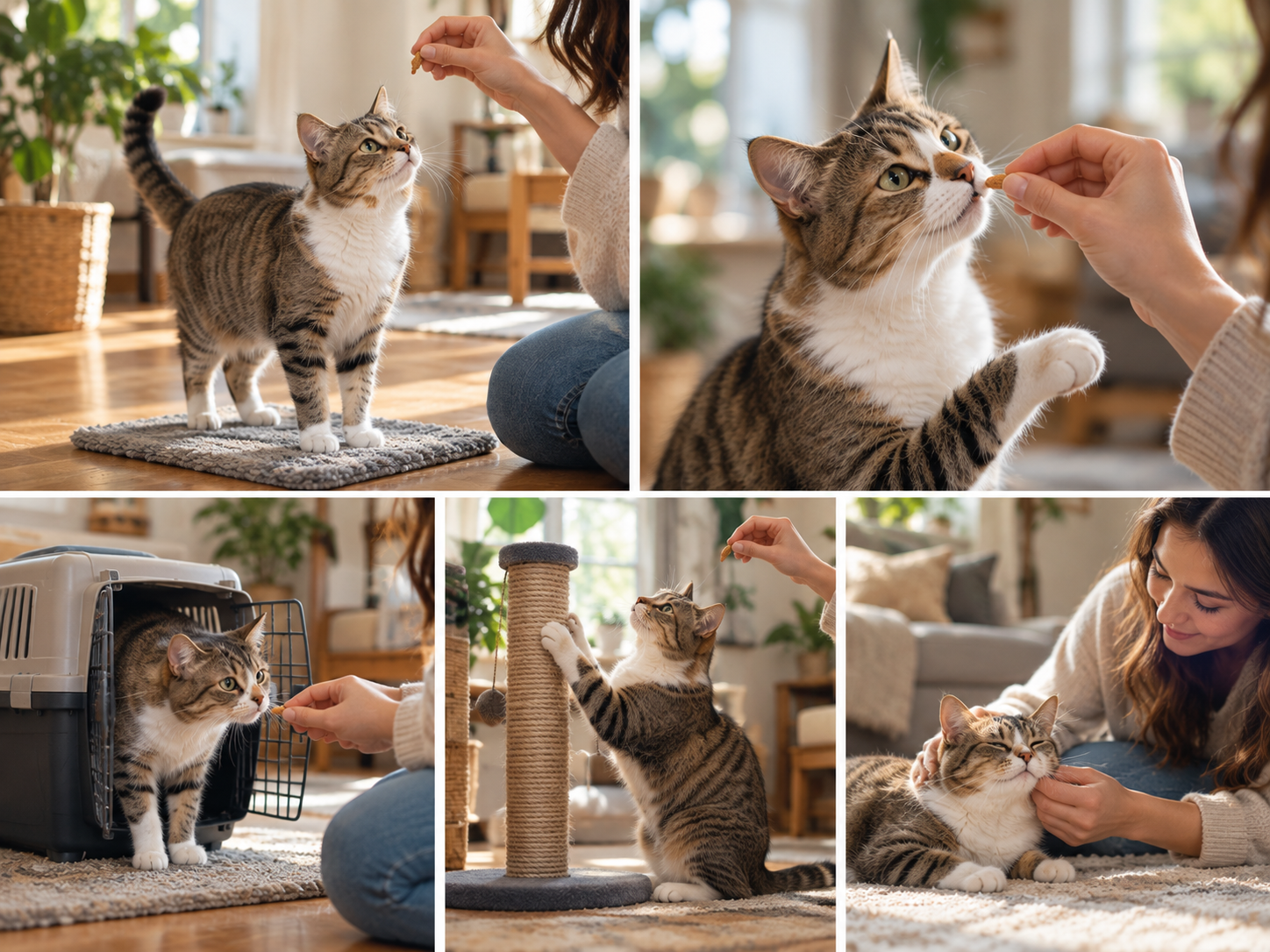
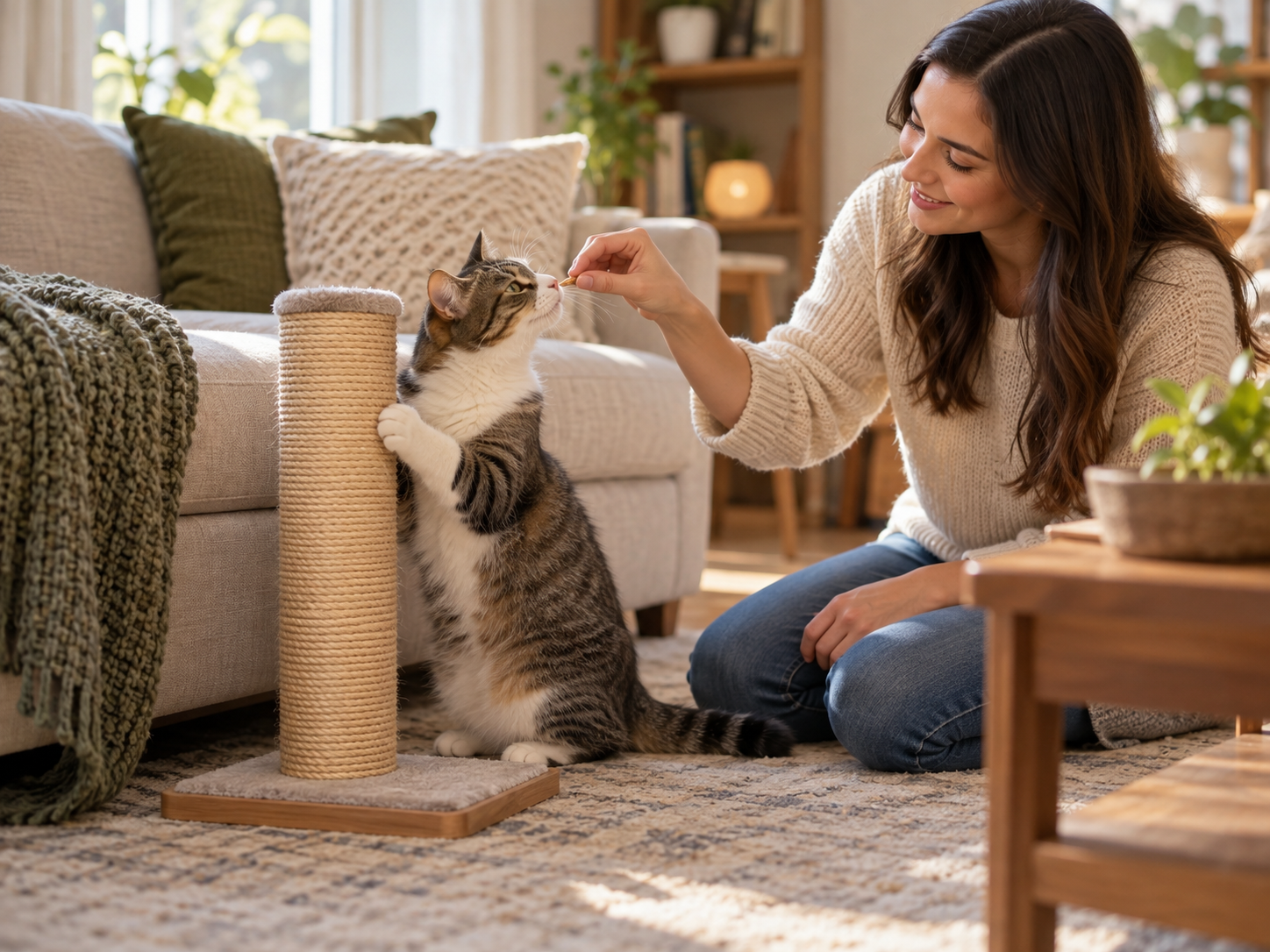
- putting all four paws on the scratching post;
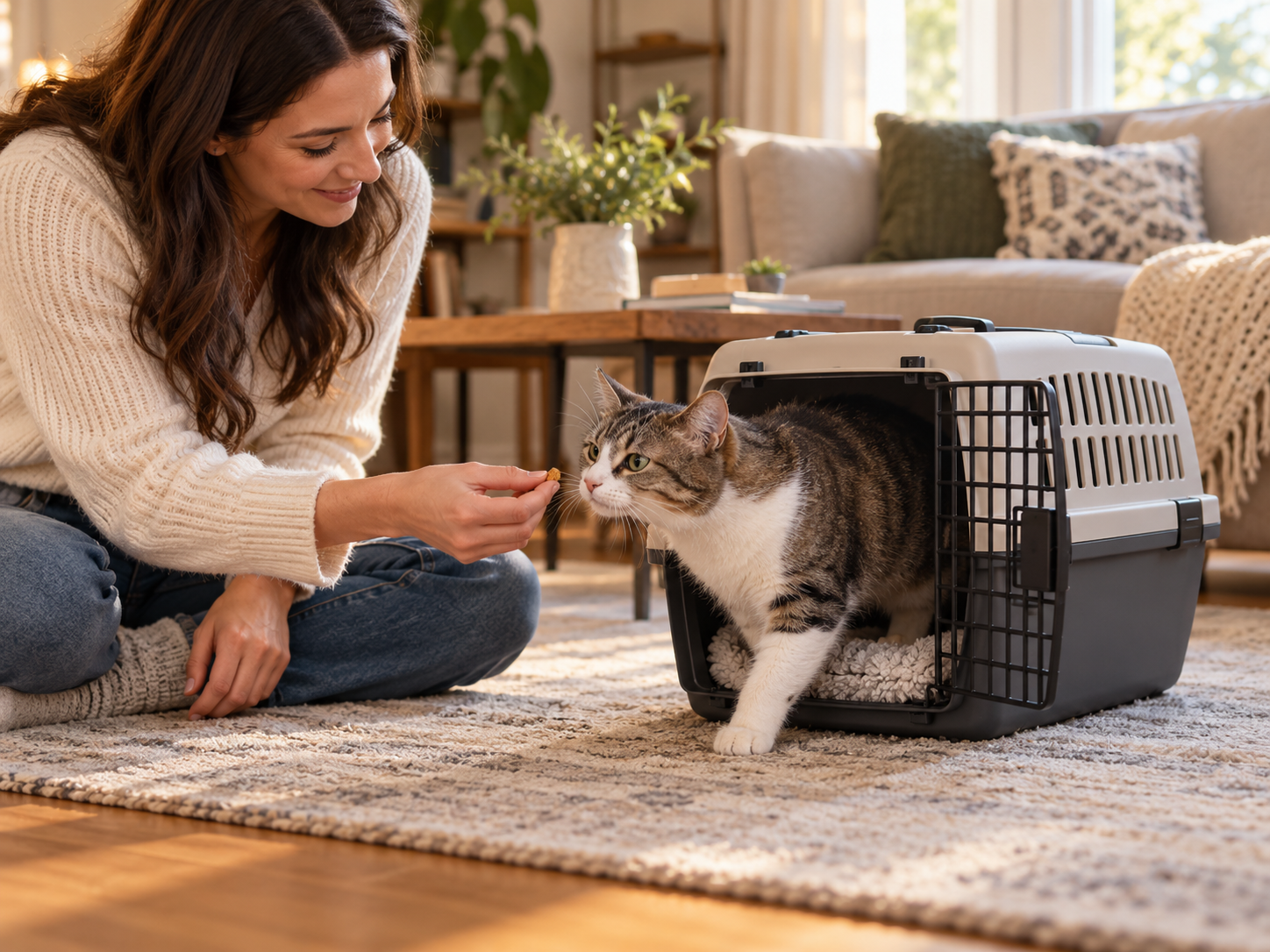
- stepping into the carrier;
- coming to a mat when called;
- waiting on the floor instead of climbing onto a food-prep surface;
- allowing a brief grooming or handling step.
The smaller the goal, the easier it is to reward the exact moment you want.
Reward quickly
Timing is one of the most important parts of reinforcement. Feline veterinary guidance emphasizes giving the reward immediately after the desired behavior—within only a few seconds—so the cat can connect the action with the outcome.
If you wait until you have walked into another room to find a treat, the connection may be unclear. Prepare the reward before the training moment begins.
Use a consistent marker if it helps
Some people use a clicker; others use a short word such as “yes.” The purpose is not to create a trick. It is to mark the exact instant the desired behavior happened, then follow with the reward. A consistent marker can be useful when the behavior itself lasts only a second.
Keep the sequence simple: behavior, marker, reward. If a marker makes the session feel complicated, skip it and focus on delivering the reward immediately. Clear timing matters more than owning special training equipment.
Find the reward your cat actually values
Not every cat is motivated by the same thing. One may work enthusiastically for a tiny food reward while another responds better to a short wand-toy chase or gentle attention.
Test several options and use the one that reliably changes behavior. Keep food rewards small so a short training session does not become a second meal.
Set the room up before you start
Short sessions work best when you remove unnecessary friction. Have the reward ready, choose a quiet moment, and decide what single behavior you are reinforcing. If you are training carrier entry, the carrier should already be open and stable. If you are reinforcing a scratching post, the post should already be in the location where the behavior is most likely to happen.
This preparation keeps the session focused on the cat’s choice instead of on you searching for treats, moving furniture, or changing the rules halfway through.
Reinforce the first useful step
Do not wait for perfection. If you are teaching carrier comfort, reward looking toward the carrier, then approaching it, then touching it, then stepping inside. This keeps the process understandable and avoids asking for too much at once.
The same idea works for scratching. Reward investigation of the correct surface before expecting a full scratching session.
Make the desired behavior easier than the unwanted one
Training works better when the environment helps. Put the scratching post beside the sofa your cat currently scratches. Leave the carrier open as part of the room rather than producing it only before a stressful trip. Place the training mat where you actually need the cat to settle.
Positive reinforcement is not only about adding rewards. It is also about arranging the situation so the right choice is obvious and easy.
Why punishment can backfire
Punishment may stop a behavior in the moment without teaching the cat what to do instead. Veterinary behavior organizations warn that aversive methods can create fear, stress, and damage to the human-animal relationship.
If your cat is doing something you dislike, ask two questions: what need is the behavior serving, and what acceptable behavior can meet the same need? Then reinforce the replacement.

Keep sessions short
A useful training session can last only a minute or two. Stop while your cat is still interested. Several tiny successful sessions are often easier than one long session that ends with frustration.
Once the behavior is reliable, you can gradually reduce how often food rewards appear while still using praise, play, access, or other natural rewards when appropriate.
Practice the same behavior in slightly different situations
A cat that performs a behavior in one setup may not immediately understand that the same rule applies everywhere. Once the behavior is reliable, change one small thing at a time. Move the mat a little, practice carrier entry at a different time of day, or ask for the behavior when you are standing instead of sitting.
Keep the reward rate generous when the situation changes. The goal is to help the cat recognize the same behavior under new conditions, not to assume learning automatically transfers to every room and every distraction.
A simple example: teaching carrier entry
- Leave the carrier open in a familiar room.
- Reward your cat for calmly looking at or approaching it.
- Place a reward just inside the entrance.
- Gradually reward deeper entry.
- Only after the carrier itself feels routine should you add brief door-closing steps.
If your cat becomes worried, make the next repetition easier rather than forcing progress.
When behavior needs professional help
Training is not a substitute for veterinary care. Sudden aggression, house-soiling, hiding, reduced interaction, or another major behavior change can have medical or stress-related causes. Rule out health problems when a change is new, intense, or persistent.
Frequently asked questions
Do I have to use treats forever?
No. Food can make early learning clear, then rewards can become less frequent as the habit becomes reliable.
What if my cat is not food-motivated?
Try play, attention, brushing, catnip where appropriate, or access to something your cat values.
Should I say “no” when my cat gets it wrong?
It is usually more productive to prevent or interrupt the unwanted setup, then make the desired alternative easy and rewarding.
Do I need a clicker?
No. A clicker or marker word can improve timing, but immediate, consistent reinforcement is the important part.
Good habits are part of the story you share.
When you have a photo that captures your cat exactly as you know them, MewKind can turn it into a personalized portrait. Explore printed products.