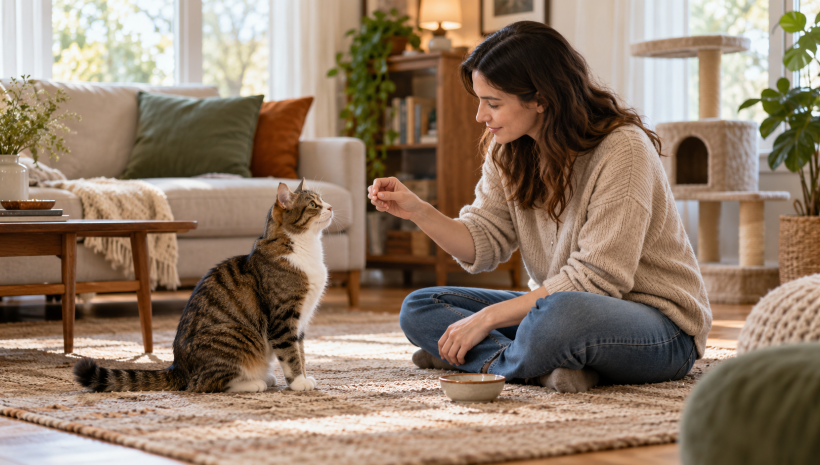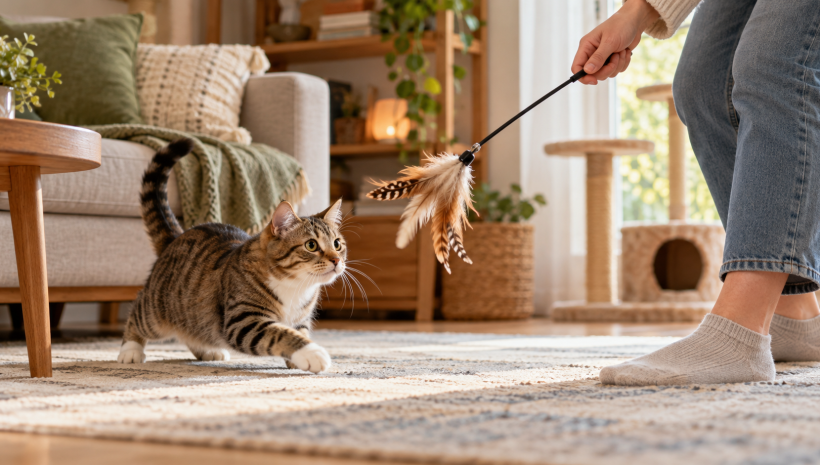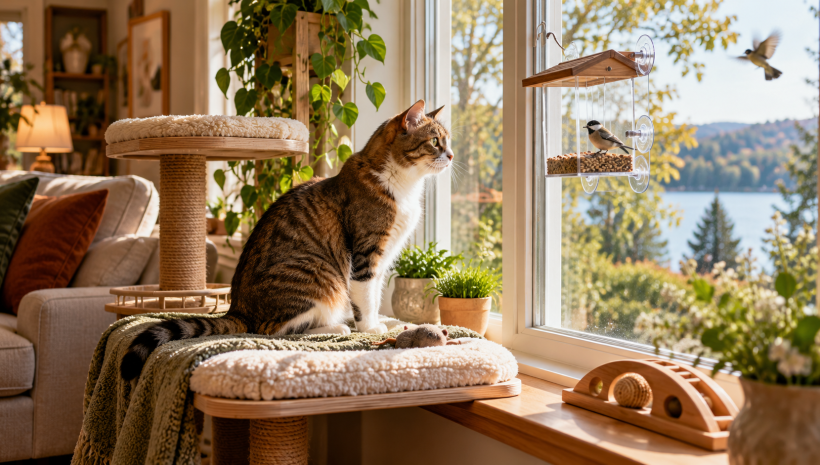
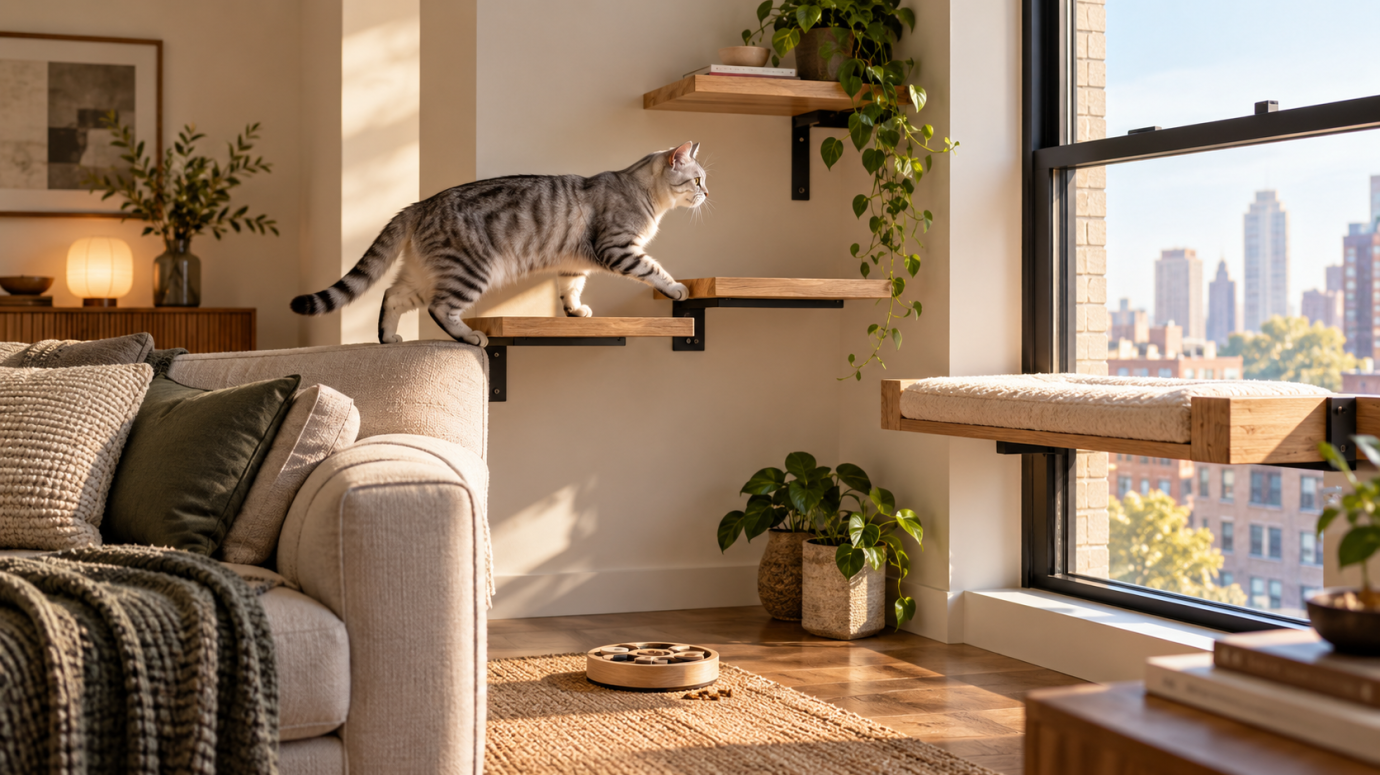
A small apartment can still be an interesting place for a cat. Floor space matters to people, but cats also use height, edges, hiding places, scent, and predictable routes through a room. When a home feels cramped, the answer is not always adding more objects. It is often about making better use of the space that already exists and giving the cat choices about where to rest, watch, climb, and search for food.
Think in routes, not just furniture
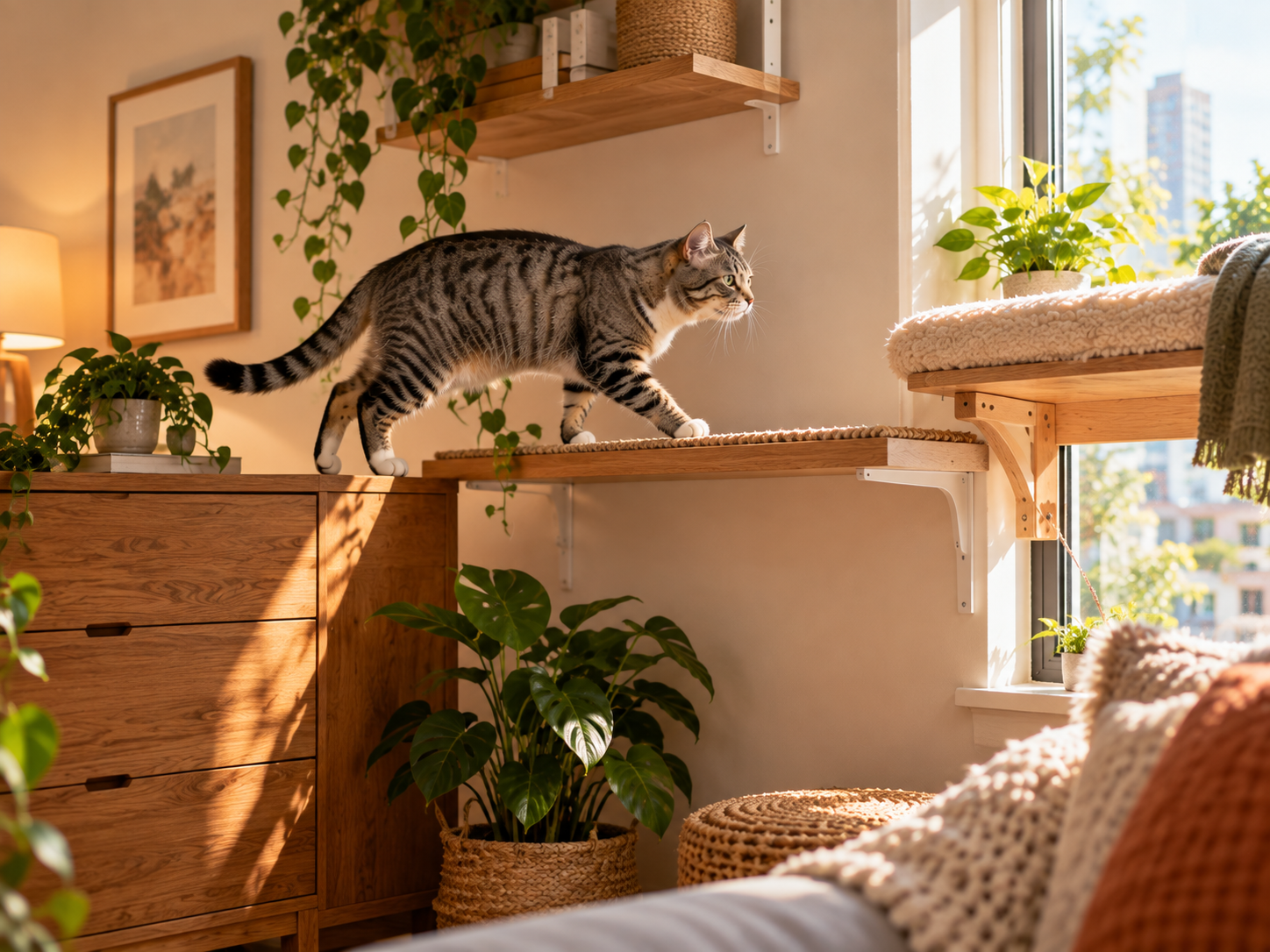
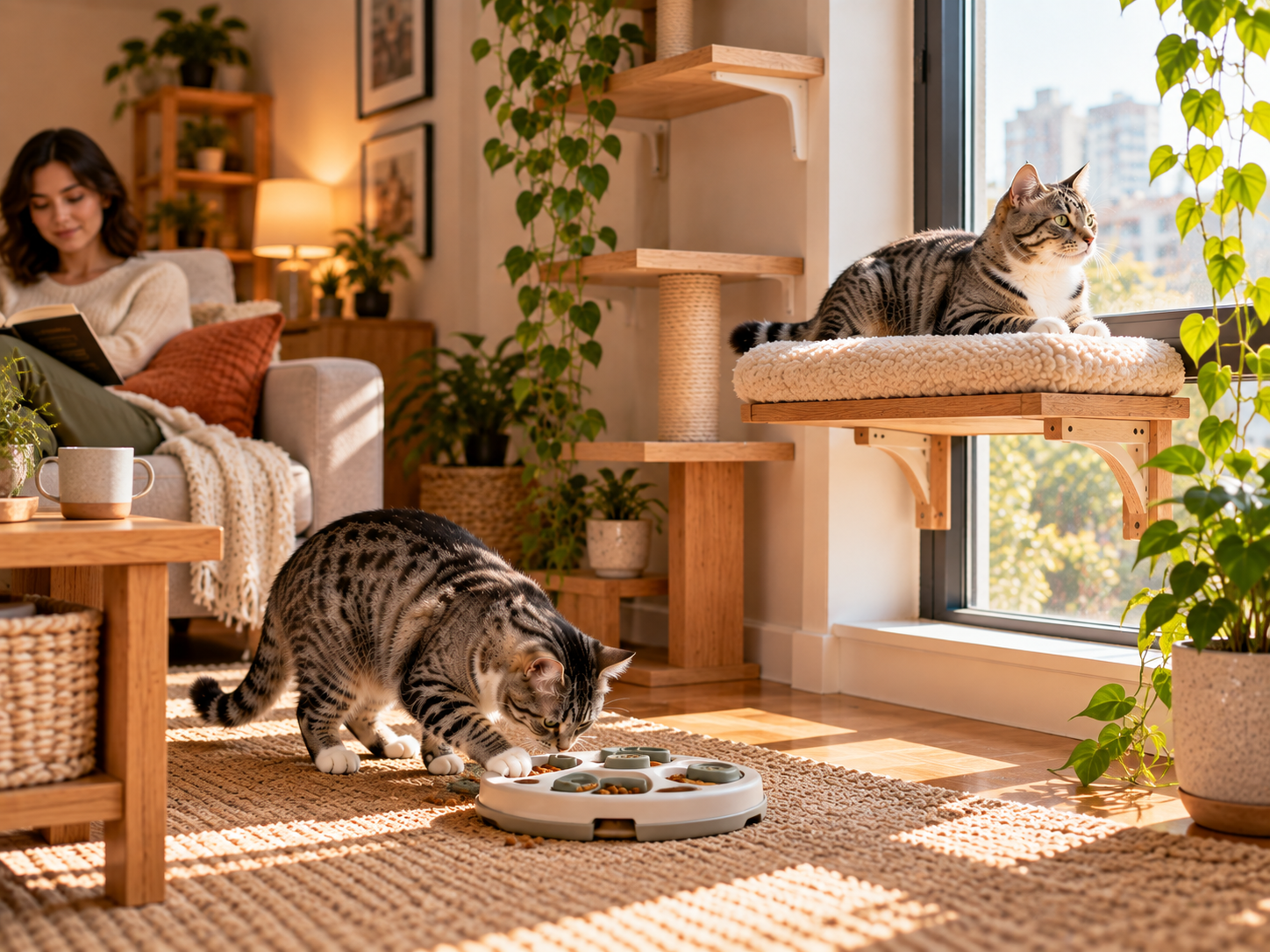
A cat tree in the corner can be useful, but one isolated tower does not automatically create a rich environment. Try looking at the room from the cat's point of view. Can the cat move from the floor to a chair, to the back of a sofa, to a sturdy shelf or window perch without having to cross a busy walkway every time? A route made from several safe landing points can be more useful than one very tall structure.
The Feline Veterinary Medical Association emphasizes that indoor cats benefit from safe territory with vertical space, resting places, play, foraging opportunities, and clean toileting areas. Height can help a cat observe the room while staying out of the busiest human traffic. For some cats, simply having an elevated retreat adds a sense of choice and control.
Start with the stable surfaces you already have
Before buying anything, list the furniture that is already safe for climbing. A sturdy dresser, wide windowsill, low bookcase, sofa back, bench, or solid side table may be part of a vertical route. The important word is sturdy. Surfaces should not wobble, tip, or send objects falling if the cat jumps onto them.
Clear fragile items from landing zones. Check that shelves are securely fixed and that tall furniture cannot topple. If a surface is slippery, a washable nonslip mat can make it easier for the cat to land confidently. The goal is not to create an obstacle course that looks impressive. It is to create several comfortable choices that the cat can use without risk.
Give the route more than one purpose
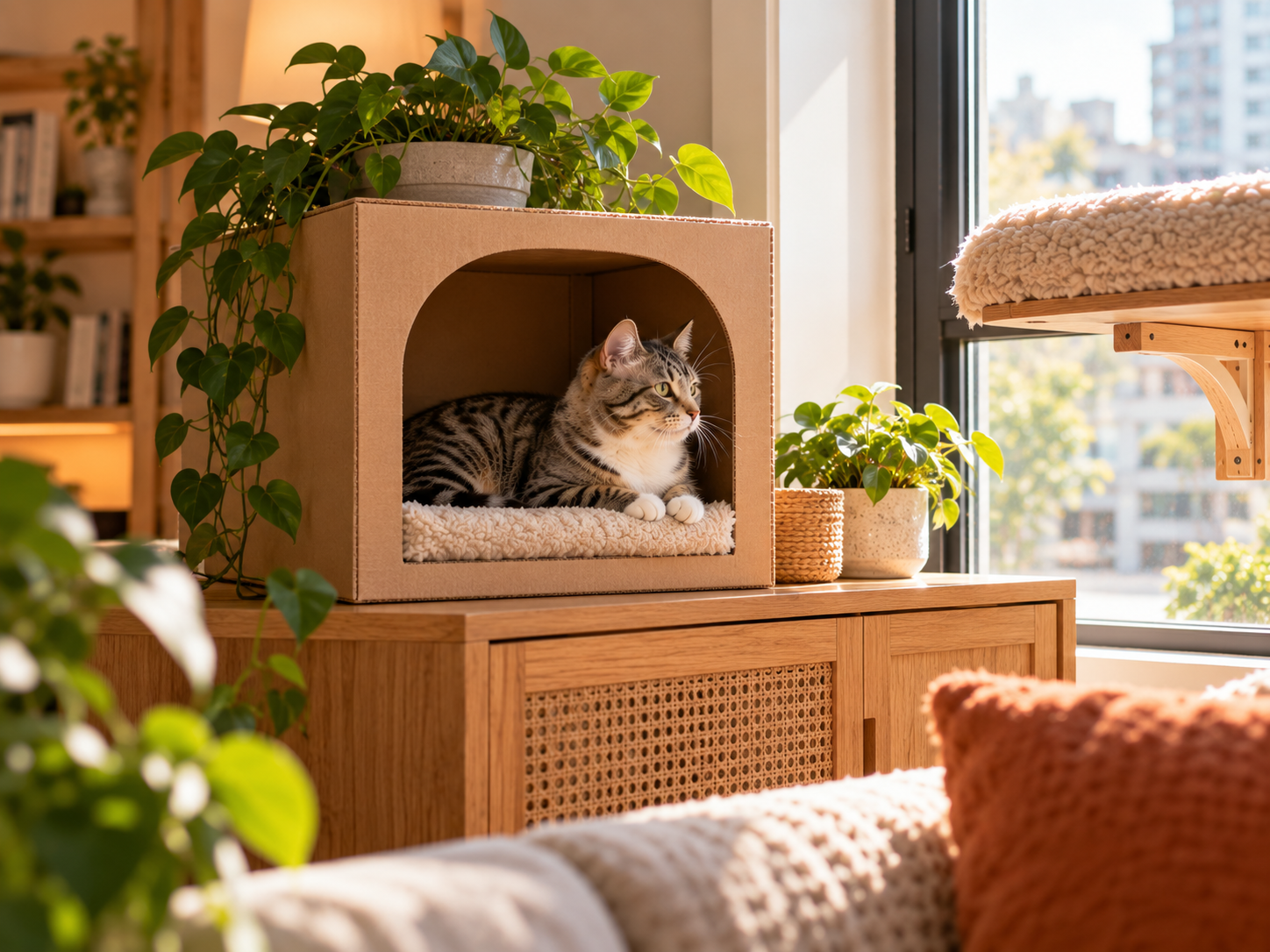
The best small-space features often do two jobs. A window perch provides height and visual stimulation. A bench can store household items underneath while giving the cat a resting place on top. A cardboard box placed on a stable cabinet can become both a hiding place and an elevated refuge. A scratching post near a route can provide a natural pause point between activity and rest.
Ohio State's Indoor Pet Initiative recommends enrichment that encourages species-typical behaviors such as climbing, exploring, hunting, and searching. You do not need to make every surface novel. Cats often value predictable favorite spots just as much as new experiences.
Preserve escape options
A high perch is less useful if another cat, dog, child, or busy doorway makes it difficult to leave. Where possible, avoid creating a single-entry dead end. A cat should be able to step down by more than one route or wait comfortably without being trapped.
This becomes especially important in multi-cat homes. A route that forces one cat to pass directly beside another cat's favorite sleeping place can create tension even if both cats like climbing. Spread desirable spots around the room instead of creating one 'best' perch that everyone must compete for.
Add foraging without turning the room into a toy store
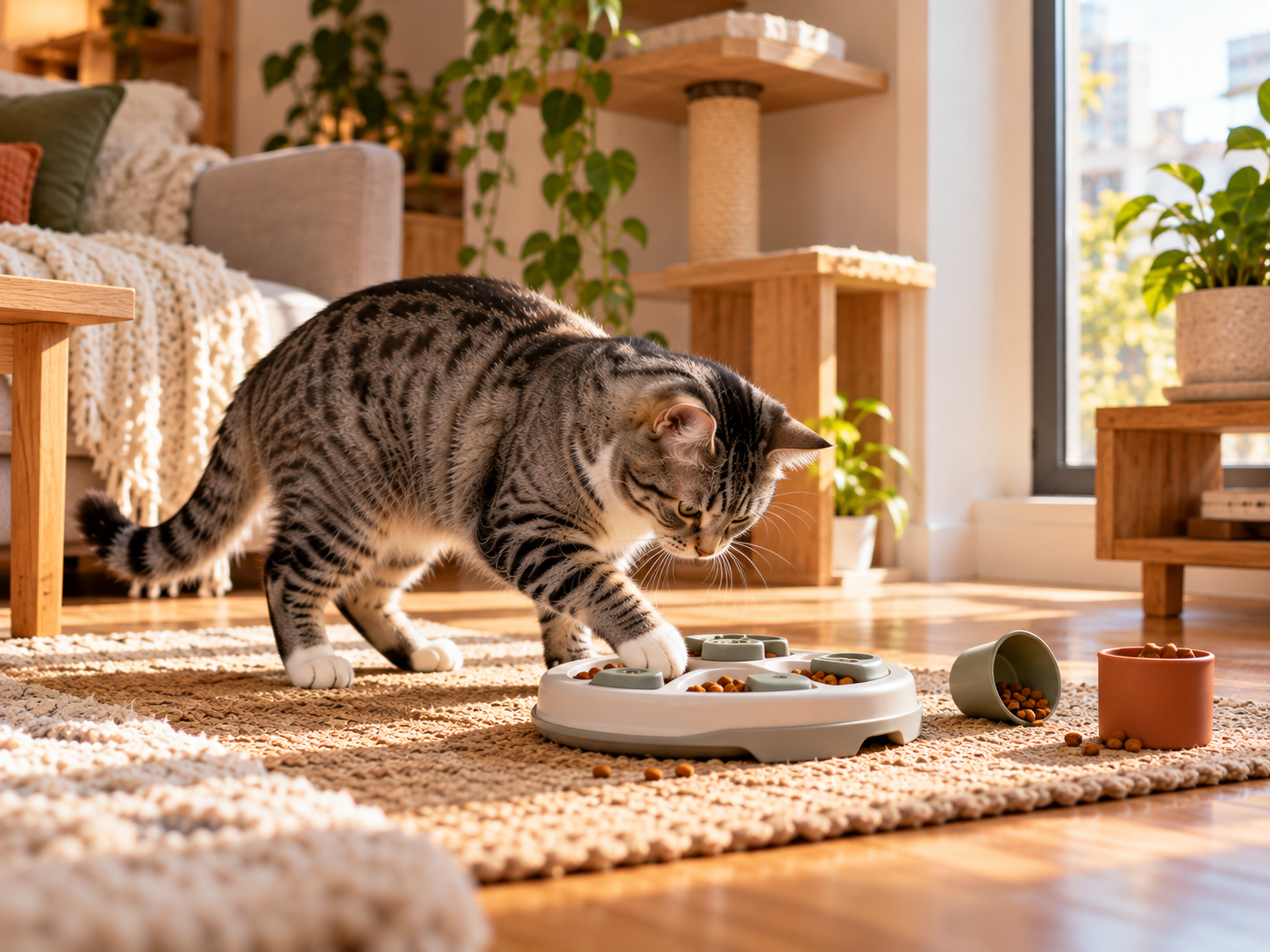
Foraging does not require a dozen gadgets. It means giving the cat a chance to search, manipulate, or work for part of its food in a safe way. Food puzzles, treat balls, simple cardboard arrangements, or small portions placed in several approved locations can encourage movement and exploration.
Ohio State notes that food puzzles can help mimic aspects of hunting and can increase activity. Start easy. A puzzle that is too difficult can create frustration rather than enrichment. Let the cat see or smell how food is obtained, and use a portion of the cat's normal daily food rather than automatically adding extra calories.
If your cat eats wet food, choose puzzle options designed for wet food or use small washable dishes placed at separate stations. Remove perishable food before it spoils. Cats with medical diets, mobility problems, or feeding plans should have any major feeding changes discussed with a veterinarian.
Create two or three stations instead of one permanent puzzle
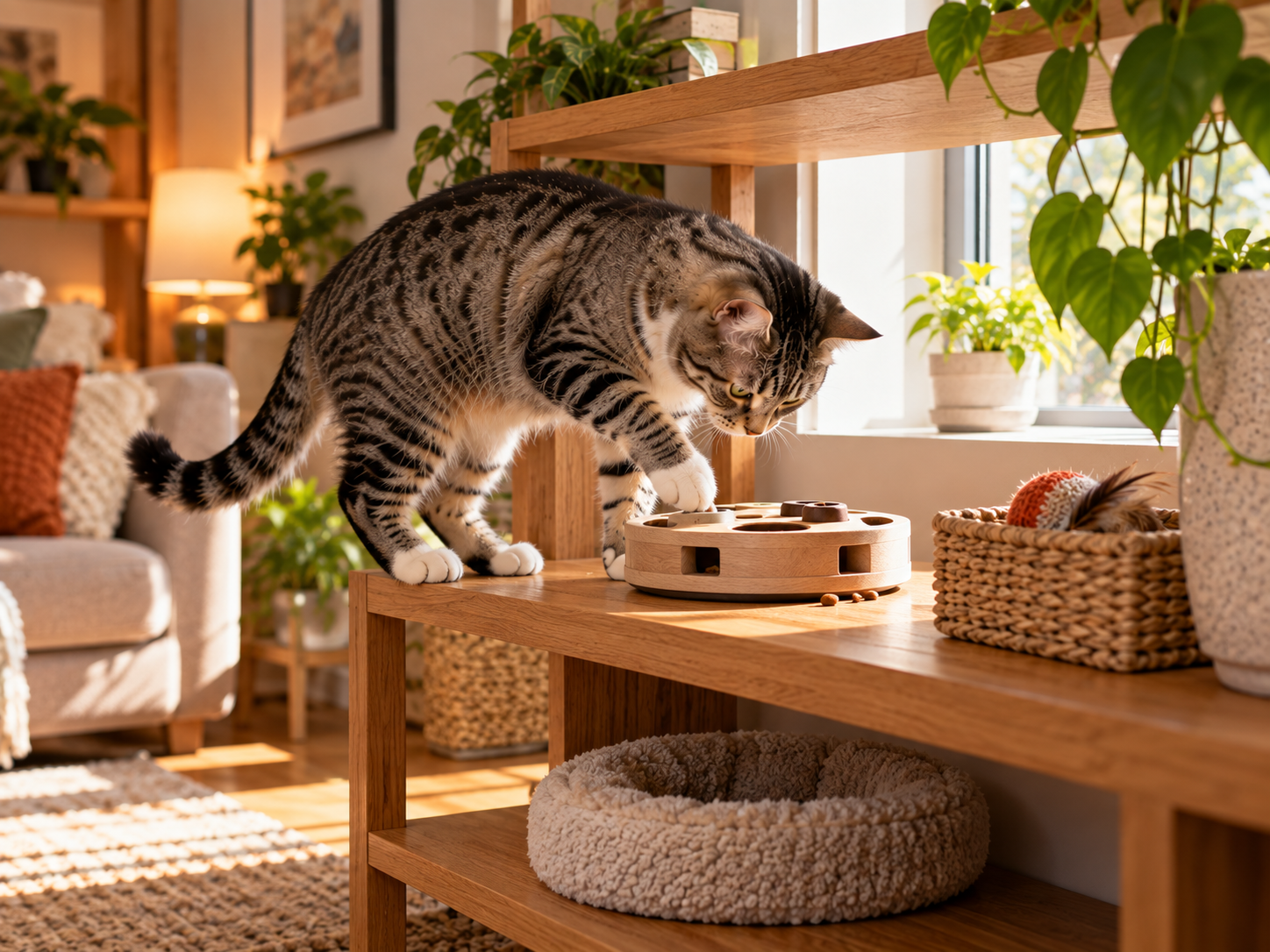
In a small home, rotation is more useful than accumulation. You might keep one simple food puzzle near the living area, one search station on a safe elevated surface, and one interactive play zone that appears only during play sessions. Change which station is active rather than leaving every enrichment item out all day.
A search station can be simple: a few pieces of dry food in a shallow cardboard egg carton, a treat hidden beneath one of several lightweight cups, or a small food puzzle on a stable mat. Supervise new setups until you know your cat will not chew or swallow pieces of the material.
Use the vertical route to lead to interesting destinations
Cats are more likely to use a route when it leads somewhere worthwhile. A window, warm resting spot, quiet box, or elevated bed gives the route a destination. You can also place a small foraging activity at one point in the route so the cat has a reason to climb and investigate.
Avoid placing food directly beside a litter tray. Cats generally prefer key resources to be separated. Food, water, toileting, scratching, resting, and play areas do not all need to fit into a single cat corner. Spreading them through the home can make a small apartment feel functionally larger.
Keep novelty controlled
Enrichment is not the same thing as constant change. Some cats investigate new objects immediately; others need time. The Indoor Pet Initiative recommends offering environmental changes as choices and removing or changing an item if it makes the cat fearful. Introduce one feature at a time so you can see what the cat actually enjoys.
If you add a new shelf route, leave the rest of the room familiar. If you introduce a new puzzle feeder, keep the usual feeding option available until the cat understands the puzzle. Confidence grows when the cat can approach and retreat on its own terms.
Build a simple weekly rhythm
A small-space routine can be uncomplicated. Keep the main resting and climbing route stable. Rotate one or two toys. Change the location of a simple food search a few times a week. Schedule interactive play at predictable times. Refresh cardboard boxes or paper bags when they become damaged, and periodically check all elevated surfaces for stability.
Watch how your cat uses the room rather than assuming the most expensive item is the favorite. The cat that ignores a designer tower but sleeps on the top of a cabinet is giving you useful information about preferred height, location, temperature, and privacy.
Measure success by behavior, not by how full the room looks
A good small-space setup gives the cat options without creating clutter for either of you. Useful signs include exploring willingly, using multiple resting places, engaging with play or food searches, and being able to retreat when the home becomes busy. If the cat avoids a new route, slips, appears fearful, or is repeatedly blocked by another pet, change the setup.
You do not need a large home to offer an indoor cat meaningful choices. A few stable elevated surfaces, safe routes between them, well-placed resting points, and simple rotating foraging activities can transform the way a cat uses a room while leaving the apartment comfortable for the humans who share it.