A scratching post can be perfectly good and still be ignored. One of the most common reasons is not the material or the price. It is where the post sits in relation to the places your cat already uses.
Scratching is normal feline behavior. The ASPCA notes that cats scratch to maintain their claws, stretch, and leave visual and scent marks. That means a post hidden in a low-traffic corner may be convenient for the room but irrelevant to the cat.
Start with location before buying another post
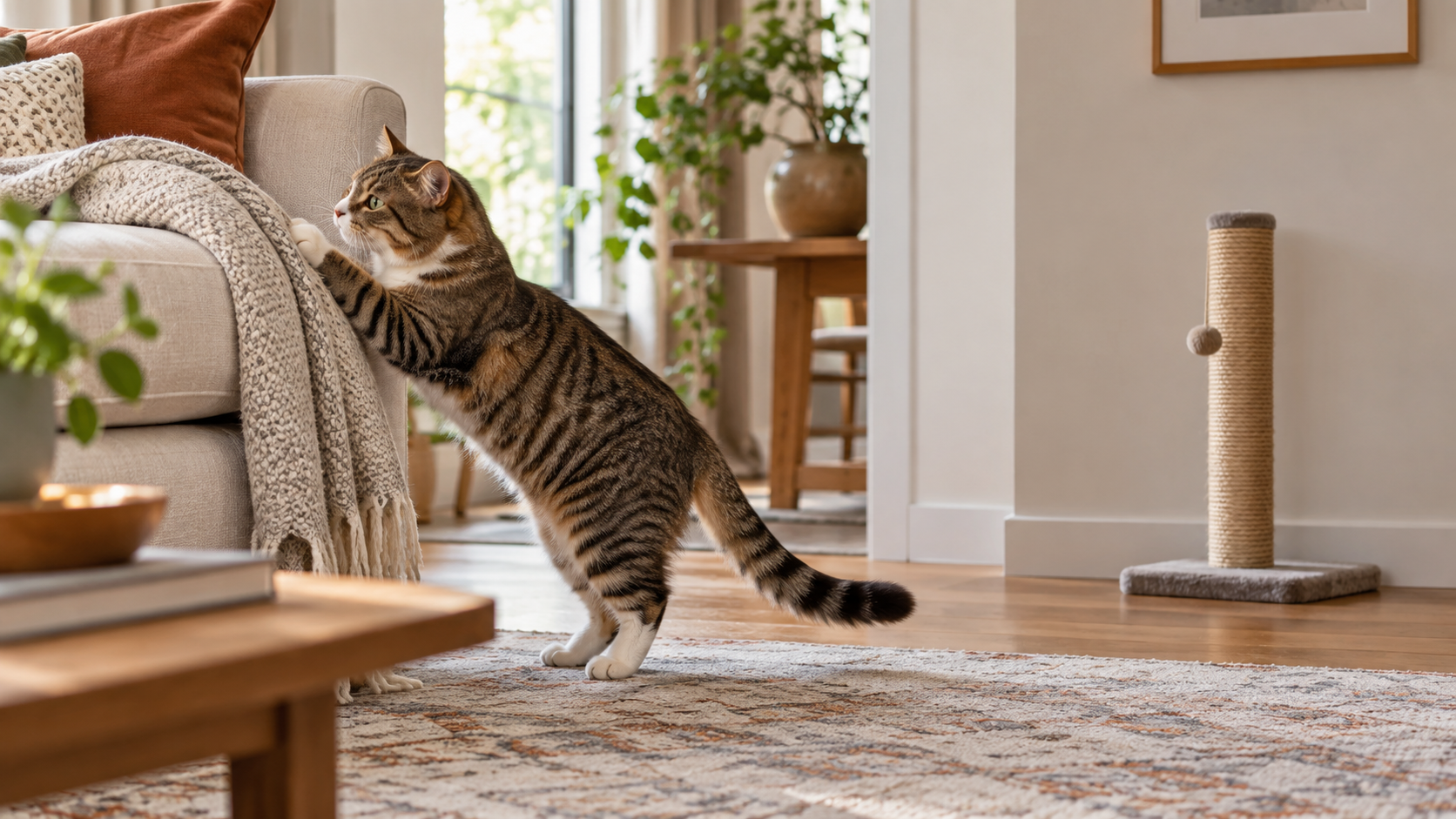
Look at where your cat already scratches. Is it beside the sofa where people gather? Near a doorway? Close to a favorite sleeping place? On a route between rooms? Those locations tell you where scratching naturally fits into your cat’s routine.
Instead of placing a new post where you wish your cat would use it, place it as close as practical to the existing scratching location. Once the new habit is established, you can experiment with moving it gradually.
Put scratching surfaces on meaningful routes
The Ohio State University Indoor Pet Initiative recommends providing appropriate scratching resources in places cats are likely to use them. Prominent, socially meaningful locations often make more sense than isolated corners.
Good places to test include:
- next to a sofa arm your cat already scratches;
- near a doorway or room transition your cat uses frequently;
- close to a favorite resting place, where stretching often happens after waking;
- in a shared living area rather than a hidden utility space.
Stability matters as much as location
A post that rocks or tips can feel unreliable. If your cat leans into a full-body scratch, the surface needs to resist that force. Check the base on the actual floor where you plan to use it. A post that feels stable on carpet may wobble on tile or wood.
If the post moves when you push it firmly with one hand, improve the base, brace it against a wall if the design allows, or choose a more stable model before concluding that your cat dislikes scratching posts.
Give your cat enough height to stretch
Many cats like to extend their bodies vertically while scratching. A very short post may technically be a scratching surface but still fail to support that stretch. The ASPCA and OSU both emphasize providing appropriate scratching surfaces that suit normal feline behavior.
Watch your cat’s preferred posture. Some cats scratch vertically; others prefer flat or angled surfaces. Match the orientation before assuming one universal post style will work for every cat.
Material still matters after placement
Once the location and stability are right, pay attention to the surface your cat already chooses. If the sofa corner attracts your cat because of a coarse woven texture, a smooth post may not feel like an obvious substitute. If your cat scratches flat carpet, a horizontal scratcher may be more relevant than a tall vertical post.
The useful comparison is not “expensive post versus cheap post.” It is “preferred surface versus offered surface.” Observe the angle, texture, and height of the place your cat already uses, then offer an acceptable version with similar physical qualities.
Protect the furniture while the new habit forms
Moving the preferred scratcher beside the problem area is the first step. During the transition, make the furniture less convenient to scratch where practical while keeping the approved surface easy to reach. The goal is not to make the entire room hostile. It is to make the correct option simpler and more rewarding.
If the scratcher begins to get regular use, resist the urge to move it across the room immediately. Keep it in the successful location long enough for the pattern to become familiar. If you later want the post somewhere else, move it gradually and watch whether use drops.
Do not punish the sofa scratch
Punishment does not make the need to scratch disappear. It can add stress without teaching the cat where the acceptable surface is. A more useful approach is to make the preferred target easy to find and satisfying to use, while protecting the furniture during the transition.
Place the post directly beside the problem area, reward calm investigation or use, and make the furniture temporarily less appealing where practical. The goal is redirection, not a battle.
Think differently in a multi-cat home
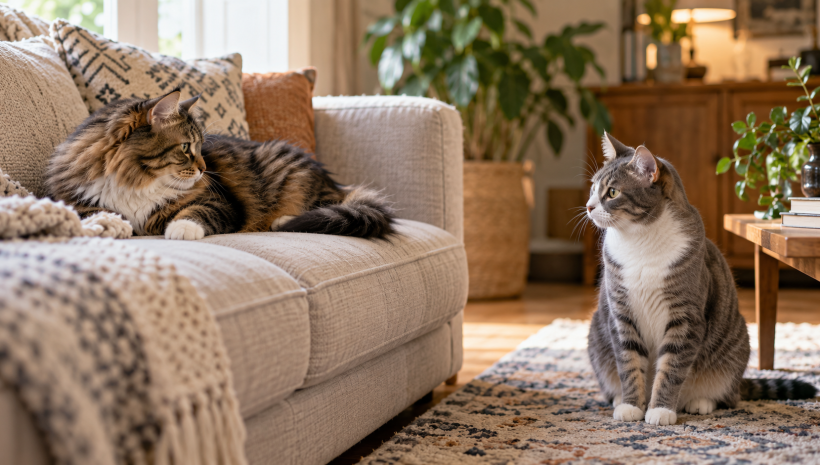
One scratching post may technically exist for several cats but still sit in a location one cat controls. Watch whether another cat hesitates to approach it, gets interrupted, or chooses furniture in a different part of the home. In that case, distribution can matter as much as total number.
Place suitable scratching surfaces in more than one meaningful area rather than clustering everything in a single “cat station.” Separate resources reduce the need for every cat to use the same route, room, or social zone.
A simple placement test
- Identify the exact furniture or surface your cat already scratches.
- Place a stable, appropriately sized scratching surface beside it.
- Keep the setup consistent long enough for your cat to notice and use it.
- If it is ignored, test orientation and material before moving the post far away.
- Once use is reliable, move the post only a little at a time if you need a different final location.
When location is not the whole problem
If your cat suddenly changes scratching behavior, seems reluctant to stretch, or reacts as though scratching is uncomfortable, do not assume it is a training issue. A sudden behavior change can justify a veterinary check, especially if you notice other signs of discomfort.

Frequently asked questions
Why does my cat scratch the sofa when a post is right across the room?
The sofa may sit on a more meaningful route or social location. Try placing the post directly beside the sofa first.
Should I hide the scratching post so it does not affect the room?
Not at first. A prominent location can make the post more relevant to your cat. Once the habit is strong, you can test small location changes.
What if my cat prefers horizontal scratching?
Offer a flat or angled scratcher instead of forcing a vertical post.
How long should I keep the post beside the sofa?
Keep it there while the new surface is becoming the reliable choice. Move it only gradually, and reverse course if use drops sharply.
They are never just a cat.
When you have a favorite photo that captures the personality behind all those little habits, MewKind can turn it into a personalized portrait. Explore printed products.