

Bringing a new cat home is an exciting milestone, but finding your new companion squeezed under a bed or wedged behind a couch can be worrying. Understanding that hiding and reduced eating in a new environment are normal stress and decompression responses for cats helps adopters approach the transition with steady confidence Source. Rather than a sign of a permanent personality or rejection, hiding is an instinctive coping mechanism that lets a cat process a completely foreign territory at their own pace.
Why New Cats Hide: Understanding Territorial Instincts and Stress
To a cat, a new home does not represent a welcoming upgrade; it represents an uncharted, unpredictable landscape filled with unfamiliar scents, sounds, and spatial layouts. Cats are territorial animals that find unfamiliar surroundings unnerving, which triggers defensive hiding Source. In the wild and in domestic settings alike, a cat’s primary survival strategy when overwhelmed is to secure a hidden vantage point where they can observe potential threats without being seen.
Moving day exposes cats to jarring changes, from carriers and car rides to strange voices and open rooms. When a cat retreats under furniture or into a closet, they are actively working to lower their sensory overload and heart rate. Research and veterinary guidance emphasize that hiding, reluctance to explore immediately, and picking only lightly at food are standard physiological and behavioral adjustments to the disruption of their territory Source. Respecting this instinctual pause is the foundation of building long-term trust.

What Is Normal vs. When to Worry: Timeline and Health Red Flags
Most newly adopted cats will spend the first 24 to 72 hours spending significant time in hiding spots. During the initial days, it is completely normal for a cat to venture out only to eat, drink, or use the litter box during quiet nighttime hours when the household is asleep. As they gradually realize the new territory is safe and predictable, their periods of hiding will shorten, and exploratory behavior will increase.
However, owners must distinguish between normal decompression and clinical distress. A sustained loss of appetite can become medically significant quickly in cats. Cornell notes that anorexia can seriously affect a mature cat if it persists for as little as 24 hours, and loss of appetite can precede hepatic lipidosis. If your new cat is not eating, especially alongside lethargy, vomiting, breathing changes, or difficulty urinating, contact a veterinarian promptly Cornell Feline Health Center: Anorexia. If these signs accompany hiding, or if a cat remains utterly frozen and terrified past the first week without minor signs of progress, consult a veterinarian promptly for an examination.

Setting Up a Safe Sanctuary Room for Gentle Decompression
Giving a new cat free run of an entire house or apartment on day one can overwhelm their coping capacity. Instead, setting up a designated sanctuary room—such as a quiet spare bedroom, a home office, or a bathroom—helps anchor their sense of security.
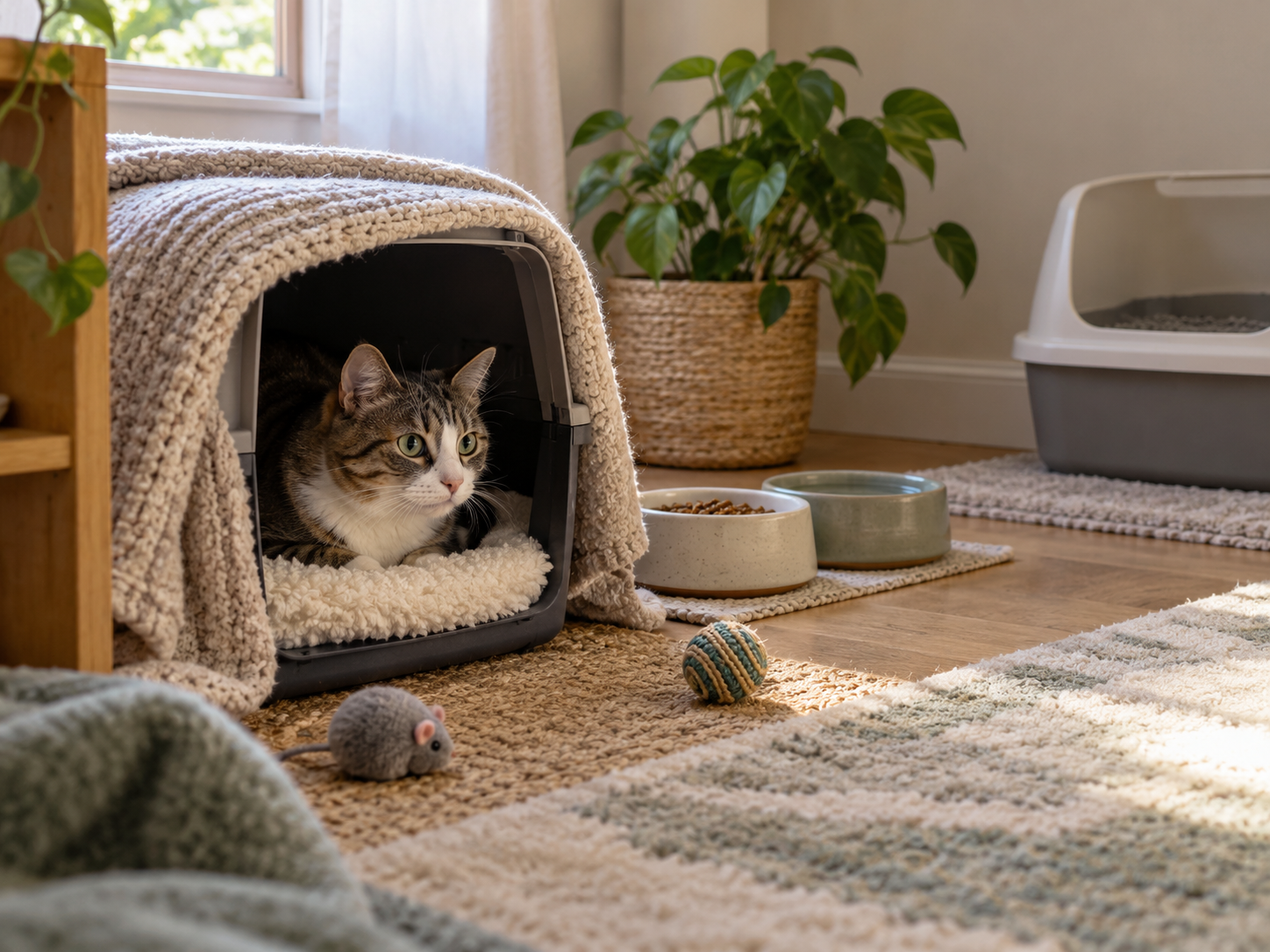
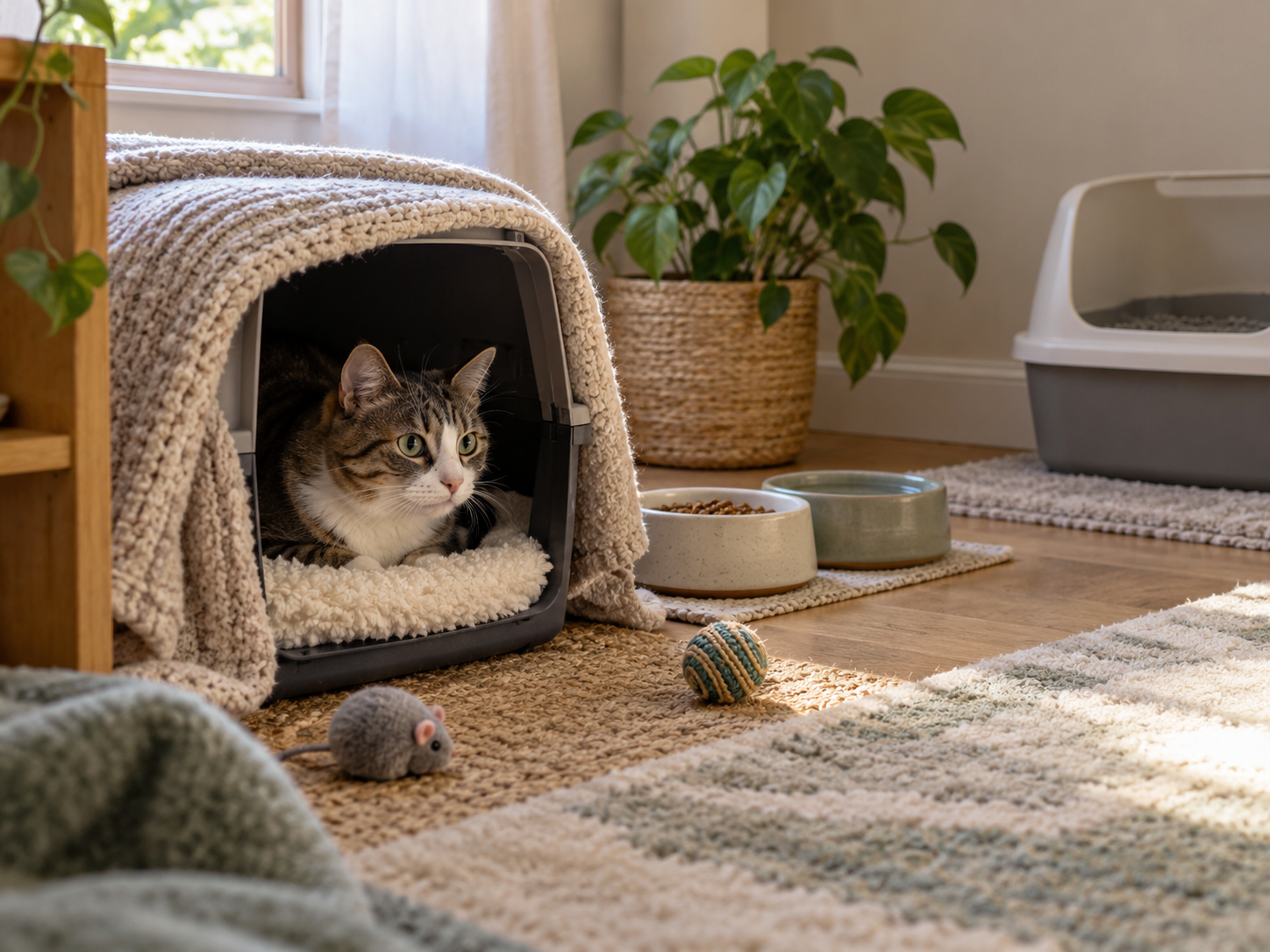
Equip this sanctuary room with all essential resources arranged thoughtfully:
- Food and Water Bowls: Place them a short distance away from the litter box to respect feline preferences for hygiene.
- A Clean Litter Box: Position it in a quiet, low-traffic corner of the room.
- Accessible Hiding Spots: Leave open-topped cardboard boxes, cat tunnels, or a partially covered crate so the cat has approved, safe places to retreat.
- Vertical Space: A stable cat tree or a low shelf allows the cat to survey their environment securely.
Keep doors closed and household foot traffic light so the cat can adjust to localized sights and sounds before facing the broader home.

How to Make the First Days Easier: Patience, Routine, and Pacing
When welcoming a new cat into your life, the most effective tool at your disposal is deliberate restraint Source. Cats thrive on predictable routines and a sense of personal control, meaning that adopters must offer steady patience and allow their new companion to decompress at an individual pace. Attempting to coax or drag a hiding cat out into the open for immediate cuddles, introducing them to resident pets too quickly, or playing loud household music can easily reset their adjustment clock and prolong their underlying fear.
Instead, practice passive socialization. Spend time in the sanctuary room quietly reading, working on a laptop, or speaking in a soft, low voice without demanding direct engagement. Let the cat approach you. Offer high-value treats or wet food at consistent meal times so they associate your presence with positive outcomes. Maintain a predictable daily rhythm for feeding, cleaning, and resting. By honoring their need for autonomy during the first vulnerable days, you lay the groundwork for a confident, trusting bond that will flourish for years to come.
Frequently Asked Questions
How long is it normal for a new cat to hide under the bed?
It is entirely normal for a new cat to spend most of their time hiding under a bed or in a closet for the first 2 to 3 days. Many cats will only emerge at night to eat and use the litter box. As long as they are drinking water, eating small amounts, and showing gradual curiosity by the end of their first week, this timeline is within expected ranges.
Should I pull my new cat out of their hiding spot to feed or socialize?
No. Pulling a cat from a hiding spot strips away their last remaining sense of control and intensifies fear. Let them remain in their chosen spot. Instead, place food, water, and the litter box within comfortable distance of their retreat, and let them decide when they are ready to step out.
What should I do if my new cat refuses to use the litter box during the first few days?
If a hiding cat eliminates outside the box inside their sanctuary room, avoid punishment, which only adds stress. Ensure the litter box has low sides, is filled with unscented litter, and sits in a quiet spot away from food bowls. If refusal to use the box persists alongside lethargy or straining, contact your veterinarian.
How can I help my new cat feel comfortable in a large home?
Expand their world gradually. Start with a single sanctuary room for the first week or until the cat actively seeks to explore beyond the door. Once they are confident in that space, open adjacent rooms one at a time while leaving their original sanctuary accessible as a home base.