For many indoor cats, the window serves as television, internet, and wildlife documentary all in one. Staring outside offers a crucial link to the natural world, satisfying an innate curiosity about outdoor movements, passing birds, and rustling leaves. However, an empty windowsill or a blocked view can quickly turn a potential source of joy into a monotonous or frustrating experience. Understanding how to transform an ordinary pane of glass into an engaging sensory hub is one of the most effective ways to support your cat’s daily well-being.
Understanding the Feline Need for Window Enrichment
Even in the most comfortable homes, cats retain strong predatory drives and instincts inherited from their ancestors. Indoor cats require mental and physical enrichment beyond basic physical care to satisfy evolutionary traits like stalking and hunting cuteness.com. Without adequate stimulation, indoor cats can experience boredom, stress, or lethargy, sometimes leading to behavioral issues or weight gain.
Watching the outdoors triggers a cat’s visual and mental faculties. When a cat spots a bird or a blowing leaf, their pupils dilate, muscles tense, and sometimes they emit small chirping noises known as chatter. This activity provides low-impact mental engagement that burns cognitive energy. Experts emphasize that pets need more than just food, water, and shelter to truly thrive in an indoor environment fun107.com. Providing low cost enrichment options to increase quality of life for cats maddiesfund.org is essential for maintaining emotional balance, and highlighting the importance of mental stimulation and positive interaction maddiesfund.org helps prevent the distress associated with stagnant indoor settings.
When cats are left in barren environments without outlets for these deep-seated behaviors, they may direct their pent-up energy toward destructive scratching, excessive vocalization, or overgrooming. Introducing dynamic visual stimuli through a window helps channel these natural instincts outward. By observing outdoor movements, your cat engages in psychological stalking, mentally tracking targets while remaining safe indoors. This satisfies the brain’s urge for challenge and discovery without requiring physical exertion or exposure to outdoor hazards.
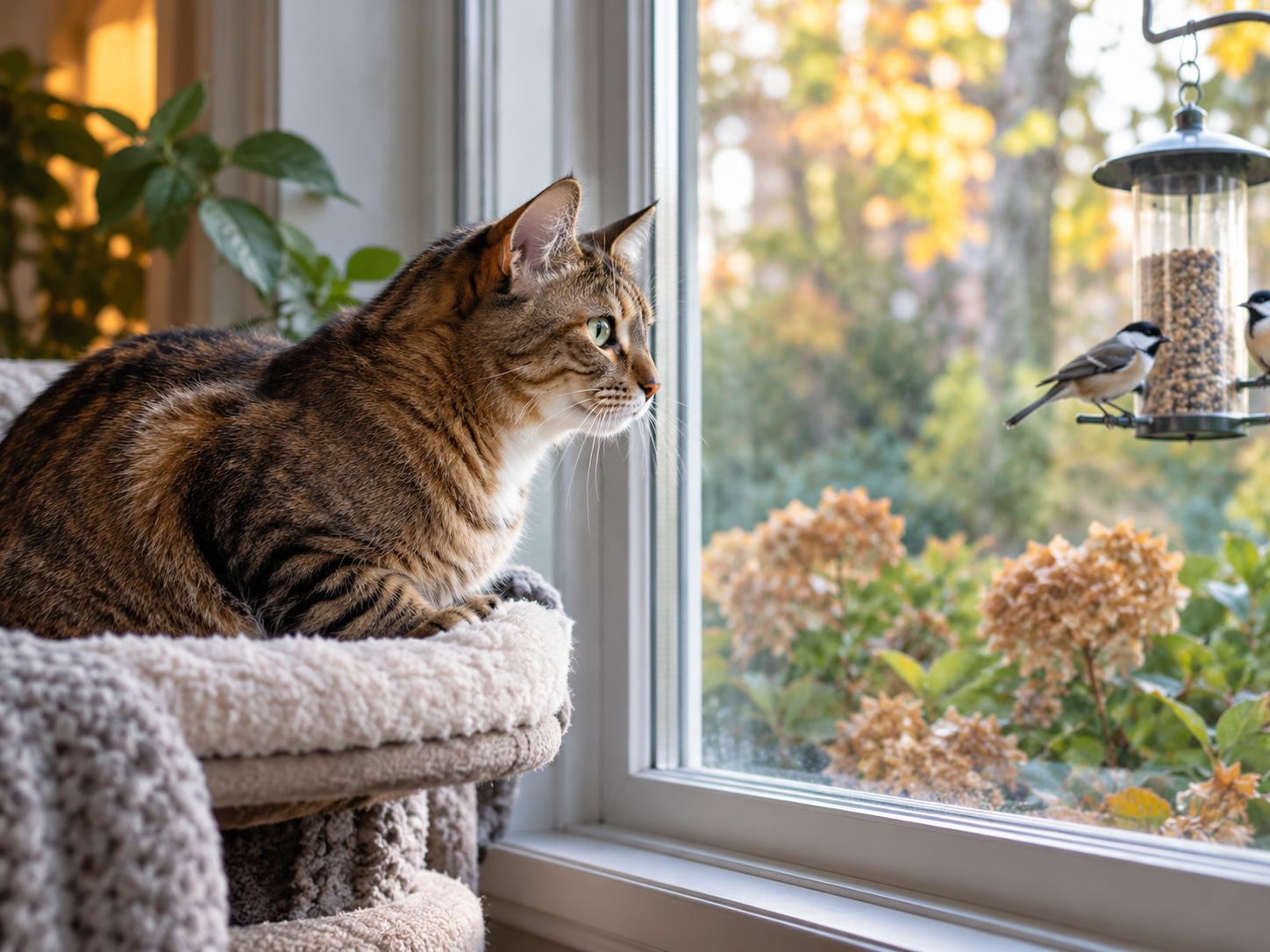
Setting Up Elevated Viewing Spaces
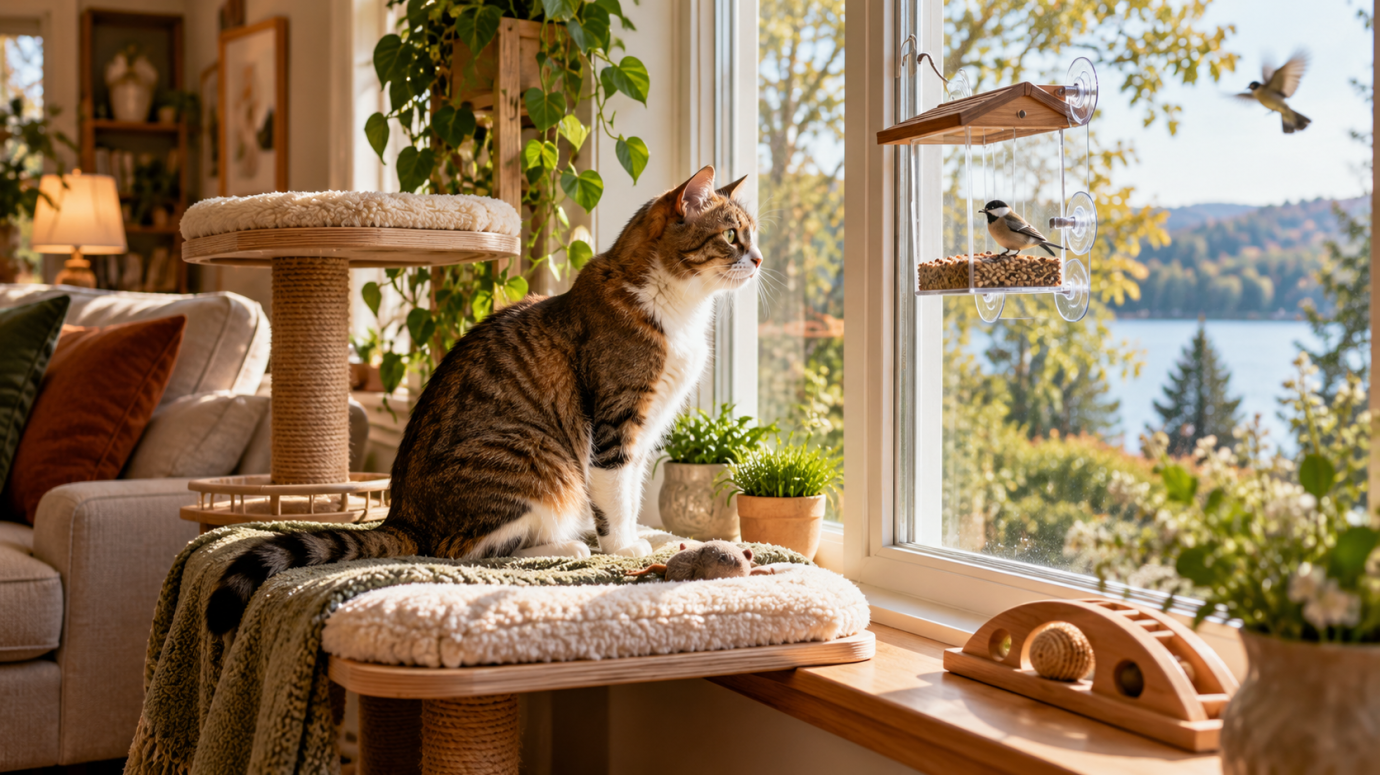
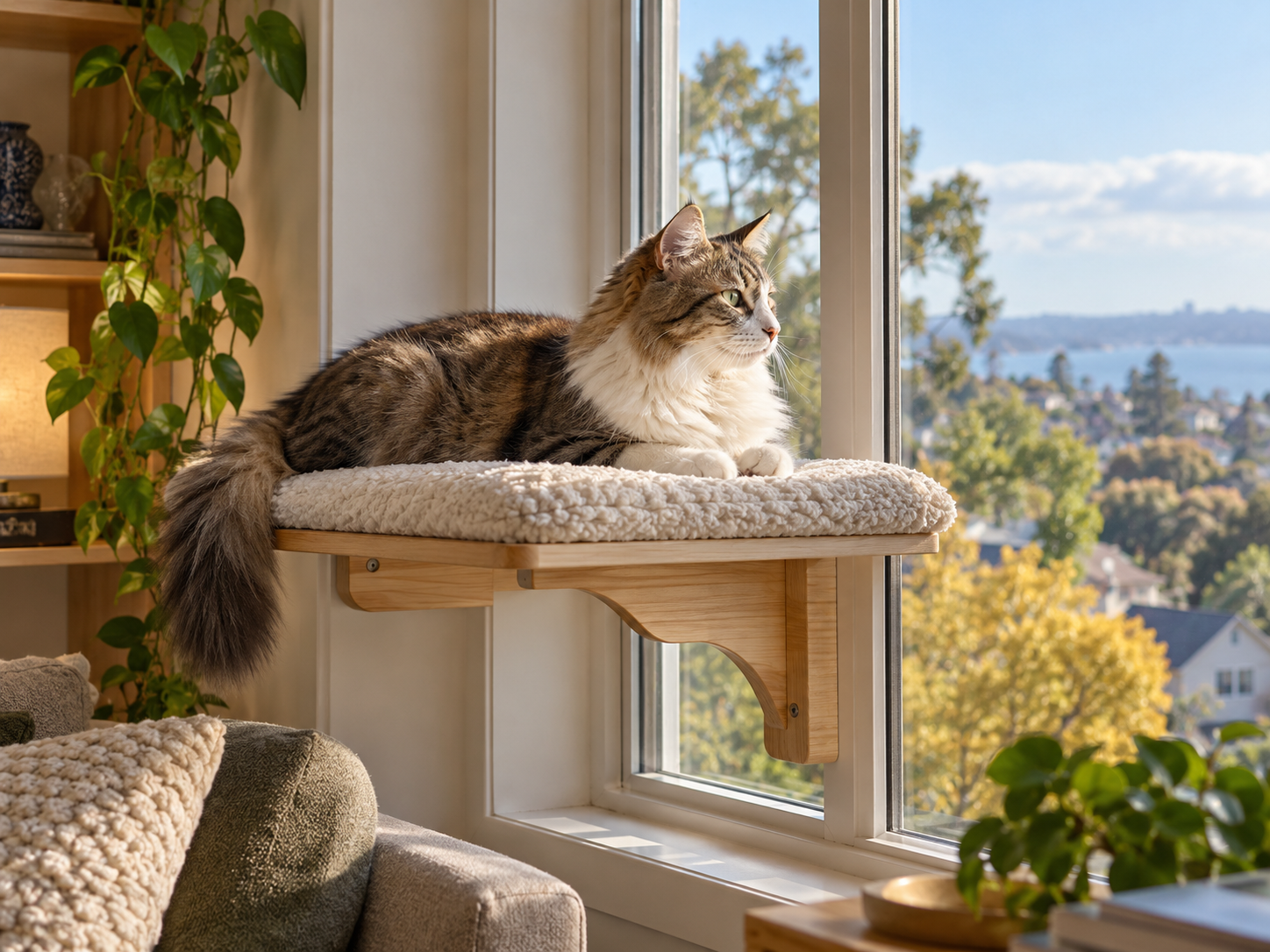
To make the most of a window view, a cat needs a comfortable and secure vantage point. Floor-level views are often blocked by furniture, sills, or window frames, limiting what your cat can actually see. Providing elevated perches and viewing options (such as window hammocks) supports feline quality of life and engagement coolhunting.com.
When choosing or installing a window setup, consider your cat’s age, physical condition, and personal preferences:
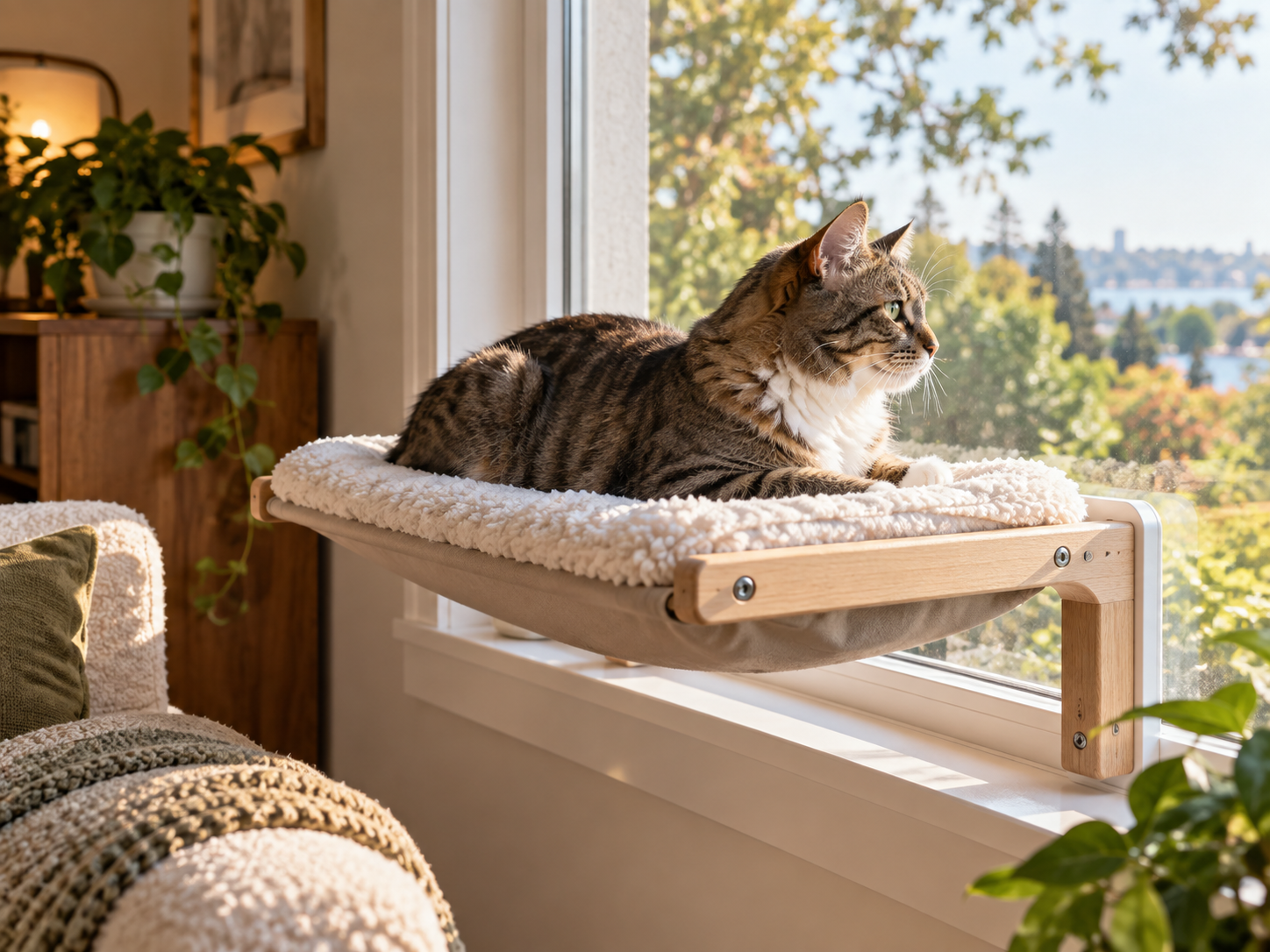
- Window Perches and Hammocks: Sturdy suction-cup hammocks or clamp-on sills allow cats to press right against the glass for an immersive view. Ensure that any suction-cup model is rated for your cat’s weight and thoroughly cleaned before installation to maintain a secure grip. These products are designed specifically for window viewing, napping, and perching coolhunting.com, highlighting weight support and functional design for home window setups coolhunting.com.
- Multi-Level Cat Trees: If a window sill is too low or narrow, placing a tall cat tree directly in front of the window creates a stable, tiered observation tower. This gives older or less agile cats easier stepping options compared to a dangling hammock.
- Clearing the Sill: Remove clutter, blinds, or heavy drapes that might brush against your cat or block their line of sight. Securing blinds safely out of reach also prevents tangling hazards.
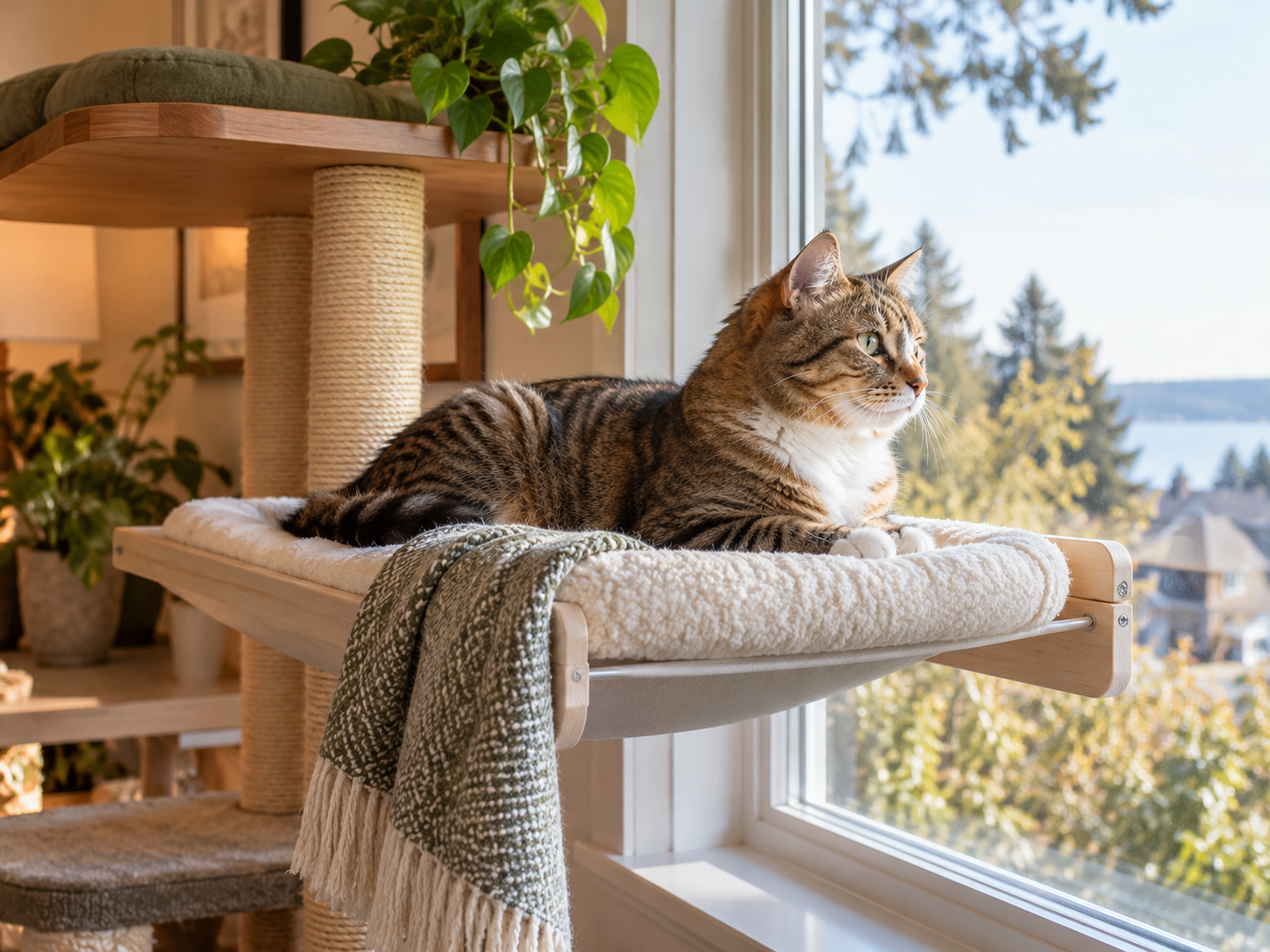
Creating a successful viewing station also involves evaluating the temperature and sunlight exposure of the specific window. South-facing windows offer prolonged warmth and bright light throughout the day, which many cats adore during cooler months. However, you should monitor glass temperatures during peak summer heat to ensure your cat does not overheat. Adding a thin, washable pad or blanket to the perch makes the surface more inviting for extended resting sessions while protecting the furniture or hammock material.
Enhancing the View with External Stimuli
Sometimes, even a sunny window overlooking a quiet street lacks enough motion to hold a cat’s attention for long. You can easily turn a static view into active entertainment by introducing gentle external stimuli.
- Backyard Bird Feeders: Placing a bird feeder or a squirrel baffle outside the window brings wildlife directly into your cat’s field of view. Position the feeder at a comfortable distance so your cat can watch the activity without becoming overly frustrated by unreachable prey.
- Safe Plantings: Consider setting up potted herbs like cat grass or catnip on an exterior ledge or a secure indoor shelf right by the glass. The presence of greenery creates a more vibrant, multisensory environment.
- Reflective and Wind-Moved Elements: Hanging a wind chime, a light-catching suncatcher, or safe fluttering ribbons outside can introduce subtle movements and reflections that catch your cat’s eye throughout the day.
When setting up external feeders or plantings, placement is critical to prevent window collisions for local birds while keeping the attraction safely within your cat’s line of sight. If birds congregate too close to the glass, some cats may experience redirected aggression or intense frustration from not being able to reach the wildlife. Balancing the proximity of feeders ensures your cat enjoys a soothing wildlife documentary experience rather than an agitated, stressful ordeal.
Expanding Daily Routines with Multi-Sensory Enrichment
Window viewing works best when integrated into a broader routine of indoor enrichment. While a customized window perch addresses visual stimulation, cats also benefit from auditory and olfactory inputs that mimic natural outdoor conditions. Leaving a window cracked open slightly—provided it is secured with a heavy-duty, cat-proof screen—allows fresh breezes carrying outdoor scents to enter the room. This olfactory engagement activates a cat’s Jacobson’s organ, offering a rich tapestry of environmental information without any physical risk.
You can also rotate window accessories or introduce temporary focal points to keep the environment feeling fresh. If wildlife traffic slows down during certain seasons, repositioning hanging toys or adding new potted plants near the sill revitalizes your cat’s interest. Observing how your cat interacts with these elements allows you to fine-tune the setup, ensuring that the window remains their favorite destination for relaxation, observation, and mental fulfillment.
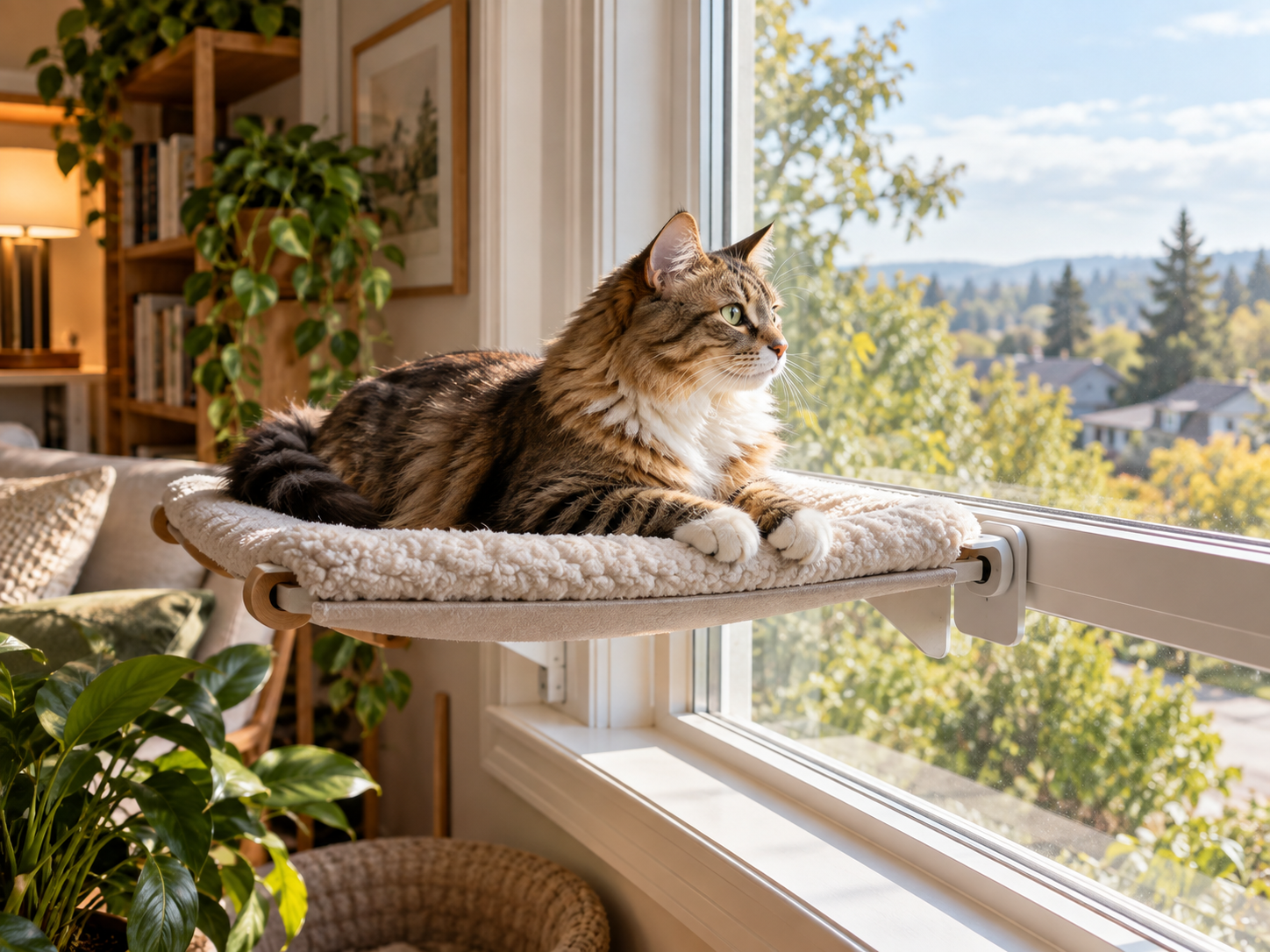
By combining a safe, elevated perch with thoughtful additions to the outdoor view, you can provide an enriching daily routine that respects your cat’s natural instincts and significantly enhances their indoor life.
Frequently Asked Questions
How can I make my cat’s window view more engaging?
You can enhance your cat’s view by installing a secure elevated perch, clearing away visual obstructions like heavy curtains, and setting up a bird feeder or cat-safe plants just outside the glass to encourage natural watching and stalking behaviors.
Are window hammocks safe for heavier cats?
Many window hammocks are engineered to hold significant weight, often utilizing heavy-duty industrial suction cups or steel frames. Always check the manufacturer’s weight limits, clean the window glass thoroughly before mounting, and test the stability before letting your cat use it.
What are some low-cost ways to provide indoor cat enrichment?
Low-cost enrichment includes rearranging furniture to create a clear window lookout, setting up DIY cardboard scratching boxes, rotating toys regularly, or placing a bird feeder within view of an existing windowsill.