It is a familiar scenario for many cat owners: you invest in the latest automated gizmo, plush mice filled with premium catnip, and puzzle feeders, only to watch your feline companion walk past them with total indifference. Cat owners often wonder why their pets seem profoundly bored despite having a house full of wonderful items. Understanding feline behavior reveals that novelty fades quickly for cats, and true engagement requires dynamic interaction rather than static objects sitting on the floor. Cats can lose interest in toys and familiar items over time, leaving owners searching for new engagement strategies Cats can lose interest in toys and familiar items over time, leaving owners searching for new engagement strategies.
When toys remain permanently scattered on the floor, cats quickly habituate to their presence. The initial novelty disappears within days, transforming exciting playthings into ordinary background scenery. Recognizing this sensory adaptation is the first step toward restructuring your approach to feline enrichment. Instead of buying more objects, the focus must shift to how existing items are presented, managed, and integrated into daily routines.
Why Your Cat Might Still Seem Bored Despite a House Full of Toys
Cats are natural hunters whose brains are hardwired for the stalk-and-capture sequence. When toys remain stationary on the carpet, they quickly lose their allure because they do not mimic real prey. Over time, cats habituate to familiar items in their environment, treating them as part of the background scenery rather than exciting stimuli Cats can lose interest in toys and familiar items over time, leaving owners searching for new engagement strategies.
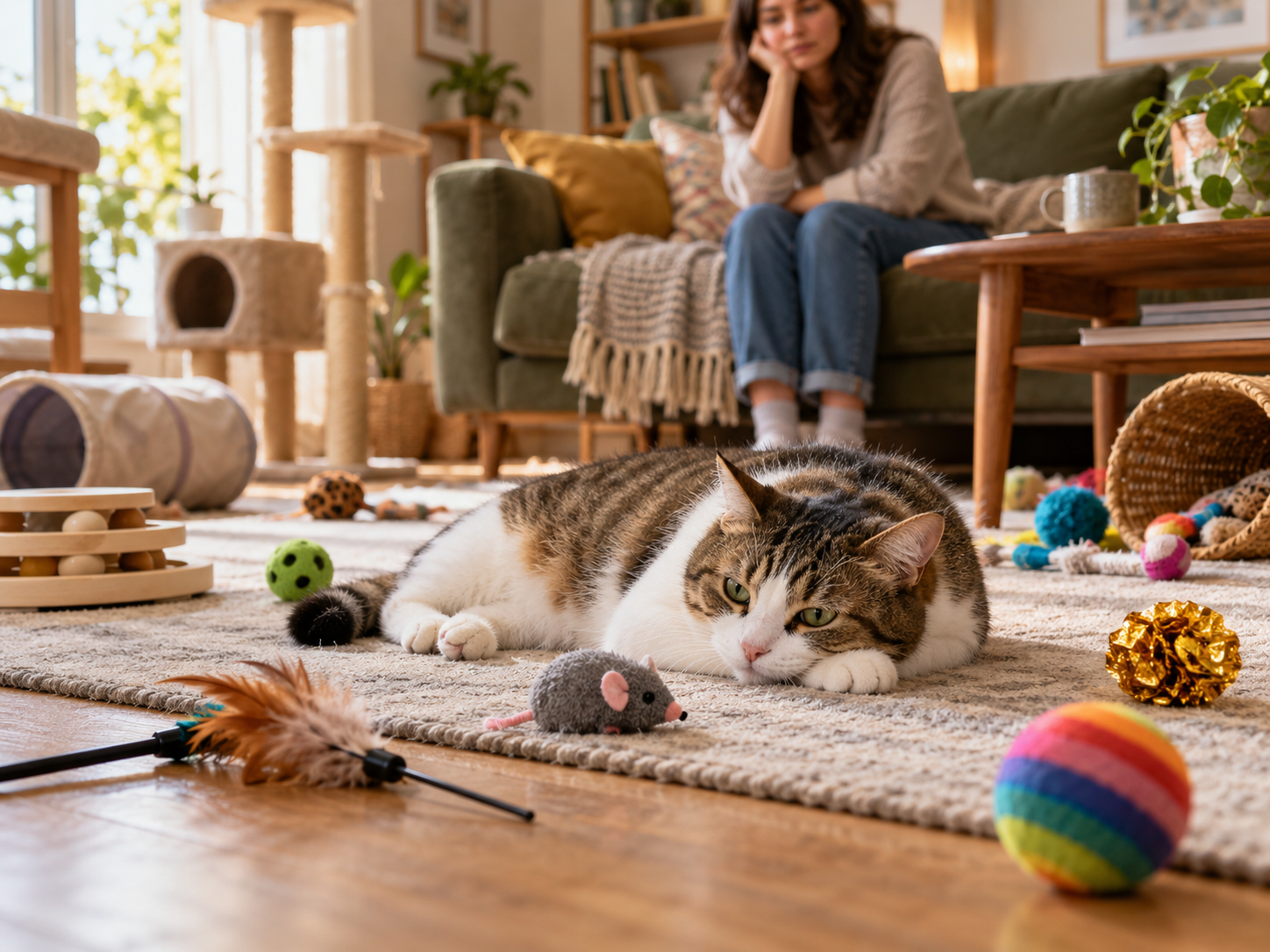
When owners notice their cat staring at walls or acting listlessly, it is easy to assume they simply need more things Cats can lose interest in toys and familiar items over time, leaving owners searching for new engagement strategies. However, accumulation of toys often leads to clutter rather than stimulation. What cats actually crave is unpredictability, movement, and a sense of hunt fulfillment. Without these elements, even the most elaborate toys fail to capture their predatory instincts or burn off excess physical energy.
Feline boredom often manifests in subtle ways beyond staring at walls. Some cats might engage in destructive scratching, excessive grooming, or nocturnal hyperactivity as they attempt to self-stimulate. Understanding that these behaviors stem from an unfulfilled predatory drive helps redirect your energy away from consumer solutions and toward behavioral adjustments. The key lies in creating an environment that mimics the challenges and rewards cats would encounter in the wild.
Interactive Play and Environmental Enrichment Strategies
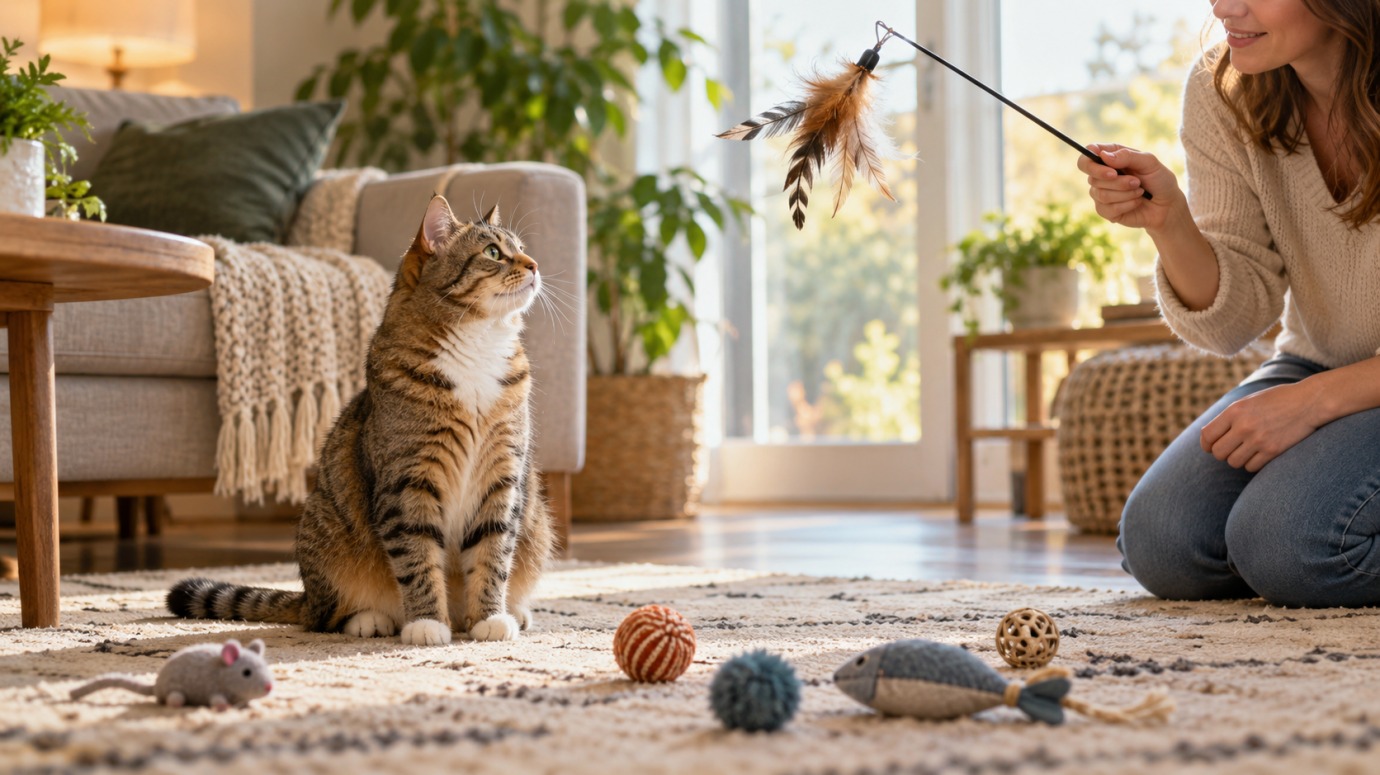
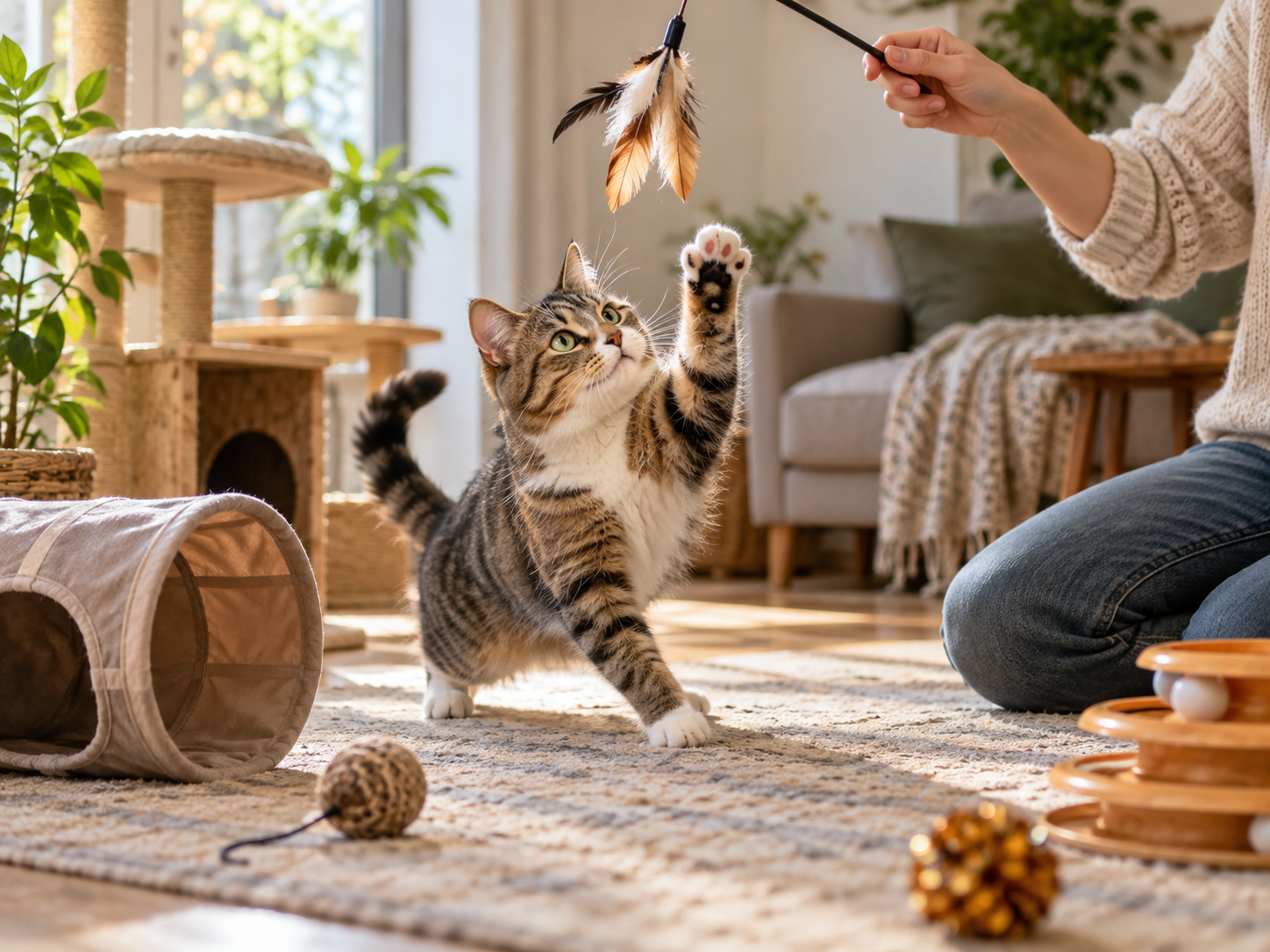
To bridge the gap between boredom and active engagement, shifting from passive toy ownership to active participation is essential. Interactive cat toys provide structured enrichment to keep active or bored cats engaged during playtime Interactive cat toys provide structured enrichment to keep active or bored cats engaged during playtime. When you share in the play session, you transform a lifeless object into a dynamic target that triggers your cat’s hunting reflexes.
Here are practical ways to refresh your cat’s daily routine:
- Rotate Toys Regularly: Put away half of your cat’s toys today and reintroduce them in two weeks. The temporary absence restores novelty, making old items feel brand new when they reappear.
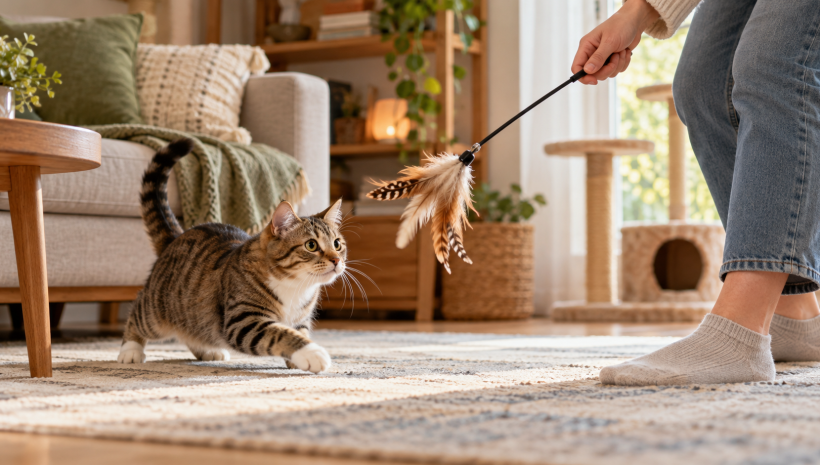
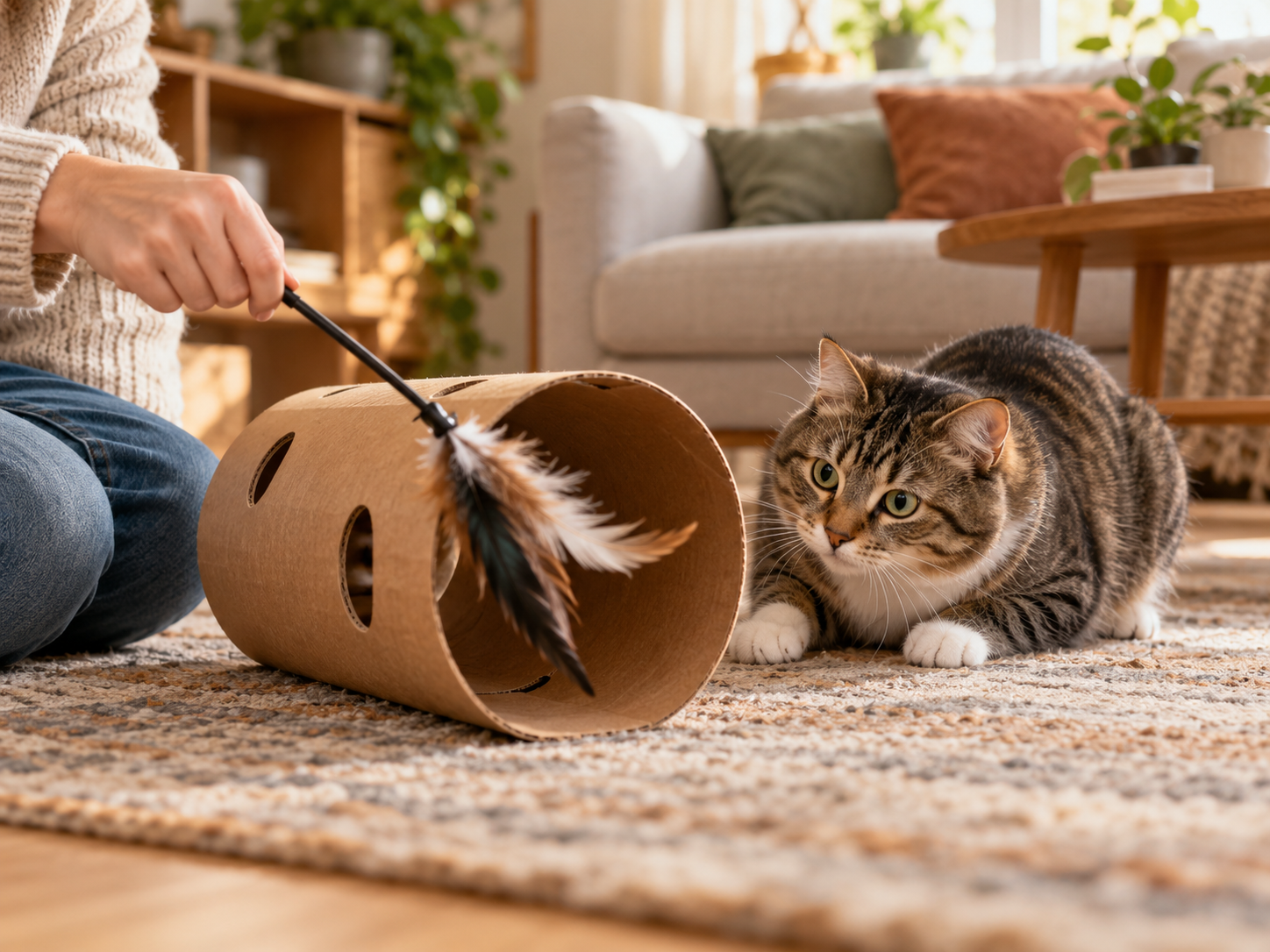
- Mimic Prey Movement: When using wand toys, move them erratically—fluttering behind a cushion, pausing like a hiding mouse, and occasionally allowing your cat to successfully catch the object to complete the predatory cycle.
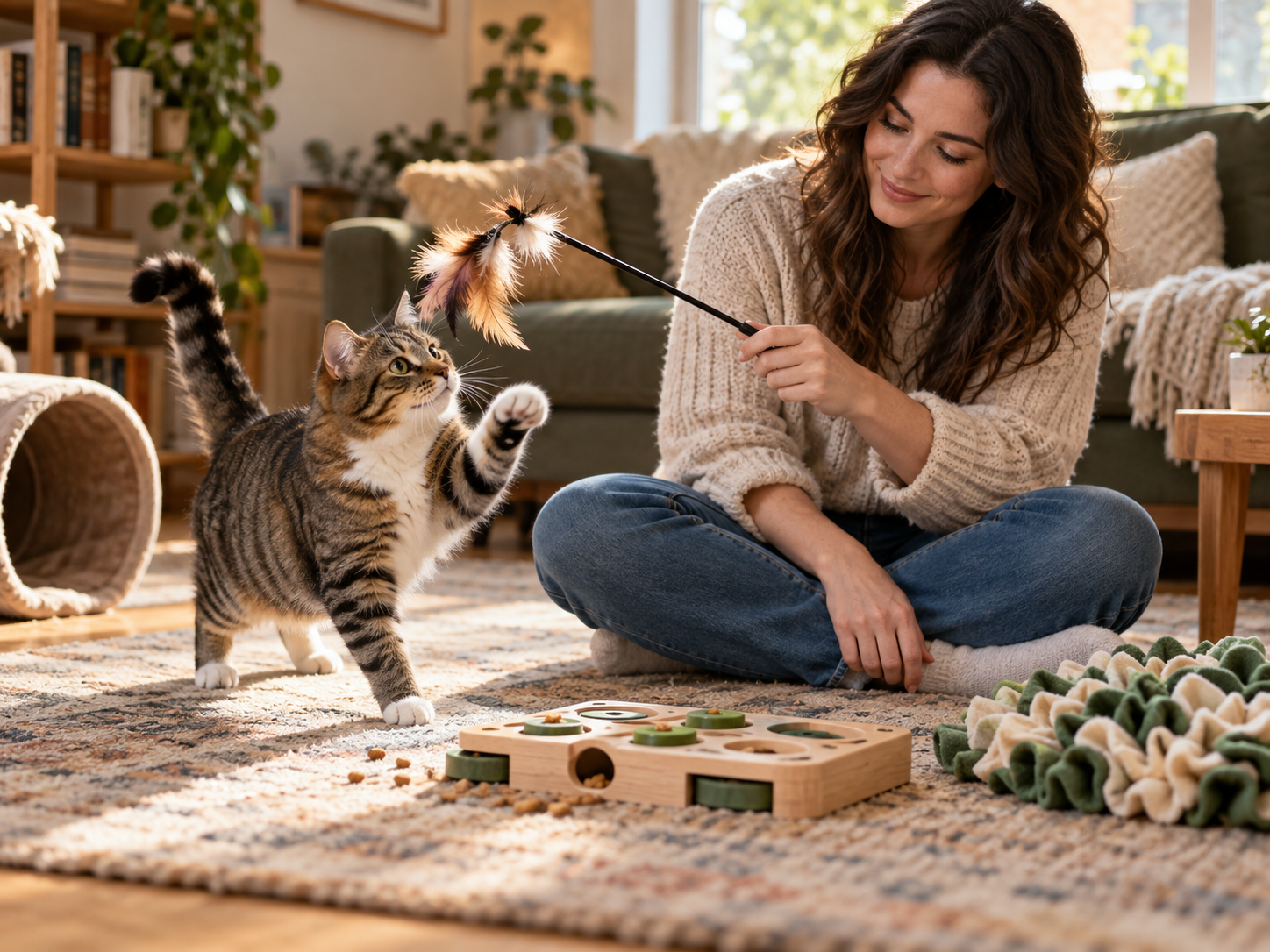
- Incorporate Puzzle Feeders: Make mealtimes challenging by hiding dry food or treats around the room or using treat-dispensing toys that require problem-solving and physical dexterity.
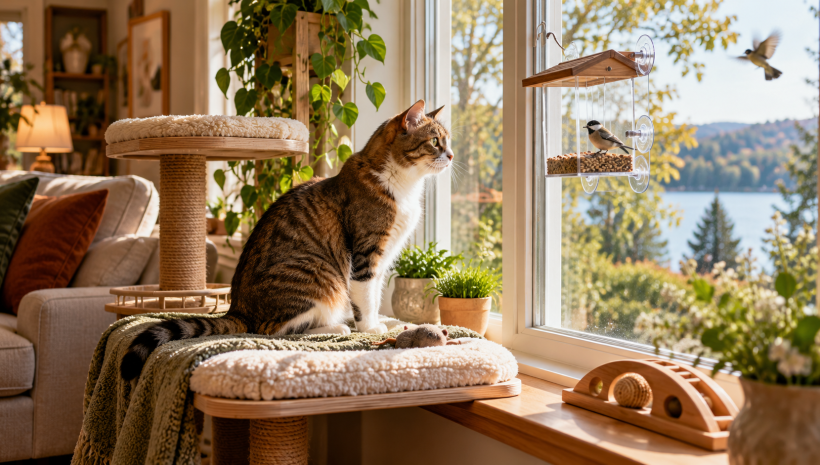
- Vertical Territory: Expand your cat’s world upward by clearing shelf space, adding window perches, or installing cat trees to stimulate natural surveillance behaviors and expand usable living space.
Implementing these strategies does not require a complete overhaul of your living space or a large financial investment. Consistency and observation are far more valuable. Pay attention to which textures, movements, and heights your cat prefers, and tailor your enrichment efforts to match their individual personality. Some cats respond best to fast-moving feather wands, while others prefer methodical puzzle-solving for food rewards.
Creating a Consistent Enrichment Schedule
Establishing a predictable daily rhythm helps manage your cat’s energy levels and prevents the afternoon or evening slumps that often lead to behavioral issues. Cats are crepuscular by nature, meaning their natural activity peaks around dawn and dusk. Scheduling interactive play sessions during these window times aligns perfectly with their biological clocks.
Dedicate two to three short sessions each day—lasting around ten to fifteen minutes each—to active wand play or structured hunting games. Concluding each play session with a small treat or a meal allows your cat to complete the entire predatory sequence: stalk, chase, catch, kill, and eat. This biological loop satisfies their mental and physical needs, greatly reducing the likelihood of boredom-induced restlessness.
Furthermore, changing the sensory landscape of your home can provide continuous background stimulation. Leaving a window cracked open with a secure screen allows fresh outdoor smells and sounds to engage your cat’s curiosity. Safe, non-toxic plants like cat grass can also provide tactile and nutritional variety.
When Disinterest or Restlessness Points to Medical Concerns
While environmental boredom is common, persistent lethargy, restlessness, or sudden changes in demeanor should never be automatically attributed to a lack of toys. A cat appearing bored or disinterested may actually be experiencing underlying medical issues such as hyperthyroidism when accompanied by weight loss and increased appetite A cat appearing bored or disinterested may actually be experiencing underlying medical issues such as hyperthyroidism when accompanied by weight loss and increased appetite.
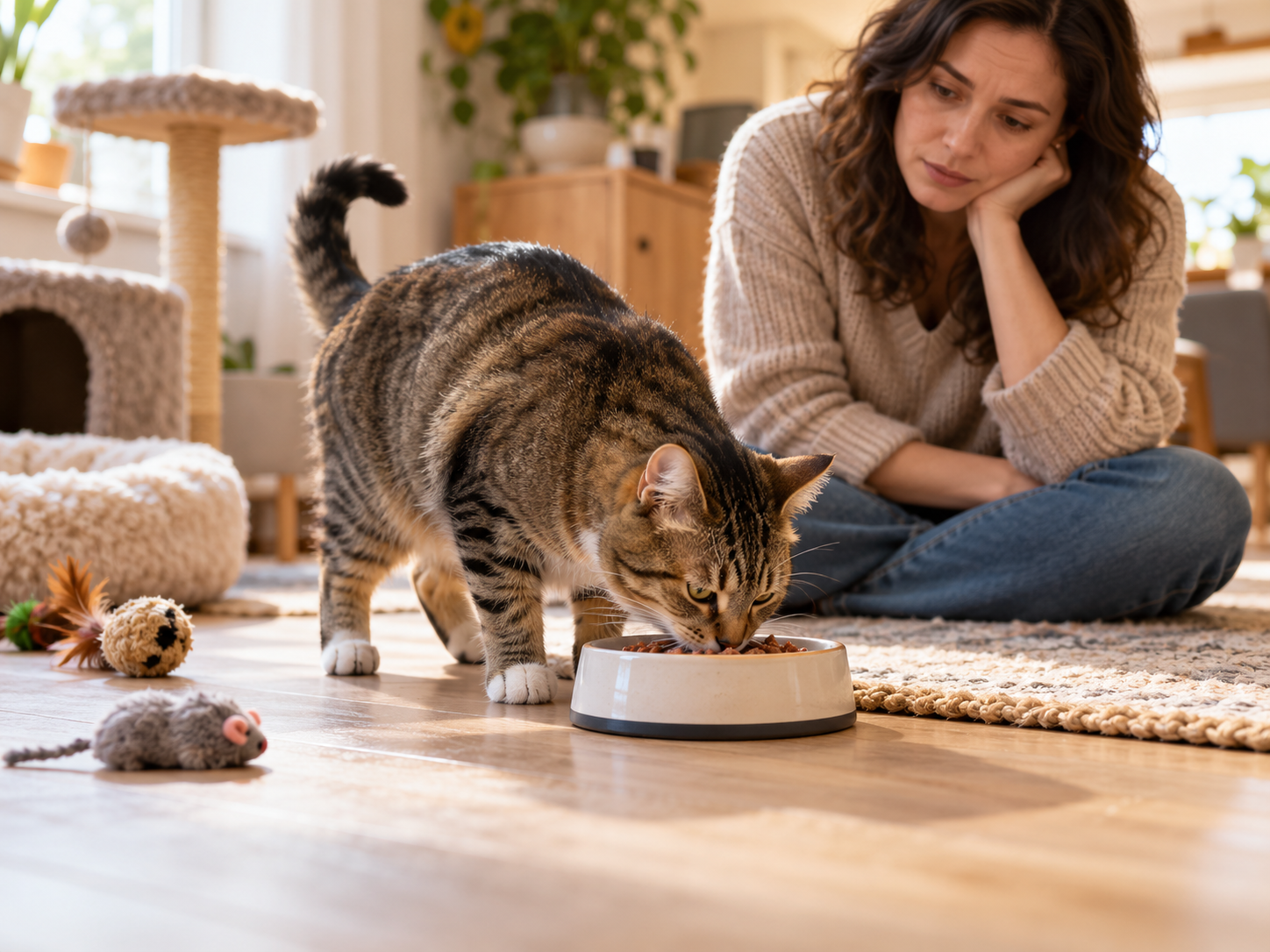
Hyperthyroidism causes an overproduction of thyroid hormones, making cats feel constantly restless, hungry, and metabolically overworked, which can easily be misinterpreted as behavioral quirkiness or persistent boredom A cat appearing bored or disinterested may actually be experiencing underlying medical issues such as hyperthyroidism when accompanied by weight loss and increased appetite. If your cat is eating substantially more food yet shedding pounds, or exhibiting unusual behavioral shifts alongside a lack of interest in normal routines, schedule an evaluation with your veterinarian to rule out clinical causes.
Other medical conditions can also mimic behavioral listlessness. Dental pain, arthritis, and urinary tract discomfort often cause cats to withdraw from play and social interaction. Because felines are masters at masking discomfort, a sudden drop in engagement should always prompt a careful check of their physical health. Working alongside your veterinarian ensures that you can safely differentiate between a simple need for more environmental variety and a medical concern requiring treatment.
By combining thoughtful toy rotation, dynamic interactive play sessions, and careful attention to your cat’s physical health, you can build a richer, more responsive daily routine that respects your unique bond and honors their individual needs.