
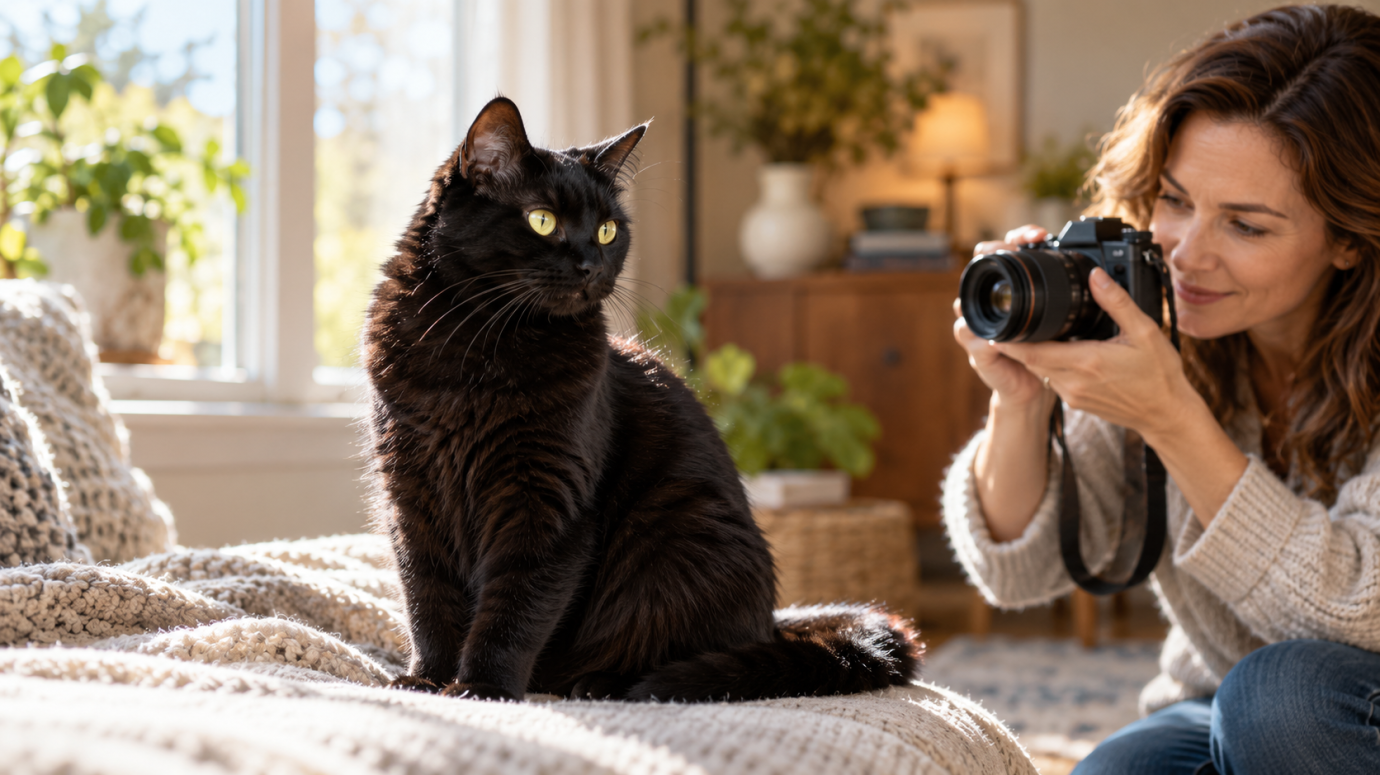
For anyone who shares their home with a black cat, capturing a photograph that does their companion justice can be surprisingly frustrating. Too often, a camera turns a sleek, majestic feline into an undifferentiated dark blur, washing out the distinct silhouette and hiding the texture of their fur in a sea of pure shadow Black cats can appear as an undifferentiated dark blur in photos due to low contrast, low-light autofocus struggles, and camera exposure algorithms interpreting black fur as deep shadows. Understanding why this happens requires looking past simple lighting mistakes into how modern digital cameras process dark subjects, and learning how a few targeted adjustments can preserve the rich visual detail of your cat’s coat.
Why Black Cats Become a Dark Blur in Photos
The root cause of photographic blur and loss of detail in black cats stems from how photographic equipment interprets contrast and luminance. Cameras are engineered to balance light across an entire frame, aiming for a neutral average exposure. When a dark subject occupies a significant portion of the viewfinder against an average or bright background, the camera’s exposure meter often overcorrects. It attempts to brighten the midtones, which can clip the shadow details inherent in dark fur, or conversely, it underexposes the entire scene to prevent bright areas from blowing out, rendering the cat as an absolute silhouette.
Furthermore, feline coats absorb a significant amount of ambient light rather than reflecting it back to the sensor. Without sufficient tonal variance or distinct edges, the camera’s processing software struggles to distinguish where the cat ends and the background begins. This dynamic is compounded when taking pictures indoors under standard domestic lighting, which lacks the directional qualities needed to bring out the subtle warm undertones, mahogany hints, or silver guard hairs common in many black cat coats.

Camera Limitations: Autofocus and Exposure Algorithms
Digital sensors and autofocus mechanisms rely heavily on contrast detection to lock onto a subject. In low-light environments, contrast-based autofocus systems hunt back and forth because they cannot detect the subtle edges and tonal gradations on a solid black cat. Without high-contrast lines—such as the boundary between a white paw and a dark floor—the lens fails to achieve a sharp focus.
Compounding this is the automated metering system inside smartphones and dedicated cameras. Most consumer cameras use evaluative or matrix metering, which divides the frame into zones and calculates exposure based on an assumed 18% gray standard. When presented with a dark cat, the algorithm assumes the shadows are underexposed and attempts to compensate, or it reads the dark mass as empty space and locks focus on the background wall instead. Understanding these algorithmic tendencies allows cat owners to step away from fully automatic settings and take control of how the camera perceives their pet.
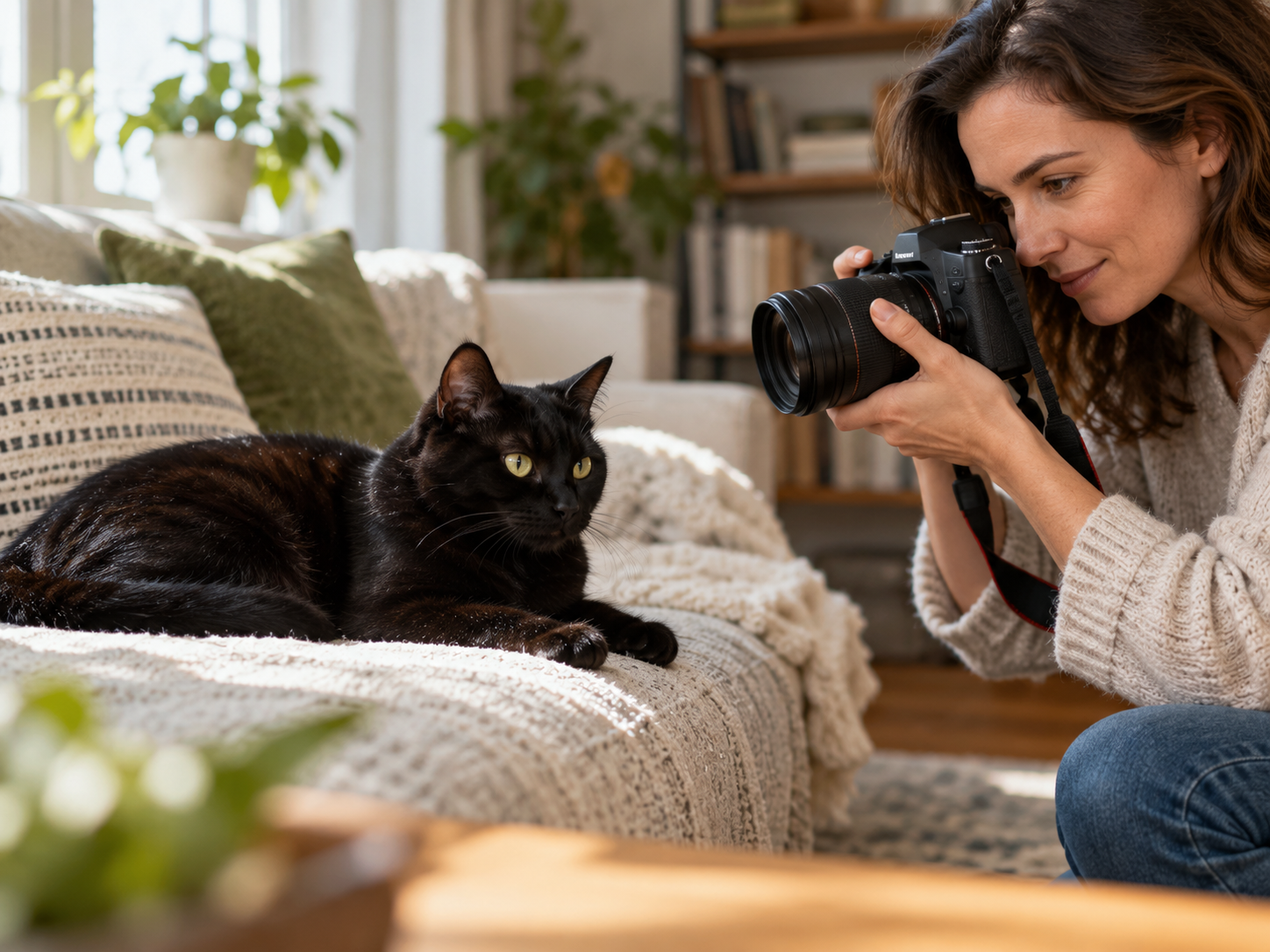
Coat Health and Grooming for Better Light Reflection
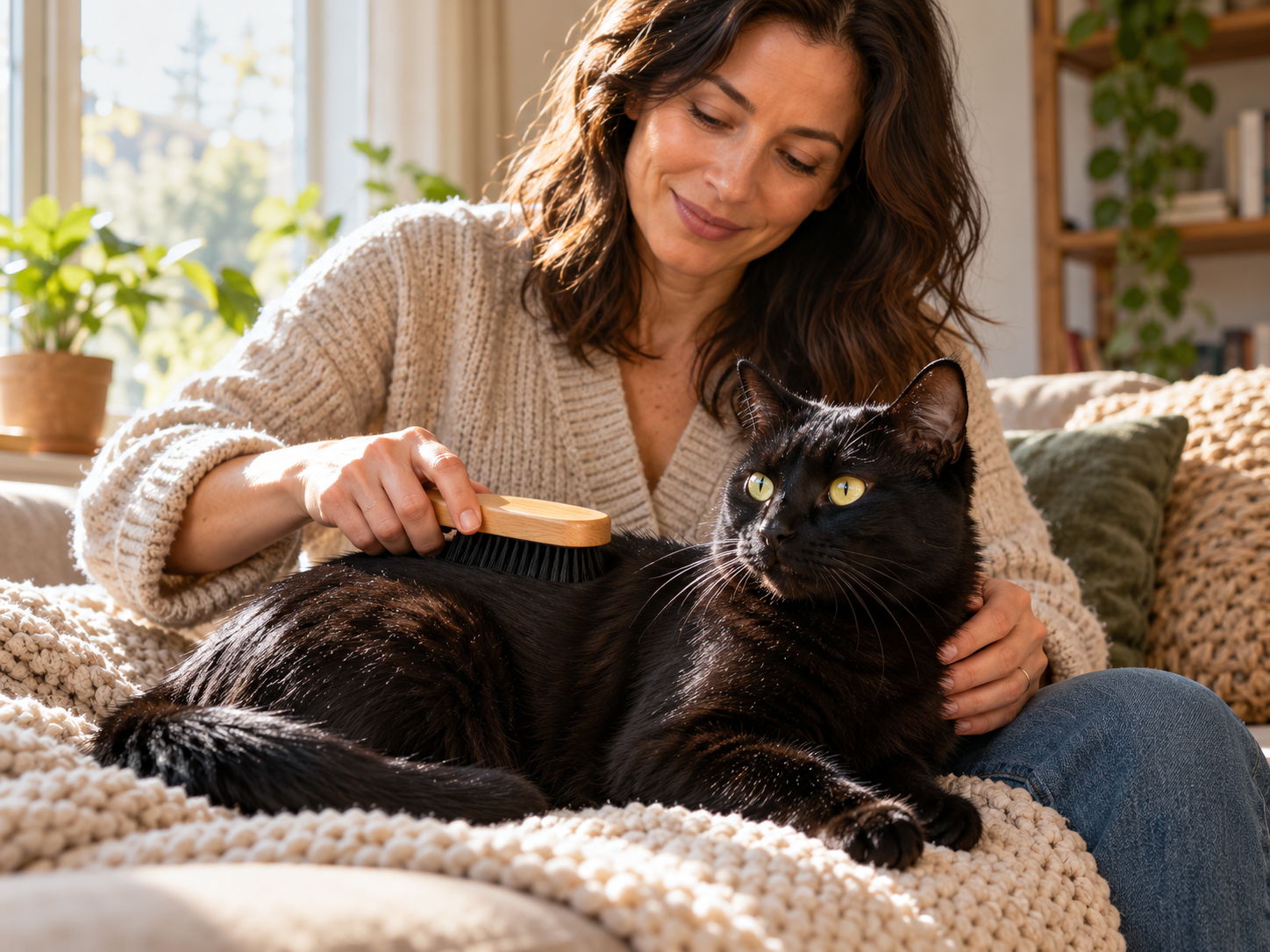
While camera settings play a major role, the physical state of your cat’s fur directly influences how light interacts with their coat. Maintaining a clean, healthy dark coat helps reflect light better than dull or dirty fur Proper grooming and coat health can help dark fur catch subtle highlights rather than absorbing all incoming light. Over time, environmental dust, loose undercoat dander, and natural skin oils can accumulate, creating a matte layer that drinks in light and accentuates the flat, blurry look in pictures.
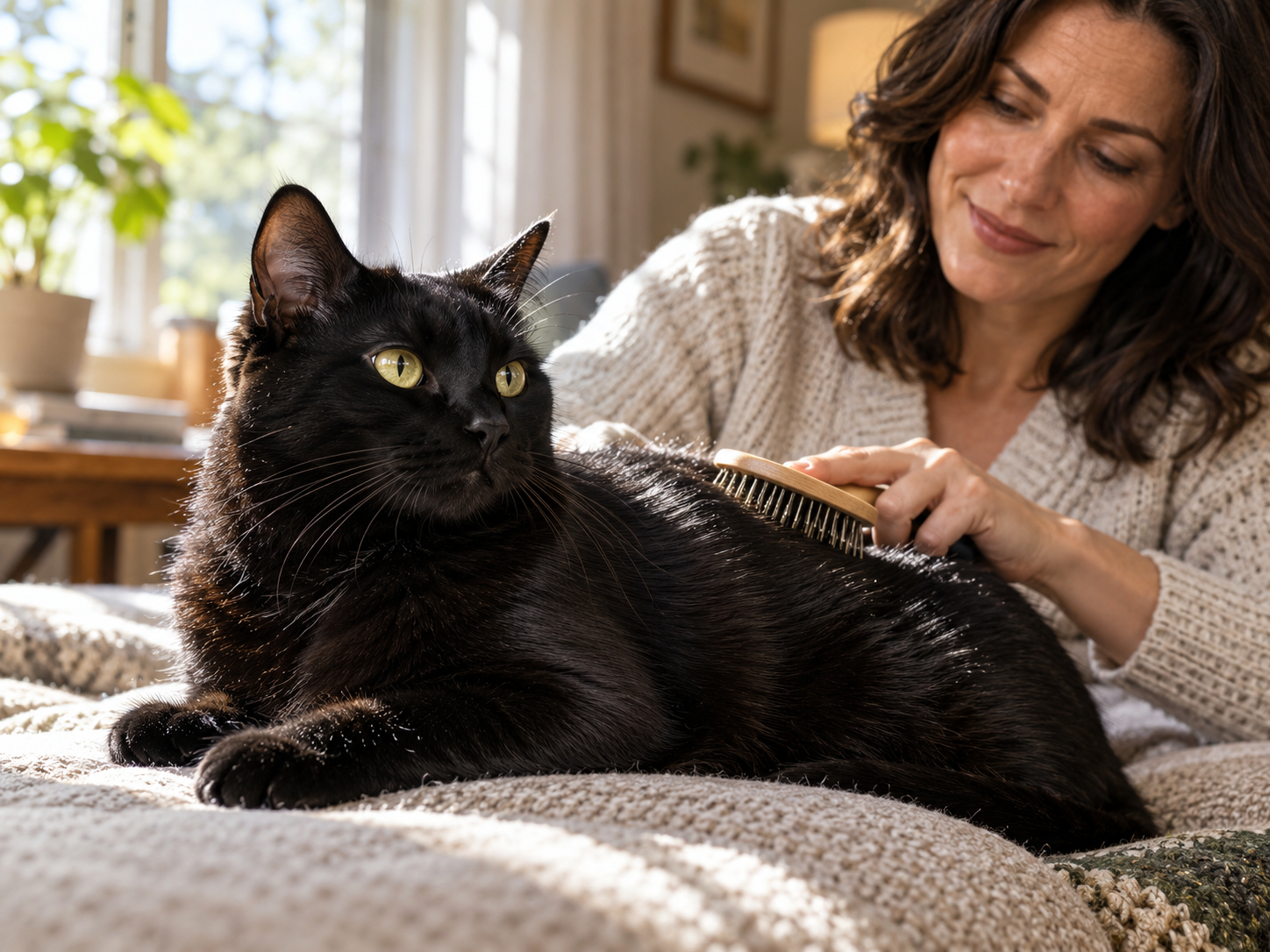
Regular brushing helps remove loose hair and aligns the guard hairs so they lie smoothly, creating microscopic specular highlights when light strikes them. If your cat is comfortable with grooming routines, a gentle brushing session right before taking photos can significantly improve how their coat catches secondary room illumination. For cats with specific skin or coat needs, utilizing appropriate grooming products or targeted dark-coat shampoos can restore a natural sheen that gives photographs physical depth and dimension instead of a flat, light-absorbing surface.
Practical Lighting and Environmental Setup
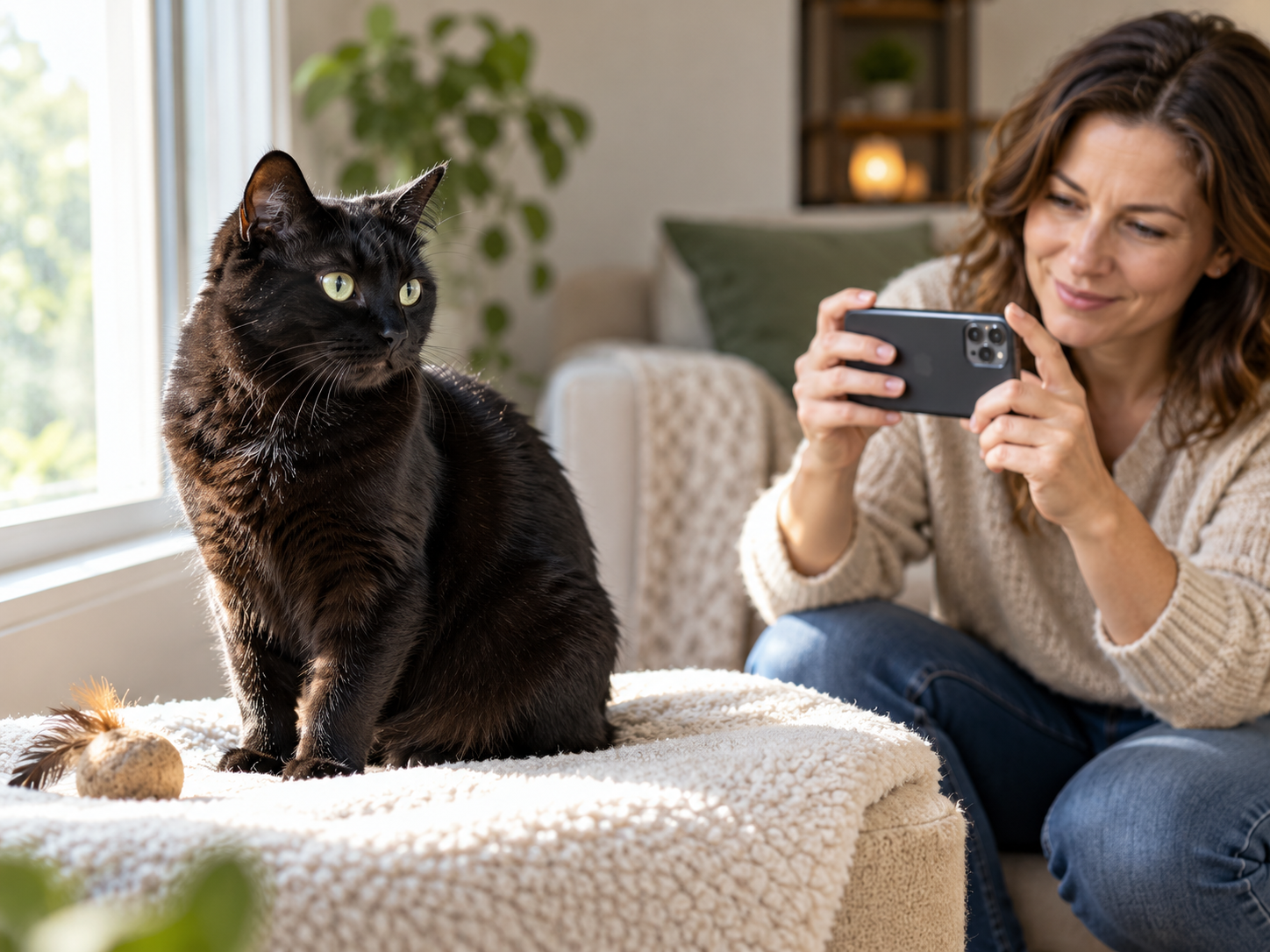
Achieving clear, detailed photos of a black cat relies far more on thoughtful environmental preparation than expensive equipment. Flash photography should generally be avoided; direct, harsh flash creates stark, unnatural highlights, glowing green or yellow eye reflections, and harsh shadows that flatten the cat’s features further. Instead, position your cat near a large, soft light source, such as a large window with diffused natural daylight. Side lighting is particularly effective, as it casts gentle shadows across the body, outlining muscle structure and individual tufts of fur.
To help your camera’s autofocus system lock onto your cat rather than hunting in the dark, place a textured, contrasting object near them temporarily during setup, or tap directly on your phone’s screen to manually set exposure and focus points on a high-contrast area, such as their whiskers or the edge of an eye. Minimizing background clutter also prevents the camera’s metering system from becoming confused by competing light sources. By combining patient environment management with an understanding of your camera’s limitations, you can consistently capture the true beauty and intricate detail of your black cat.
Frequently Asked Questions
Why does my black cat always look like a shadow in photos?
Cameras rely on light and contrast to define shapes. Because black fur absorbs most incoming light and camera meters attempt to balance the overall scene exposure, dark cats frequently get rendered as flat silhouettes lacking visible texture Black cats can appear as an undifferentiated dark blur in photos due to low contrast, low-light autofocus struggles, and camera exposure algorithms interpreting black fur as deep shadows.
How can I help my camera focus on a black cat in low light?
Switching from automatic settings to manual tap-to-focus on a high-contrast area—such as the eye contour or white whiskers—helps the sensor find an edge. Supplementing indoor environments with soft, indirect window light rather than relying on harsh overhead bulbs also gives the autofocus system enough contrast to work with.
Does coat hygiene affect how black fur appears in pictures?
Yes. Regular grooming removes dust and loose debris that dulls fur. A clean, well-maintained coat reflects light more evenly, allowing individual hairs to catch subtle highlights rather than absorbing all illumination Proper grooming and coat health can help dark fur catch subtle highlights rather than absorbing all incoming light.