For many cat owners, the relationship with an indoor feline companion is deeply personal and rewarding. Yet when it comes to daily care, a common piece of advice echoes across the internet: “play more.” While well-meaning, this vague directive often leaves cat owners feeling guilty and confused. Without concrete guidance, wondering whether your cat is bored or if you are doing enough can strain that special bond. Most indoor cats experience boredom and stress when relying solely on unattended toys, but vague advice to “play more” fails without structured routines Source, Source. Understanding how to build a sustainable, manageable routine transforms playtime from a chore into a meaningful connection.
Why Indoor Cats Need More Than Just Toys Left Out
Leaving a basket of rubber mice and crinkle balls on the living room floor feels convenient, but unattended toys rarely solve an indoor cat’s need for stimulation. In a natural environment, a cat’s day is driven by intense mental and physical focus. When toys simply sit in a room, they lack novelty, unpredictability, and interaction. Cats quickly lose interest in static objects that do not respond to their movements.
Without active outlets, indoor cats can exhibit signs of under-stimulation, ranging from restless pacing and nocturnal yowling to redirected aggression or over-grooming. Most indoor cats are bored due to vague advice or expensive gear rather than owner neglect Source. Fixing boredom requires rebuilding how cats play, hunt, and expend energy daily Source. Play provides essential mental stimulation and physical activity for cats of all ages Source, helping them maintain a healthy weight, reduce stress, and express natural behaviors safely.
Understanding the Natural Predatory Sequence
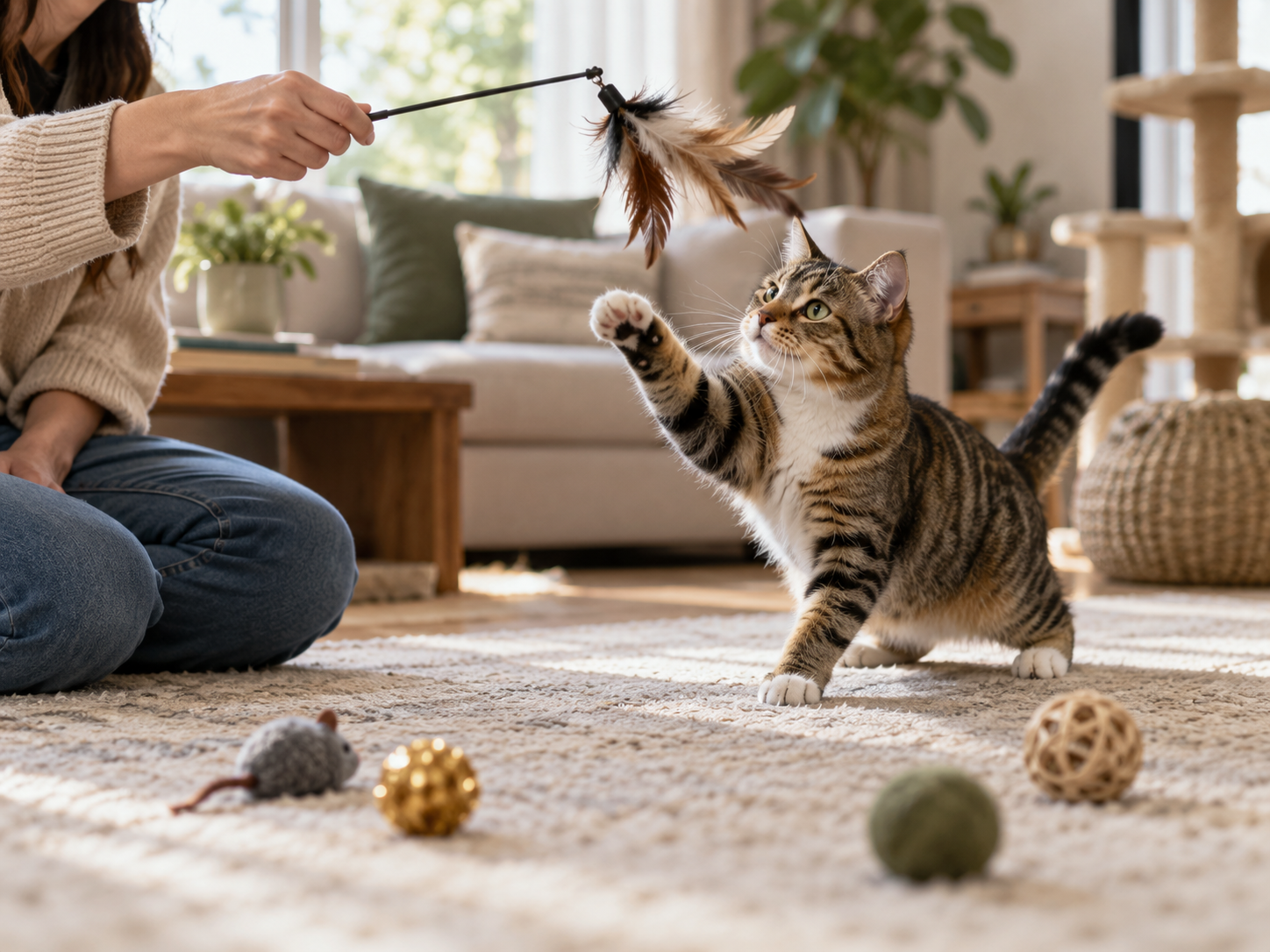
To give your cat a satisfying play experience, it helps to look at how cats operate instinctively. In the wild, hunting is not a random dash; it follows a predictable neurological sequence: stalk, chase, catch, kill, and eat. Interactive play sessions are most effective when they mimic these natural predatory sequences and fit sustainably into human daily life Source, Source.
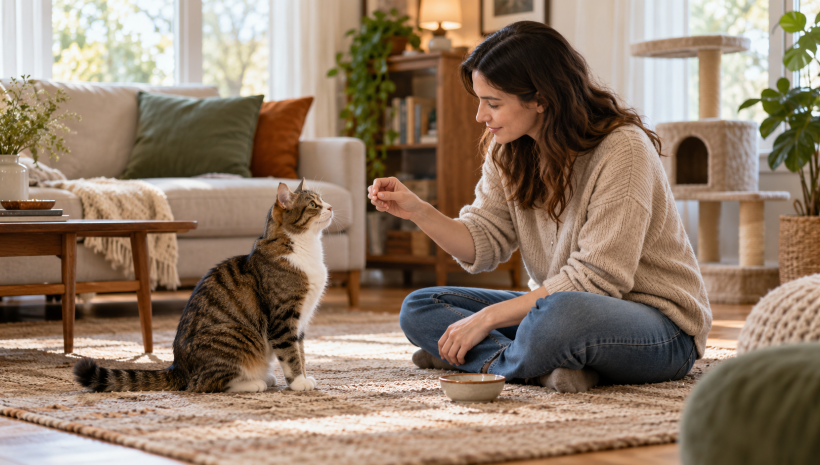
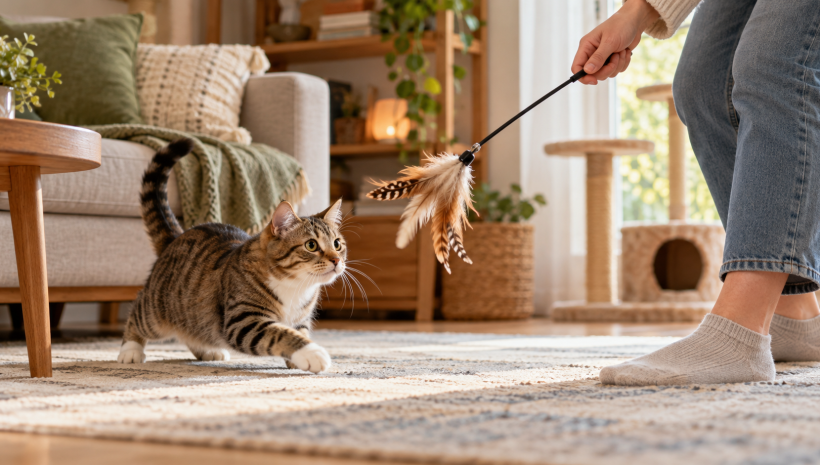
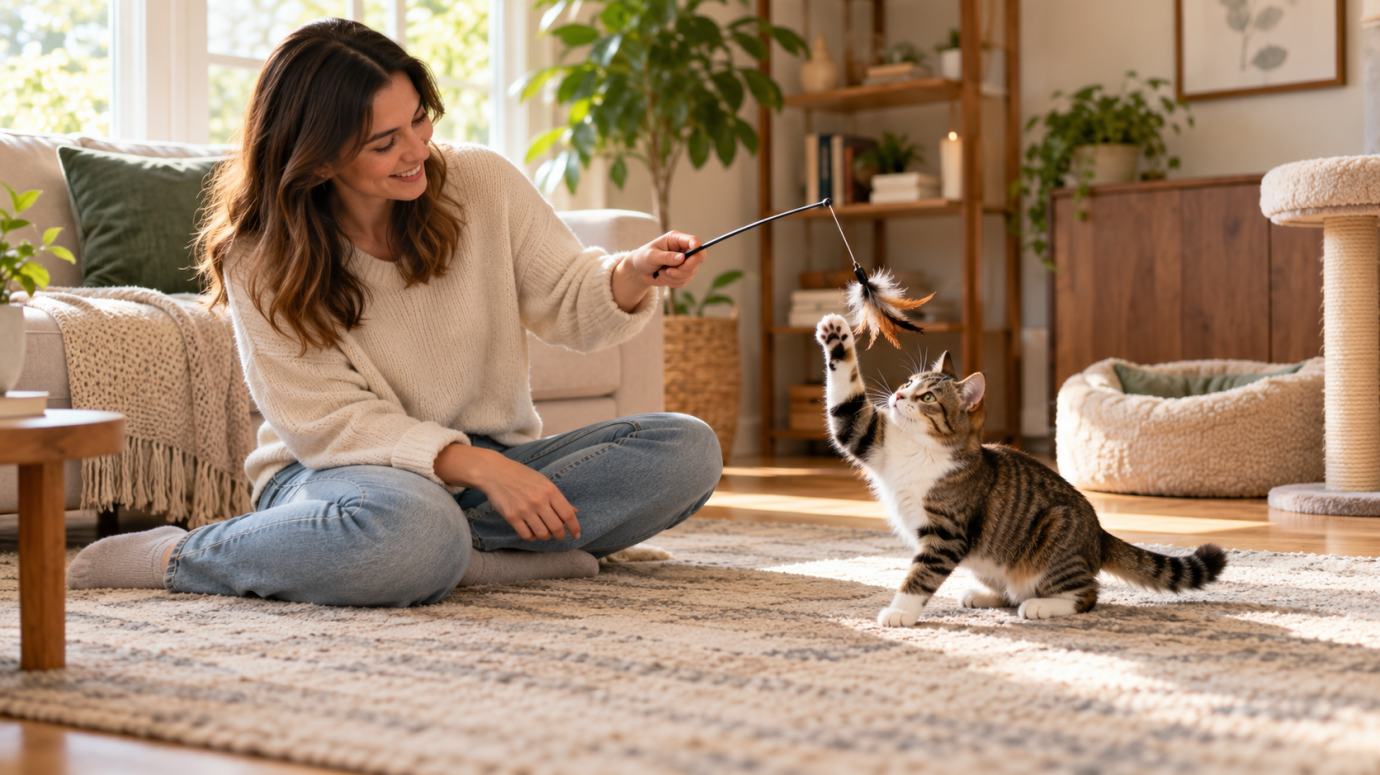
When you use a wand toy or a feather attachment, you control the “prey.” Begin by letting your cat spot the toy and sink into a stalking posture. Move the toy slowly, letting it pause behind a piece of furniture to build anticipation. Allow brief bursts of fast movement so your cat can chase and finally capture the object. Letting the cat physically grab, bat, and “kill” the toy satisfies the end of the sequence. If a play session ends abruptly without a catch, cats can become frustrated. Completing the cycle with a small treat or a meal mimics the final “eat” phase, naturally signaling to your cat’s brain that the hunt was successful and it is time to groom and rest.
Building a Low-Stress Daily Routine You Can Actually Keep
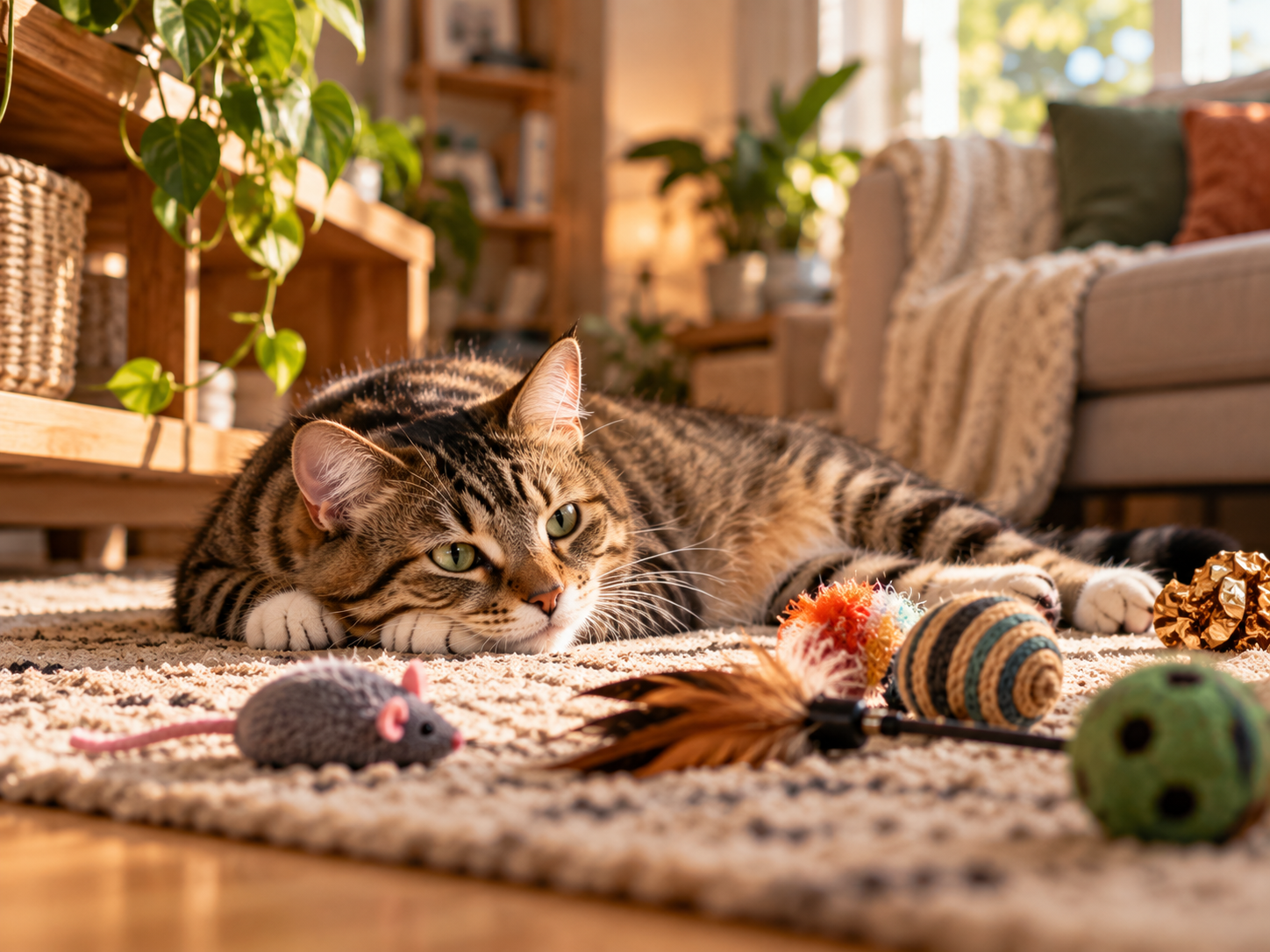
One of the biggest hurdles for cat owners is time. Between work, household responsibilities, and personal commitments, carving out an hour of high-energy play every single day feels impossible. Fortunately, cats do not need hour-long marathons. In fact, felines are crepuscular hunters, meaning their natural energy peaks occur around dawn and dusk.
Sustainable routines must fit normal, busy life rather than demanding an impossible, perfect plan Source. Instead of striving for a rigid schedule, aim for two or three focused, highly engaging five-to-ten-minute play sessions scattered throughout the day. You can easily pair these with existing habits: initiate a quick wand-toy session right after your morning coffee or right as you unwind after logging off work. Interactive play with humans strengthens bonding and facilitates communication Source, turning brief moments into powerful relationship-builders.
Creative Enrichment Ideas That Don’t Clutter Your Home
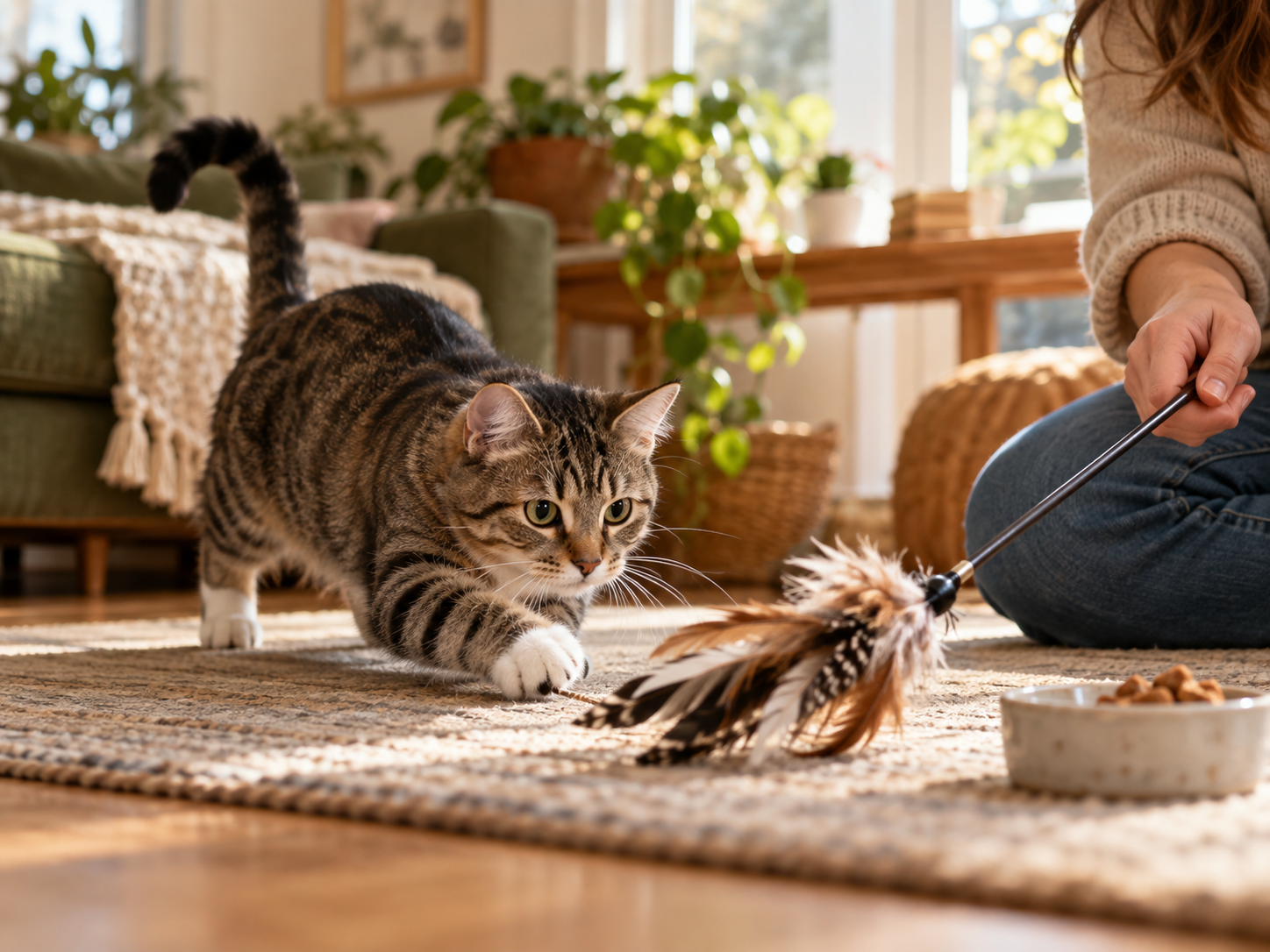
Play is only one component of a thriving indoor lifestyle. Environmental enrichment keeps cats mentally engaged even when you are away or busy. Crucially, keeping your cat stimulated does not require turning your living room into an obstacle course or buying bulky gear that disrupts your home decor. Enrichment can be built using small-space play, food puzzles, vertical routes, scratching, and scent work without clutter Source.
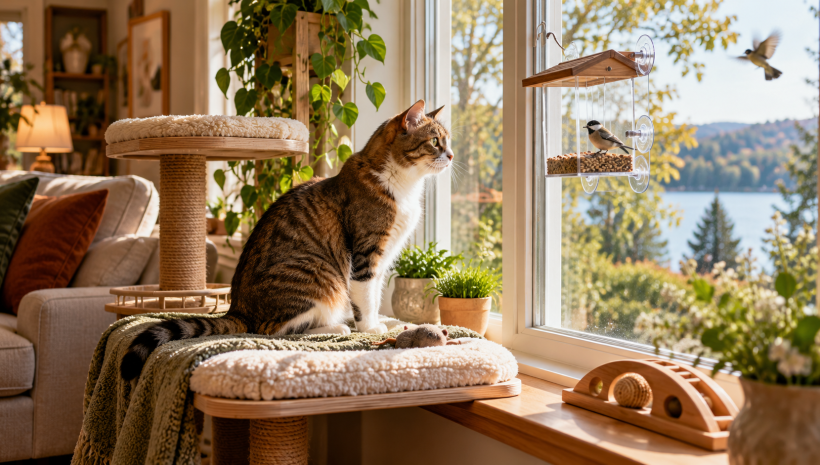
- Vertical Routes: Utilize existing furniture, bookshelves, or compact wall-mounted perches to give your cat safe elevated viewpoints, which naturally expand their territory in smaller apartments.
- Food Puzzles and Foraging: Swap out a traditional food bowl for interactive puzzle feeders or treat balls that require your cat to bat and solve problems to access their kibble, satisfying foraging instincts.
- Scent Work: Introduce safe, novel aromas such as fresh catnip, silver vine, or a small handful of dried leaves in a cardboard box to stimulate sensory exploration without taking up physical floor space.
By combining short, predictable play sessions that mirror the predatory cycle with clever, low-profile environmental enrichment, you create a balanced routine. This approach respects your cat’s natural instincts while fitting seamlessly into your real, everyday life.
Frequently Asked Questions
How many minutes of play does an indoor cat need each day?
There is no single magic number that applies to every feline, as age, temperament, and energy levels vary significantly. However, splitting total activity into two or three focused 5-to-10 minute interactive play sessions throughout the day is generally sufficient to keep most healthy indoor cats physically active and mentally satisfied.

What should I do if my indoor cat loses interest in toys quickly?
Cats easily habituate to stationary or predictable objects. To renew their interest, rotate your toys weekly so they feel “new” again. During play, make the toy behave more like living prey by moving it erratically, hiding it behind cushions, and allowing your cat moments of successful capture.

How can I fit cat play into a busy work schedule?
Anchoring play sessions to routine daily milestones—such as right when you wake up, immediately after returning home from work, or before winding down at night—makes consistency effortless. Short, intense bursts of play require very little time while offering maximum mental and physical benefits.
How to know your routine is sustainable
A useful play routine is one you can repeat without feeling that every missed session is a failure. Watch your cat over a week rather than judging one evening: note whether they engage readily, settle after play, and still show interest when the next session begins. If your plan regularly feels too long for either of you, shorten it and keep the most engaging minutes. Consistency matters more than turning every session into a marathon.