Building a meaningful, lasting bond with a cat does not require grand gestures or forced affection. Cats are autonomous, sensitive individuals that often prefer low-pressure interactions where they retain the power to choose whether and how to engage. Understanding how your cat communicates and establishing predictable, calm daily routines can significantly improve your shared environment and foster genuine trust.
The Short Answer
A strong bond with your cat is built through repeatable, low-pressure interactions rather than forcing physical closeness. By maintaining predictable daily routines and respecting your cat’s boundaries, you create a secure environment where trust can develop naturally AAFP/ISFM Feline Environmental Needs Guidelines.
Understanding Feline Autonomy and Environmental Needs
Cats navigate their world through a lens of control and predictability. Unlike social species that rely on constant physical contact for reassurance, cats derive confidence from environmental stability and autonomy. Environmental guidelines emphasize that cats need control over their space, including reliable resting places, vertical lookouts, and hiding spots where they can retreat undisturbed AAFP/ISFM Feline Environmental Needs Guidelines.
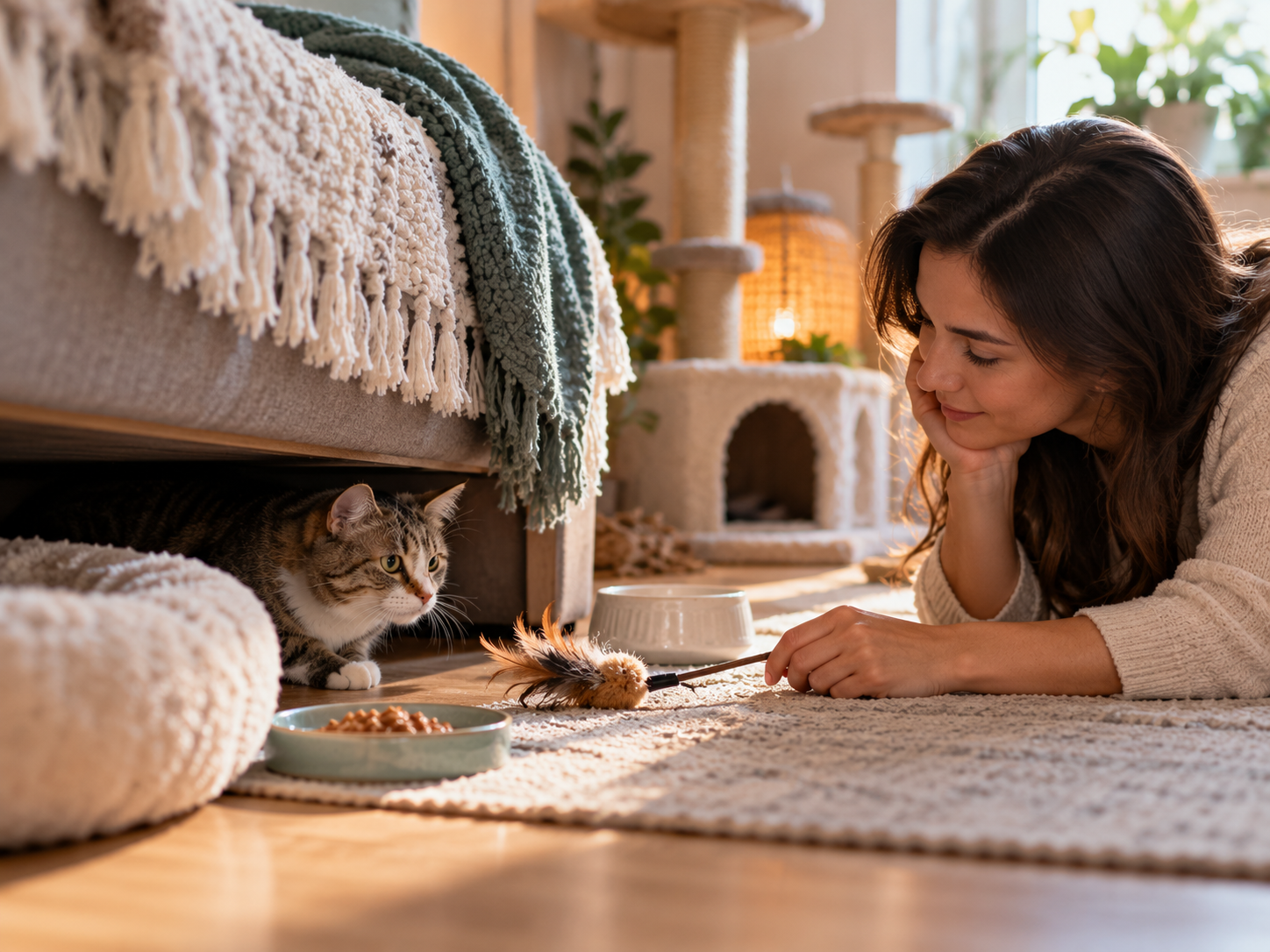
When a cat feels that their physical space is secure and that they can withdraw whenever they choose, their baseline stress levels decrease. This sense of security is the foundation upon which any meaningful bond is built. Forcing physical contact—such as picking up a cat that wants to stay grounded or cornering them for affection—communicates unpredictability and threat, which undermines trust.
Use Slow Blinking as a Low-Pressure Greeting
One of the most accessible ways to communicate peaceful intent to your cat is through slow blinking, sometimes described as eye narrowing. Research investigating feline behavior indicates that slow-blinking movements can facilitate positive cat-human communication, encouraging cats to approach and engage more comfortably with humans The role of cat eye narrowing movements in cat-human communication.
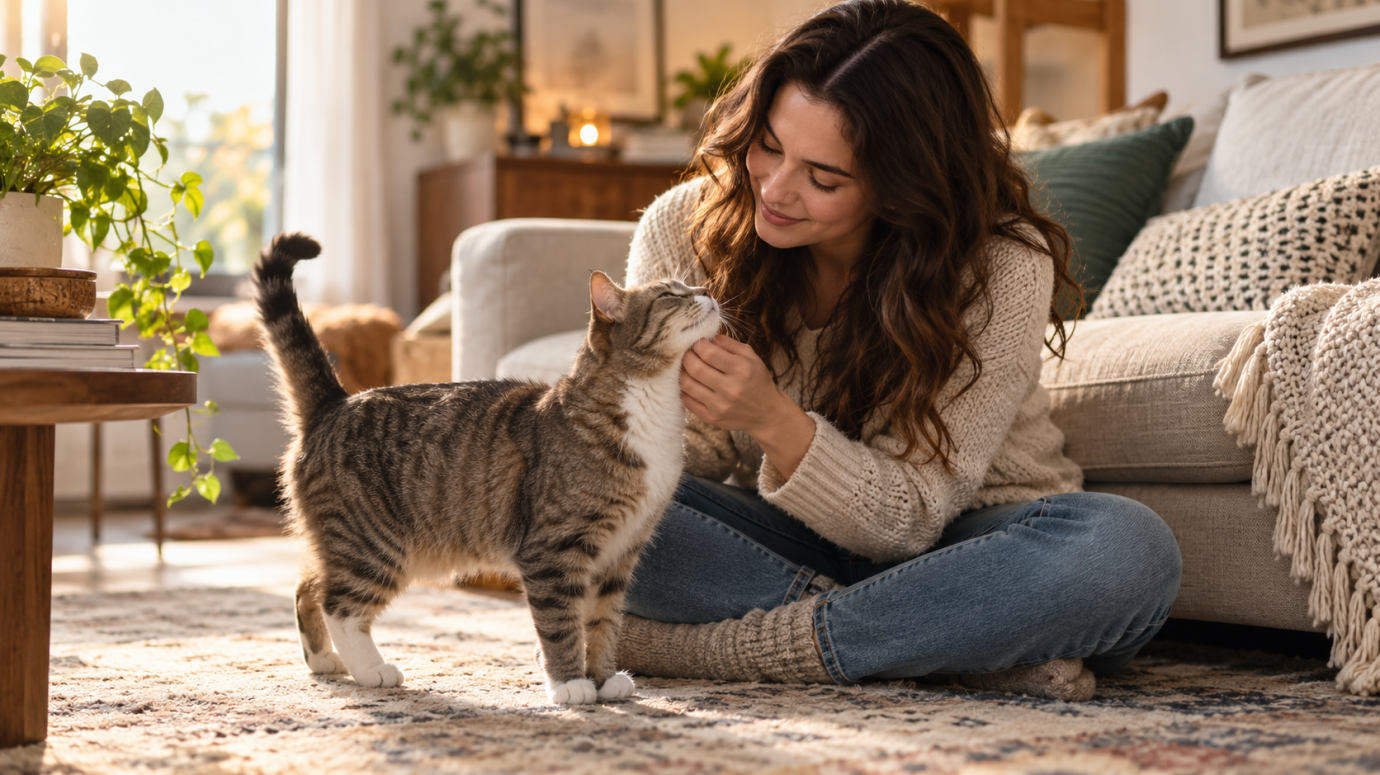
When you catch your cat’s eye across the room, try softening your gaze and slowly closing and opening your eyes. Avoid staring directly, which can be interpreted as a sign of tension or threat. If your cat slow blinks back or turns away relaxed, it indicates they feel secure in your presence. While this behavior does not guarantee an immediate invitation for petting, it serves as a gentle, non-threatening acknowledgment that respects feline communication signals Slow Blinking Can Strengthen Your Bond with Your Cat: Research.
Scientific observation shows that slow blinking is a positive signal of calm intent and trust rather than a direct translation of human romantic concepts The role of cat eye narrowing movements in cat-human communication. It indicates that your cat feels safe enough in your presence to lower their guard without feeling pressured to interact physically.
Make Good Interactions Predictable
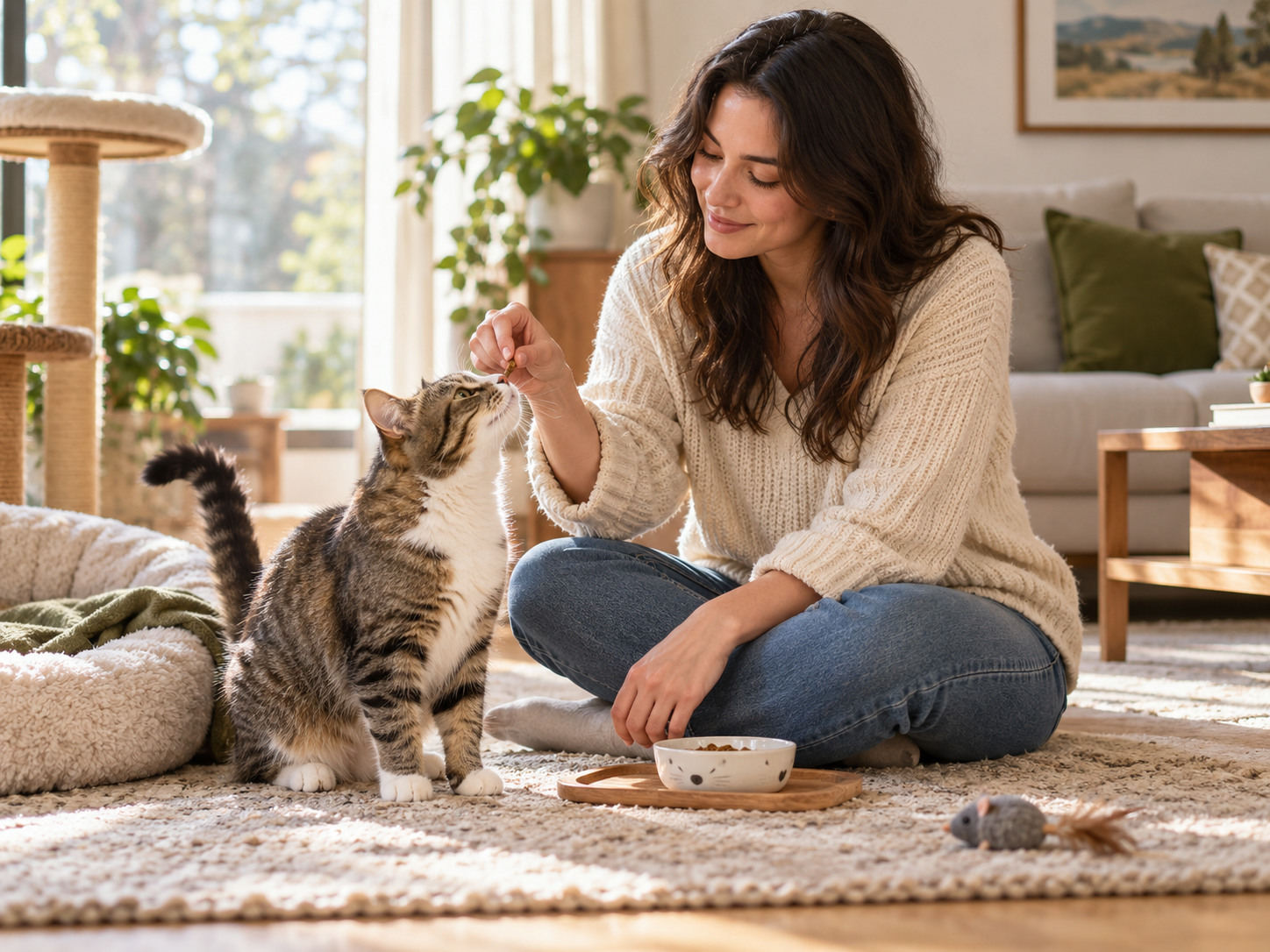
Cats thrive on predictability. Sudden changes in their daily schedule, feeding times, or home environment can cause stress and anxiety. Establishing consistent daily routines—such as feeding at regular intervals, setting aside predictable times for interactive play, and maintaining a stable household environment—helps reduce feline anxiety and strengthens trust over time AAFP/ISFM Feline Environmental Needs Guidelines.
When your cat knows what to expect from their environment and from you, they spend less energy being vigilant and more energy relaxing. Predictability builds confidence, making your cat more receptive to social contact because they know they will not be cornered or forced into unwanted handling. Consistent daily routines and predictable interactions help reduce feline anxiety and strengthen trust over time AAFP/ISFM Feline Environmental Needs Guidelines.
Let Your Cat Choose the Distance
Respecting your cat’s autonomy is essential for a healthy relationship. Environmental and behavioral guidelines emphasize that cats need control over their space, including reliable resting places, vertical lookouts, and hiding spots where they can retreat undisturbed AAFP/ISFM Feline Environmental Needs Guidelines.
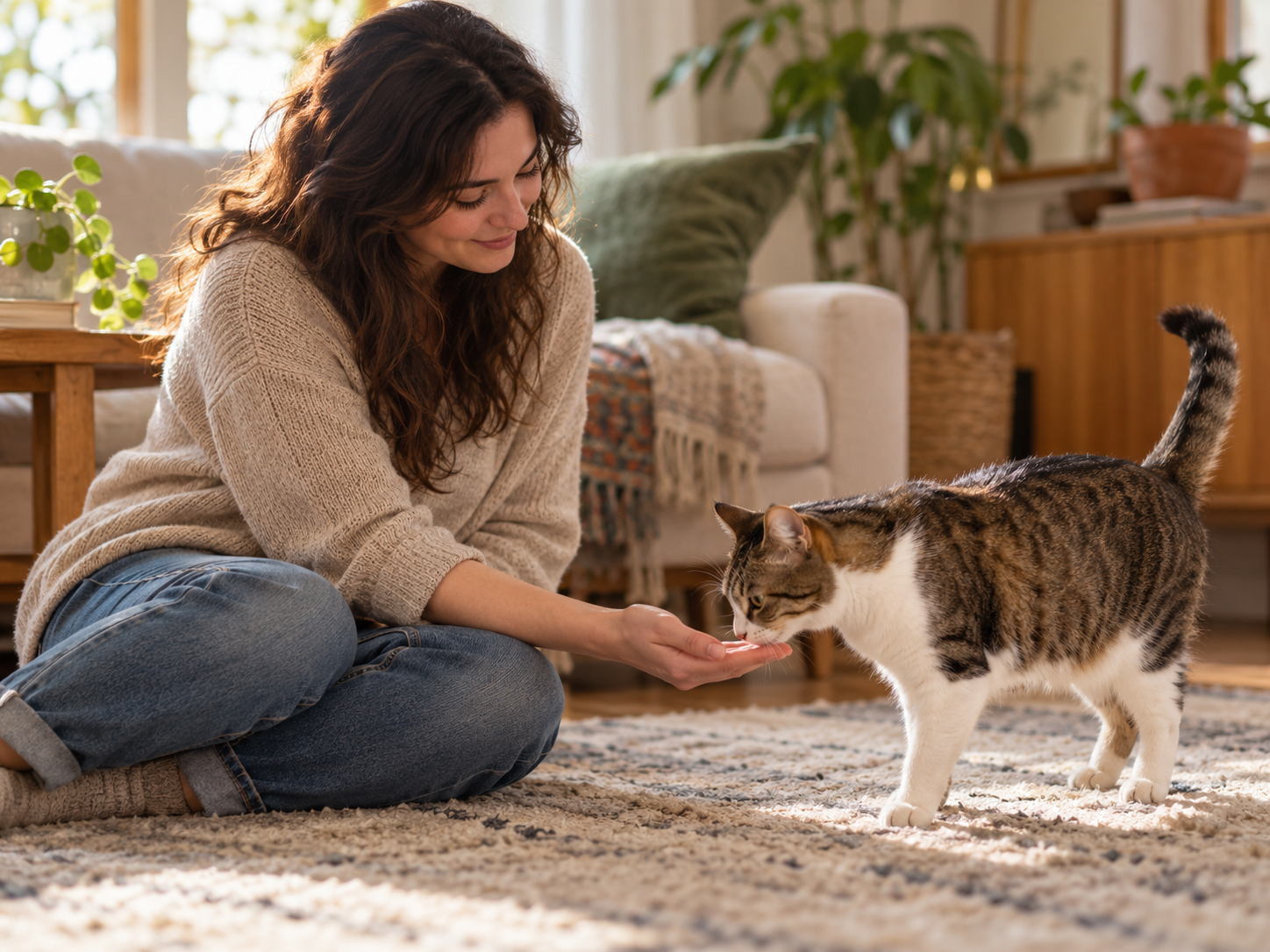
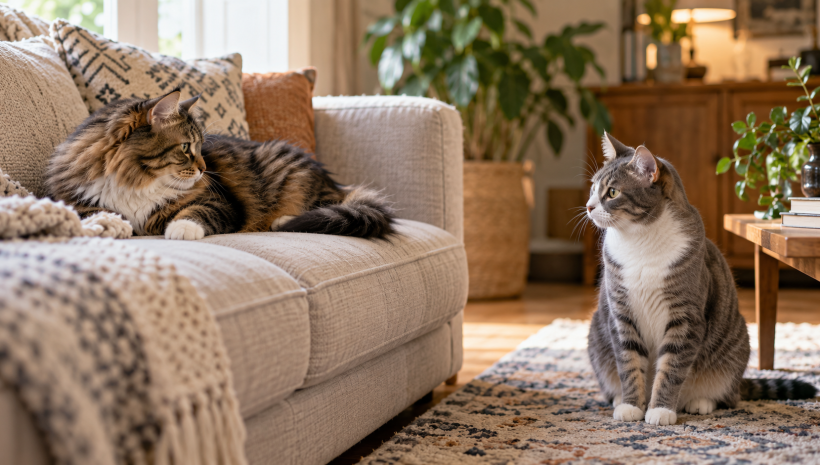
Allowing your cat to choose the distance means letting them approach you rather than pursuing them when they want quiet time. Pay attention to subtle body language: a stiff tail, flattened ears, or dilated pupils indicate a desire for space. When you let your cat decide when to leave or stay, you teach them that your presence is safe and non-intrusive.
Implementing Consistent Daily Rhythms
Integrating these principles into your day does not require a complicated schedule. A simple daily routine can be woven into ordinary moments:
1. Calm Morning Greeting: Start the day with a gentle, soft-eyed slow blink when you first enter the room, allowing your cat to approach you on their terms The role of cat eye narrowing movements in cat-human communication. 2. Predictable Feeding and Care: Serve meals at consistent times in a quiet area, reinforcing a stable and reliable routine AAFP/ISFM Feline Environmental Needs Guidelines. 3. Optional Play and Social Contact: Engage in a short session of interactive play using a wand toy or feather teaser that mimics natural hunting behaviors, stopping before your cat loses interest or becomes overstimulated. 4. Respecting Disengagement: Conclude interactions gracefully if your cat walks away, signaling that their boundaries are respected.
What Not to Force
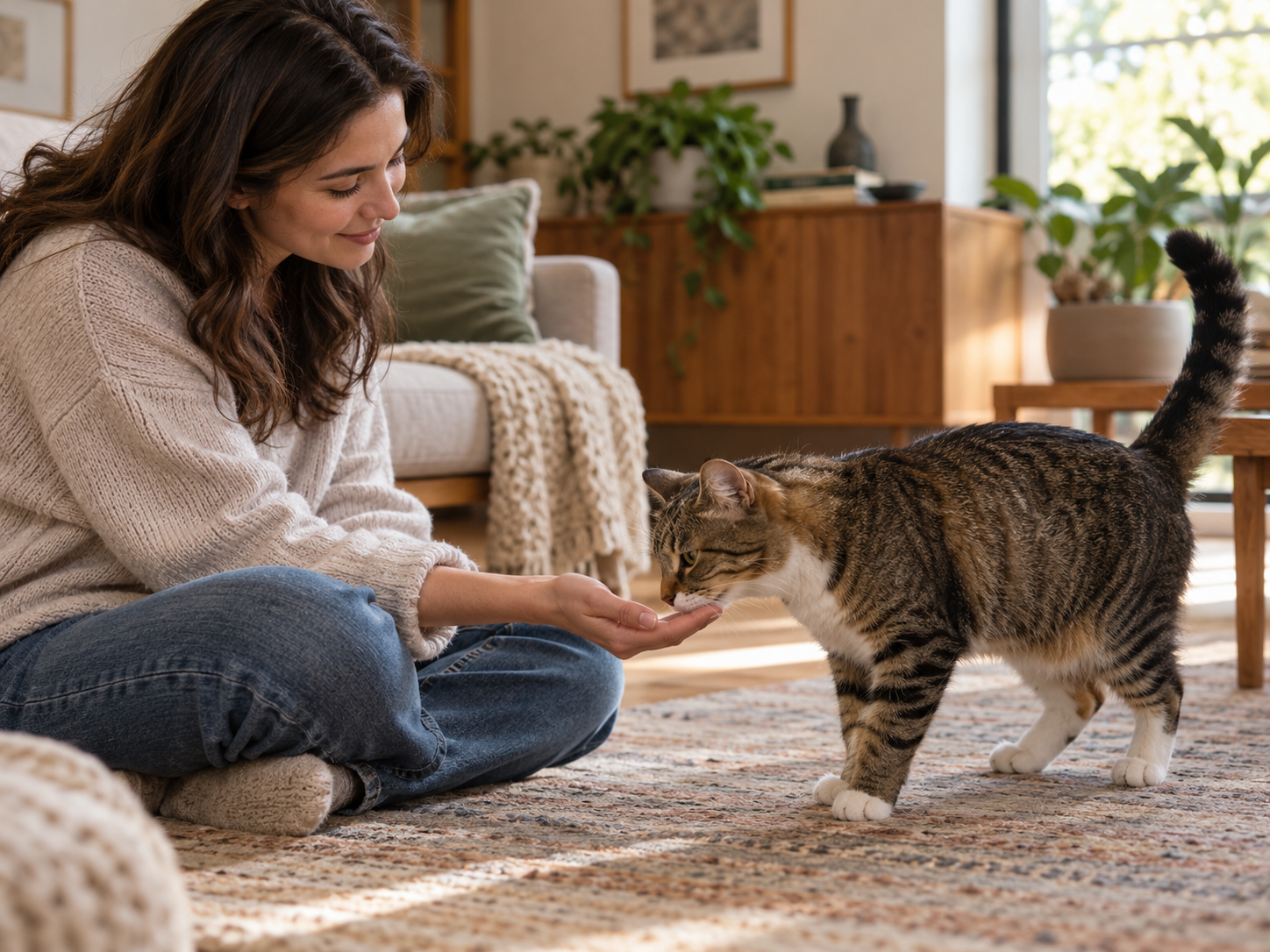
Every cat is an individual with a unique personality, past history, and comfort level. Some cats adore long lap-sitting sessions, while others prefer resting nearby on a separate cushion. Avoid treating slow blinking or structured routines as guaranteed shortcuts to affection. Forcing interaction, picking up a cat that wants to stay grounded, or ignoring subtle warning signs can damage trust. Patience, observation, and respecting individual differences will always yield a more honest and enduring bond.
Frequently Asked Questions
Does slow blinking mean my cat loves me?
Slow blinking does not translate directly to human romantic concepts, but scientific observation shows it is a positive signal of calm intent and trust The role of cat eye narrowing movements in cat-human communication. It indicates that your cat feels safe enough in your presence to lower their guard.
What if my cat does not slow blink back?
Not all cats respond immediately, and some may simply look away or ignore the gesture. This does not mean your cat dislikes you; individual communication styles vary widely. Consistency and patience are more important than expecting a specific reaction.
How long does it take to build trust with a cat?
Building trust depends entirely on the cat’s background and temperament. Some cats warm up within days, while rescues or timid cats may require weeks or months of predictable, low-pressure routines to feel completely secure AAFP/ISFM Feline Environmental Needs Guidelines.