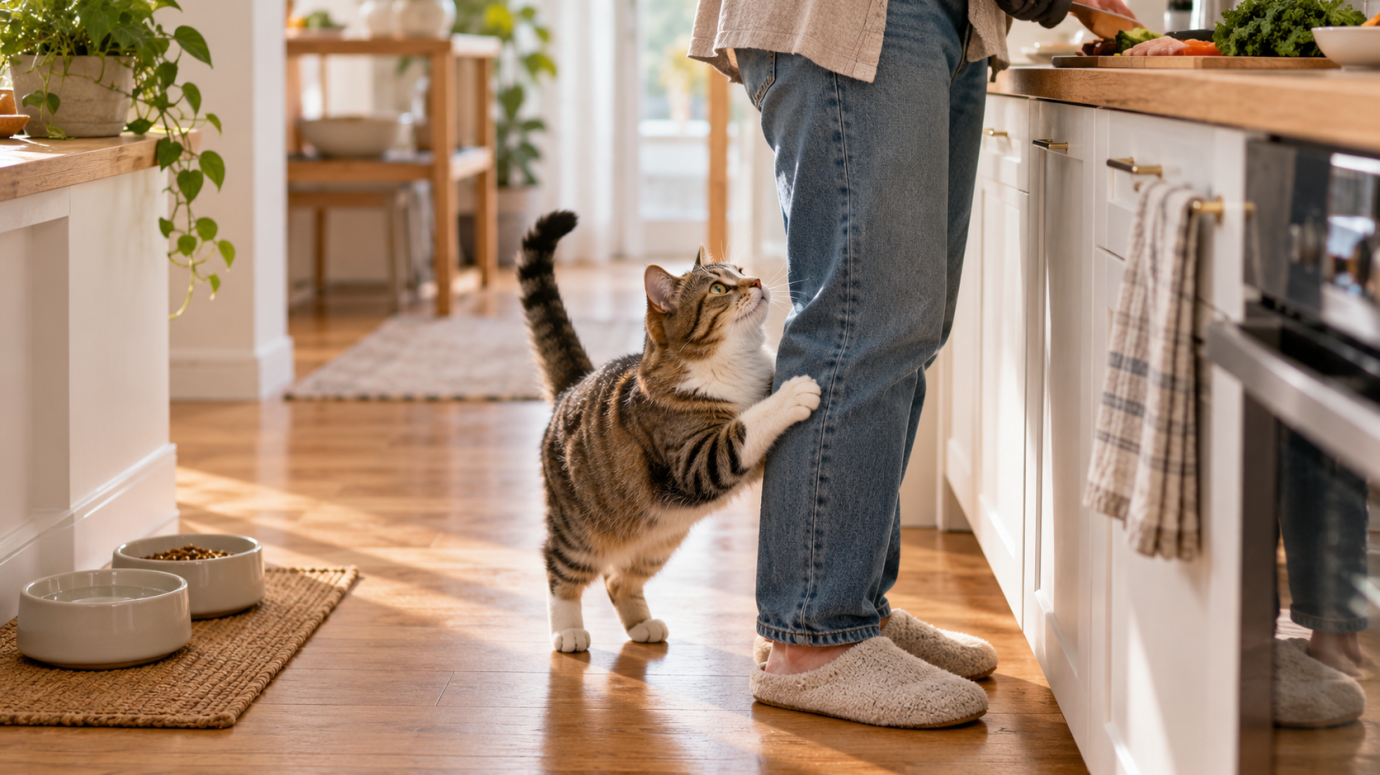
When you are moving around the kitchen preparing a meal, a sudden cat bite or leg grab can be startling and painful. This behavior often catches owners off guard, especially when it happens right in the middle of a daily routine. Understanding why cats exhibit this behavior and how to set calm, structured boundaries can help make meal preparation peaceful for both you and your cat.
The short answer
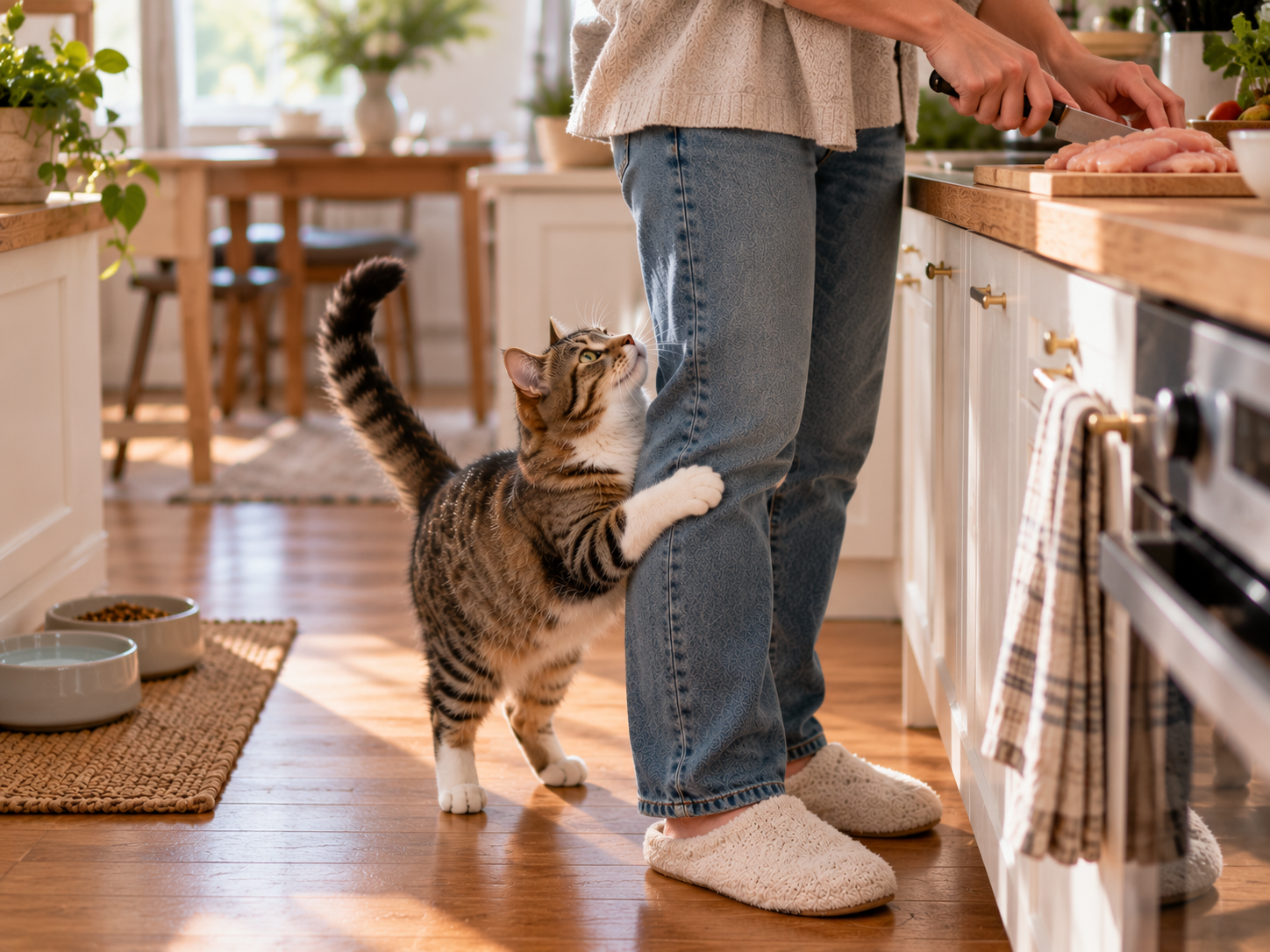
Cats may grab or bite legs during food preparation due to heightened predatory arousal and anticipation of feeding time Why Does My Cat Grab My Hand and Bite Me?. The fast movements of walking toward the kitchen, handling bowls, and opening packages naturally trigger hunting instincts. However, it is important to rule out underlying medical discomfort if this behavior is sudden or accompanied by other signs of pain. When food is being prepared, a cat’s internal motivation surges, turning an ordinary human chore into a high-stakes event for the animal. Recognizing this transition from calm rest to intense physiological arousal is the first step toward establishing predictable boundaries.
What is really happening
Domestic cats retain strong predatory instincts inherited from their wild ancestors. In a natural context, hunting involves a sequence of stalking, chasing, pouncing, and biting. When human food preparation begins, the sights, sounds, and familiar smells signal that a meal is coming. For an energetic or food-motivated cat, this anticipation builds into high arousal Why Does My Cat Grab My Hand and Bite Me?. Because human legs are moving and easily accessible at floor level, they frequently become moving targets for that pent-up predatory energy and excitement Why Does My Cat Grab and Bite My Arm.
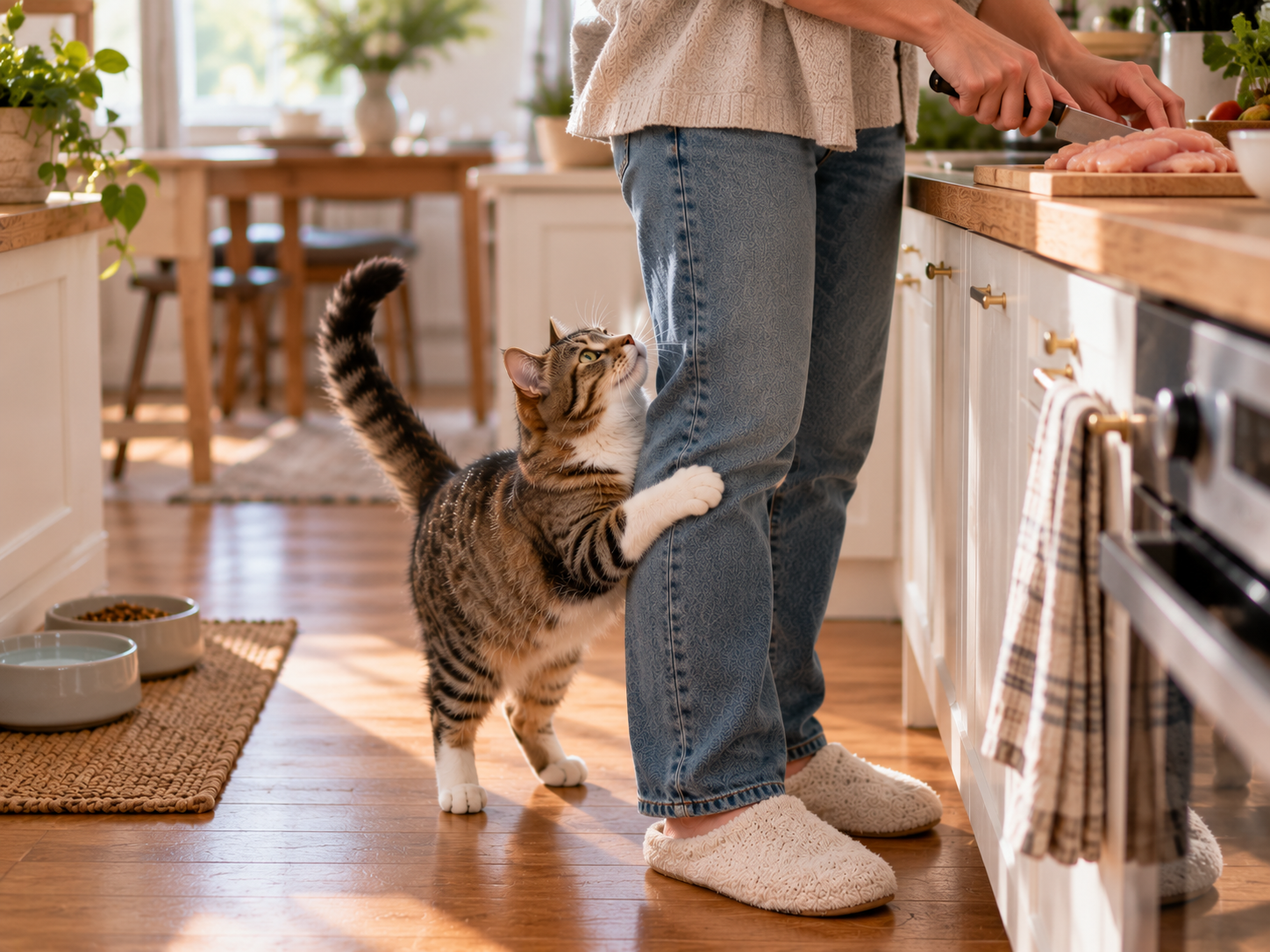
Furthermore, cats quickly learn associations. If grabbing a leg prompts you to look down, speak, or move faster toward the food bowl, the cat may interpret that reaction as successful attention-seeking behavior. Even negative attention reinforces the habit if the end result is getting fed sooner or engaging your immediate focus. Over time, this creates a deeply ingrained loop where the cat learns that ambushing ankles is an effective way to accelerate the feeding process.
The mechanics of feline anticipation
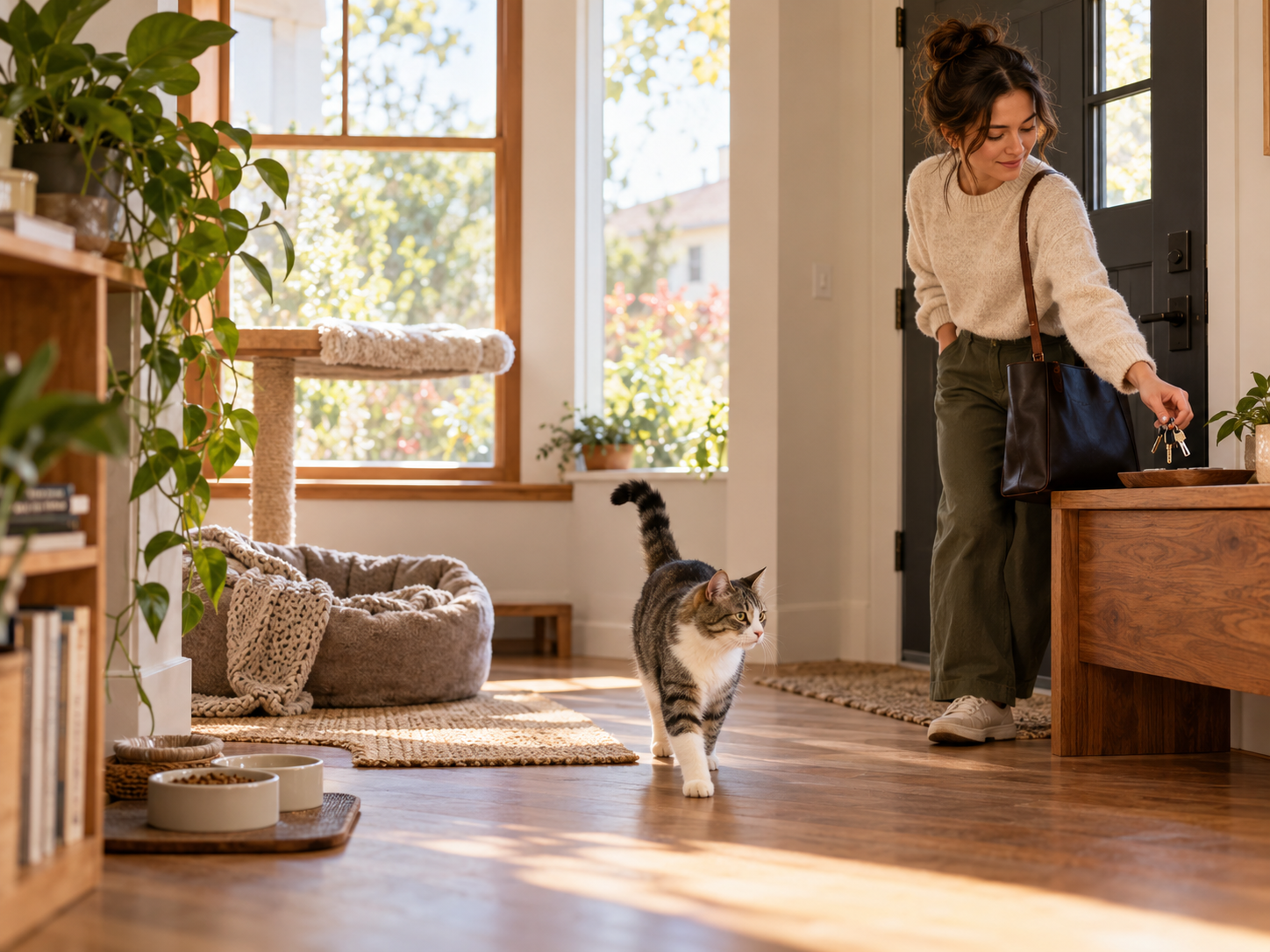
To fully grasp why meal preparation triggers such intense responses, it helps to look at the domestic cat’s daily sensory experience. Kitchen sounds—such as cupboard doors opening, cutlery clinking, or the rustle of food packaging—act as powerful auditory cues. In the wild, similar auditory triggers signaled the presence of prey. When these sounds occur indoors without an outlet for actual hunting behavior, the cat’s nervous system remains primed for action.
As you walk across the floor, your legs provide the exact visual and kinetic stimuli that trigger a pounce. The movement is predictable, close to the ground, and coincides precisely with the arrival of food. This convergence of sensory signals explains why even the most affectionate cat can seem momentarily transformed into an aggressive predator the moment you step toward the kitchen counter.
What changes the answer
Not every cat behaves this way for the exact same reasons, and several factors can influence how intense or frequent the behavior becomes:
- Age and Energy Levels: Kittens and young adult cats possess significantly higher energy reserves and play drives than senior cats, making them much more prone to sudden pouncing.
- Feeding Schedules: Unpredictable feeding times can increase anxiety around food preparation, whereas consistent schedules help lower anticipation-driven stress.
- Previous Reinforcement: If accidental rewards—such as talking to the cat or tossing a stray piece of food—have occurred in the past, persistence will be much stronger.
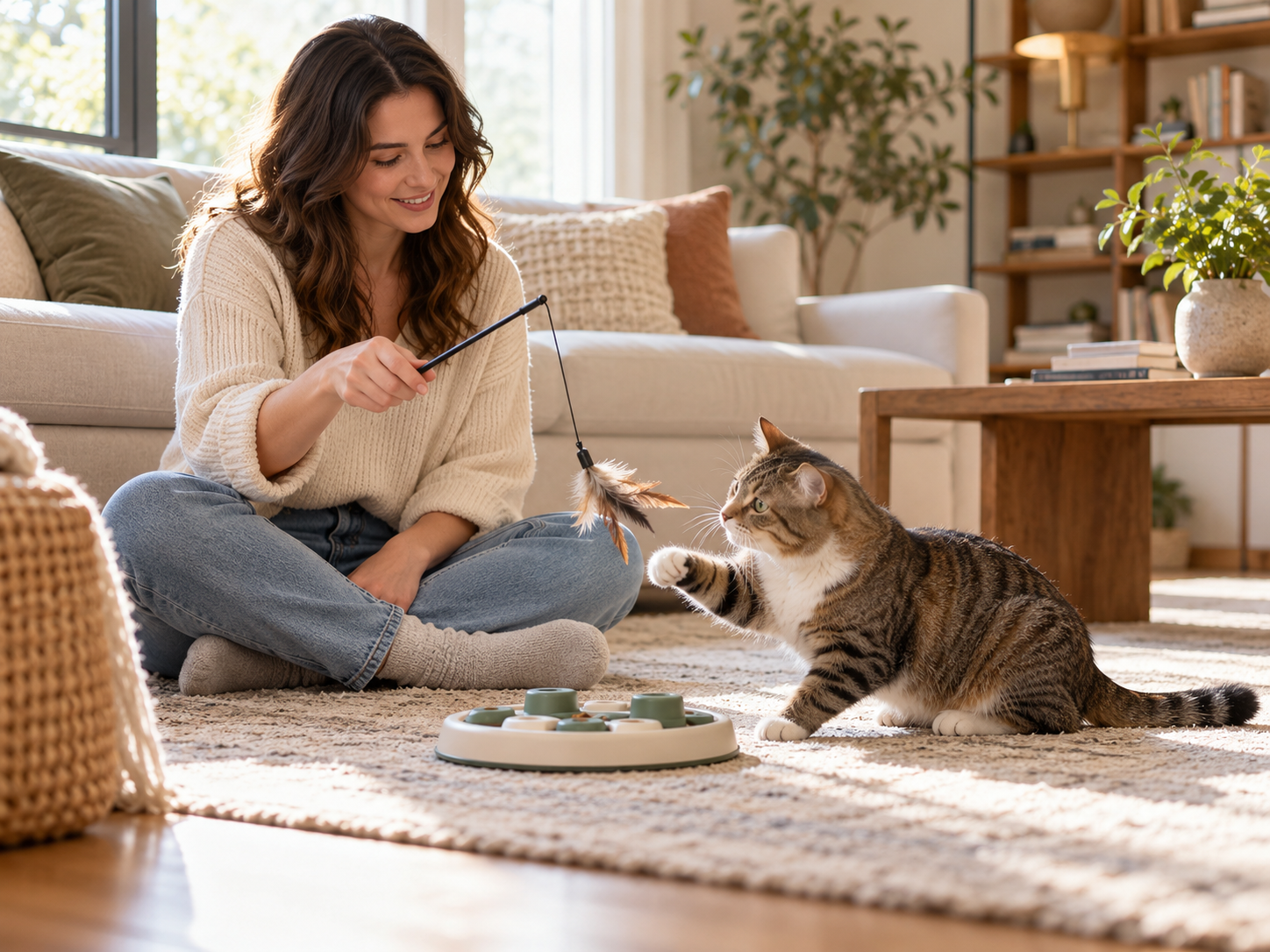
- Environmental Enrichment: Cats with limited opportunities for active play or hunting simulation throughout the day often channel residual energy into mealtime ambushes.
Evaluating these variables helps tailor your approach. For instance, a young, high-energy cat requires a very different outlet than an older cat whose behavior stems primarily from learned attention-seeking habits.
What to check before you decide
Before implementing new boundaries, run through a practical checklist to ensure your cat’s overall well-being and environment are properly supported:
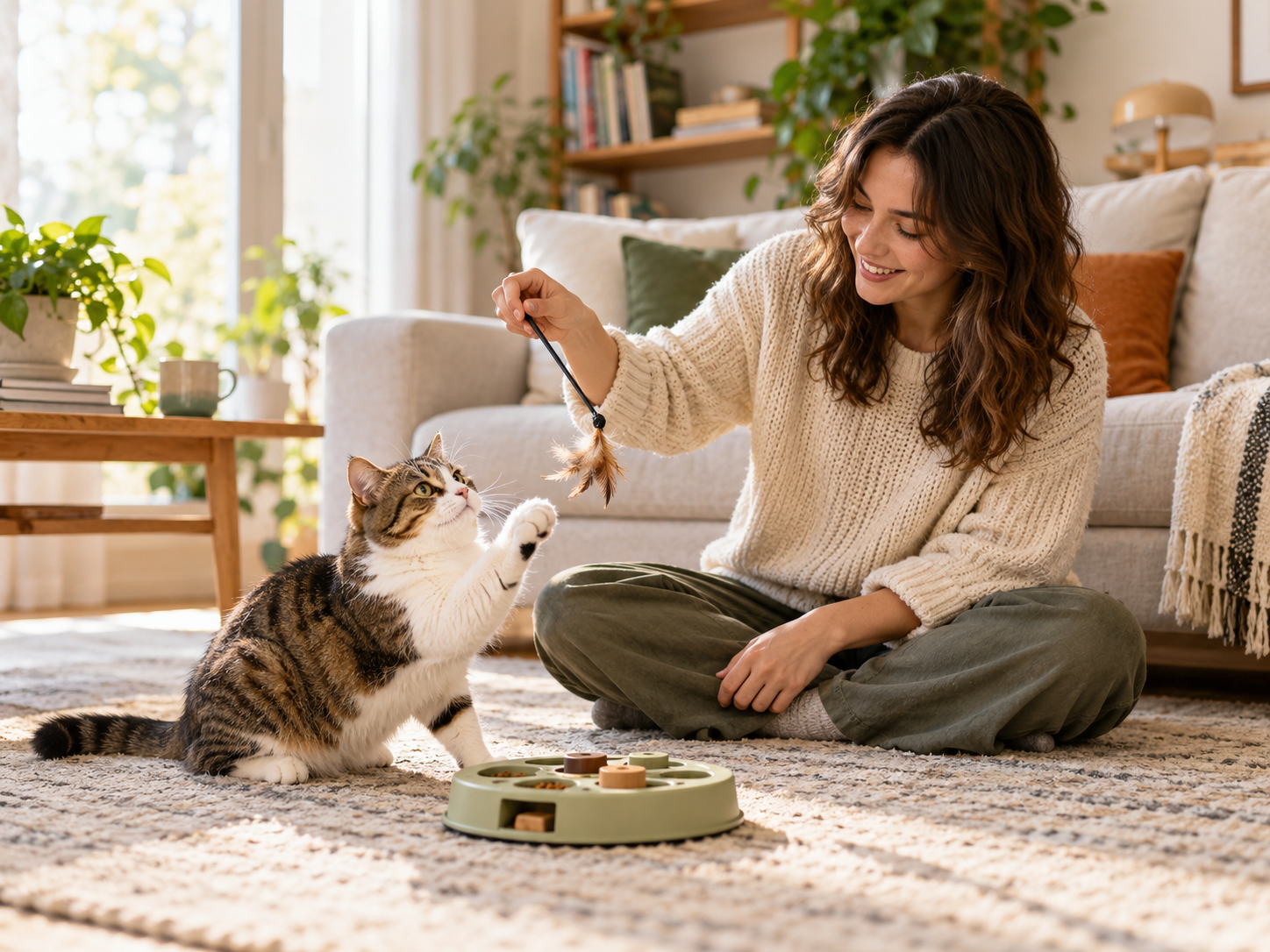
1. Rule out medical issues: Check whether your cat is showing other signs of stress, pain, or sudden behavioral shifts that warrant a veterinary consultation. 2. Evaluate daily play: Assess whether your cat has dedicated interactive play sessions that satisfy hunting instincts before mealtime arrives. 3. Review your reactions: Pay attention to how you respond when the grab happens. Do you stop walking, speak, or look down? Eliminating accidental reinforcement is crucial. 4. Inspect the feeding routine: Consider whether turning mealtime into a structured, engaging activity can redirect that eager focus away from your ankles A Well-Fed Mind: Mealtime Enrichment For Cats.
Running through this checklist ensures that any behavioral modification efforts address the root cause rather than just suppressing symptoms. If medical discomfort is present, no amount of environmental restructuring will resolve the underlying agitation until a veterinarian treats the issue.
Common mistakes or myths
It is easy to misinterpret why cats bite or grab legs during food preparation. A common myth is that cats act out of spite or anger. In reality, feline behaviorists emphasize that cats operate on instinct and learned consequences rather than malicious intent. Punishing or yelling at a cat for grabbing your leg is another mistake; physical reprimands or loud noises often increase fear and arousal, potentially worsening defensive or aggressive responses.
Another frequent misstep is feeding the cat immediately after a bite to quiet them down. Doing so teaches the cat an explicit causal relationship: biting the leg causes the food to appear faster. Breaking this cycle requires consistency, patience, and redirection rather than emotional reactions. When owners react with frustration, the cat may misinterpret the reaction as a chaotic form of engagement, which inadvertently fuels the cycle rather than stopping it.
Establishing constructive mealtime boundaries
Creating a peaceful kitchen routine requires a deliberate shift in how meals are delivered and how you react during preparation. Indoor cats thrive when mealtime is turned into an engaging, structured activity rather than a passive bowl feed A Well-Fed Mind: Mealtime Enrichment For Cats. By introducing predictable routines and removing the link between ankle grabs and food delivery, you help your cat learn a calmer approach to meal preparation.
One effective strategy is to separate the cat from the kitchen entirely before you begin preparing food, or to provide an independent puzzle feeder in a separate room simultaneously. This satisfies the cat’s foraging instincts without requiring your legs to act as moving targets. Consistency is essential; if the cat learns that food never appears while they are clinging to your ankle, the behavior gradually loses its payoff.
Long-term behavioral consistency
Managing mealtime boundaries is not a one-time fix but an ongoing practice of consistency and observation. As your cat adapts to predictable feeding schedules and structured enrichment, the urgency behind food preparation naturally diminishes. Providing regular play sessions earlier in the day burns off excess energy, leaving your cat calmer when kitchen routines begin.
By recognizing that leg grabs stem from natural anticipation and high arousal Why Does My Cat Grab My Hand and Bite Me?, you can approach the kitchen routine with calm preparation. Providing structured mealtime enrichment and puzzle feeders helps redirect feeding-related anxiety and excitement A Well-Fed Mind: Mealtime Enrichment For Cats into appropriate outlets, protecting both your skin and the meaningful bond you share with your companion.