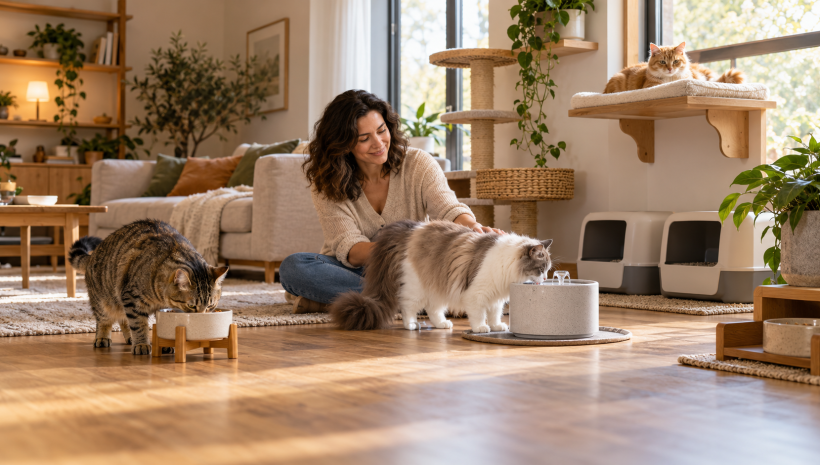
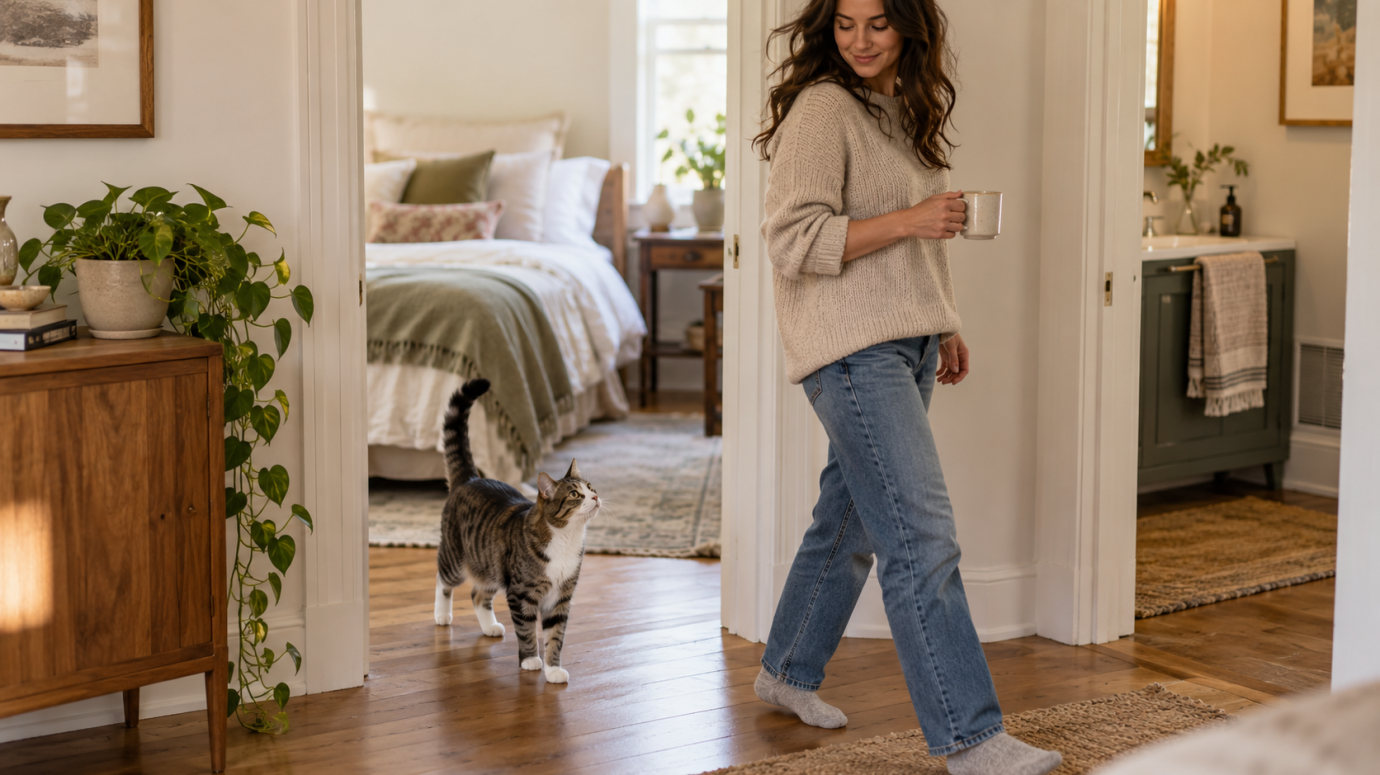
If you have ever stood up from your desk, walked to the kitchen, and turned around to find your cat waiting patiently behind you—only for her to ignore the fresh food in her bowl—you are not alone. This constant shadowing is a familiar daily routine for many cat owners. While it is easy to assume that any persistent feline presence must revolve around mealtime, cats frequently trail their humans for entirely different reasons Cats often follow their humans from room to room due to social bonding, territorial curiosity, or a desire for engagement rather than hunger..
Understanding why your cat acts as your personal house shadow involves looking closer at feline behavior, social attachment, and how cats interact with their indoor environment. Recognizing these underlying drivers helps transform daily interruptions into meaningful opportunities for mutual understanding.
Social Bonding and Attachment
A common misconception is that domestic cats are entirely solitary creatures that only tolerate human company when it suits them. In reality, cats form strong, meaningful social attachments to their human companions. Research and veterinary behavioral observations indicate that cats often follow their humans from room to room due to social bonding, territorial curiosity, or a desire for engagement rather than hunger Cats often follow their humans from room to room due to social bonding, territorial curiosity, or a desire for engagement rather than hunger..
For an indoor cat, you are a primary source of social interaction and comfort. Following you from the living room to the hallway is often a simple expression of companionship. Your cat simply enjoys being in your physical space and sharing your immediate environment, reinforcing a secure attachment built through daily coexistence.
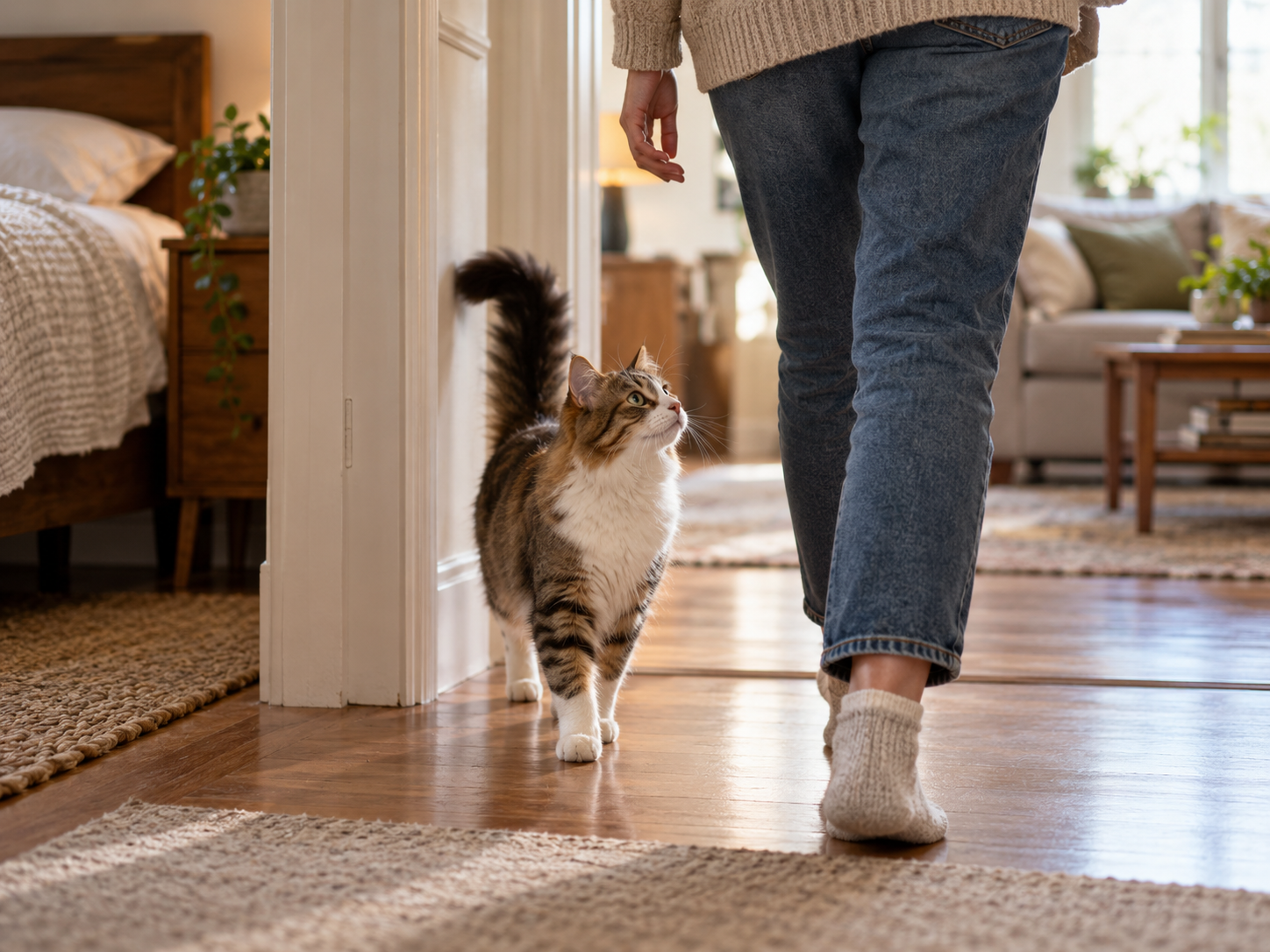
The Dynamics of Feline Affection
Unlike dogs, which were domesticated primarily for cooperative tasks, cats retained a largely independent lifestyle while choosing to integrate into human households. This evolutionary path means that feline affection often manifests in subtle ways—such as tail hooks, head bunts, and quiet shadowing.
When your cat follows you without any vocal demand for food, she is exercising choice. She chooses to spend her resting or active hours within your vicinity because your presence provides a stabilizing anchor in her daily routine.
Curiosity and Environmental Control
Cats are naturally inquisitive animals with a strong drive to monitor their territory. In the wild, keeping tabs on changes within a home range is a vital survival strategy. Indoors, this instinct translates into an ongoing interest in household activities.
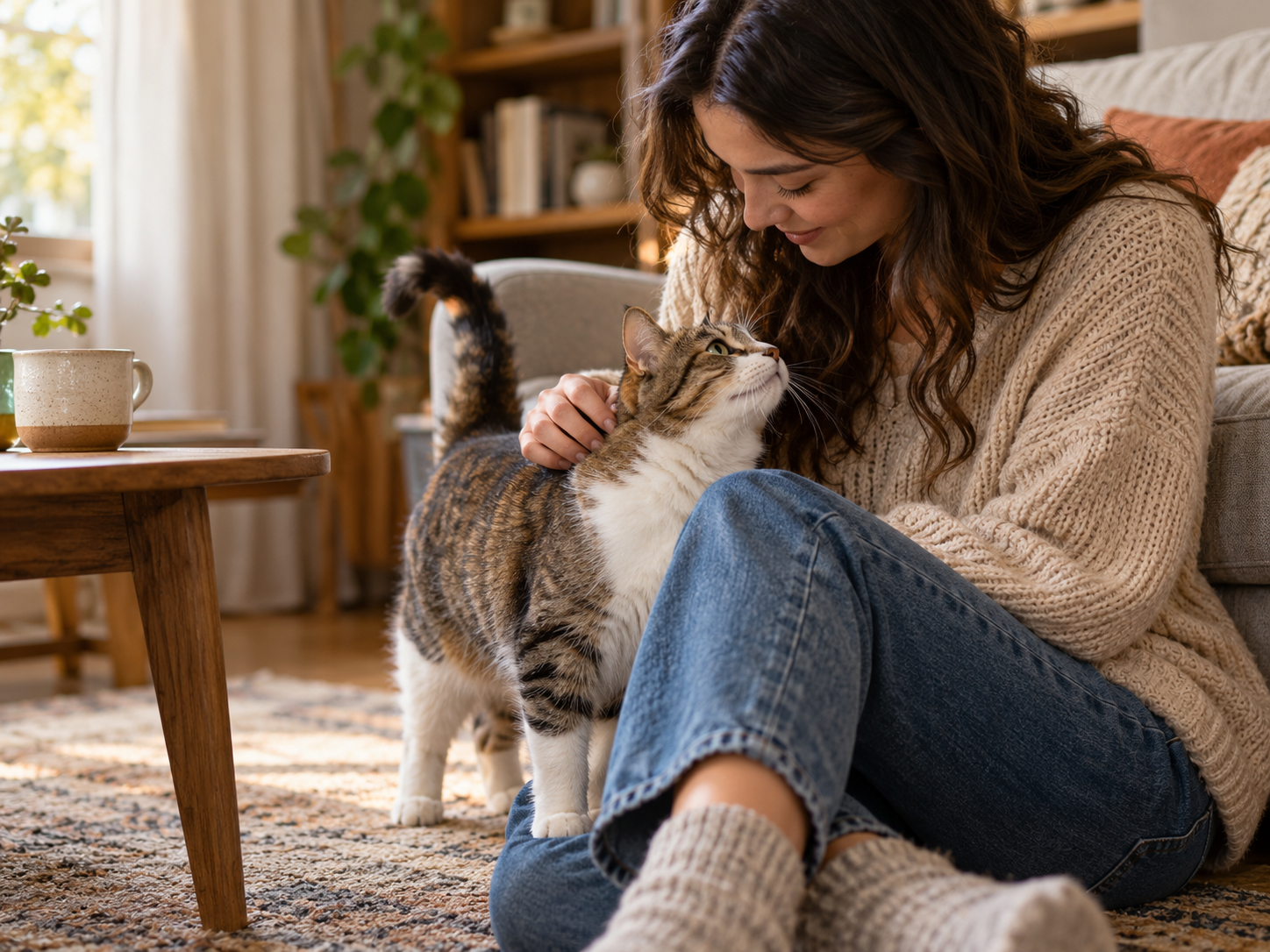
When you move from room to room, you disrupt a quiet space, open doors, and create activity. Your cat follows to investigate what is happening and ensure nothing new or noteworthy has changed in her domain. This behavior reflects a desire for environmental oversight rather than an urgent demand for treats or meals Cats often follow their humans from room to room due to social bonding, territorial curiosity, or a desire for engagement rather than hunger..
Monitoring Changes in the Home
Your home is a complex sensory landscape. Every closed door, shifted piece of furniture, or altered sound pattern registers in your cat’s awareness. By following you, your cat maintains continuous awareness of household shifts. She acts as an active observer, ensuring her entire territory remains secure, predictable, and fully accounted for.
Understanding Cat-Owner Communication
Shadowing is also a clear form of feline communication. Because cats learn that following you often yields a response—whether that is a gentle word, a pat on the head, or a play session—they use the behavior to initiate interaction.
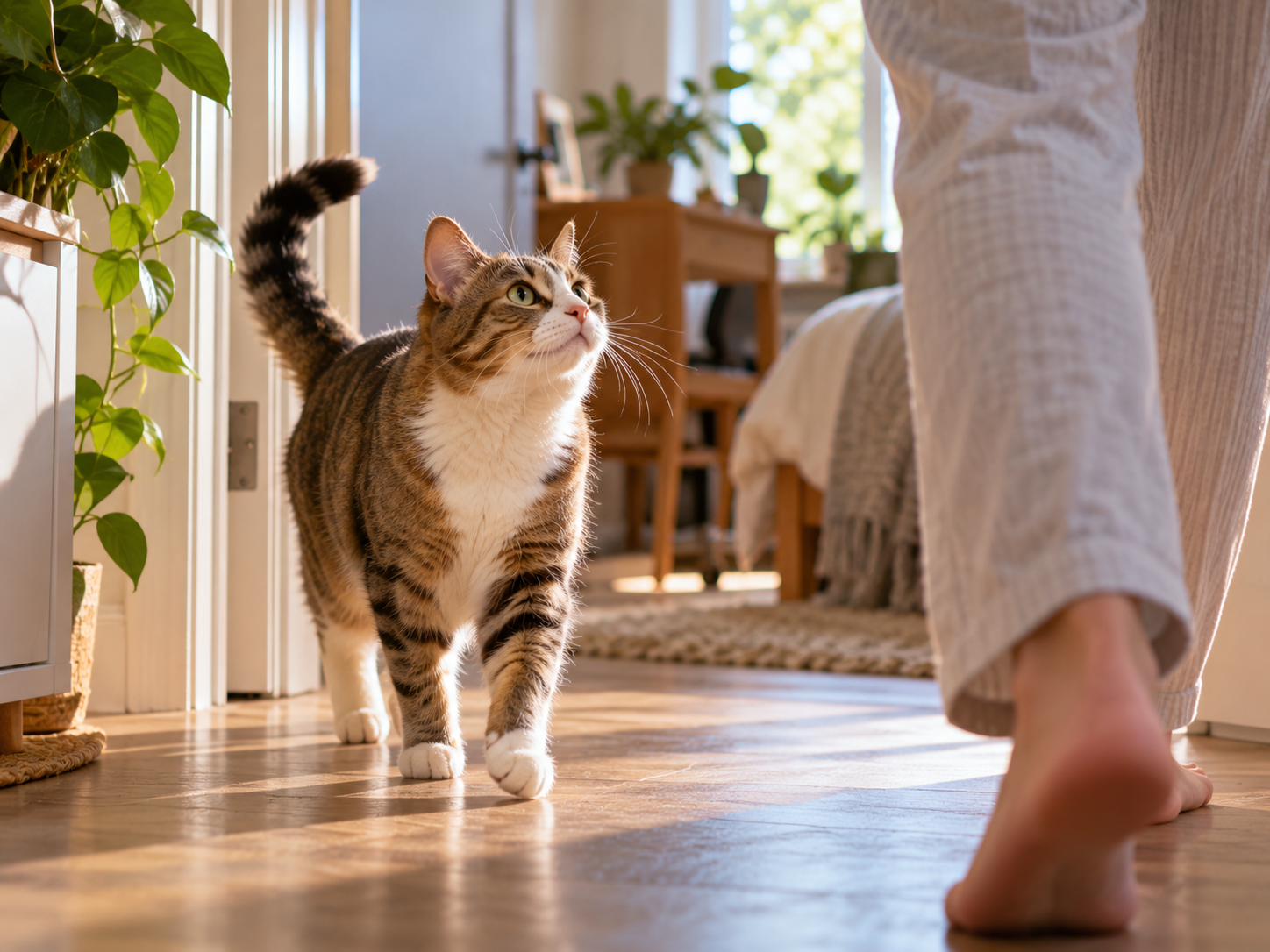
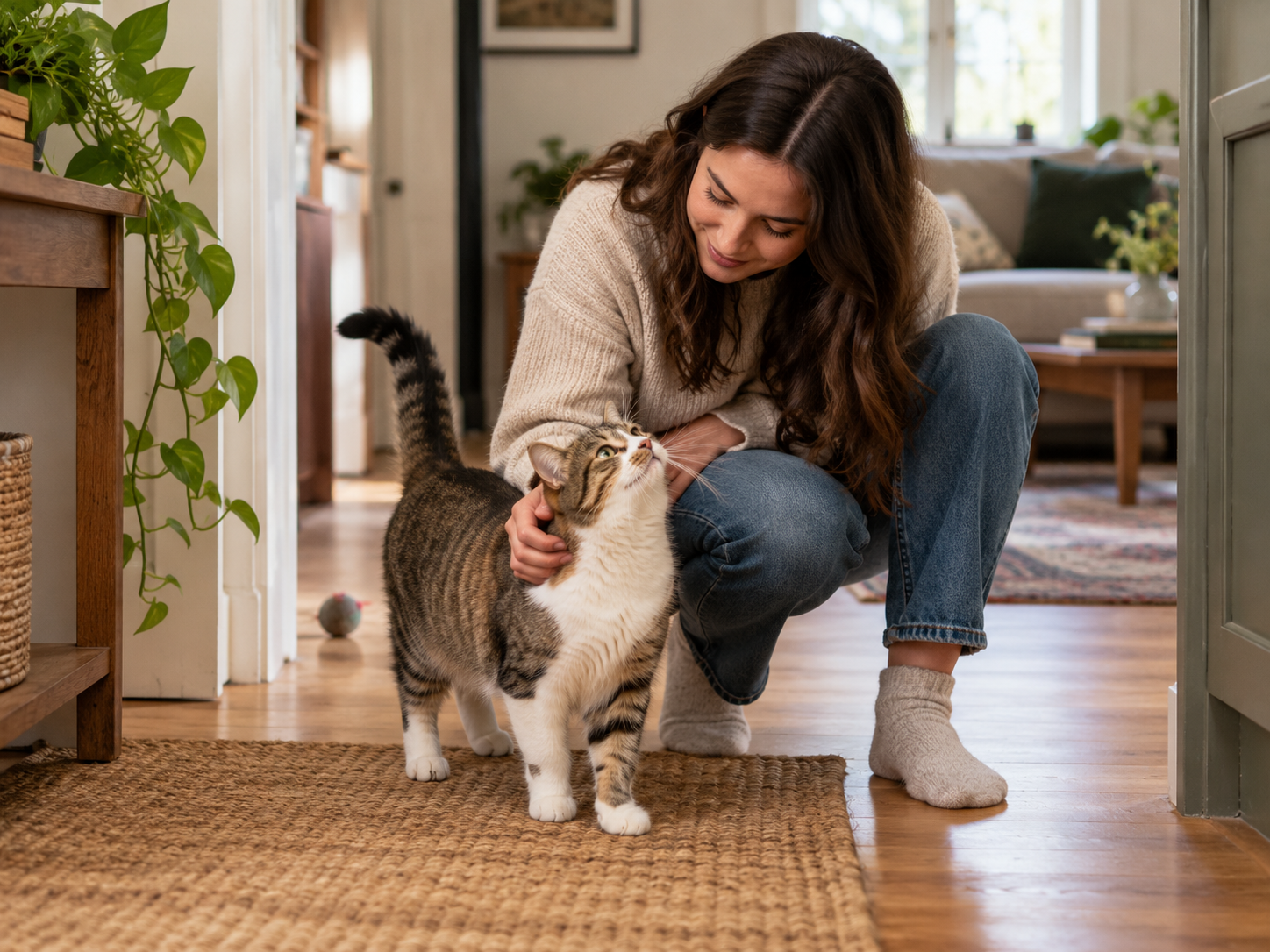
If your cat follows you closely without crying by her food bowl, she may be looking for subtle engagement, mental stimulation, or a moment of shared quiet time. Observing her body language, such as a high, slightly curved tail or relaxed ears, can help confirm that she is seeking positive connection rather than expressing anxiety or physical distress.
Interpreting Subtle Behavioral Cues
Feline communication relies heavily on micro-signals. A cat seeking engagement may pace slightly ahead of you, turn to look back to ensure you are following, or gently wrap her tail around your ankles. Tuning into these signals helps you differentiate between routine curiosity, boredom, and genuine requests for attention.
Frequently Asked Questions
Why does my cat follow me if her bowl is already full?
When a bowl is full and your cat still trails you, it confirms that the motivation is social or exploratory rather than dietary. Cats look to their humans for companionship, stimulation, and a sense of security.
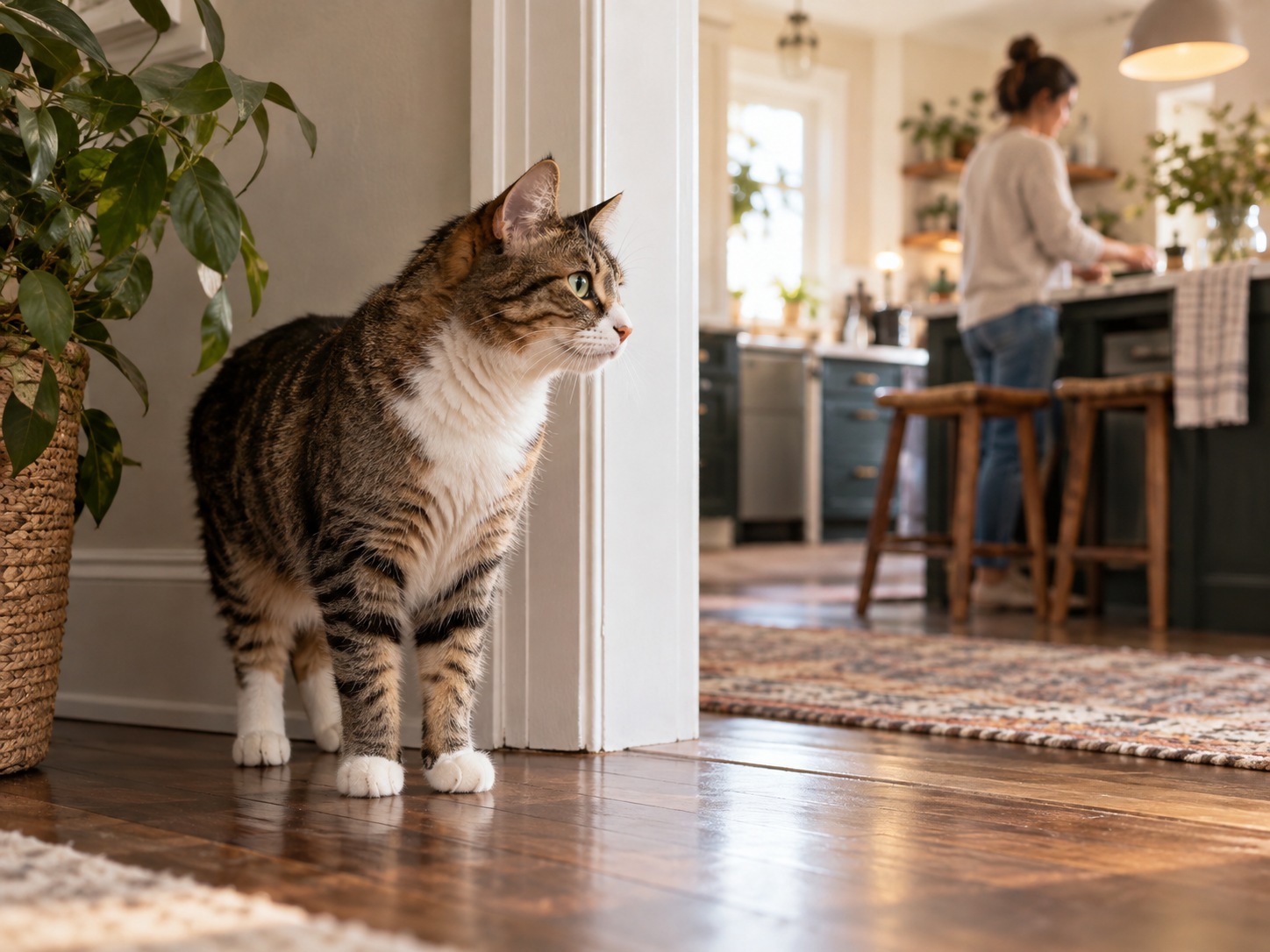
Is room-to-room shadowing a sign of separation anxiety in cats?
Not necessarily. While excessive shadowing combined with distress vocalizations when you leave the house can indicate anxiety, casual room-to-room following is usually normal, healthy social behavior.
How can I tell if my cat wants attention versus food?
Pay attention to the location and cues. If she leads you toward a toy, leans against your legs, or blinks softly without visiting her feeding station, she is looking for interaction or play rather than a meal.
Do certain cat breeds shadow their owners more than others?
While individual personality plays the largest role, some breeds known for high activity and social intelligence—such as Siamese, Burmese, or Abyssinian cats—frequently display higher levels of shadowing and human-oriented curiosity.
Deepening Your Bond Through Observation
Recognizing that your cat’s shadowing is rooted in curiosity and affection changes how you respond to these daily interruptions. Instead of viewing her presence as a demand for food or an inconvenience, you can treat it as an invitation to strengthen your mutual understanding. Simple moments—like acknowledging her with a soft blink, pausing for a brief petting session, or introducing a puzzle toy when she seems restless—validate her natural instincts.
Every cat has a unique rhythm and preferred style of engagement. Some prefer to sit quietly nearby while you work, whereas others actively pace ahead of you to inspect every doorway. Paying close attention to these subtle behavioral cues helps you decode what your cat needs in the moment, transforming everyday shadowing into a deeper, more rewarding connection between you and your feline companion.