Cat owners often observe chasing, wrestling, and role-switching behaviors and seek guidance on whether these interactions are normal play or actual fights. Interpreting multi-cat interactions can be challenging, especially when high energy turns into sudden bursts of running and tumbling across the living room floor. Understanding the nuances of feline body language helps owners support a harmonious multi-cat household.
Introduction: Play or Predatory Aggression?
When two cats tear across the house, wrestling and batting at each other, it is easy to wonder where harmless fun ends and genuine conflict begins. Multi-cat households frequently display dynamic physical interactions that mimic hunting or fighting. Cat owners often observe chasing, wrestling, and role-switching behaviors and seek guidance on whether these interactions are normal play or actual fights Cat owners often observe chasing, wrestling, and role-switching behaviors and seek guidance on whether these interactions are normal play or actual fights. While outdoor cats may engage in intense pursuits that resemble post-encounter skirmishes Why does my cat look like she won a fight after chasing a slug?, indoor play dynamics rely heavily on mutual participation and subtle behavioral cues.
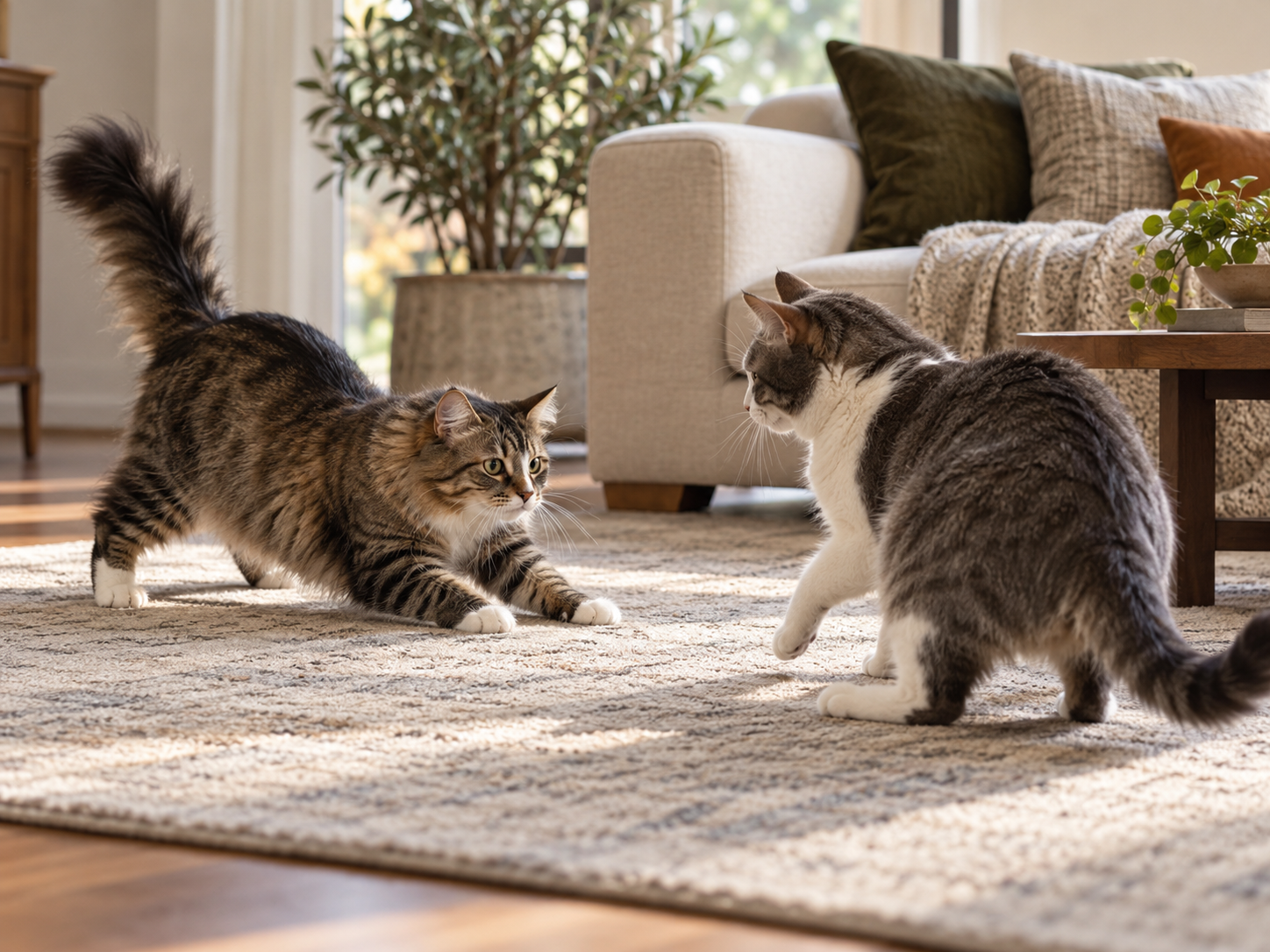
Observing cats as they navigate these bursts of activity requires patience and attention to detail. Because domestic cats retain strong predatory instincts inherited from their wild ancestors, play often takes the form of stalking, ambushing, wrestling, and high-speed chases. These behaviors serve as essential outlets for physical energy and mental stimulation, allowing cats to practice hunting skills without real prey or genuine danger. However, the fine line between harmless recreation and escalating tension can blur quickly, leaving pet parents uncertain about whether to intervene or let the cats resolve their differences naturally.
Key Signs of Healthy Cat Play
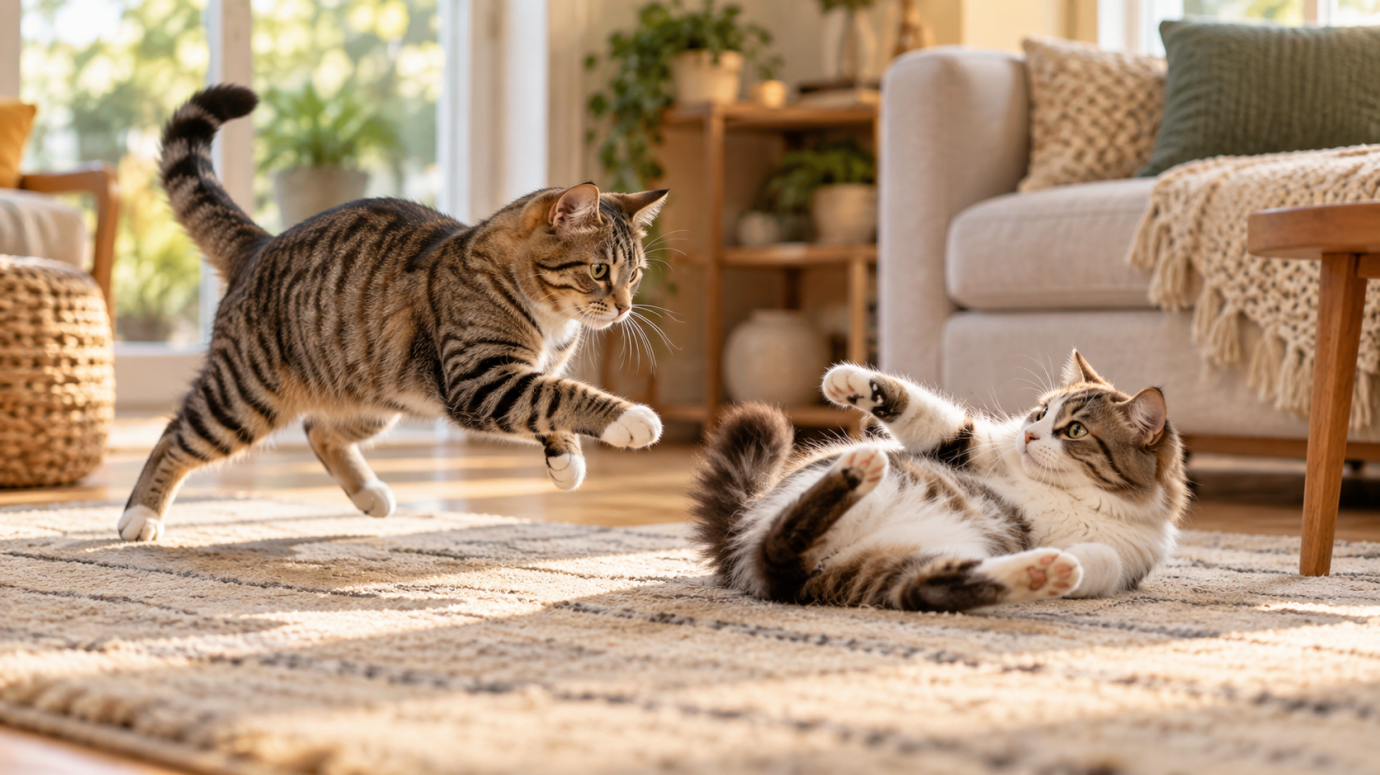
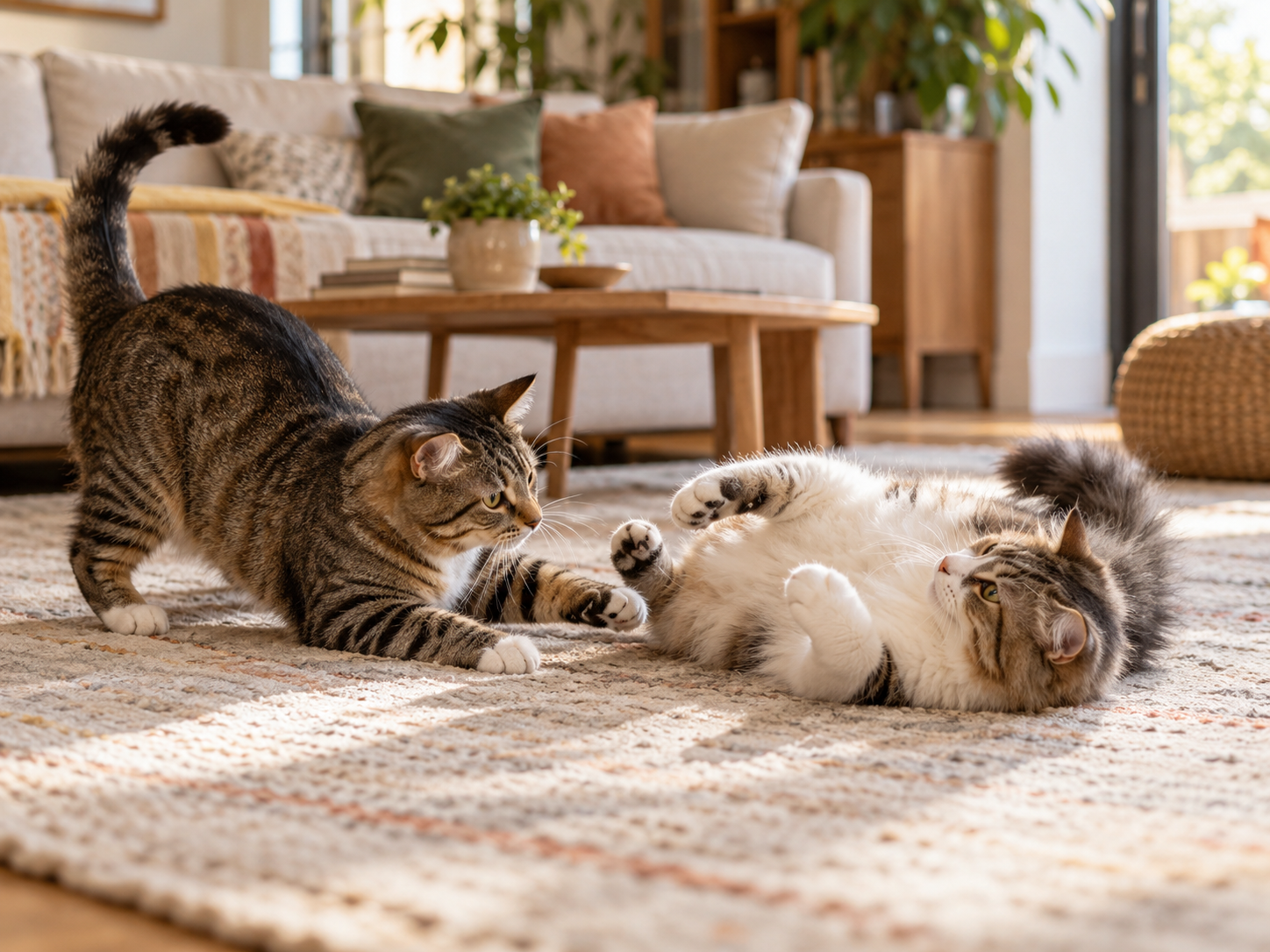
Healthy feline play is characterized by reciprocity and intermittent pauses. In friendly interactions, cats frequently trade roles, with the chaser becoming the chased and the cat on the bottom of a wrestling match rolling over to take the upper hand. Role-switching is one of the clearest indicators that both participants are enjoying themselves and sharing control of the interaction. When cats willingly alternate who initiates the chase or who assumes the vulnerable position during a tumble, it demonstrates a balanced dynamic where neither animal is dominating or intimidating the other.
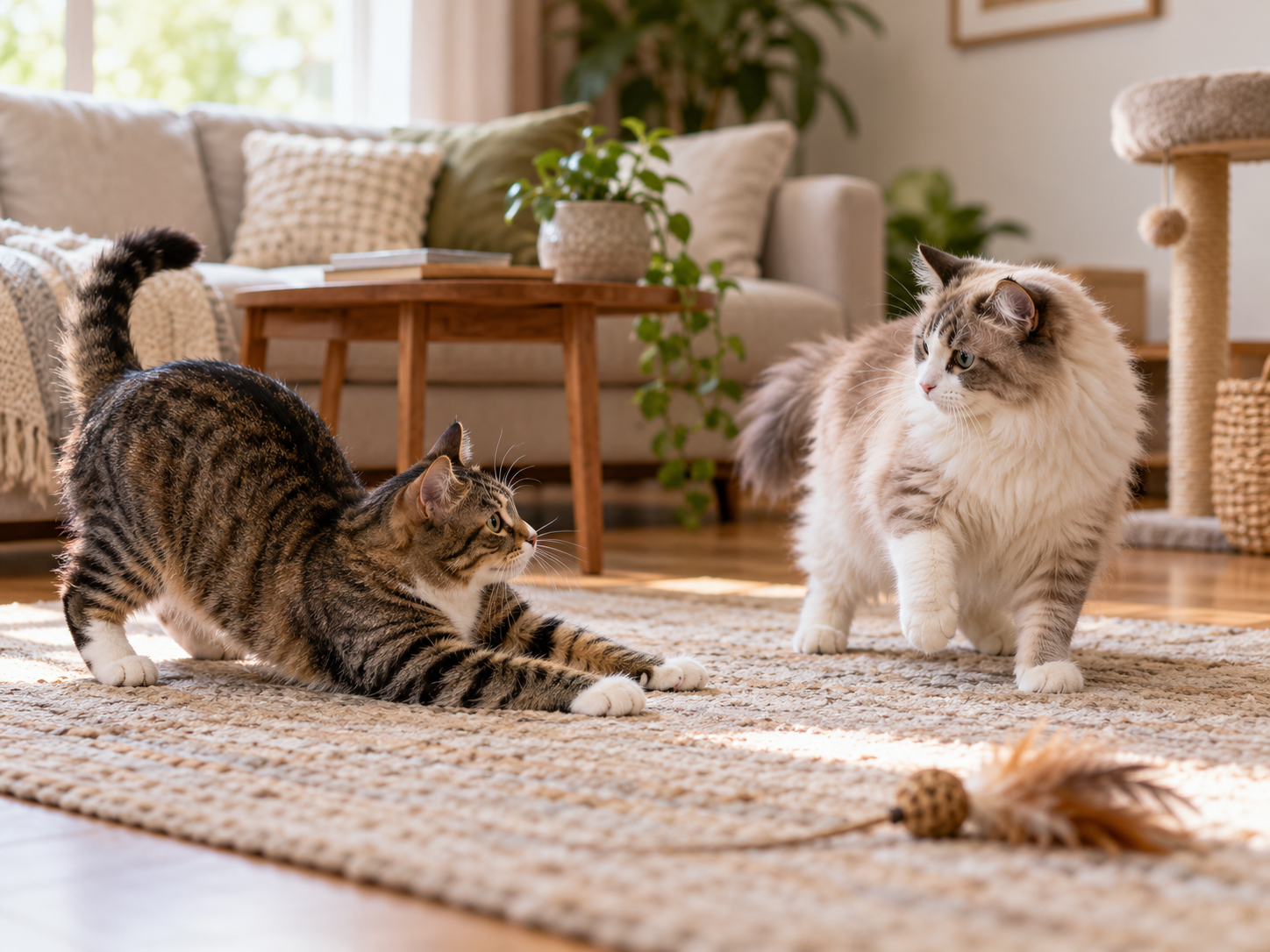
Additionally, friendly play often features loose, relaxed body postures, retracted claws during wrestling, and muted vocalizations like quiet trills or muffled scuffles rather than sustained howling or yowling. Cats engaged in healthy play keep their muscles relatively fluid, avoiding the rigid stances and puffed-up fur that signal defensive or offensive arousal. Their paws remain soft with claws sheathed, preventing accidental injury during rapid batting and grappling. When vocal sounds do occur, they tend to be brief chirps, murmurs, or silent open-mouth panting from exertion rather than the piercing screeches or deep guttural growls associated with territorial disputes.
The Importance of Micro-Pauses and Consent
Pauses are another hallmark of safe play. During a wrestling match, cats will often freeze for a few seconds, breaking contact entirely before resuming the activity. These micro-pauses allow both animals to assess each other’s comfort levels, reset their arousal states, and confirm mutual consent to continue. If a cat chooses not to re-engage after a pause—such as walking away, grooming, or turning its back—and the other cat respects that boundary, the interaction remains friendly.
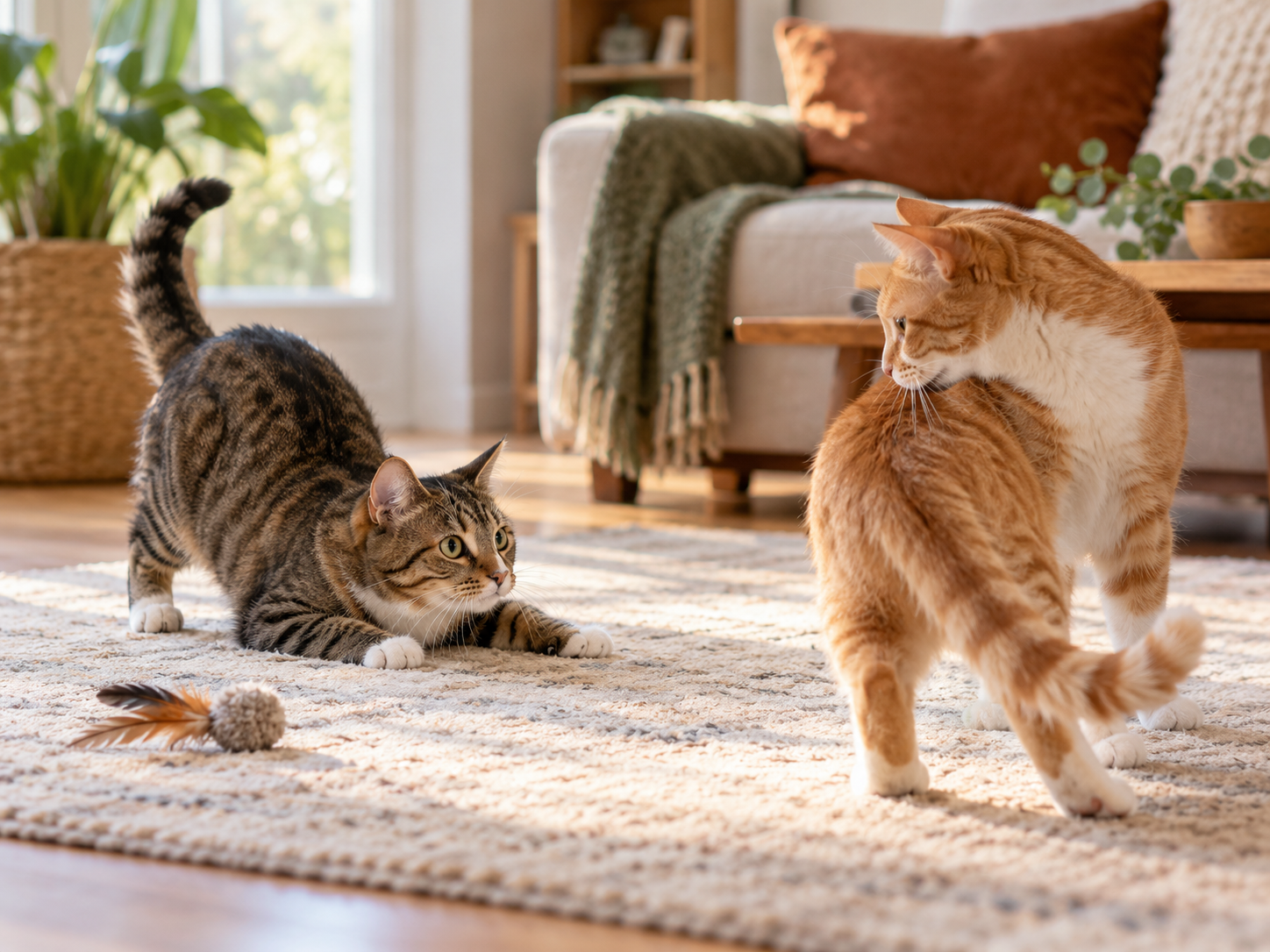
These temporary standstills act as vital communication checkpoints. In a multi-cat dynamic, respectful adherence to boundaries ensures that neither cat feels trapped or overwhelmed. If one participant signals a desire to disengage and the initiator honors that signal by letting them walk away, trust is reinforced within the household. Conversely, if a cat attempts to walk away and is immediately pounced on again without a chance to decompress, friendly play can rapidly deteriorate into frustration and defensive aggression.
When Play Turns into Conflict
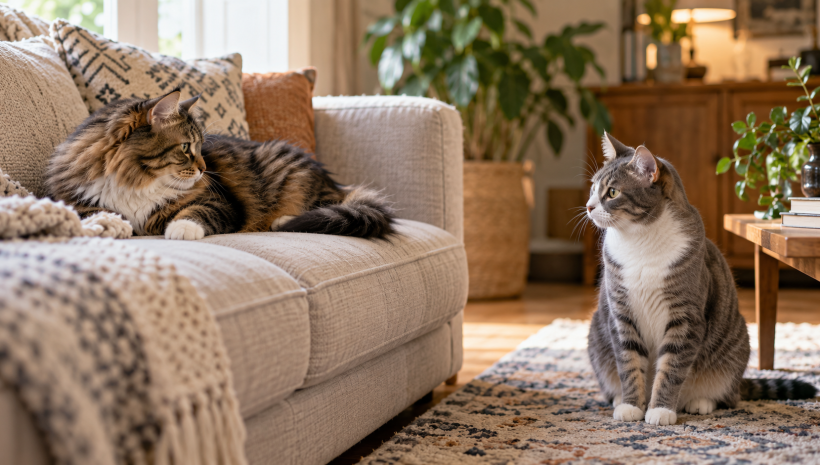
Distinguishing play from actual aggression requires careful observation of intensity, vocalization, and body language. Unlike friendly wrestling, aggressive conflict lacks balanced role-switching. If one cat is constantly pursuing, pinning, or cornered without ever taking the offensive role, the dynamic may be one-sided rather than mutual. Unfriendly encounters also feature flattened ears, puffed tails, piloerection along the spine, hard staring, and sharp, defensive yowls or hissing.
When play escalates into a real fight, the pauses disappear or are replaced by tense standoffs where neither cat breaks eye contact. Real conflict is often marked by sustained eye contact, rigid postures, and an absence of the casual, rolling movements seen in play. Cats involved in a genuine dispute may puff up their fur and tilt their ears backward or outward to appear larger and more intimidating. The vocalizations accompanying such encounters are far more intense, ranging from prolonged yowls and growls to sharp hisses that communicate a clear demand for distance.
Managing Escalations and Reducing Household Tension
If you suspect an interaction is crossing the line into aggression, it is best to gently interrupt the cats by tossing a toy or creating a visual barrier rather than intervening physically, which can redirect aggression toward human hands. Providing separate resources, vertical space, and adequate environmental enrichment can also help reduce tension in multi-cat homes.
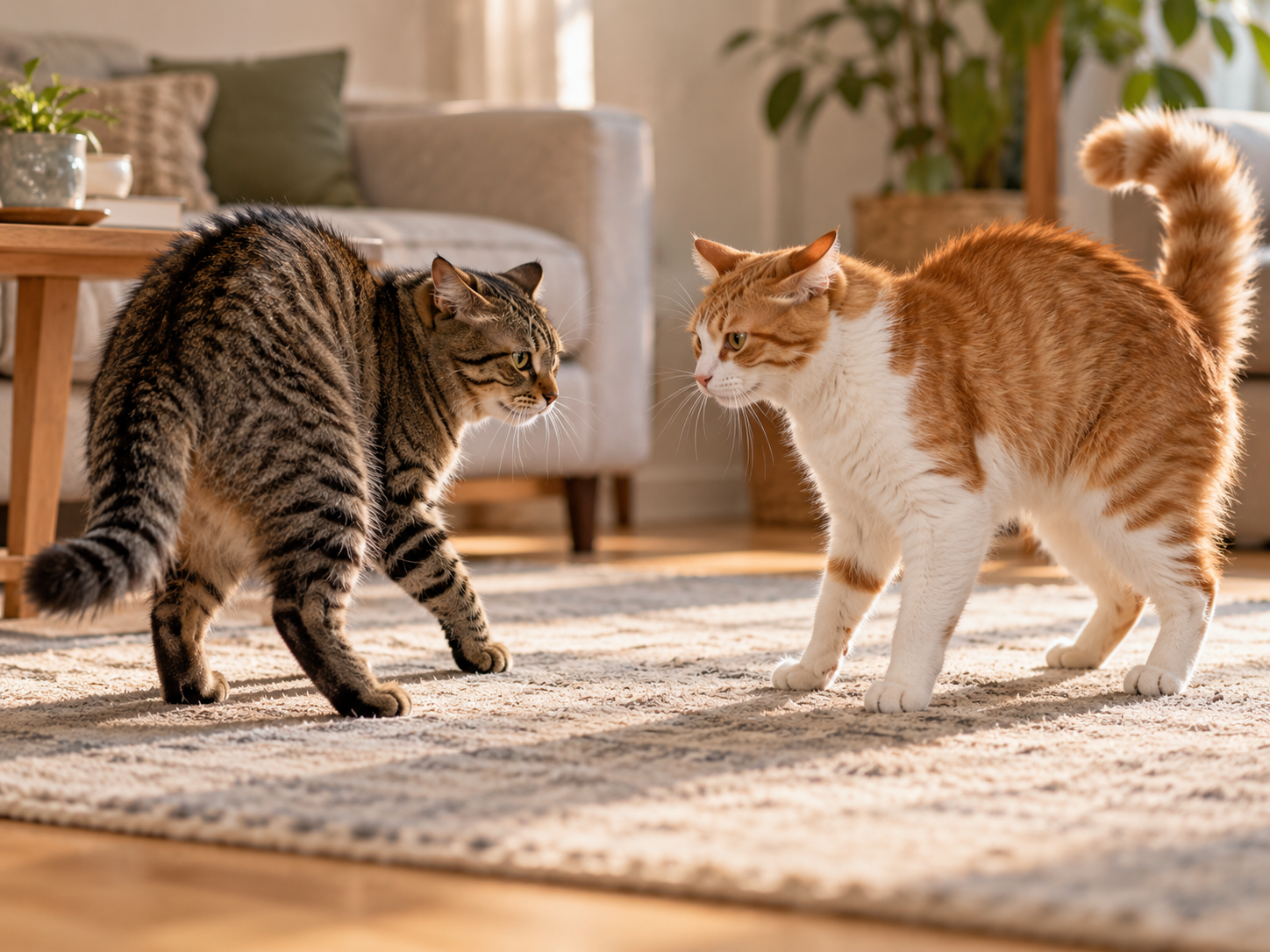
Intervening physically in an active cat fight puts you at significant risk of injury, as startled cats often direct their heightened arousal toward the nearest moving object, which may be your hands or arms. Instead, creating a sudden distraction—such as sliding a large piece of cardboard between the cats, tossing a lightweight toy nearby, or making a gentle noise—can successfully break their focus without causing additional panic.
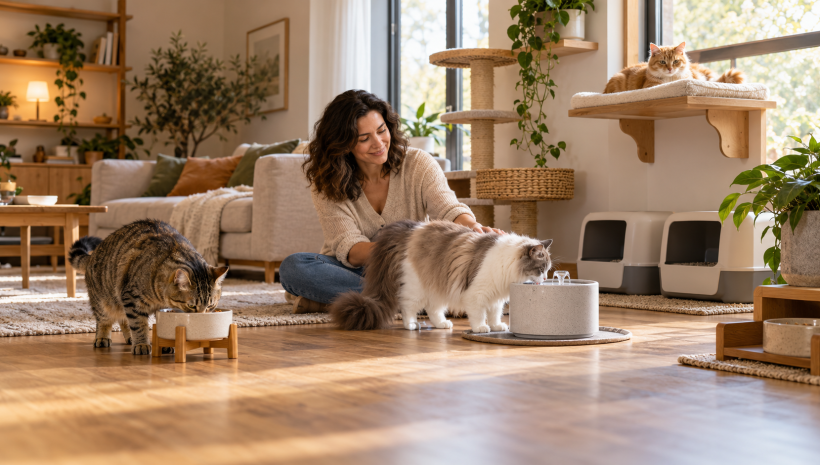
Long-term harmony in a multi-cat environment depends heavily on environmental management. Ensuring that each cat has access to independent feeding stations, multiple litter boxes placed in separate locations, and distinct resting areas prevents resource guarding and minimizes daily friction. Vertical territory, such as tall cat trees, wall shelves, and clear window perches, gives subordinate or resting cats safe pathways to navigate the home without having to cross paths with a more energetic housemate. By combining careful observation of body language with thoughtful spatial design, owners can foster a peaceful coexistence where both play and rest have designated, secure boundaries.