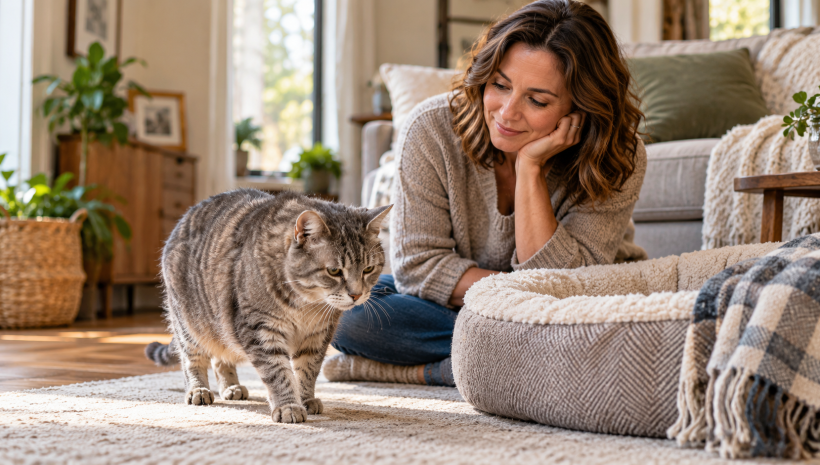
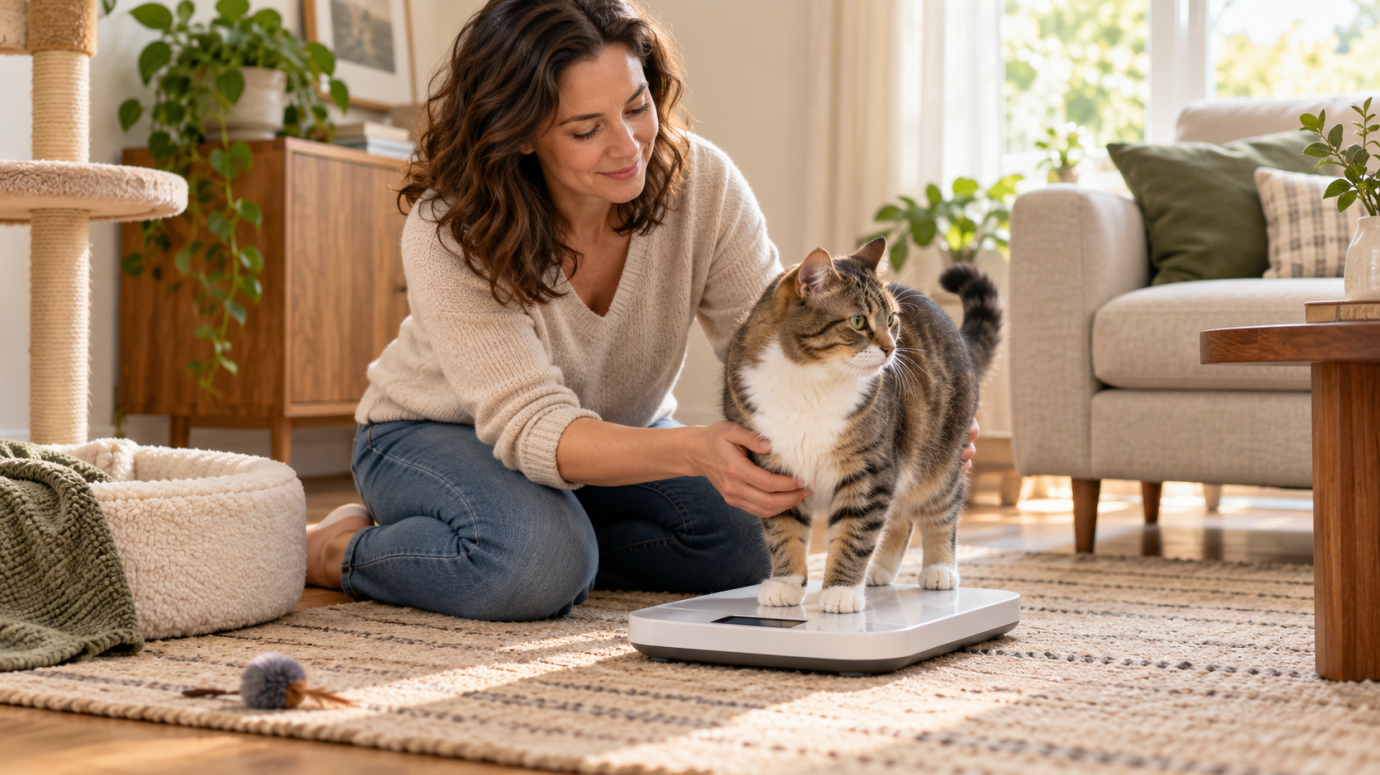
Weighing a cat accurately at home can be difficult because cats typically will not stay still on standard bathroom scales. How to Weigh Your Cat at Home: Step-by-Step Guide (Vet Reviewed) Yet, keeping a regular check on your cat’s weight is an essential part of lifelong healthcare. Regular weight monitoring helps owners track diet changes and ensures proper medication dosing. How to Weigh Your Cat at Home: Step-by-Step Guide (Vet Reviewed) When a cat is stressed by rough handling or unfamiliar procedures, however, the process can quickly become an exhausting wrestling match. By using gentle, low-stress techniques that respect your cat’s comfort and preferences, you can turn home weighing into a calm, routine check.
Why Home Weight Monitoring Matters
Monitoring your cat’s weight at home provides a valuable window into their overall health and well-being. Gradual weight shifts can serve as early indicators of underlying health concerns, changes in metabolism, or shifts in activity levels. When managing a specific diet or monitoring a chronic condition, having reliable weight data allows you and your veterinarian to make informed adjustments to food portions. Furthermore, accurate weight measurements are critical when your cat requires medication, as proper dosing depends directly on their current body mass. Regular weight monitoring helps owners track diet changes and ensures proper medication dosing. How to Weigh Your Cat at Home: Step-by-Step Guide (Vet Reviewed)
Despite these clear benefits, many cat owners encounter hurdles when attempting to use standard household equipment. Weighing a cat accurately at home can be difficult because cats typically will not stay still on standard bathroom scales. How to Weigh Your Cat at Home: Step-by-Step Guide (Vet Reviewed) Cats naturally prefer secure footing and predictable environments. Placing a freestanding cat directly onto a cold, moving, or exposed platform scale often triggers an immediate retreat. To succeed without turning the routine into a struggle, you need methods that align with feline instincts—prioritizing secure, enclosed, or familiar spaces rather than forcing them to stand unassisted on an open surface.
The Carrier-Weight Method (Tare Method)
One of the most reliable and stress-free ways to weigh a cat at home involves utilizing an item they already know well: their travel carrier. Common home weighing methods include weighing the owner holding the cat and subtracting the owner’s weight, or weighing the cat inside their carrier and subtracting the empty carrier weight. How to Weigh Your Cat at Home: Step-by-Step Guide (Vet Reviewed) The carrier-weight method—often referred to as the tare method—is particularly helpful for cats who become anxious when separated from a secure den-like environment.
To begin, ensure your cat’s carrier is accessible and familiar. Leaving the carrier out in your living space with the door open and a soft, comfortable blanket inside helps your cat view it as a safe resting place rather than just a vehicle for veterinary visits. When it is time for a weight check, follow these steps:
1. Weigh the Empty Carrier: Place your cat’s empty carrier—complete with any standard bedding or pads that will remain inside during the weigh-in—onto a digital scale and record the exact measurement. This is your tare weight. 2. Encourage Your Cat Inside: Gently guide or encourage your cat to enter the carrier naturally. You can place a favorite toy or a few treats inside to make the experience positive. Avoid forcing or rushing them, as patience preserves trust. 3. Secure and Weigh: Once your cat is comfortably inside and resting, close the carrier door and place the entire loaded carrier back onto the scale. Record this combined weight. 4. Calculate the Difference: Subtract the empty carrier tare weight from the total combined weight. The resulting number is your cat’s current weight.
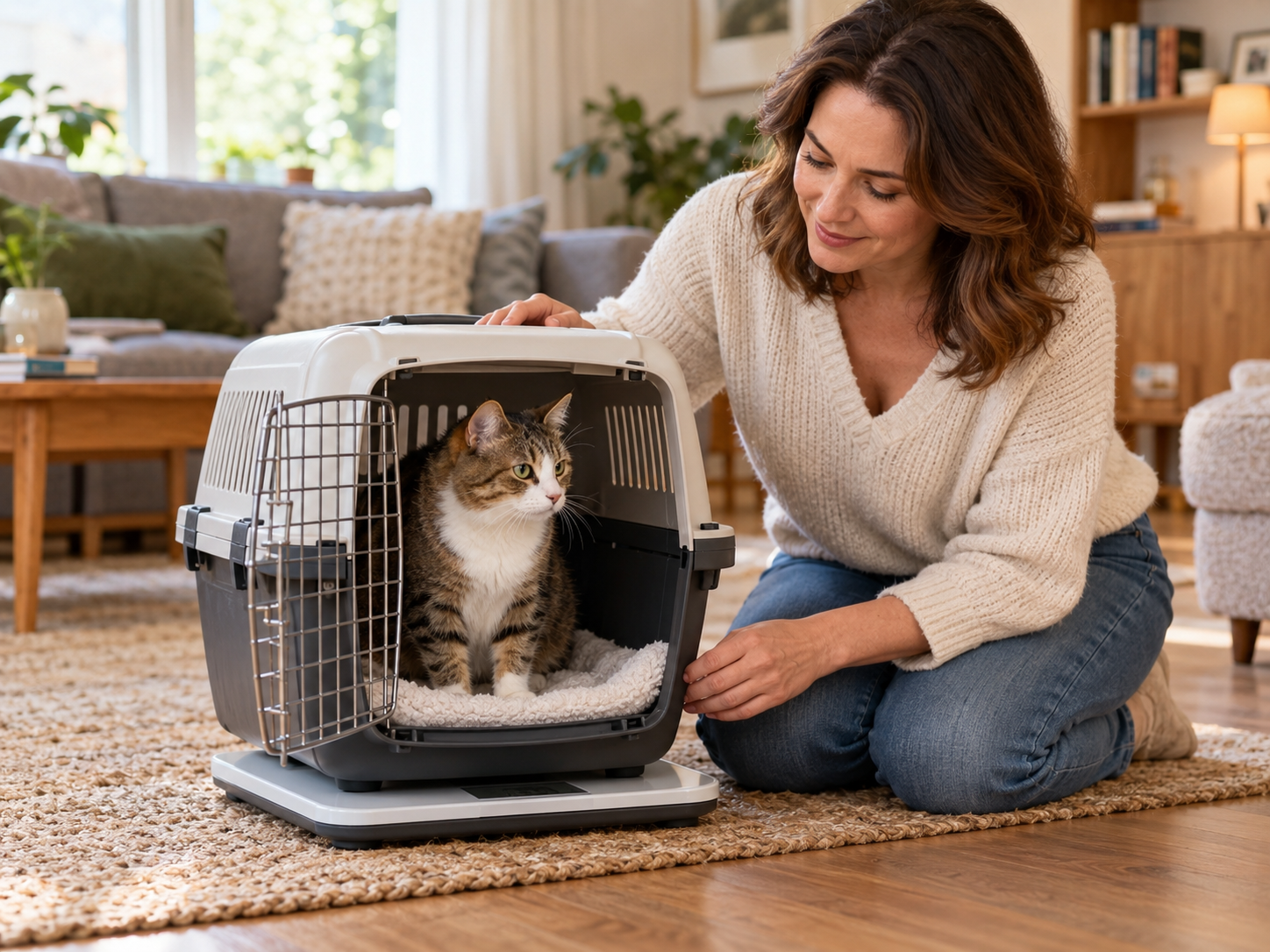
This method keeps your cat feeling secure within an enclosed space while providing the precise numbers you need for health tracking.
Alternative Low-Stress Home Weighing Options
If your cat strongly dislikes their carrier or if you prefer a different approach, several alternative techniques can accommodate different temperaments and household setups. Common home weighing methods include weighing the owner holding the cat and subtracting the owner’s weight, or weighing the cat inside their carrier and subtracting the empty carrier weight. How to Weigh Your Cat at Home: Step-by-Step Guide (Vet Reviewed) Each option relies on minimizing handling stress and respecting your cat’s boundaries.
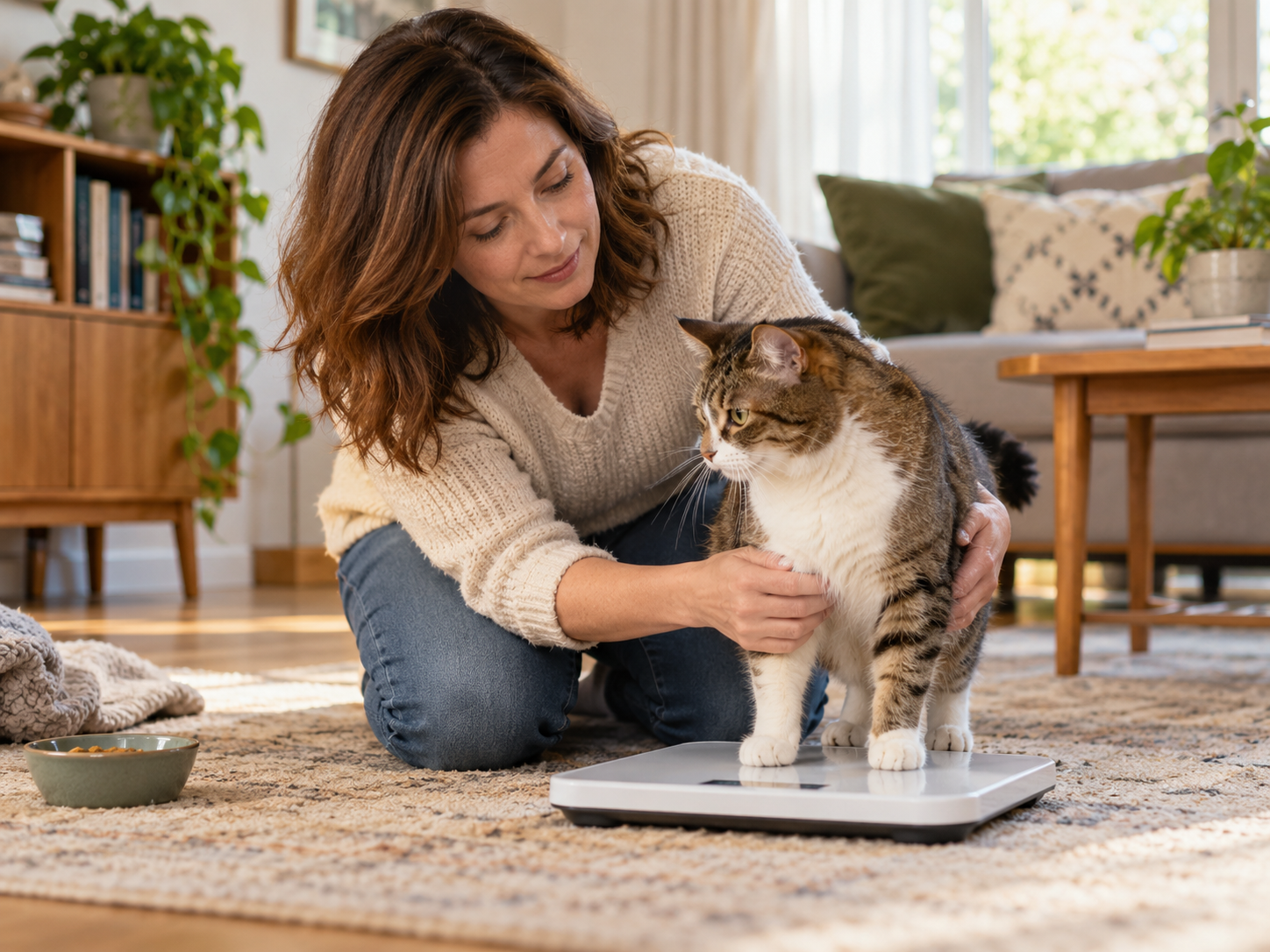
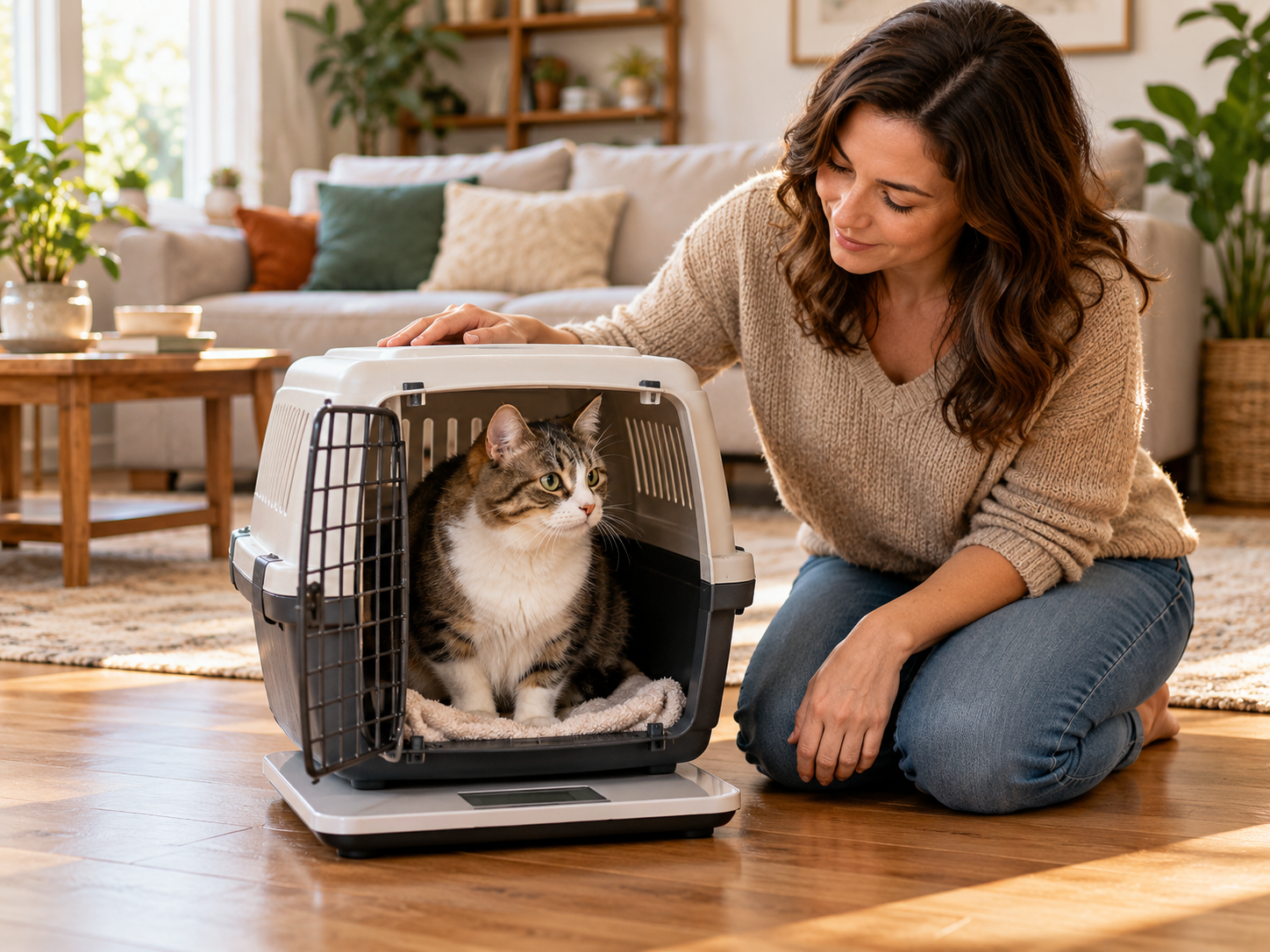
For smaller cats or kittens, a digital baby or pet platform scale can be an excellent investment. These flat scales often accommodate a lightweight cardboard box, a familiar cushion, or a basket on top. Before placing your cat on the scale, set the scale to zero with the box or blanket already in place (tare function) so that only the cat’s weight is measured. Allowing your cat to explore the box or basket voluntarily beforehand helps them feel comfortable on the platform.
Another common approach is the human-scale subtraction method. First, weigh yourself while standing unassisted on your bathroom scale. Next, pick up your cat gently, hold them close to your body, and step back onto the scale together. Subtract your individual weight from the combined total to find your cat’s weight. While straightforward, this method can sometimes be skewed if the cat squirms or shifts their weight during the measurement. If your cat tends to wiggle, try taking two or three consecutive measurements and averaging them, or use a carrier-based approach instead.
Regardless of the method you choose, remember that creating a positive environment is key. Providing cats safe spaces in the home to reduce stress and help them feel secure Bringing A New Cat Home | Cats | Guide | Omlet UK applies to routine care moments just as much as it does to new arrivals. Offering gentle praise, speaking in a calm tone, and following up with a favored reward after the weigh-in reinforces that home health checks are safe and predictable.
Frequently Asked Questions
How often should I weigh my cat at home?
For healthy adult cats, a monthly or bimonthly weight check is usually sufficient to catch gradual trends. Senior cats, pets on weight-management diets, or cats with ongoing health conditions may benefit from more frequent monitoring, such as every one to two weeks, as advised by your veterinarian.
What is the easiest way to weigh a cat that refuses to sit still?
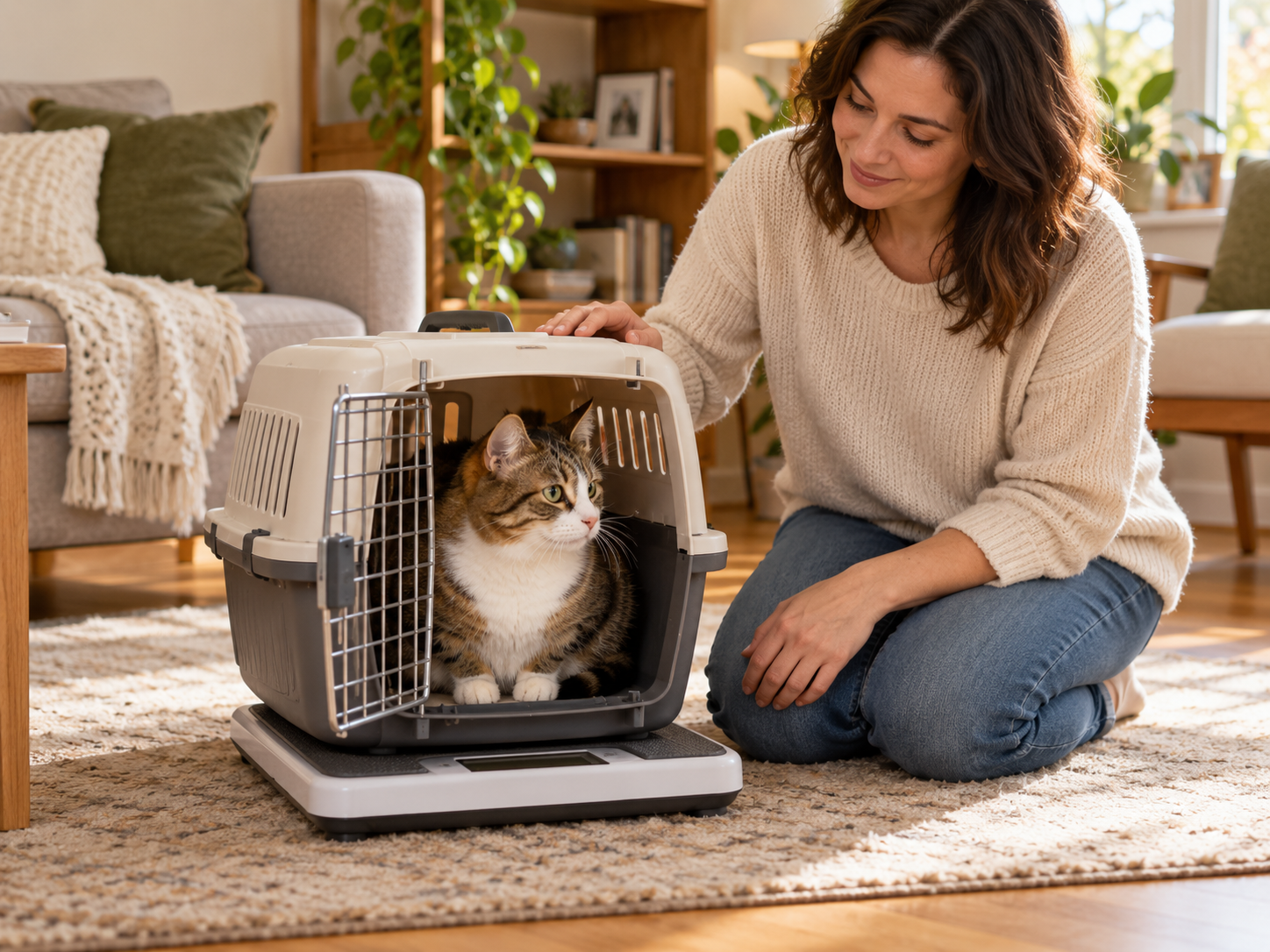
The carrier-weight method is typically the easiest and most reliable option for active or restless cats. Because the cat is enclosed safely inside their familiar carrier, they cannot jump out or shift around, allowing you to get an accurate reading without a struggle.
Can I use a regular bathroom scale to weigh my cat?
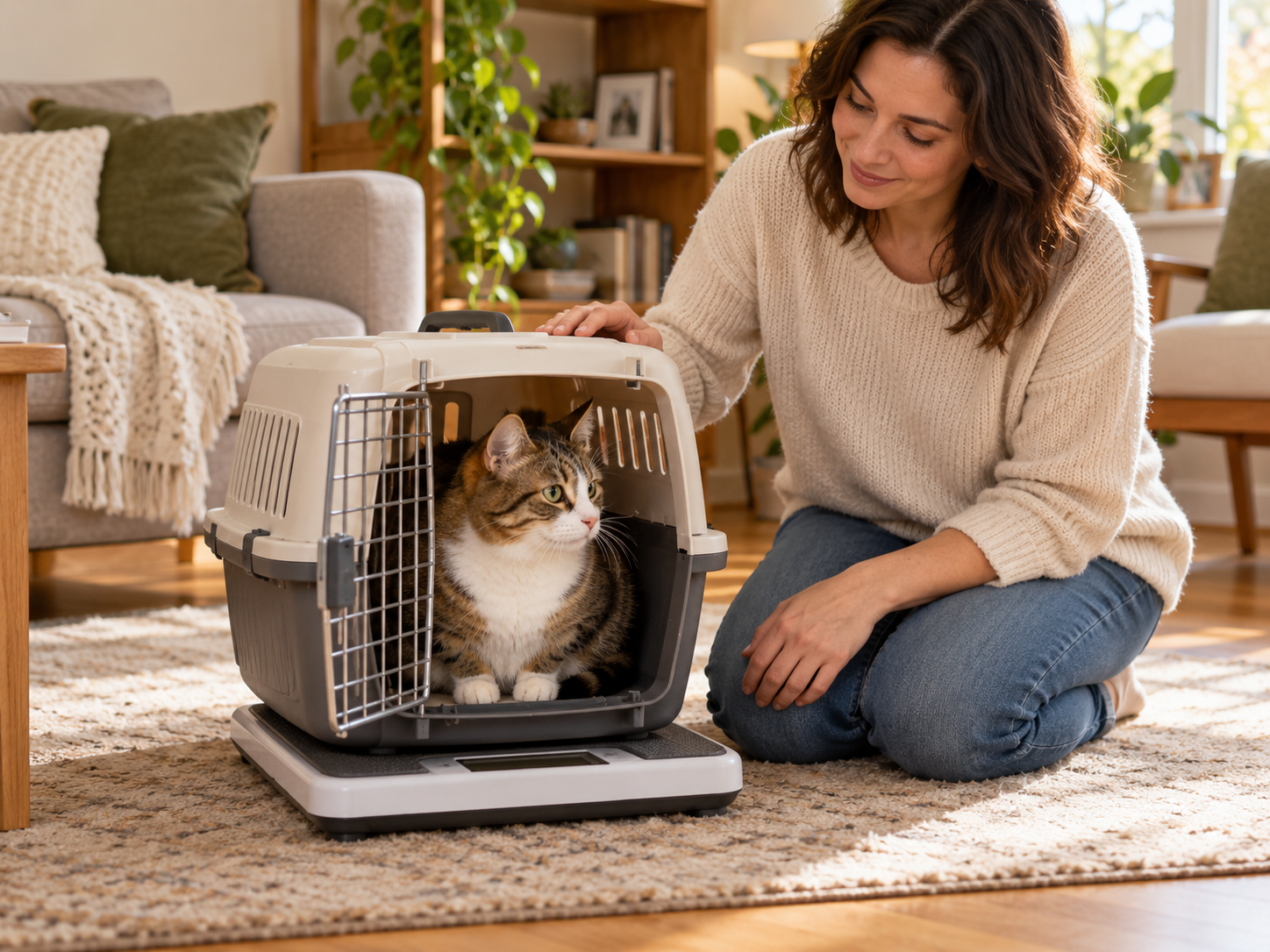
Yes, you can use a bathroom scale via the subtraction method (weighing yourself holding the cat and subtracting your own weight), or by placing a secure box or carrier on the scale. However, standard bathroom scales are often less sensitive to small weight fluctuations than digital baby scales or luggage scales.
Final Thoughts
Weighing your cat at home does not need to be a stressful ordeal for either of you. By choosing a method that respects your cat’s need for security—whether that means utilizing their favorite carrier or creating a calm platform routine—you can gather accurate health data while preserving a trusting, gentle bond.